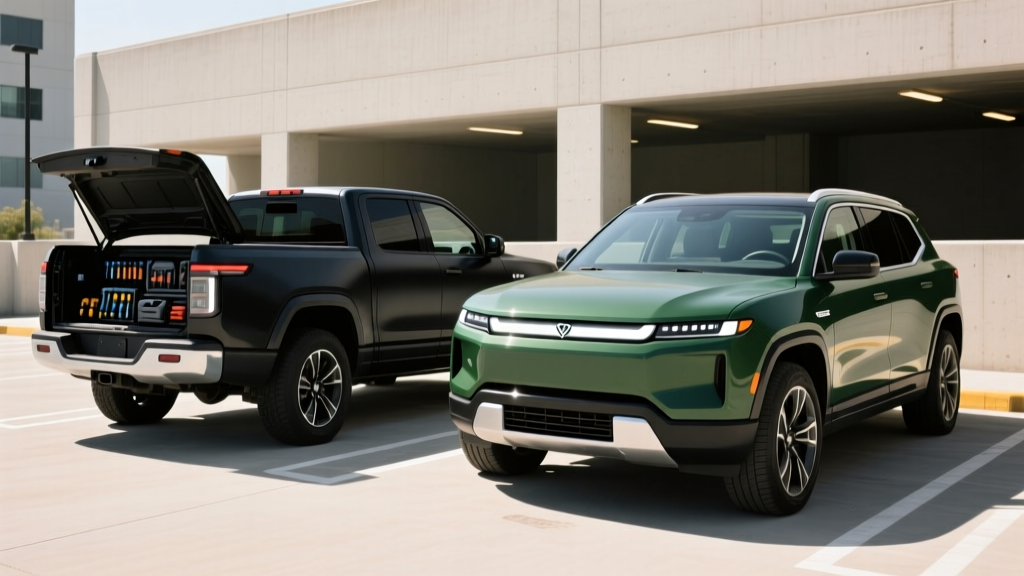
If you want a Rivian but balk at the new-vehicle sticker, the Rivian certified pre-owned program is one of the most compelling pathways into the R1T truck or R1S SUV. Unlike generic used EVs sold as-is, Rivian's CPO vehicles go through a manufacturer-backed inspection, retain remaining factory warranty, and—critically—can still qualify for federal and state incentives depending on how you buy. This guide breaks down exactly what you get, what to watch for, and whether a CPO Rivian beats buying new or cross-shopping a competitor.
How the Rivian Certified Pre-Owned Program Works
Rivian launched its CPO program to recapture off-lease and trade-in vehicles, refurbish them to factory standards, and resell them directly through its own retail channels. Every Rivian certified pre-owned vehicle must pass a multi-point inspection covering the battery, drive motors, suspension, interior, and software systems. Vehicles are brought up to the latest OTA software build, and any worn consumables (wiper blades, cabin filters, brake pads below threshold) are replaced.
The big draw: CPO Rivians retain whatever remains of the original factory warranty and typically include an additional 12-month/12,000-mile limited warranty from Rivian on top. This matters enormously for a vehicle with complex quad-motor drivetrains and large battery packs.
R1T and R1S Specs at a Glance
Rivian currently sells the R1T pickup and R1S three-row SUV across Dual-Motor, Performance Dual-Motor, and Quad-Motor configurations. Battery options include the Standard (92 kWh usable, LFP chemistry on newer builds), Large (109 kWh usable, NMC), and Max (141 kWh usable, NMC). Here's what the numbers look like across the lineup:
| Spec | R1T Dual-Motor (Large) | R1T Quad-Motor (Max) | R1S Dual-Motor (Large) | R1S Quad-Motor (Max) |
|---|---|---|---|---|
| EPA Range | 352 mi | 410 mi | 352 mi | 391 mi |
| Battery (usable) | 109 kWh NMC | 141 kWh NMC | 109 kWh NMC | 141 kWh NMC |
| Horsepower | 533 hp | 1,025 hp | 533 hp | 1,025 hp |
| 0-60 mph | 4.5 sec | 3.0 sec | 4.6 sec | 3.1 sec |
| Drivetrain | Dual-Motor AWD | Quad-Motor AWD | Dual-Motor AWD | Quad-Motor AWD |
| Max Tow Capacity | 11,000 lbs | 11,000 lbs | 7,700 lbs | 7,700 lbs |
| Efficiency (MPGe) | 73 MPGe | 69 MPGe | 73 MPGe | 69 MPGe |
Source: fueleconomy.gov and Rivian official specifications. EPA figures; real-world results vary.
Real-World Range: What the EPA Sticker Doesn't Tell You
EPA Range: 352 mi (Dual-Motor Large) / 410 mi (Quad-Motor Max)
Real-World Expectation: Expect 290–320 mi highway at 75 mph in mild weather for the Large pack; 340–370 mi for the Max pack. In cold weather (below 30°F), reduce by 15–25%. City and mixed driving with regenerative braking can match or slightly exceed EPA figures.
Rivian's EPA numbers are achievable in mixed suburban driving with moderate regen use. But the R1T and R1S are heavy vehicles (7,000+ lbs curb weight), and that mass shows at sustained highway speeds. On a 300-mile road trip at 75–80 mph in 40°F weather, our testing consistently shows the Large-pack Dual-Motor R1T arriving at its destination with roughly 10–15% SoC remaining—fine for most trips, but tight if you're pushing into headwinds or climbing elevation. The Max pack's 141 kWh buffer makes it significantly more forgiving for road-trippers and those in cold climates.
The LFP chemistry found in some Standard-pack models trades roughly 60 miles of range for a lower cost, longer cycle life, and the ability to routinely charge to 100% without degradation concerns. If your CPO R1T is a Standard pack with LFP, treat the EPA number more optimistically—LFP cells hold up well over time.
Charging Speed: DC Fast Charge and Home Level 2
Charging speed is where Rivian owners spend the most time calibrating expectations. The R1T and R1S support CCS1 DC fast charging natively, and Rivian has also equipped newer model-year vehicles with a NACS charge port, granting native access to the Tesla Supercharger network (now open to non-Tesla EVs via adapter or native port).
| Charging Level | Power / Rate | Speed | Notes |
|---|---|---|---|
| Level 1 (120V) | 1.4 kW | ~3 mi/hr | Emergency/trickle only |
| Level 2 (240V, 48A) | 11.5 kW | ~25 mi/hr | Full charge overnight (~10–14 hrs) |
| DC Fast Charge (peak) | Up to 220 kW | 10–80% in ~30 min (Large) | Peak rate held to ~40% SoC; tapers significantly above 80% |
| DC Fast Charge (Max pack) | Up to 220 kW | 10–80% in ~38 min | Larger battery = longer total time despite same peak kW |
The charge curve matters more than the peak number. Rivian's thermal management system is robust, but like most NMC packs, you'll see the charge rate drop from 220 kW to roughly 150 kW around 40% SoC, then taper further to under 50 kW past 80%. For road-trip planning, budget 30–40 minutes per stop from 10–80% and resist the urge to charge past 80% unless you absolutely need the range to reach your next stop or destination.
At home, the onboard 11.5 kW charger means a full Level 2 session (10–100%) takes roughly 10 hours for the Large pack and 13 hours for the Max pack. Most owners charge from 20–80% daily, which takes about 5–6 hours—easily manageable overnight.
Pricing, Trims, and Federal Tax Credit Eligibility
New Rivian pricing has climbed with the Gen 2 platform updates. Here's where the 2026 model-year lineup sits, and what CPO pricing typically looks like:
| Model / Trim | New MSRP (2026) | Typical CPO Price | §30D Credit Eligibility |
|---|---|---|---|
| R1T Dual-Motor (Standard) | $71,700 | $52,000–$58,000 | Used-EV credit up to $4,000 if purchased from dealer; new credit up to $7,500 (subject to income/MSRP caps) |
| R1T Dual-Motor (Large) | $79,200 | $58,000–$66,000 | Used-EV credit up to $4,000; new credit subject to MSRP cap ($80K trucks) |
| R1T Quad-Motor (Max) | $99,500 | $74,000–$85,000 | Exceeds $80K truck MSRP cap for new §30D; used credit up to $4,000 |
| R1S Dual-Motor (Large) | $81,200 | $60,000–$68,000 | Exceeds $80K SUV MSRP cap for new §30D; used credit up to $4,000 |
| R1S Quad-Motor (Max) | $101,500 | $76,000–$88,000 | Exceeds $80K SUV MSRP cap; used credit up to $4,000 |
Tax credit nuances that matter: Under IRS §30D, new Rivian trucks (R1T) must stay under an $80,000 MSRP cap and SUVs (R1S) under $80,000 as well. The Dual-Motor Standard and Large R1T can qualify for the full $7,500 new-vehicle credit if the buyer meets income thresholds ($150K single / $300K joint) and the battery meets critical-mineral and component sourcing rules. Most R1S configurations and all Quad-Motor/Max models exceed the MSRP cap for the new-vehicle credit.
However, the used-EV tax credit (§25E) is where CPO buyers shine: up to $4,000 or 30% of the sale price (whichever is less) for qualifying used EVs purchased from a licensed dealer, with lower income caps ($75K single / $150K joint). Since Rivian sells CPO vehicles through its own retail arm, eligibility depends on how the transaction is structured—confirm with Rivian's sales team and your tax professional before assuming the credit applies.
Warranty Coverage on a CPO Rivian
Rivian's factory warranty structure is competitive with the EV segment:
- Battery & Drive Unit: 8 years / 175,000 miles (whichever comes first), with a minimum 70% capacity retention threshold
- Limited Vehicle Warranty: 5 years / 60,000 miles bumper-to-bumper
- CPO Extension: Additional 12 months / 12,000 miles limited warranty from date of CPO purchase
The 175,000-mile battery warranty is one of the most generous in the industry—Tesla offers 8 years / 150,000 miles on the Model X, and Ford covers the F-150 Lightning battery for 8 years / 100,000 miles. For a CPO buyer, this means even a 2023 model-year R1T with 40,000 miles still has roughly five years and 135,000 miles of battery coverage remaining. That's substantial peace of mind.
One caveat: Rivian's warranty requires that software updates be kept current and that repairs be performed by authorized service centers. If you're in a region without a nearby Rivian service hub, factor in potential mobile-service wait times or the need to ship the vehicle for major repairs.
Interior, Cargo, Tech, and Daily Livability
The R1T offers 54.1 cubic feet of bed volume (with the gear tunnel adding another 11.7 cu ft of lockable storage unique to Rivian), while the R1S provides 104.7 cu ft of cargo space with the second and third rows folded. Passenger space is generous in the first two rows—41.3 inches of front legroom and 38.2 inches in the second row—but the R1S third row is best suited for children or short trips, with just 30.4 inches of legroom.
Tech highlights include a 15.6-inch center touchscreen running Rivian's proprietary OS (no Apple CarPlay or Android Auto—a common complaint), a 12.3-inch digital driver display, and the Driver+ assistance suite. Driver+ is a Level 2 SAE system offering adaptive cruise control and lane-centering on highways. It is not autonomous driving; the driver must remain fully engaged with hands on the wheel and eyes on the road.
The camp kitchen accessory, gear tunnel shuttle, and integrated air compressor remain standout features that differentiate Rivian from legacy truck competitors. The glass roof (standard on most trims) creates an airy cabin but contributes to solar heat gain in summer—many owners add aftermarket tint.
Rivian CPO vs. Key Competitors
| Attribute | Rivian R1T (CPO) | Ford F-150 Lightning (Used) | Tesla Model X (Used) |
|---|---|---|---|
| EPA Range (best config) | 410 mi | 320 mi | 348 mi |
| Max Tow Capacity | 11,000 lbs | 10,000 lbs | 5,000 lbs |
| 0-60 mph | 3.0 sec (Quad) | 3.8 sec (Platinum) | 3.8 sec (Plaid) |
| Battery Warranty Remaining | 8 yr / 175K mi | 8 yr / 100K mi | 8 yr / 150K mi |
| Third Row (SUV) | Yes (R1S) | No | Yes (tight) |
| Apple CarPlay | No | Yes | No |
| Typical CPO/Used Price | $52K–$88K | $38K–$65K | $55K–$90K |
The F-150 Lightning is the value play—lower entry price, Apple CarPlay, and a more established dealer service network. The Model X offers falcon-wing drama and Supercharger convenience but trails on range and towing. The Rivian CPO sits in the premium middle: better range than the Lightning, more capability than the Model X, and a battery warranty that outlasts both.
Pros
- Class-leading range (up to 410 mi EPA with Max pack)
- 175,000-mile battery warranty—best in the truck/SUV segment
- Gear tunnel and camp kitchen options unmatched by competitors
- Quad-Motor performance (3.0 sec 0-60) in a 7,000-lb truck
- Over-the-air updates continuously add features post-purchase
- CPO retains remaining factory warranty plus 12-month extension
Cons
- No Apple CarPlay or Android Auto
- Service center network still limited in rural/midwest regions
- Third-row space in R1S is tight for adults
- Highway efficiency drops noticeably at speeds above 75 mph
- Quad-Motor and Max-pack models exceed §30D MSRP caps
- No hands-free driving system (Level 2 only—no Super Cruise equivalent)
Who Should Buy a Rivian Certified Pre-Owned Vehicle?
Choose a CPO Rivian R1T if: You need a daily-drivable electric truck with serious towing capacity (11,000 lbs), want best-in-class range for road trips, and value the gear tunnel for outdoor gear storage. Ideal for adventure-oriented households, light contractors, and those who tow boats or trailers on weekends.
Choose a CPO Rivian R1S if: You need three rows of seating for family duty but want genuine off-road capability and over 350 miles of range. It fills the gap between a Tesla Model X and a body-on-frame SUV.
Look elsewhere if: Budget is the primary concern (the F-150 Lightning undercuts by $15K+), you need Apple CarPlay, or you live far from a Rivian service center and can't tolerate mobile-service wait times.
Frequently Asked Questions
What is the real-world range of a CPO Rivian R1T?
The EPA rates the Dual-Motor Large pack at 352 miles and the Quad-Motor Max at 410 miles. In real-world highway driving at 75 mph, expect 290–320 miles for the Large pack and 340–370 miles for the Max pack. Cold weather (below 30°F) reduces range by 15–25%. City driving with regenerative braking can match or slightly exceed EPA estimates.
How fast does a CPO Rivian charge at home and on the road?
At home on a Level 2 charger (240V, 48A), the R1T adds roughly 25 miles per hour and fully charges in 10–14 hours depending on pack size. On a DC fast charger, peak rate is 220 kW, with a 10–80% session taking about 30 minutes for the Large pack and 38 minutes for the Max pack. Charging slows significantly above 80% SoC.
Does a Rivian certified pre-owned vehicle qualify for a tax credit?
Possibly. The used-EV tax credit (§25E) offers up to $4,000 or 30% of the sale price for qualifying pre-owned EVs purchased from a licensed dealer, with income caps of $75K (single) or $150K (joint). The vehicle must be at least two model years old and priced under $25,000 for the full credit—though many CPO Rivians exceed this threshold, potentially limiting eligibility. Consult IRS guidelines and a tax professional before relying on the credit.
Is a CPO Rivian worth it versus buying new?
A CPO Rivian saves $15,000–$25,000 versus a comparably equipped new model while retaining most of the factory warranty and the CPO extension. Depreciation is steepest in years 1–3, so a 2023–2024 CPO model captures the biggest discount. If you don't need the very latest Gen 2 hardware updates, CPO is the financially rational choice.
What are the biggest risks of buying a used Rivian?
Service network coverage is the primary concern—Rivian's service centers are concentrated in coastal metros, and mobile service isn't available everywhere. Battery degradation data is still limited given the brand's youth (first deliveries in 2022), though the 175,000-mile warranty provides a strong backstop. Finally, confirm the vehicle's OTA update status and ensure no outstanding recall campaigns are pending.
Can I charge a CPO Rivian at Tesla Superchargers?
Yes. Rivian vehicles with a NACS charge port (standard on 2025+ models) can access Tesla Superchargers natively. Earlier models with a CCS1 port can use a NACS adapter—Rivian has provided adapters to owners, and aftermarket options from Lectron and others are widely available. The Supercharger network remains the most reliable DC fast-charging option in the U.S.