Rivian Cars: Who Makes Them and Why It Matters for EV Buyers
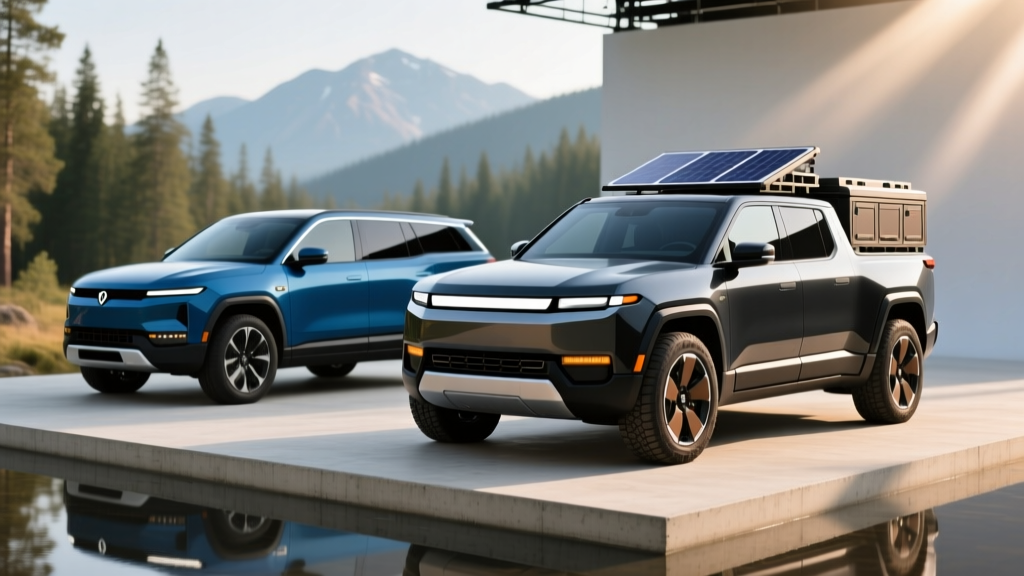
Rivian Automotive, Inc. designs, engineers, and manufactures its own electric vehicles at a 3.3-million-square-foot assembly plant in Normal, Illinois — a former Mitsubishi factory Rivian acquired in 2017. Founded in 2009 by MIT-educated engineer RJ Scaringe (originally as Mainstream Motors, later Avera Motors, then Rivian), the company is headquartered in Irvine, California. Unlike several EV startups that rely on contract manufacturing, Rivian vertically integrates its own skateboard platform, battery pack assembly, drive units, and software stack. Amazon holds a significant minority stake following a 2019 investment, and the two companies partnered on the EDV (Electric Delivery Van), but Rivian's consumer vehicles — the R1S SUV and R1T pickup — are wholly Rivian products.
Understanding who makes Rivian cars matters because vertical integration directly affects service, software updates, parts availability, and long-term platform evolution. Rivian controls its own retail, service centers, and mobile service fleet rather than franchising through dealers — a model similar to Tesla's direct-to-consumer approach.
The 2026 Rivian Lineup: R1S and R1T at a Glance
As of the 2026 model year, Rivian offers two consumer vehicles built on its second-generation "Gen 2" skateboard platform, which introduced a redesigned tri-motor configuration, a new 106 kWh Max battery pack, and a redesigned electrical architecture. Both the R1S (three-row SUV) and R1T (crew-cab pickup) share powertrains, battery options, and pricing tiers.
| Spec | Dual-Motor (Standard) | Tri-Motor (Performance) |
|---|---|---|
| Horsepower | 533 hp | 850 hp |
| Torque | 610 lb-ft | 1,103 lb-ft |
| 0-60 mph | 4.5 sec (R1S) | 2.9 sec (R1T Tri-Motor) |
| Drivetrain | AWD (dual motor) | AWD (tri motor) |
| Standard Battery (kWh usable) | 92 kWh (NMC) | 92 kWh (NMC) |
| Max Battery option (kWh usable) | 106 kWh (NMC) | 106 kWh (NMC) |
| EPA Range (Standard / Max) | 270 / 330 mi (R1S) | 258 / 315 mi (R1S) |
| Max DC Fast Charge | 200 kW (Std) / 220 kW (Max) | 200 kW / 220 kW |
| 10-80% DC Fast Charge | ~27 min (Max pack) | ~27 min (Max pack) |
| Level 2 Home Charge | 11.5 kW (~25 mi/hr) | 11.5 kW (~25 mi/hr) |
| Towing Capacity | 7,700 lb | 7,700 lb |
| Battery/Powertrain Warranty | 8 years / 120,000 miles | |
Charging Speed and Network Access
Rivian vehicles use the NACS (North American Charging Standard) connector as of the 2025 model year refresh, giving native access to Tesla's Supercharger network — the largest and most reliable DC fast-charging network in the U.S. with over 25,000 stalls. Earlier Rivian models with CCS connectors can access Superchargers via an approved adapter.
| Charging Level | Power | Miles Added per Hour | Notes |
|---|---|---|---|
| Level 1 (120V household) | ~1.4 kW | ~3–4 mi/hr | Emergency/trickle only |
| Level 2 (240V home, 48A) | 11.5 kW | ~25 mi/hr | Full overnight charge in ~9–10 hr |
| DC Fast (Standard pack) | Peak 200 kW | ~140 mi in 20 min | Tapers significantly above 80% |
| DC Fast (Max pack) | Peak 220 kW | ~190 mi in 20 min | 10–80% in ~27 min; 80–100% adds ~30 min |
The charging curve matters: Rivian's Max pack sustains close to peak kW from roughly 10% to 50% state of charge, then tapers progressively. If you're road-tripping, plan to charge from 10–80% and skip the slow 80–100% top-off unless you're parked overnight. Preconditioning activates automatically when you navigate to a charger in the infotainment system — this warms the battery to optimal temperature and is essential for achieving advertised charge speeds, especially in cold weather.
Pricing, Trims, and Federal Tax Credit Eligibility
Rivian simplified its trim structure for 2026. Both the R1S and R1T are offered in Dual-Motor and Tri-Motor configurations, with Adventure and Ascend (formerly "Launch") trim packages.
| Model / Config | Base MSRP | As-Tested Typical | §30D Credit Eligible? |
|---|---|---|---|
| R1T Dual-Motor Adventure | $69,900 | $74,500 | Yes (if under MSRP cap) |
| R1T Tri-Motor Ascend | $92,000 | $99,500 | No — exceeds $80K truck cap |
| R1S Dual-Motor Adventure | $74,900 | $79,000 | Yes (if under MSRP cap) |
| R1S Tri-Motor Ascend | $97,000 | $104,000 | No — exceeds $80K SUV cap |
Federal tax credit eligibility under IRS §30D depends on three factors that change frequently:
- MSRP cap: Vans, SUVs, and pickups are capped at $80,000 MSRP. Dual-Motor Adventure trims typically qualify; Tri-Motor and Ascend trims do not.
- Buyer income cap: Modified AGI must not exceed $300,000 (joint), $225,000 (head of household), or $150,000 (single).
- Battery sourcing: Critical minerals and battery components must meet escalating domestic-content thresholds. Rivian sources cells from Samsung SDI, and compliance status can shift year to year — verify current eligibility on fueleconomy.gov before purchasing.
When eligible, the up-to-$7,500 credit can be transferred to the dealer at point of sale as a purchase-price reduction, effective since 2024. Always confirm with your tax professional — credit rules are subject to change and individual circumstances vary.
Efficiency, Cargo Space, and Daily Usability
For a vehicle class defined by size and capability, Rivian's efficiency is competitive but not class-leading. The Dual-Motor R1S returns roughly 73 MPGe combined (approximately 46 kWh/100 miles) per EPA data. The heavier Tri-Motor drops to about 65 MPGe. For comparison, a Tesla Model X achieves roughly 100 MPGe, though it offers no off-road capability and only two rows of seating in standard configuration.
R1S cargo volume: 10.4 cu ft (behind third row) / 46.7 cu ft (behind second row) / 104.7 cu ft (all rows folded). Third-row legroom is 30.4 inches — usable for children on short trips, tight for adults. Front trunk (frunk) adds 11.0 cu ft of lockable, weather-sealed storage.
R1T bed: 4.5-foot bed with a unique Gear Tunnel option (11.0 cu ft of enclosed, pass-through storage between cab and bed) and an available integrated camp kitchen. Payload capacity is approximately 1,760 lb. The R1T's bed is shorter than a full-size truck's, which is a real trade-off for buyers who regularly haul lumber or motorcycles.
Tech, Driver Assistance, and Software
Rivian runs its own software stack on a 15.6-inch center display and a 12.3-inch driver cluster. The system is responsive, supports over-the-air updates, and integrates navigation with charging-route planning (including automatic battery preconditioning). Apple CarPlay and Android Auto are not natively supported — Rivian has opted for its own interface, which is a dealbreaker for some buyers.
The driver-assistance suite, branded Rivian Driver+, includes adaptive cruise control, lane-centering, and automatic lane changes on divided highways. This is an SAE Level 2 system — the driver must remain attentive with hands on the wheel at all times. It is not self-driving and does not approach the capability of Level 4 systems like Waymo. In our experience, Driver+ performs well on interstate cruising but requires frequent steering-wheel torque inputs to confirm engagement, which some drivers find more intrusive than GM's Super Cruise or Ford's BlueCruise hands-free implementations.
How Rivian Stacks Up Against Key Competitors
The R1S competes most directly with the Tesla Model X, BMW iX, Mercedes EQS SUV, and the upcoming Cadillac Escalade IQ. The R1T occupies a unique position as the only premium electric midsize pickup, though the Ford F-150 Lightning targets a more value-oriented truck buyer and the Tesla Cybertruck offers polarizing styling with comparable performance.
Rivian's edge lies in combining genuine off-road capability (up to 14.9 inches of ground clearance with air suspension, wading depth of 36+ inches) with refined on-road manners and a well-built interior that consistently earns praise for material quality. Its weakness is efficiency and charging speed — neither class-leading — and a service network that, while growing, still has gaps in rural areas.
Choose the R1T if: You want a daily-drivable pickup with genuine trail capability, need the Gear Tunnel for gear storage, and don't require a full 6-foot bed.
Look elsewhere if: You prioritize maximum efficiency (Tesla Model X or BMW iX), need hands-free highway driving (GM Super Cruise), or live far from a Rivian service center.
Pros and Cons: The Honest Summary
Pros
- Class-leading off-road capability with air suspension
- Tri-motor performance (2.9-sec 0-60) rivals supercars
- High-quality interior materials and thoughtful design
- NACS connector = native Tesla Supercharger access
- Strong OTA update cadence; features improve over time
- 8-year/120,000-mile battery warranty
Cons
- Efficiency below class average (46 kWh/100 mi)
- Charging speed (220 kW peak) trails 800V rivals at 350 kW
- No Apple CarPlay or Android Auto
- Third-row legroom is tight for adults
- Tri-Motor/Ascend trims exceed §30D MSRP cap
- Service center coverage still expanding
Frequently Asked Questions
Who owns Rivian?
Rivian is a publicly traded company (NASDAQ: RIVN) founded and led by CEO RJ Scaringe. Amazon is the largest external shareholder, holding a minority stake. No legacy automaker owns or controls Rivian — it is an independent American EV manufacturer.
Where are Rivian vehicles built?
All Rivian R1S and R1T vehicles are assembled at the company's own factory in Normal, Illinois. Battery packs are assembled on-site using cells sourced from Samsung SDI.
What is the real-world range of the Rivian R1S?
The EPA rates the Max-pack Dual-Motor R1S at 330 miles. Real-world highway range at 75 mph is approximately 260–280 miles in moderate temperatures, dropping to 200–230 miles in sub-freezing conditions. The Standard pack delivers about 210–225 highway miles.
Does Rivian qualify for the $7,500 federal tax credit?
Dual-Motor Adventure trims of the R1T and R1S (priced under $80,000 MSRP) may qualify for the full or partial §30D credit, depending on battery-sourcing compliance and buyer income limits. Tri-Motor and Ascend trims exceed the MSRP cap and do not qualify. Verify current status on fueleconomy.gov and consult a tax professional.
How fast does a Rivian charge at home?
On a 240V Level 2 home charger at 48 amps (11.5 kW), a Rivian adds approximately 25 miles of range per hour. A full charge from 10% to 100% takes roughly 9–10 hours for the Max pack. Most owners charge overnight and wake to a full battery every morning.
Is Rivian reliable?
Rivian has improved build quality significantly since its 2022 launch year, and J.D. Power and owner surveys show upward trends. However, as a young automaker, long-term reliability data (10+ years) doesn't yet exist. The 8-year/120,000-mile battery and powertrain warranty provides substantial coverage during the critical early-ownership period.
Can Rivian vehicles tow?
Yes. Both the R1S and R1T are rated to tow 7,700 pounds. Expect range to drop 40–50% when towing at highway speeds — plan for 150–180 miles between charges with a heavy trailer.