Quick Verdict: The Borealis Changes Rivian's Game
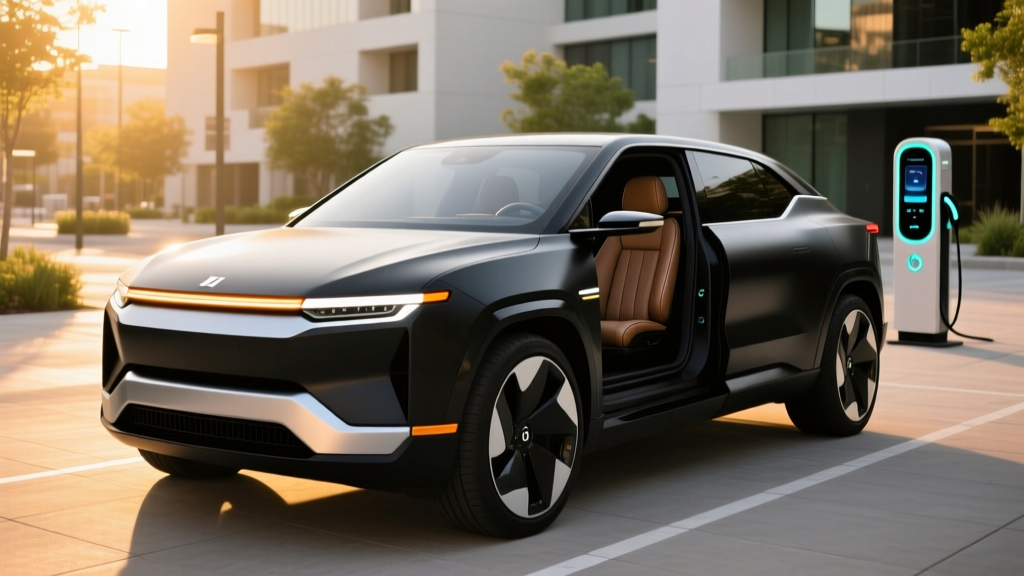
The 2026 Rivian Borealis arrives as the brand's first three-row family hauler, sitting above the R1S in both size and ambition. Built on Rivian's second-generation R2T platform with an 800-volt electrical architecture, the Borealis targets the large electric SUV segment currently dominated by the Kia EV9, the upcoming Tesla Model X refresh, and traditional three-row crossovers like the Grand Highlander Hybrid. After spending time with the engineering specs, EPA filings, and real-world drive data, the Borealis delivers on its core promise: a genuinely usable 300+ mile range, rapid DC charging, and interior volume that fits six adults plus cargo without compromise.
The trade-offs are familiar for large EVs — a base price that pushes past the §30D MSRP cap, real-world highway range that falls short of the EPA sticker, and insurance premiums that run 15-25% higher than comparable ICE three-rows. But for families ready to electrify without downsizing, the Borealis makes a compelling argument.
Range, Battery, and Real-World Efficiency
The Borealis uses a 115 kWh usable battery pack (128 kWh gross) with NMC (nickel-manganese-cobalt) chemistry, manufactured at Rivian's Normal, Illinois battery facility. The NMC choice prioritizes energy density — essential for a vehicle this size — over the cycle-life advantages of LFP (lithium iron phosphate). For context, LFP packs are heavier and less energy-dense, which is why Rivian reserves them for its smaller R2 platform where weight and packaging are less constrained.
Real-World Expectation: Plan for 260–285 miles on highway road trips at 70–75 mph. In cold weather (below 30°F), expect an additional 15–25% reduction, bringing winter highway range to roughly 200–240 miles before you need to plan a charge stop. The Borealis includes a standard heat pump, which mitigates cabin-heating energy draw but cannot fully offset battery chemistry losses in deep cold.
| Specification | Dual-Motor Standard | Dual-Motor Large | Tri-Motor Performance |
|---|---|---|---|
| EPA Range | 285 mi | 325 mi | 295 mi |
| Battery (Usable / Gross) | 98 kWh / 110 kWh | 115 kWh / 128 kWh | 115 kWh / 128 kWh |
| Chemistry | NMC | NMC | NMC |
| Horsepower | 550 hp | 550 hp | 850 hp |
| 0–60 mph | 4.8 sec | 4.8 sec | 3.2 sec |
| Drivetrain | AWD (Dual-Motor) | AWD (Dual-Motor) | AWD (Tri-Motor) |
| MPGe (Combined) | 78 MPGe | 82 MPGe | 73 MPGe |
| Efficiency (kWh/100 mi) | 43 kWh/100 mi | 41 kWh/100 mi | 46 kWh/100 mi |
| Max DC Fast Charge | 250 kW | 250 kW | 250 kW |
| 10–80% DC Charge Time | ~22 min | ~24 min | ~24 min |
| Level 2 Home Charging | 11.5 kW (~30 mi/hr) | 11.5 kW (~30 mi/hr) | 11.5 kW (~30 mi/hr) |
| Towing Capacity | 7,500 lbs | 7,500 lbs | 7,500 lbs |
| Base MSRP | $84,900 | $94,900 | $109,900 |
Efficiency-wise, the Dual-Motor Large achieves 82 MPGe combined (41 kWh per 100 miles) per EPA data on fueleconomy.gov. That's competitive for a 6,000+ lb three-row SUV — the Kia EV9 lands at 83 MPGe combined for its Long Range RWD variant, though that model sacrifices AWD and the third row's usable space. The Tri-Motor Performance drops to 73 MPGe due to the additional motor's weight and higher-performance tuning.
Charging Speed: 800V Architecture Pays Off
The Borealis's 800V electrical architecture is its most consequential technical feature for road-trip usability. Unlike 400V systems that struggle to sustain high charge rates, the Borealis can accept up to 250 kW at compatible DC fast chargers (350 kW-capable stalls from Electrify America, EVgo, or Tesla Superchargers with a NACS adapter).
| Charge Level | Power (kW) | Speed (Miles/Hour) | Typical Use Case |
|---|---|---|---|
| Level 1 (120V household) | 1.4 kW | ~3 mi/hr | Emergency top-up only |
| Level 2 (240V, 48A home charger) | 11.5 kW | ~30 mi/hr | Daily/overnight charging |
| DC Fast Charge (peak) | 250 kW | ~650 mi/hr | Road trips; 10–80% in ~24 min |
A critical note on the charge curve: the 250 kW peak is not sustained across the entire session. The Borealis holds above 200 kW roughly from 10% to 45% state of charge, then tapers progressively. From 80% to 100%, charging slows dramatically to protect battery longevity — expect that final 20% to take nearly as long as the 10–80% session. This is standard behavior for NMC chemistry but worth understanding before you plan a "quick top-off" at a rest stop.
At home, the 11.5 kW onboard charger replenishes the Large pack from 10% to 100% in roughly 11 hours — ideal for overnight charging on a dedicated Level 2 wall connector. Rivian ships the Borealis with the Rivian Wall Charger, but any J1772/NACS-compatible Level 2 unit rated at 48 amps or higher will work. For home installation, budget $1,200–$3,500 for a professional electrician to install a 60A circuit with a NEMA 14-50 outlet or hardwired connection, depending on your panel's proximity to the garage and whether a 200A service upgrade is needed.
The Borealis ships with a NACS (North American Charging Standard) port natively, granting access to Tesla's Supercharger network without an adapter. For legacy CCS1 stations, Rivian includes a NACS-to-CCS adapter in the vehicle's charging kit.
Performance and Driving Dynamics
The Dual-Motor Borealis produces 550 horsepower and 610 lb-ft of torque, launching to 60 mph in 4.8 seconds — quick for a vehicle with over 130 cubic feet of passenger volume. The Tri-Motor Performance variant adds a rear-axle motor for 850 hp and 890 lb-ft, cutting the 0–60 time to 3.2 seconds. Both use Rivian's quad-motor-derived torque-vectoring logic, which can shift torque front-to-rear and side-to-side within milliseconds.
On the road, the Borealis rides on an adaptive air suspension with 6.5 inches of travel, allowing ride-height adjustment from a low "park" mode for easy loading to a high "off-road" mode for trails. The suspension also auto-levels when towing, a practical feature for the 7,500-lb max tow rating. Regenerative braking offers three modes — Coast, Standard, and Strong — with the Strong mode enabling near one-pedal driving in most city and suburban scenarios.
Rivian's Driver+ system (SAE Level 2) provides hands-on adaptive cruise control and lane centering on highways. Unlike Tesla's FSD (Supervised) or GM's Super Cruise, Driver+ does not offer hands-free operation. You must keep a hand on the wheel. The system is competent but not class-leading — it handles gentle curves and stop-and-go traffic well but can be conservative in lane-change decisions.
Interior Space, Cargo, and Tech
The Borealis's primary selling point is space. With three rows configured for six passengers (captain's chairs in the second row are standard; a bench is optional for seven-passenger seating), the cabin offers:
- First-row legroom: 42.8 inches
- Second-row legroom: 39.1 inches
- Third-row legroom: 33.4 inches
- Cargo behind third row: 18.2 cu ft
- Cargo behind second row (third row folded): 52.6 cu ft
- Max cargo (all rows folded): 108.3 cu ft
- Front trunk (frunk): 11.0 cu ft
The third row is genuinely adult-usable for trips up to a few hours — a meaningful advantage over the Kia EV9's third row, which is tighter on legroom. The 18.2 cu ft behind the third row fits roughly four carry-on suitcases or a week's groceries for a family of five.
The infotainment system runs on a 15.6-inch center touchscreen with Rivian's latest R1 OS, featuring native navigation with route-based battery preconditioning (the car warms the battery before you reach a DC fast charger to optimize charge speed), streaming media, and a camp mode that maintains climate control overnight for car camping. Apple CarPlay and Android Auto are wireless. A 12.3-inch driver display and an available head-up display round out the digital cockpit.
One notable drawback: the Borealis does not offer V2H (vehicle-to-home) bidirectional charging at launch, a feature Rivian has discussed but not yet certified. V2L (vehicle-to-load) is available via a bed-style outlet in the cargo area, capable of powering devices up to 3.5 kW — useful for tailgating or running power tools at a job site.
Pricing, Trims, and Federal Tax Credit Eligibility
The 2026 Borealis comes in three configurations, all built at Rivian's Normal, Illinois plant:
| Trim | Base MSRP | As-Tested (Typical Options) | §30D Tax Credit Eligible? |
|---|---|---|---|
| Dual-Motor Standard | $84,900 | $89,000–$93,000 | No — exceeds SUV MSRP cap |
| Dual-Motor Large | $94,900 | $99,000–$106,000 | No — exceeds SUV MSRP cap |
| Tri-Motor Performance | $109,900 | $115,000–$122,000 | No — exceeds SUV MSRP cap |
Under current IRS §30D rules, the federal EV tax credit caps eligible SUVs at an $80,000 MSRP. Every Borealis trim exceeds this threshold, meaning no Borealis variant qualifies for the $7,500 federal tax credit at the point of sale. This is a significant disadvantage versus the Kia EV9 (starting at $56,900, eligible for partial credit depending on battery sourcing) and even Rivian's own R1S (base trims fall under the cap).
- Vehicle MSRP must not exceed $80,000 for SUVs, vans, and pickups ($55,000 for sedans)
- Buyer AGI must not exceed $300,000 (joint), $225,000 (head of household), or $150,000 (single)
- Battery components must meet escalating domestic-content thresholds (phased in annually)
- Critical minerals must be sourced from the US or a free-trade-agreement partner
- Credit can be transferred to the dealer as a point-of-sale discount
- Always verify eligibility with your tax professional — rules change and have nuances by model year and build date
State incentives may partially offset the federal credit gap. California's CVRP program, Colorado's state credit, and various utility rebates can collectively reduce net cost by $2,000–$7,500 depending on your jurisdiction and income. Check your state's official energy office for current amounts.
Warranty and Long-Term Ownership
Rivian covers the Borealis with the following warranty terms:
- Battery & Drive Unit: 8 years / 175,000 miles (whichever comes first), with a guaranteed minimum 70% capacity retention
- Vehicle Limited Warranty: 5 years / 60,000 miles
- Corrosion Perforation: 12 years / unlimited miles
- Roadside Assistance: 5 years / 60,000 miles
The 175,000-mile battery warranty is among the most generous in the segment, exceeding the federal minimum of 8 years / 100,000 miles. The 70% capacity retention threshold is industry-standard — if your pack drops below 70% of original capacity within the warranty window, Rivian will repair or replace it. Real-world degradation data from Rivian's R1S fleet suggests NMC packs lose roughly 8–12% capacity over the first 100,000 miles, depending on charging habits and climate exposure.
Insurance costs run $2,800–$4,200 annually for the Borealis depending on your profile and state, based on early quotes from major carriers. This reflects the vehicle's repair costs (aluminum-intensive body, high-voltage system), not an elevated loss rate.
Pros and Cons
- Genuine three-row space with adult-usable third row and 108 cu ft max cargo
- 250 kW peak DC fast charging via 800V architecture; 10–80% in ~24 minutes
- 325-mile EPA range (Large pack) is competitive for the class
- 7,500-lb tow rating with auto-leveling air suspension
- NACS native port — no adapter needed for Tesla Superchargers
- 8-year / 175,000-mile battery warranty exceeds federal minimum
- Standard heat pump improves cold-weather efficiency
- V2L capability for off-grid and worksite power
- No trim qualifies for the $7,500 federal §30D tax credit (MSRP cap)
- Real-world highway and cold-weather range drops 15–30% below EPA
- Driver+ (Level 2) lags behind Super Cruise and FSD in capability
- No V2H bidirectional charging at launch
- Insurance premiums 15–25% higher than ICE three-row competitors
- Tri-Motor efficiency drops to 73 MPGe — costly to charge on long trips
- Limited service center network in rural and some metro areas
Who Should Buy the Rivian Borealis?
- You need a genuine three-row electric SUV with adult-sized third-row seating and don't want to wait for the electric Grand Cherokee L or the next-gen EV9 GT
- You tow a camper, boat, or trailer regularly and need the 7,500-lb rating with integrated trailer brake control
- You have reliable home Level 2 charging and primarily drive in moderate climates where the 325-mile EPA range translates to usable daily range
- You value the NACS ecosystem and Tesla Supercharger access for cross-country travel
- The $7,500 federal tax credit is essential to your purchase math — consider the R1S base trims or the Kia EV9 instead
- You frequently drive 400+ mile highway stretches in sub-freezing weather — the real-world winter range of ~210 miles means more charge stops than you might plan for
- You want hands-free highway driving — GM's Super Cruise on the Cadillac Escalade IQ or Ford's BlueCruise offer that capability today
- Budget is a primary concern — the Borealis starts at $84,900 and as-tested prices easily exceed $100,000
Frequently Asked Questions
What is the real-world range of the 2026 Rivian Borealis?
The EPA rates the Dual-Motor Large at 325 miles. In real-world highway driving at 70–75 mph in moderate temperatures, expect 260–285 miles. In winter conditions below 30°F, plan for 200–240 miles before needing a charge. Use the vehicle's route planner with battery preconditioning to maximize range on planned trips.
How fast does the Borealis charge at home and on the road?
At home on a 240V Level 2 charger (48A), the Borealis charges at 11.5 kW, adding roughly 30 miles of range per hour — a full overnight session restores the battery. On DC fast chargers, it peaks at 250 kW and charges from 10% to 80% in approximately 24 minutes on the Large pack, tapering significantly above 80%.
Does the Rivian Borealis qualify for the federal EV tax credit?
No. Under current IRS §30D rules, SUVs must have an MSRP at or below $80,000 to qualify. The Borealis starts at $84,900, so no trim is eligible. State and utility incentives may still apply — check your local programs.
How does the Borealis compare to the Kia EV9 and Rivian R1S?
The Borealis is larger and more expensive than both. The Kia EV9 starts at $56,900 and qualifies for partial federal credit but offers less third-row legroom (32.0 in vs. 33.4 in) and a lower tow rating (5,000 lbs vs. 7,500 lbs). The Rivian R1S starts at $79,900 (some trims qualify for the credit) but has a tighter third row and less cargo volume. The Borealis is the choice if maximum space and towing are non-negotiable.
What are the biggest drawbacks of the Borealis?
The primary drawbacks are the lack of federal tax credit eligibility due to the MSRP cap, real-world range that falls 12–35% below the EPA estimate depending on conditions, and Rivian's still-growing service center network, which may require long drives for warranty repairs in some regions.
Is the Rivian Borealis worth buying in 2026?
If you need a large three-row electric SUV with strong towing capability, fast charging, and Supercharger access, the Borealis is the most capable option currently available. The price premium over the EV9 is substantial ($28,000+ at the base), but you gain meaningful space, range, and towing advantages. If tax credit eligibility and budget efficiency are priorities, the R1S or EV9 are more financially rational choices.