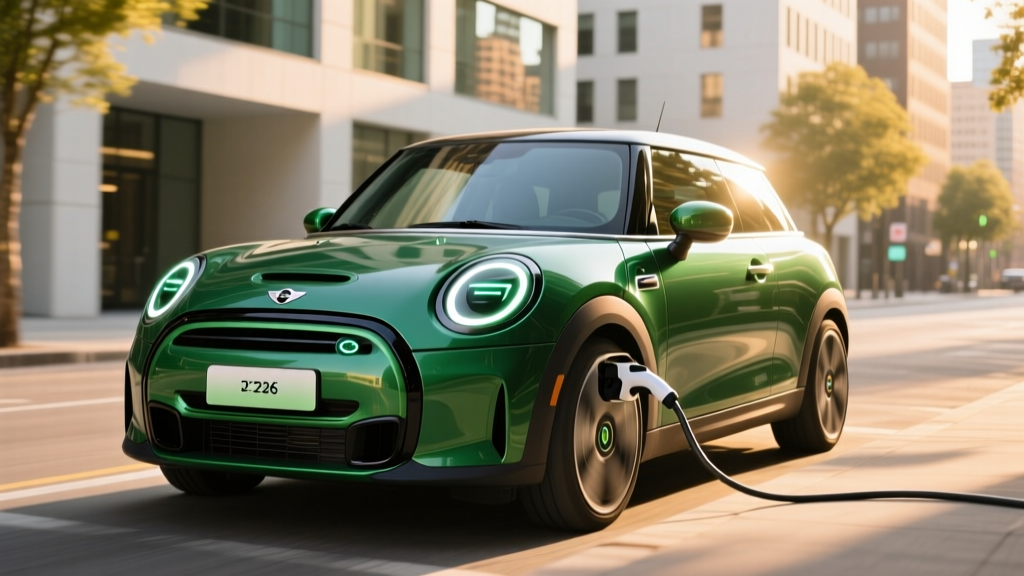
The phrase "mini electric cart" gets thrown around a lot in EV circles, but few vehicles earn it quite like the 2026 MINI Cooper SE. Compact, nimble, and unapologetically urban, the Cooper SE leans into what MINI does best — go-kart handling wrapped in a footprint small enough for the tightest parking spots — while adding a fully electric powertrain that's practical for daily commuting. For 2026, MINI has refreshed the Cooper SE with a larger battery, faster charging, and updated infotainment, making this the most capable version of its smallest electric cart yet.
But does a sub-170-mile range work for your life? How fast does it really charge? And does it still qualify for the federal EV tax credit? We break down every number that matters.
Range and Real-World Efficiency
The 2026 MINI Cooper SE carries a 54.2 kWh battery pack (40.7 kWh usable) using NMC (nickel manganese cobalt) lithium-ion cells. That translates to an EPA-estimated range of 162 miles — a significant jump from the previous generation's 114-mile figure. Efficiency lands at 110 MPGe combined, or roughly 30 kWh per 100 miles, according to fueleconomy.gov.
Real-World Expectation: In mixed city/highway driving at moderate temperatures, expect 140–155 miles. Sustained highway speeds above 70 mph will push range closer to 120–130 miles due to the Cooper SE's boxy aerodynamics. In freezing temperatures (below 32°F), plan for a 20–30% reduction, bringing usable range to roughly 100–125 miles without preconditioning. The standard heat pump helps mitigate cold-weather losses compared to EVs without one.
For city dwellers and short-distance commuters, 162 miles is more than sufficient. The average American drives roughly 37 miles per day, meaning most owners will charge every three to four days. But if your routine includes frequent 80-mile-plus round trips or regular cold-weather driving, the margin narrows quickly.
Charging Speed: DC Fast and Home Level 2
Charging is where the 2026 Cooper SE makes its biggest generational leap. MINI has upgraded the DC fast-charging capability to a peak rate of 95 kW via its CCS1 connector (with NACS compatibility available through an adapter for Tesla Supercharger access starting in 2025).
| Charging Level | Power (kW) | Speed / Time |
|---|---|---|
| Level 1 (120V household) | ~1.4 kW | ~4 miles per hour |
| Level 2 (240V home/public) | 11 kW (max onboard) | ~32 miles per hour; 0–100% in ~4.5 hours |
| DC Fast Charge (CCS) | 95 kW peak | 10–80% in ~28 minutes |
The 95 kW peak is respectable for a small-battery EV, though it won't match the 200+ kW rates of larger platforms. In practice, the charge curve tapers significantly after 80%, which is standard for NMC chemistry. Charging from 80–100% on DC can add another 20+ minutes. For daily use, most owners will rely on Level 2 home charging, where the 11 kW onboard charger replenishes the pack overnight in under five hours.
One note for home installers: the Cooper SE's 11 kW onboard charger requires a 48-amp circuit to reach maximum speed. A standard 40-amp Level 2 charger will still deliver roughly 9.6 kW — perfectly adequate for overnight top-ups, but slightly slower than the car's maximum capability.
Performance and Driving Dynamics
| Spec | 2026 MINI Cooper SE |
|---|---|
| Drivetrain | Front-wheel drive (FWD) |
| Horsepower | 215 hp |
| Torque | 243 lb-ft |
| 0–60 mph | 6.7 seconds |
| Top Speed | 106 mph (electronically limited) |
| Battery (Usable) | 40.7 kWh (NMC) |
| EPA Range | 162 miles |
| Efficiency | 110 MPGe / 30 kWh/100mi |
The electric motor produces 215 horsepower and 243 lb-ft of instant torque, sent entirely to the front wheels. The 0–60 mph time of 6.7 seconds isn't going to embarrass a Tesla Model 3 Performance, but it's genuinely quick for a subcompact hatchback and makes merging and city driving effortless. More importantly, the Cooper SE retains MINI's signature go-kart feel: sharp steering, firm damping, and a low center of gravity thanks to the under-floor battery placement.
Regenerative braking is adjustable through multiple levels, and the strongest setting enables near one-pedal driving in city traffic. It's not quite as aggressive as Nissan's e-Pedal or Chevrolet's one-pedal mode, but it's intuitive once you learn the lift points.
Interior, Cargo, and Tech
The 2026 Cooper SE features MINI's latest circular OLED infotainment display — a 9.4-inch touchscreen with wireless Apple CarPlay and Android Auto, built-in navigation with real-time charging station routing, and an AI voice assistant. The interface is a significant upgrade over the previous generation, with faster response times and cleaner menus.
Driver-assistance features include adaptive cruise control with stop-and-go, lane-keeping assist, automated emergency braking, and parking assist. These are SAE Level 2 systems — meaning the driver must remain fully engaged and hands on or near the wheel at all times. This is not autonomous or self-driving capability.
Cargo space measures 7.1 cubic feet behind the rear seats, expanding to approximately 22.8 cubic feet with the 60/40 split rear seats folded. That's tight even for the subcompact class — a weekend grocery run for two is comfortable, but furniture or luggage-heavy road trips will require creative packing. Rear legroom is 28.7 inches, which is best suited for children or short-trip adult passengers.
Pricing, Tax Credits, and Ownership Costs
The 2026 MINI Cooper SE starts at an MSRP of $32,900 (including destination) for the Classic trim, with the mid-level Signature trim at $35,400 and the top-tier Iconic trim at $38,400. A well-equipped Iconic with premium paint and the panoramic roof can push the as-tested price above $41,000.
| Trim | Base MSRP | Est. After Federal Credit* |
|---|---|---|
| Classic | $32,900 | $25,400 |
| Signature | $35,400 | $27,900 |
| Iconic | $38,400 | $30,900 |
*Federal tax credit estimates assume full $7,500 eligibility under IRS §30D rules. Actual credit depends on battery component and critical-mineral sourcing requirements, buyer income caps ($150K single / $300K joint), and MSRP caps ($55K for sedans/hatchbacks). The Cooper SE qualifies on MSRP. Verify current-year eligibility at irs.gov or with a tax professional. The credit may be applied as a point-of-sale reduction through a registered dealer.
Battery sourcing has been the moving target for MINI's tax credit eligibility. For 2026, the Cooper SE's battery components and critical minerals must meet escalating domestic-content thresholds under the Inflation Reduction Act. Buyers should confirm the specific vehicle's eligibility via the dealer and the IRS's official qualified vehicle list before purchase, as mid-year sourcing changes can affect credit availability.
Warranty and Long-Term Ownership
MINI covers the Cooper SE's battery and electric powertrain with an 8-year/100,000-mile warranty, guaranteeing at least 70% capacity retention over that period. The basic vehicle warranty is 4 years/50,000 miles, and complimentary scheduled maintenance is included for 3 years/36,000 miles.
NMC battery chemistry typically shows moderate degradation in the first two years (roughly 5–8%), then stabilizes. Based on data from similar platforms, Cooper SE owners can expect approximately 85–90% state of health after five years of typical use. The heat pump and active thermal management system help protect long-term battery health by keeping cells within optimal temperature ranges during charging and driving.
Who Is the MINI Cooper SE Best For?
- You're a city or suburban commuter with daily drives under 60 miles
- You prioritize handling and personality over maximum range
- You have reliable home Level 2 charging access
- You want a premium-badged compact EV under $40,000 (before credits)
- Back-seat and cargo space are secondary concerns
- You regularly drive more than 100 miles round-trip without charging access
- You live in an extreme cold-weather climate and lack garage parking
- You need space for more than two adults or frequent cargo hauling
- You want access to the Tesla Supercharger network natively (adapter required)
The Cooper SE is an urban-focused mini electric cart at heart. It excels as a stylish, fun-to-drive daily commuter that's cheap to fuel and easy to park. It does not pretend to be a road-trip vehicle, and that's the point.
MINI Cooper SE vs. Key Competitors
Against the Nissan LEAF (149–212 miles depending on trim), the Cooper SE offers a more premium interior and sharper handling, though the LEAF SV Plus delivers more range for the dollar. The LEAF's CHAdeMO connector, however, is increasingly a liability as CCS and NACS dominate public charging infrastructure.
The Hyundai Kona Electric (261 miles EPA) is the practicality play — significantly more range, more cargo room, and similar pricing. If range is your top priority, the Kona wins decisively. But it can't match the MINI's driving engagement or brand cachet.
The Fiat 500e (149 miles EPA) is the closest spiritual competitor — small, stylish, urban-oriented. The Cooper SE edges it out on range, power, and charging speed, though the Fiat's starting price under $30,000 is appealing.
Pros and Cons
- Engaging, go-kart handling with quick acceleration
- Compact footprint ideal for tight urban parking
- Premium interior with updated OLED infotainment
- Heat pump standard for better cold-weather efficiency
- Federal tax credit eligible (verify sourcing/year)
- Wireless CarPlay/Android Auto and strong driver assists
- 162-mile range limits road-trip practicality
- Tight rear seat and cargo space (7.1 cu ft)
- DC fast charging at 95 kW is slower than rivals
- NACS adapter required for Tesla Supercharger access
- FWD only — no AWD option for snow-belt buyers
- Real-world cold-weather range drops significantly
Frequently Asked Questions
What is the real-world range of the 2026 MINI Cooper SE?
The EPA rates it at 162 miles. In real-world mixed driving, expect 140–155 miles. Highway-heavy driving at 70+ mph reduces that to roughly 120–130 miles, and freezing temperatures can drop it further to 100–125 miles without preconditioning.
How fast does the Cooper SE charge?
On a DC fast charger, it peaks at 95 kW and charges from 10–80% in approximately 28 minutes. On a Level 2 home charger at 11 kW, a full charge takes about 4.5 hours. Level 1 (standard outlet) adds roughly 4 miles per hour.
How much does the Cooper SE cost after tax credits?
The base Classic trim starts at $32,900 MSRP. With the full $7,500 federal tax credit (assuming eligibility), that drops to approximately $25,400. However, credit eligibility depends on current-year IRS §30D rules including battery sourcing, buyer income limits, and MSRP caps. Always verify at irs.gov.
Does the MINI Cooper SE qualify for the federal EV tax credit?
It qualifies on MSRP (under the $55,000 cap for hatchbacks). However, the full $7,500 credit depends on battery component and critical-mineral sourcing requirements that change annually. Buyer income must not exceed $150,000 (single) or $300,000 (joint). Confirm the specific vehicle's status before purchase.
Is the MINI Cooper SE worth buying over the Hyundai Kona Electric?
If range and cargo space are your top priorities, the Kona Electric (261 miles EPA, more room) is the pragmatic choice. If you value driving dynamics, premium feel, compact size, and urban maneuverability — and your daily drive is under 60 miles — the Cooper SE is the more rewarding car.
Can I use Tesla Superchargers with the Cooper SE?
Yes, but only with a NACS adapter. The Cooper SE uses a CCS1 connector natively. MINI and third-party adapters enable access to Tesla's Supercharger network, though charging speed will be limited by the car's 95 kW peak rate.