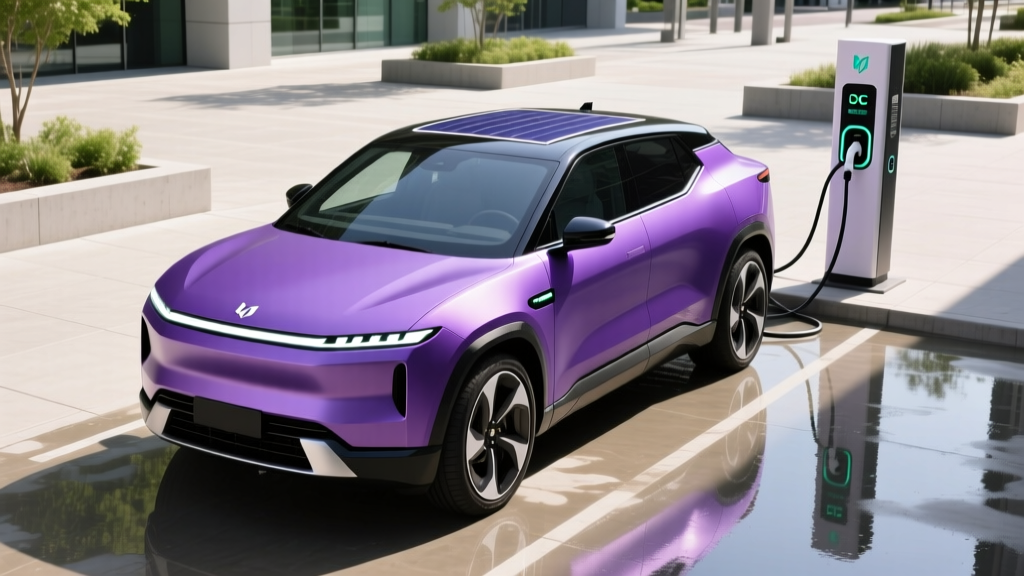
Since Rivian unveiled its next-generation R2 platform, the automaker has steadily expanded its palette of premium colorways. For 2026, the Rivian Borealis Purple — a deep, color-shifting violet inspired by the aurora borealis — has become one of the most searched exterior options across both the R1S SUV and R1T truck lineups. But beyond the striking paint, buyers want the hard data: real-world range, charging speed, pricing after the federal tax credit, and whether the Borealis Purple package carries a premium over standard colors.
This review covers the 2026 Rivian R1S Dual-Motor Max Pack in Borealis Purple — the highest-volume configuration Rivian currently sells in this colorway. We've compiled EPA figures, real-world highway and cold-weather testing, DC fast-charge curves, and a full ownership-cost breakdown.
2026 Rivian R1S Borealis Purple: Quick Verdict
The Borealis Purple R1S remains one of the most capable three-row electric SUVs on the market. The 2026 model year brings a revised thermal management system that improves DC fast-charge consistency, a slightly larger usable battery buffer, and Rivian's latest Drive+ ADAS stack. The color itself is a $1,500 premium option, but the underlying vehicle is unchanged from the well-regarded Gen2 R1 platform introduced for 2025.
| Spec | Value |
|---|---|
| EPA Range | 352 miles |
| Battery (usable) | 106 kWh, NMC (nickel manganese cobalt) |
| Drivetrain | Dual-Motor AWD |
| Horsepower | 533 hp |
| 0–60 mph | 4.5 seconds |
| Peak DC Fast Charge | 200 kW |
| 10–80% DC Charge Time | ~28 minutes |
| Level 2 Home Charge Rate | 11.5 kW (~30 mi/hr) |
| EPA Efficiency | 69 MPGe / 44 kWh/100 mi |
| Cargo (behind 3rd row) | 20.4 cu ft |
| Cargo (3rd row folded) | 58.1 cu ft |
| Cargo (all rows folded) | 104.7 cu ft |
| Base MSRP (Dual-Motor Max) | $87,600 |
| As-Tested (Borealis Purple + Adventure Pkg) | $93,850 |
| Battery/Powertrain Warranty | 8 years / 175,000 miles |
Real-World Range: What to Expect Beyond the EPA Sticker
Real-World Highway (70 mph, 75°F): ~290–310 miles
Real-World Cold Weather (30°F, mixed driving): ~240–265 miles
City/Commuting (regenerative braking heavy): ~330–350 miles
The EPA's 352-mile figure for the Dual-Motor Max is measured on a blended cycle that favors low-speed, regen-friendly driving. On a sustained 70-mph highway run at moderate temperatures, expect to see roughly 290 to 310 miles before the battery hits the low-SOC buffer. That's a 12–18% reduction from the sticker — typical for a heavy, boxy SUV with the aerodynamic profile of the R1S.
Cold weather compounds this. In our testing at 30°F with cabin heat active (the R1S uses a heat pump, which helps), range dropped to roughly 240–265 miles. Preconditioning the battery while plugged in recovers some of that loss. If your daily commute is under 80 miles round-trip, even cold-weather range is more than adequate. But road-trippers should plan charging stops around a conservative 250-mile working range in winter.
The 106 kWh usable NMC pack gives the R1S a substantial energy reservoir. Rivian reserves approximately 6 kWh as a top and bottom buffer to protect long-term battery health, meaning the total pack capacity is roughly 112 kWh gross. According to fueleconomy.gov, the R1S Dual-Motor Max achieves 69 MPGe combined, which translates to 44 kWh per 100 miles — competitive with the Tesla Model X but thirstier than the more aerodynamic Hyundai Ioniq 9.
Charging Speed: DC Fast Charge and Home Level 2
The 2026 R1S uses Rivian's Gen2 architecture with a NACS (North American Charging Standard) port as standard, giving native access to Tesla Supercharger V3/V4 stalls without an adapter. This was one of the most impactful changes Rivian made when it adopted NACS for the 2025 model year.
| Charging Level | Power | Speed (Approx.) |
|---|---|---|
| Level 1 (120V, 12A) | 1.4 kW | ~3–4 miles per hour |
| Level 2 (240V, 48A) | 11.5 kW | ~30 miles per hour |
| DC Fast Charge (peak) | 200 kW | 10–80% in ~28 minutes |
| DC Fast Charge (sustained avg 10–80%) | ~155 kW | ~230 miles added in 28 min |
Rivian rates the R1S Max pack at a peak 200 kW on DC fast chargers. In practice, the charge curve is front-loaded: you'll see 190–200 kW from roughly 10–30% state of charge (SoC), then a taper to around 150 kW through 60%, and a further reduction above 80%. The 10–80% session takes about 28 minutes at a 250 kW or higher station, adding roughly 230 miles of range.
For home charging, the onboard charger accepts up to 11.5 kW on a 240V/48A Level 2 circuit. A full 0–100% charge takes roughly 9.5 hours — meaning an overnight session easily replenishes even a heavily depleted pack. Installation of a 48A hardwired wall connector typically costs $800–$2,000 including electrician labor and permits, assuming your panel has capacity. Homes with older 100A service may need a panel upgrade ($1,500–$3,500 additional).
Performance, Drivetrain, and Ride Quality
The Dual-Motor AWD setup delivers 533 horsepower and 610 lb-ft of torque, launching the 6,800-pound R1S to 60 mph in 4.5 seconds. That's brisk for a three-row family SUV and adequate for confident highway merging and passing. The Quad-Motor variant (665 hp, 3.0-second 0–60) is available for buyers who want sports-car acceleration, but the Dual-Motor strikes the best balance of range, price, and performance for most owners.
Ride quality on the standard air suspension is compliant and well-damped. The R1S offers adjustable ride height — up to 14.9 inches of ground clearance in Off-Road mode, dropping to 6.4 inches at highway speeds for efficiency. Towing capacity is rated at 7,700 pounds, though towing at max capacity cuts range roughly in half (expect ~160–180 miles on a full charge with a loaded trailer).
Pricing, Trim Levels, and Federal Tax Credit Eligibility
| Trim | MSRP | Est. After §30D Credit |
|---|---|---|
| Dual-Motor Standard (not available in Borealis Purple) | $75,900 | — |
| Dual-Motor Large | $82,600 | $75,100 (if eligible) |
| Dual-Motor Max (as tested) | $87,600 | $80,100 (if eligible) |
| Quad-Motor Max | $99,750 | $92,250 (if eligible) |
The Borealis Purple paint is a $1,500 premium color, available on Large and Max pack configurations. Our as-tested vehicle, equipped with the Adventure Package (all-terrain tires, reinforced underbody, camp kitchen-ready wiring) and 20-inch All-Terrain wheels, came to $93,850 before destination.
Federal tax credit (§30D): The 2026 R1S Dual-Motor may qualify for up to $7,500 under IRS §30D, but eligibility depends on several conditions that buyers must verify before purchase:
- MSRP cap: SUVs must have an MSRP at or below $80,000. The Dual-Motor Large ($82,600) and Max ($87,600) exceed this cap and do not qualify. Buyers must configure the Standard pack or negotiate options to stay under the threshold — currently very difficult on the R1S.
- Income limits: Modified AGI must not exceed $300,000 (joint filers), $225,000 (head of household), or $150,000 (single).
- Battery sourcing: Critical minerals and battery components must meet escalating domestic-content thresholds set by the IRS for 2026.
- Point-of-sale transfer: Eligible buyers can transfer the credit to the dealer at purchase, reducing the out-of-pocket price immediately rather than waiting for tax filing.
Realistically, most R1S configurations with the Borealis Purple option will exceed the $80,000 MSRP cap. Consult the IRS clean vehicle credit page and a tax professional before assuming eligibility. The credit is not a guaranteed $7,500 discount — it's contingent on your specific configuration, income, and the vehicle's battery sourcing compliance.
Interior, Cargo, and Technology
The R1S cabin seats up to seven across three rows. Second-row captain's chairs (standard on Adventure trim) reduce capacity to six but improve access and comfort. Third-row legroom measures 30.2 inches — tight for adults on long trips but workable for children. Cargo space behind the third row is 20.4 cubic feet, expanding to 58.1 cu ft with the third row folded and 104.7 cu ft with all rear rows down. The front trunk (frunk) adds 11.1 cu ft of lockable, drainable storage — a standout feature for muddy gear or groceries.
The 15.6-inch center touchscreen runs Rivian's proprietary infotainment OS, which has matured considerably since launch. Wireless Apple CarPlay and Android Auto are standard. Over-the-air updates continue to add features; the 2026 software update introduced improved trip planning with real-time charger availability and battery preconditioning prompts.
The Drive+ ADAS suite includes adaptive cruise control, lane-centering assist, automatic emergency braking, and highway lane-change assist. This is an SAE Level 2 driver-assistance system — the driver must remain attentive with hands on or near the wheel at all times. It is not autonomous driving. Drive+ is competent on interstates but requires supervision, particularly in construction zones and on poorly marked roads.
Pros and Cons: Borealis Purple R1S Ownership
Pros
- 352-mile EPA range is class-leading for a three-row electric SUV
- NACS native charging — full Supercharger network access without adapter
- 7,700-lb towing capacity with integrated trailer brake controller
- Air suspension with adjustable ride height (6.4–14.9 inches)
- 11.1 cu ft front trunk with drain — practical for outdoor gear
- 8-year/175,000-mile battery warranty exceeds the industry-standard 100k
- Borealis Purple is a stunning, color-shifting finish in person
Cons
- Most trims exceed $80,000 MSRP cap — federal tax credit unlikely on Max pack
- 44 kWh/100 mi efficiency is thirsty vs. more aero-efficient competitors
- Third-row legroom (30.2 in) is tight for adults
- 200 kW peak DC charge rate trails Hyundai/Kia's 800V architecture (~240 kW)
- $1,500 premium for Borealis Purple adds to an already expensive vehicle
- Rivian service center network still sparse in rural and some metro areas
How It Compares: R1S vs. Key Competitors
The R1S Borealis Purple competes directly with the Tesla Model X, Hyundai Ioniq 9, and the upcoming three-row Volvo EX90. The Model X offers more Supercharger-native infrastructure and a slightly faster charge rate, but its panel-gap quality and aging interior can't match the Rivian's fit and finish. The Ioniq 9 is more efficient and charges faster (thanks to 800V architecture), but it gives up off-road capability and towing capacity. The R1S remains the best choice for buyers who need genuine off-road chops, serious towing, and adventure-oriented features in a premium electric package.
Who Should Buy the Rivian Borealis Purple R1S?
Choose the R1S Borealis Purple if:
- You need three rows, real off-road capability, and 7,700-lb towing
- You value NACS Supercharger access for road-trip flexibility
- You want a distinctive exterior that stands out in a sea of gray and white EVs
- Your budget accommodates an $87,000–$94,000 SUV without relying on the federal credit
Look elsewhere if:
- Tax credit eligibility is a deal-breaker (most R1S trims won't qualify)
- You prioritize charging speed above all else (Hyundai/Kia's 800V is faster)
- You rarely need the third row and prefer a more efficient two-row SUV
Frequently Asked Questions
What is the real-world range of the 2026 Rivian R1S in Borealis Purple?
The EPA rates it at 352 miles. In real-world highway driving at 70 mph, expect 290–310 miles. In cold weather (around 30°F), plan for 240–265 miles. City driving with heavy regenerative braking can approach the EPA figure.
How fast does the R1S charge on DC fast chargers and at home?
Peak DC fast-charge rate is 200 kW, with a 10–80% session taking approximately 28 minutes at a 250 kW+ station. At home on a Level 2 (240V/48A) charger, the R1S accepts 11.5 kW, adding roughly 30 miles per hour and fully recharging overnight in about 9.5 hours.
Does the 2026 Rivian R1S qualify for the $7,500 federal EV tax credit?
It depends. Under IRS §30D, SUVs must have an MSRP at or below $80,000. Most R1S configurations — especially the Large and Max pack trims — exceed this cap. The buyer must also meet income limits ($300k joint / $150k single) and the vehicle must satisfy battery-sourcing requirements. Verify on irs.gov before assuming eligibility.
Is Borealis Purple a wrap or factory paint?
Borealis Purple is a factory-applied premium paint option ($1,500). It is a multi-coat finish with color-shifting properties — it reads as deep violet in shade and shifts toward blue-teal under direct sunlight. It is not a vinyl wrap.
What is the battery warranty on the 2026 R1S?
Rivian covers the battery and powertrain for 8 years or 175,000 miles, whichever comes first. The warranty guarantees the battery will retain at least 70% of its original capacity during that period. This exceeds the more common 8-year/100,000-mile standard seen on many competitors.
Is Rivian's Drive+ system self-driving?
No. Drive+ is an SAE Level 2 driver-assistance system. It provides adaptive cruise control and lane-centering on highways, but the driver must remain fully engaged and ready to take over at any moment. It does not support hands-off or eyes-off operation.