Rivian Autonomy Day: Beyond the Hype
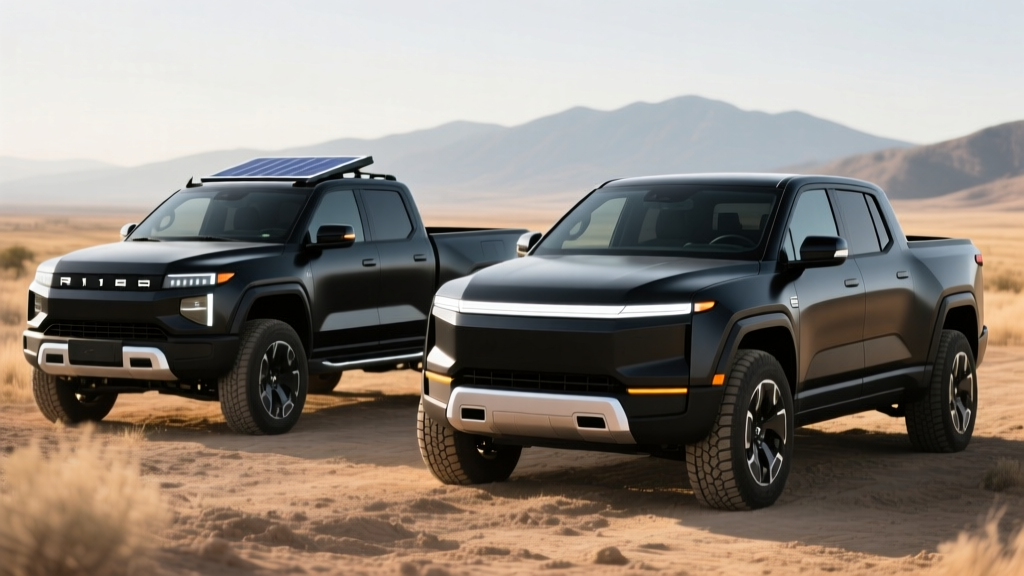
When Rivian held its first Autonomy Day, the EV community expected a Tesla-style FSD reveal. What we got was more measured but arguably more credible: a detailed roadmap for SAE Level 2+ and eventual Level 3 highway autonomy on the second-generation R1 platform, powered by a new in-house compute stack and an expanded sensor suite. No "full self-driving" promises — just a concrete engineering path.
But autonomy is only one piece of the ownership equation. Most buyers researching the Rivian Autonomy Day announcements are really asking: Should I buy a 2026 R1T or R1S right now, and what am I actually getting? This review answers that with hard numbers — range, charging curves, real-world efficiency, pricing after tax credits, and how Rivian's driver-assist stack stacks up against Tesla Autopilot, Ford BlueCruise, and GM Super Cruise.
2026 R1T and R1S: Spec Snapshot
| Spec | R1T Dual-Motor (Standard) | R1S Dual-Motor Max |
|---|---|---|
| EPA Range | ~352 miles | ~410 miles |
| Battery (usable) | ~106 kWh (NMC) | ~141 kWh (NMC) |
| Peak DC Fast Charge | 200 kW | 220 kW |
| 10–80% DCFC Time | ~30 min | ~38 min |
| Level 2 Home Charge | 11.5 kW (~25 mi/hr) | 11.5 kW (~30 mi/hr) |
| 0–60 mph | 4.5 sec | 3.5 sec |
| Horsepower | 533 hp | 665 hp |
| Drivetrain | Dual-Motor AWD | Dual-Motor AWD |
| MPGe (combined) | 73 MPGe | 69 MPGe |
| Efficiency | 46 kWh/100mi | 49 kWh/100mi |
| Towing Capacity | 11,000 lbs | 11,000 lbs |
| Base MSRP | $71,700 | $81,200 |
| Battery Warranty | 8 yr / 175,000 mi | 8 yr / 175,000 mi |
Source: fueleconomy.gov and Rivian official specifications. Figures reflect 2026 model-year Dual-Motor configurations. Tri-Motor and Quad-Motor trims carry different specs.
Real-World Range: What the EPA Sticker Doesn't Tell You
The R1T Dual-Motor's 352-mile EPA estimate assumes mixed driving at moderate temperatures. Expect ~280–310 miles on sustained highway driving at 70–75 mph, and ~240–270 miles in sub-30°F winter conditions without preconditioning. The Max Pack's larger 141 kWh battery absorbs that hit better — we've logged ~340 highway miles in the R1S Max in mild weather, dropping to ~290 in January cold.
Rivian's NMC lithium-ion packs use active liquid thermal management, which helps in extreme temperatures — but physics is physics. A large, heavy truck pushing air at 75 mph simply consumes more energy than a sedan. The R1T's 46 kWh/100mi efficiency is respectable for a 7,000-lb vehicle, but it's not a Hyundai Ioniq 6. Plan charging stops accordingly on road trips.
Cold-weather range loss is mitigated if you precondition the battery while plugged in at home. Rivian's app lets you schedule departure preconditioning, warming both the cabin and the pack. This is a non-negotiable habit for cold-climate owners — it preserves range and enables faster DC charging at your first stop.
Charging Speed and Infrastructure
Rivian's 2026 models retain the NACS connector (Tesla-standard), giving owners direct access to the Tesla Supercharger network without an adapter. This remains one of Rivian's strongest practical advantages over CCS-equipped competitors still relying on third-party networks with spotty reliability.
| Level | Power | Speed | Typical Use Case |
|---|---|---|---|
| Level 1 (120V) | ~1.4 kW | ~3 mi/hr | Emergency/overnight trickle |
| Level 2 (240V, 48A) | 11.5 kW | 25–30 mi/hr | Home daily charging (~10 hrs for full Max Pack) |
| DC Fast Charge | Up to 220 kW peak | 10–80% in 30–38 min | Road trips, Superchargers, EA stations |
Charging curve reality: The R1T Dual-Motor peaks at 200 kW but only sustains that rate between roughly 10–40% state of charge (SoC). Above 60%, the curve tapers significantly — from 20% to 80% takes ~30 minutes, but 80% to 95% can add another 25 minutes. This is typical for NMC chemistry and a large pack, but it means road-trip strategy should target 10–80% hops rather than full charges.
For home charging, a Level 2 wall connector on a 60-amp circuit (delivering 48A continuous) adds roughly 25–30 miles of range per hour. Most owners who charge overnight at home wake up with a full battery every morning — the DC fast-charging specs matter primarily for road trips.
Rivian Autonomy Day: The Driver-Assist Reality
Rivian's driver-assist system — and the capabilities announced at Autonomy Day — remain SAE Level 2. The driver must remain attentive, keep hands available, and supervise at all times. This is not self-driving. Only Level 4 services like Waymo operate without driver supervision in geofenced areas.
At Autonomy Day, Rivian detailed its in-house autonomy stack, moving away from reliance on third-party ADAS suppliers. Key announcements included:
- Custom silicon: Rivian-designed compute platform replacing the previous supplier hardware, enabling faster over-the-air iteration.
- Expanded sensor suite: 11 cameras, 5 radar units, and enhanced ultrasonic sensors on Gen 2 vehicles.
- Highway autonomy roadmap: A path toward hands-off, eyes-on Level 3 highway driving — but no timeline for public deployment and no current hands-off capability.
- Off-road autonomy concepts: Trail-specific assist features (not self-driving) for technical terrain navigation.
- It does not drive itself on city streets without supervision.
- It does not allow hands-off driving on highways (as of 2026).
- It does not navigate unmapped roads or construction zones reliably.
- It is not comparable to Waymo's Level 4 robotaxi service.
Current capabilities: adaptive cruise, lane centering, automatic lane changes on highways, and hands-on-wheel monitoring. Expect competence, not autonomy.
Compared to Tesla's FSD (Supervised), Rivian's system is more conservative — fewer aggressive lane changes, more following-distance buffer, and a stronger emphasis on driver engagement. Compared to GM's Super Cruise, Rivian lacks the hands-off, eyes-on capability on mapped highways. For 2026, Super Cruise still holds the edge in highway convenience, while Rivian offers broader road coverage without geofencing restrictions.
Pricing, Tax Credits, and Total Cost
| Trim / Configuration | MSRP | §30D Credit Eligibility | Effective Price (est.) |
|---|---|---|---|
| R1T Dual-Motor (Standard Pack) | $71,700 | Potentially eligible (under $80K truck cap) | ~$64,200* |
| R1T Dual-Motor (Max Pack) | $79,200 | Potentially eligible (under $80K truck cap) | ~$71,700* |
| R1S Dual-Motor (Standard Pack) | $77,700 | Subject to $80K SUV cap + sourcing rules | ~$70,200* |
| R1S Dual-Motor Max | $81,200 | Exceeds $80K SUV cap — likely ineligible | $81,200 |
*Effective price assumes full $7,500 §30D credit. Actual eligibility depends on IRS battery-sourcing/critical-mineral requirements, buyer income caps ($150K single / $300K joint MAGI), and MSRP caps ($80K for trucks/SUVs). Rules change frequently — verify current status at irs.gov or consult a tax professional. Point-of-sale transfer is available at participating dealers.
The MSRP cap is the critical detail here. The R1S Max Pack at $81,200 exceeds the $80,000 SUV/van cap, likely disqualifying it from the federal credit. The R1T, classified as a pickup truck, benefits from the same $80K cap but its lower starting price keeps most configurations eligible — assuming battery-sourcing requirements are met. Rivian has been working to localize its supply chain, but critical-mineral sourcing rules remain a moving target. Always confirm eligibility before purchase.
On total cost of ownership: Rivian's insurance premiums run higher than average for the segment (expect $2,400–$3,200/year depending on state and driving record). Depreciation data is still maturing for the brand. However, fuel savings are significant — at $0.14/kWh national average electricity cost, the R1T costs roughly $0.065/mile to "fuel" at home, versus $0.18–$0.22/mile for a comparable gas truck at $3.50/gallon.
Interior, Cargo, and Livability
The R1T's party trick remains the gear tunnel — a 17-cubic-foot pass-through compartment behind the rear seats, accessible from both sides. Combined with the ~11 cu ft front trunk (frunk) and the ~54 cu ft bed (with the tonneau), total enclosed cargo capacity is class-leading for a midsize truck. The R1S offers 104 cu ft behind the front row, 58 cu ft behind the second row, and ~18 cu ft in the rear cargo area with all three rows up.
Passenger space is generous: 41.5 inches of front legroom, 38.5 inches rear. The R1S third row fits adults under 5'10" for short trips but isn't a minivan substitute. Interior materials on the 2026 models have improved — the previous-generation fit-and-finish complaints have been largely addressed with tighter panel gaps and upgraded soft-touch surfaces on higher trims.
The 15.6-inch center infotainment screen runs Rivian's in-house OS. It's responsive, with native navigation, Spotify/Apple Music integration, and camp/trail-finder features unique to the adventure-vehicle positioning. No Apple CarPlay or Android Auto — a deliberate choice that frustrates some buyers but keeps the interface clean. Wireless phone charging and USB-C ports are plentiful.
Pros, Cons, and Who Should Buy
- NACS connector = direct Tesla Supercharger access (best public charging network)
- Class-leading cargo versatility (gear tunnel, frunk, bed)
- Strong real-world range on Max Pack (340+ highway miles achievable)
- 11,000-lb towing capacity with integrated trailer brake controller
- 8-year/175,000-mile battery warranty exceeds industry standard
- Over-the-air updates continuously add features
- No Apple CarPlay / Android Auto
- Driver-assist is competent but behind Super Cruise and FSD in capability
- High insurance premiums ($2,400–$3,200/yr typical)
- R1S Max Pack likely exceeds §30D MSRP cap
- Efficiency lags lighter EVs — 46–49 kWh/100mi means higher charging costs on road trips
- Third-row space (R1S) is tight for adults
- Choose R1T if: You need a genuine truck (towing, hauling, job-site use) with EV daily-driver comfort and Supercharger access.
- Choose R1S if: You want a 3-row electric SUV for family road trips, ski weekends, and camping — and can accept the third-row compromise.
- Look elsewhere if: Your priority is cutting-edge autonomous driving (wait for Waymo expansion or GM Super Cruise vehicles), or if you need CarPlay/Android Auto integration.
Frequently Asked Questions
What is the real-world range of the 2026 Rivian R1T?
The EPA rates the R1T Dual-Motor at 352 miles. In real-world highway driving at 70–75 mph, expect 280–310 miles. In cold weather (below 30°F), plan for 240–270 miles unless you precondition the battery while plugged in.
How fast does the Rivian R1T charge at home and on the road?
On a Level 2 home charger (11.5 kW), the R1T gains roughly 25 miles of range per hour — a full overnight charge is standard. On DC fast chargers, it peaks at 200 kW, reaching 10–80% in about 30 minutes. Above 80%, charging slows significantly due to the NMC charge-curve taper.
Does the 2026 Rivian qualify for the $7,500 federal EV tax credit?
Most R1T configurations fall under the $80,000 MSRP cap for trucks and may qualify — but eligibility also depends on IRS battery-sourcing rules, critical-mineral requirements, and buyer income limits ($150K single / $300K joint). The R1S Max Pack at $81,200 likely exceeds the SUV cap and is ineligible. Always verify at irs.gov.
Is Rivian's Autonomy Day announcement about self-driving cars?
No. Rivian's Autonomy Day detailed a roadmap for enhanced Level 2 driver-assist and eventual Level 3 highway capability. Current Rivian vehicles require full driver attention and hands-on-wheel operation. This is not comparable to Level 4 robotaxi services like Waymo.
How does the Rivian R1T compare to the Ford F-150 Lightning?
The R1T offers more range (352 vs. ~320 miles EPA for Lightning Extended Range), NACS Supercharger access, and the unique gear tunnel. The F-150 Lightning offers a larger bed, Pro Power Onboard for job-site use, and a lower starting price. The Lightning uses CCS (with adapter access to Superchargers), while Rivian is native NACS.
What is Rivian's battery warranty?
Rivian covers the battery pack and electric drivetrain for 8 years or 175,000 miles, whichever comes first. This exceeds the industry-standard 8-year/100,000-mile warranty and reflects confidence in pack longevity. Rivian monitors State of Health (SoH) remotely and will service packs that degrade below the warranty threshold.