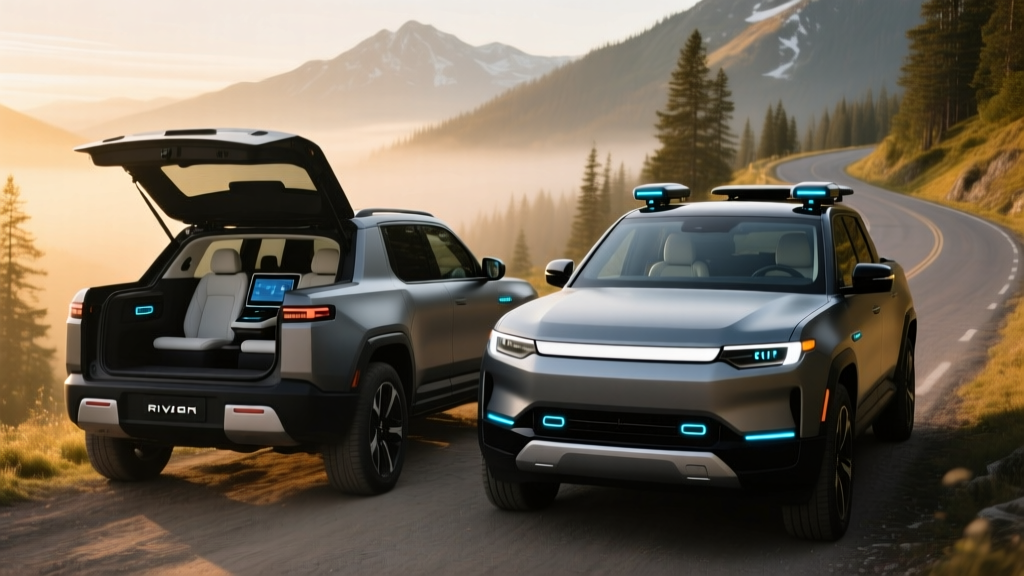
Rivian's highly anticipated AI and Autonomy Day put the company's software ambitions on full display, but for buyers shopping the 2026 R1S SUV and R1T pickup today, the real question is how the current hardware and EPA-rated range hold up against competitors. Below, we pair the autonomy announcements with hard numbers on battery capacity, charging speed, efficiency, pricing, and federal tax credit eligibility so you can decide whether a Rivian belongs in your driveway now — or whether it's worth waiting for the software to catch up.
2026 Rivian R1S & R1T: The Specs That Matter Today
Both the R1S (three-row SUV) and R1T (crew-cab pickup) share Rivian's updated Gen 2 architecture for 2026, which introduced a more efficient drive unit lineup and revised battery pack options. Here's the side-by-side breakdown for the most popular configurations.
| Spec | R1S Dual-Motor AWD (Standard) | R1S Tri-Motor AWD | R1T Dual-Motor AWD (Standard) | R1T Tri-Motor AWD |
|---|---|---|---|---|
| EPA Range | 270 mi | 320 mi (Large pack) | 270 mi | 320 mi (Large pack) |
| Battery (usable) | ~92 kWh (LFP) | ~128 kWh (NMC) | ~92 kWh (LFP) | ~128 kWh (NMC) |
| Horsepower | 533 hp | 850 hp | 533 hp | 850 hp |
| 0-60 mph | 4.5 sec | 2.9 sec | 4.5 sec | 2.9 sec |
| Max DC Fast Charge | 200 kW | 220 kW | 200 kW | 220 kW |
| 10-80% DC Time | ~30 min | ~28 min | ~30 min | ~28 min |
| Level 2 Home Rate | 11.5 kW (~30 mi/hr) | 11.5 kW (~30 mi/hr) | 11.5 kW (~30 mi/hr) | 11.5 kW (~30 mi/hr) |
| MPGe (combined) | 73 MPGe | 70 MPGe | 73 MPGe | 70 MPGe |
| Efficiency | 46 kWh/100 mi | 48 kWh/100 mi | 46 kWh/100 mi | 48 kWh/100 mi |
| Towing Capacity | 7,700 lb | 7,700 lb | 11,000 lb | 11,000 lb |
| Base MSRP | $75,900 | $99,900 | $69,900 | $93,900 |
Sources: fueleconomy.gov, Rivian official spec sheets.
Real-World Range: What the EPA Sticker Doesn't Tell You
R1S / R1T Dual-Motor (Standard Pack, LFP): EPA 270 miles. Expect ~230–250 miles on a highway road trip at 70–75 mph. In sub-freezing winter conditions, plan for 190–215 miles before needing a charger.
R1S / R1T Tri-Motor (Large Pack, NMC): EPA 320 miles. Real-world highway driving yields ~275–295 miles. Cold weather (below 32°F) drops usable range to roughly 230–260 miles.
Towing note: When pulling a 5,000+ lb trailer with the R1T, range effectively halves. Budget 130–160 miles between charges on flat terrain at 60 mph.
Rivian's LFP (lithium iron phosphate) Standard packs sacrifice some energy density for longevity and lower cost. LFP cells tolerate regular 100% charging without the degradation concerns of NMC chemistry — a genuine advantage for daily commuters who can charge at home every night. The trade-off is roughly 50 fewer miles of EPA range versus the Large NMC pack, plus slightly slower DC fast-charging speeds.
The NMC (nickel manganese cobalt) Large packs deliver the range and performance enthusiasts want, but Rivian recommends capping daily charges at 80–90% to preserve long-term health. That means your daily usable range on a Large pack is closer to 256–288 miles — still excellent, but not the full 320-mile sticker figure.
Charging Speed: DC Fast, Level 2, and the Curve Reality
| Charging Level | Power | Miles Added per Hour | Notes |
|---|---|---|---|
| Level 1 (120V household) | ~1.4 kW | ~3 mi/hr | Emergency/trickle only |
| Level 2 (240V home, 48A) | 11.5 kW | ~30 mi/hr | Full charge overnight (~9–11 hrs) |
| DC Fast (Standard LFP pack) | Peak 200 kW | ~140 mi in 20 min | Curve tapers sharply above 80% |
| DC Fast (Large NMC pack) | Peak 220 kW | ~150 mi in 20 min | 10-80% in ~28 min; 80-100% adds 20+ min |
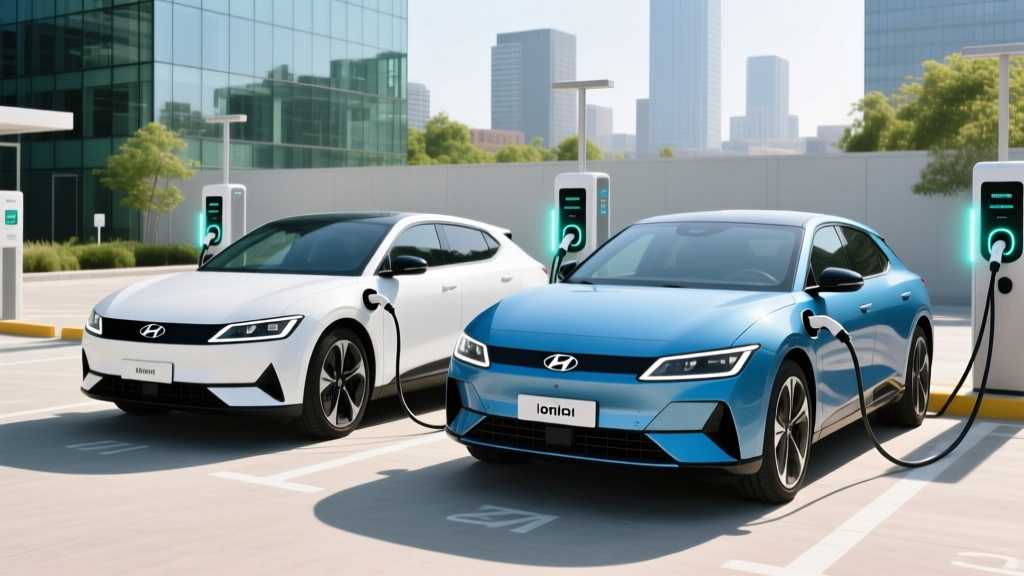
Rivian's DC fast-charging performance is competitive but not class-leading. The Hyundai Ioniq 5 and Kia EV6, built on 800V architectures, can peak above 240 kW and complete a 10-80% session in roughly 18 minutes. Rivian's 400V-class system is solid, and the charge curve is reasonably flat through 60% SoC before tapering — but if you road-trip frequently and want the shortest possible charging stops, the gap is noticeable.
One practical advantage: Rivian's built-in navigation includes battery preconditioning. When you route to a DC fast charger, the vehicle warms the battery pack to optimal temperature before arrival, which can shave 5–8 minutes off a cold-weather charging session. Always precondition — skipping it in winter can cut your peak charge rate by 40% or more.
At home, the 11.5 kW Level 2 rate (via a hardwired Wall Connector on a 60A circuit) replenishes the Standard pack in about 8 hours and the Large pack in roughly 11 hours. Most owners wake up to a full battery every morning, which eliminates range anxiety for daily driving entirely.
What Rivian AI and Autonomy Day Means for Buyers
Rivian's AI and Autonomy Day showcased the company's roadmap for advanced driver-assistance and, eventually, higher-level autonomous capabilities. Here's what's relevant if you're buying today versus what's on the horizon.
Rivian's current Driver+ system is an SAE Level 2 driver-assistance feature. It combines adaptive cruise control and lane-centering on divided highways. The driver must remain fully engaged — hands on or near the wheel, eyes on the road at all times. This is not self-driving. Level 4 autonomy (true driverless operation, like Waymo robotaxis) remains years away for consumer vehicles.
The AI and Autonomy Day presentations emphasized Rivian's in-house developed perception stack, leveraging the vehicle's suite of cameras, radar, and ultrasonic sensors. Key takeaways included improved lane-change decision-making, better construction-zone handling, and a planned hands-free highway driving feature for mapped divided roads — similar in concept to Ford's BlueCruise or GM's Super Cruise.
For current buyers, the practical reality is:
- Driver+ (included on all trims): Adaptive cruise, lane-centering, automatic emergency braking, blind-spot intervention. Works well on interstate highways but requires active supervision.
- Planned hands-free feature (OTA update, timeline TBD): Eyes-off/highway-capable on approved roads, with driver-monitoring camera. Availability and pricing not yet confirmed for 2026 models.
- Full autonomy: Not available, not imminent. Any purchase decision should be based on the vehicle as it drives today, not on software promises.
- It does not navigate city streets autonomously or handle traffic lights without driver input.
- It does not perform hands-free driving on non-divided or unmapped roads.
- It cannot replace an attentive driver in construction zones, heavy weather, or complex merging situations.
- Hands-off highway functionality, when released, will still require eyes-on monitoring and will be geofenced to approved highways.
Pricing, Trims, and Federal Tax Credit Eligibility
| Model / Trim | Base MSRP | As-Tested (typical) | §30D Credit Eligibility | Effective Price (est.) |
|---|---|---|---|---|
| R1T Dual-Motor (Standard) | $69,900 | $74,500 | Likely eligible (up to $7,500) | ~$67,000 |
| R1T Tri-Motor (Large) | $93,900 | $101,000 | MSRP cap: $80,000 for trucks — NOT eligible | $101,000 |
| R1S Dual-Motor (Standard) | $75,900 | $81,000 | Likely eligible (up to $7,500) | ~$73,500 |
| R1S Tri-Motor (Large) | $99,900 | $108,000 | MSRP cap: $80,000 for SUVs — NOT eligible | $108,000 |
The IRS §30D federal EV tax credit offers up to $7,500, but eligibility hinges on several requirements that change periodically. For 2026, the key rules include:
- MSRP cap: Vans, SUVs, and pickups must have an MSRP at or below $80,000. Sedans: $55,000.
- Buyer income cap: Modified AGI must not exceed $300,000 (joint), $225,000 (head of household), or $150,000 (single).
- Battery sourcing: A percentage of critical minerals and battery components must be sourced from the U.S. or free-trade-agreement partners. Rivian has worked to shift supply chains, but final eligibility is determined at point of sale.
- Point-of-sale transfer: Buyers can apply the credit as an immediate price reduction at the dealer, rather than waiting to claim it on their tax return.
The critical takeaway: the Dual-Motor Standard configurations of both the R1T and R1S are the most likely to qualify, since their MSRPs fall under the $80,000 cap. The Tri-Motor Large-pack variants blow past the cap and do not qualify. Always verify current eligibility at irs.gov or with a tax professional before purchasing — rules and sourcing requirements shift, and dealer point-of-sale systems provide the definitive answer at the time of purchase.
Cargo, Passenger Space, and Daily Practicality
The R1S is one of the few three-row electric SUVs on the market, and its packaging is genuinely clever. With all three rows up, cargo space is modest at about 10.4 cu ft behind the third row. Fold the third row and you get 46.7 cu ft; fold both rear rows for a flat 91.6 cu ft. Front-trunk (frunk) space adds 11.1 cu ft — enough for a couple of carry-on bags or charging cables.
The R1T's bed is 4.5 feet long (just under 5 feet with the gate down and tailgate extended), with a unique Gear Tunnel option that provides 11.7 cu ft of lockable, pass-through storage between the cab and bed. Combined bed + tunnel + frunk (11.1 cu ft), the R1T offers remarkable versatility for a midsize truck.
Passenger space is generous in both rows of the R1T and the first two rows of the R1S. The R1S third row is best suited for children or occasional use — legroom is tight at roughly 30 inches, and headroom suffers from the sloping roofline. For families who need regular three-row seating, the Kia EV9 offers more usable third-row space.
Warranty, Ownership Costs, and Long-Term Battery Outlook
Rivian covers the R1S and R1T with:
- Vehicle limited warranty: 5 years / 60,000 miles
- Battery and drive unit warranty: 8 years / 175,000 miles (retains at least 70% of original capacity)
The 175,000-mile battery warranty is among the most generous in the industry, and the 70% retention threshold is standard. Rivian's LFP packs, used in the Standard configuration, are expected to exhibit slower long-term degradation than the NMC Large packs — LFP chemistry typically sustains 80%+ capacity beyond 2,000 full charge cycles. For an owner driving 12,000 miles per year, that translates to well over a decade of service before meaningful range loss.
Insurance costs for Rivians tend to run 15–25% higher than comparable gas-powered trucks and SUVs, reflecting the vehicle's repair complexity and performance. Get quotes before purchasing. Maintenance, on the other hand, is minimal — no oil changes, no transmission fluid, and regenerative braking significantly extends brake pad life.
Who Should Buy a Rivian — And Who Should Look Elsewhere
- You need a pickup truck with genuine off-road capability (up to 14.9 inches of ground clearance in Max mode) and 11,000-lb towing.
- You want a daily-driver EV that can handle weekend camping, trailering, and adventure use.
- You can charge at home and don't frequently road-trip beyond 250 miles between stops.
- You want a three-row electric SUV with real off-road chops and distinctive design.
- Third-row use is occasional (kids, carpools) rather than daily adult seating.
- You value the Gear Tunnel and frunk storage flexibility.
- Fastest possible DC charging is a priority (consider Hyundai Ioniq 5 or Porsche Macan EV).
- You need a usable adult-friendly third row (Kia EV9 is better here).
- Budget is under $60,000 (Rivians start near $70K before options).
- You're buying primarily for autonomous driving — no consumer vehicle offers that today.
- Best-in-class off-road capability among electric trucks/SUVs
- LFP Standard pack offers daily 100% charging without degradation worry
- Generous 8-yr/175,000-mi battery warranty
- Unique Gear Tunnel storage (R1T) and large frunk
- OTA software updates continuously add features
- Dual-Motor trims can qualify for up to $7,500 federal credit
- DC fast charging (200–220 kW peak) trails 800V competitors
- Tri-Motor trims exceed §30D MSRP cap — no federal credit
- R1S third row is cramped for adults
- Insurance premiums run higher than average
- Hands-free driving features not yet available; Autonomy Day promises remain future OTA
- Service center network still expanding in some regions
Frequently Asked Questions
What is the real-world range of the 2026 Rivian R1T and R1S?
The EPA rates the Dual-Motor Standard (LFP) at 270 miles and the Tri-Motor Large (NMC) at 320 miles. In real-world highway driving at 70–75 mph, expect 230–250 miles from the Standard and 275–295 from the Large pack. Cold weather (below freezing) reduces those figures by 15–25%. Towing cuts range roughly in half.
How fast does a Rivian charge at home and on the road?
At home on a 240V Level 2 charger (48A, 11.5 kW), Rivians add about 30 miles of range per hour, fully recharging overnight. On DC fast chargers, the Standard LFP pack peaks at 200 kW (10-80% in ~30 minutes) and the Large NMC pack peaks at 220 kW (10-80% in ~28 minutes). Charging slows significantly above 80% SoC — plan your road-trip stops to 80% for efficiency.
How much does a Rivian cost after the federal tax credit?
The Dual-Motor Standard R1T starts at $69,900 and the R1S at $75,900. If you meet IRS §30D income, MSRP, and battery-sourcing requirements, you may qualify for up to $7,500 — bringing the R1T to roughly $62,400 and the R1S to roughly $68,400 effective. Tri-Motor Large-pack trims exceed the $80,000 MSRP cap and do not qualify. Verify at irs.gov and with your tax professional.
Does the Rivian R1T or R1S qualify for the federal EV tax credit?
The Dual-Motor Standard configurations (MSRP under $80,000) are likely eligible, subject to buyer income caps ($300K joint / $150K single) and battery critical-mineral sourcing requirements. The Tri-Motor Large-pack models are NOT eligible due to exceeding the MSRP cap. Eligibility rules can change — always confirm at point of sale.
Is Rivian's driver-assist system self-driving?
No. Rivian's Driver+ is an SAE Level 2 system — it provides adaptive cruise control and lane-centering on highways but requires the driver to remain fully attentive at all times. The AI and Autonomy Day announcements outlined a future hands-free highway feature, but it is not yet available and will still require driver monitoring when released. True self-driving (Level 4) is not offered by any consumer vehicle.
Is the Rivian worth buying vs. the Ford F-150 Lightning, Tesla Cybertruck, or Kia EV9?
The R1T excels in off-road capability, build quality, and adventure versatility vs. the F-150 Lightning (which offers more range and a lower starting price for work-truck trims). The Cybertruck offers comparable performance but polarizing design and limited service infrastructure. The R1S competes with the Kia EV9 on three-row electric SUV duty — the EV9 wins on third-row space and price, while the R1S wins on off-road ability, frunk/Gear Tunnel storage, and premium materials. Your priorities determine the winner.
What's the long-term battery replacement cost for a Rivian?
Rivian has not published official out-of-warranty replacement pricing, but industry estimates for a pack of this size (92–128 kWh) range from $12,000 to $20,000+ depending on chemistry and labor. Given the 8-year/175,000-mile warranty and LFP's slow degradation curve, most owners are unlikely to face this cost during typical ownership.