Quick Answer: Should You Buy a Rimac Concept One?
The Rimac Concept One is a limited-production, hand-built electric hypercar — not a daily-driver EV. Only eight units were ever produced, and all are spoken for. If you're researching the Rimac Concept One electric car as a potential purchase, know this: it's a collector-grade machine with a ~$980,000 original price, 205 miles of EPA-equivalent range, 1,224 horsepower, and maintenance realities closer to a Pagani than a Tesla. For practical EV buyers, this article breaks down what hypercar-level EV ownership actually costs compared to mainstream electric and gas alternatives — and what you can learn from its engineering for your next EV purchase.
What Is the Rimac Concept One Electric Car?
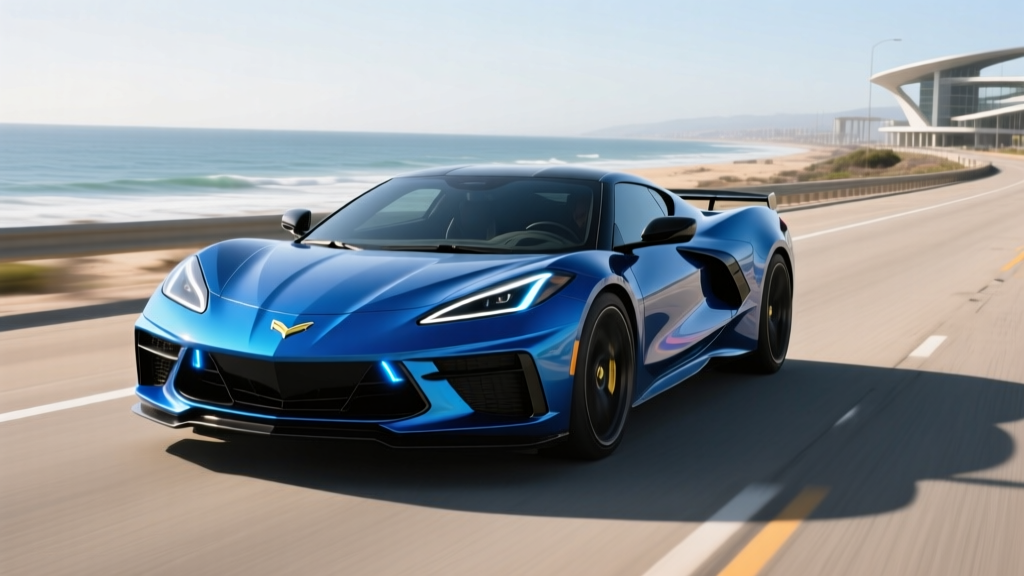
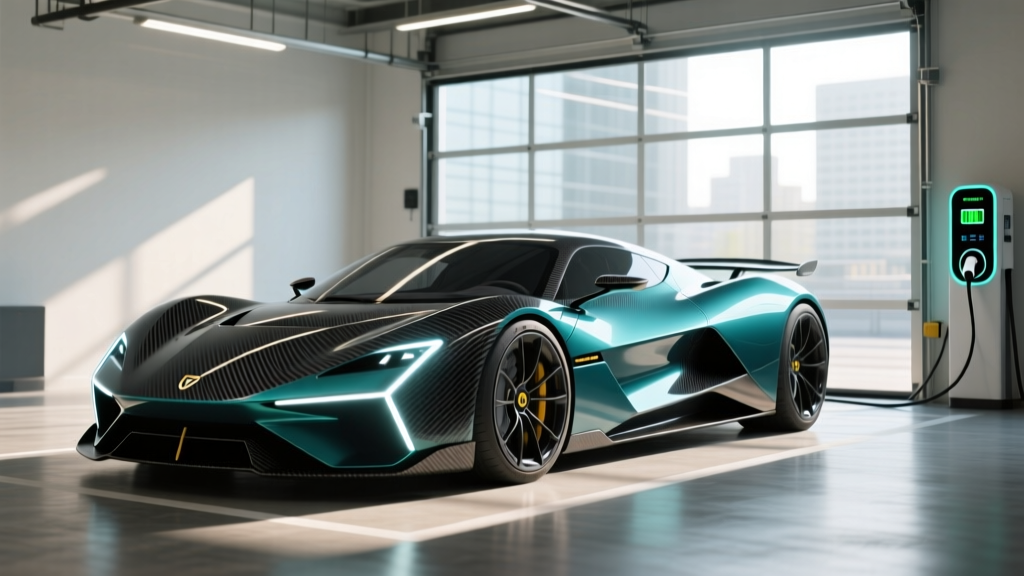
The Rimac Concept One is a Croatian-built, all-electric hypercar that debuted at the 2011 Frankfurt Motor Show and entered limited production in 2013. Rimac Automobili manufactured just eight units before shifting focus to the Rimac Nevera, its spiritual successor introduced in 2021 with 1,914 HP and a 340-mile WLTP range.
The Concept One was groundbreaking for its era: four independent liquid-cooled permanent-magnet synchronous motors (one per wheel), torque vectoring, and a 92 kWh NMC lithium-ion battery pack delivering 1,224 horsepower and 1,180 lb-ft of torque. It ran a 0-60 mph sprint in 2.5 seconds and carried a top speed of 211 mph.
| Specification | Rimac Concept One |
|---|---|
| Powertrain | Quad-motor AWD (4× PMSM) |
| Horsepower | 1,224 HP |
| Torque | 1,180 lb-ft |
| Battery | 92 kWh, NMC chemistry |
| Range (claimed) | ~205 miles (NEDC-adjusted; no official EPA test) |
| 0-60 mph | 2.5 seconds |
| Top Speed | 211 mph |
| DC Fast Charge (max) | ~50 kW (CCS) |
| Level 2 Charge | ~22 kW (Type 2) |
| Units Produced | 8 |
| Original MSRP | ~$980,000 (€845,000 at launch) |
Real-world range caveat: The 205-mile figure is based on the older NEDC cycle, which is notably generous. Expect approximately 150–170 miles in mixed real-world driving, and potentially as low as 110–130 miles during aggressive track use or cold-weather highway driving. This is a performance-tuned pack, not optimized for efficiency.
Rimac Concept One vs. Gas Hypercars: By the Numbers
The natural comparison for the Concept One isn't a Tesla Model 3 — it's a Bugatti Veyron or Porsche 918 Spyder. Here's how the economics and performance stack up against a gas hypercar benchmark.
| Metric | Rimac Concept One (EV) | Bugatti Veyron 16.4 (Gas) |
|---|---|---|
| Horsepower | 1,224 HP | 1,001 HP |
| 0-60 mph | 2.5 sec | 2.5 sec |
| Top Speed | 211 mph | 253 mph |
| Fuel/Energy Cost (per mile) | ~$0.06 (at $0.15/kWh) | ~$1.05 (at $4.50/gal, 8 MPG) |
| Annual Fuel/Energy (5,000 mi) | ~$300 | ~$5,250 |
| Oil Changes / Year | 0 | 2–3 ($1,500+ each) |
| Brake Wear | Minimal (regen braking) | Carbon-ceramic replacement: ~$40,000 |
| Original MSRP | ~$980,000 | ~$1,700,000 |
The efficiency story is striking. Even at hypercar performance levels, the Concept One's electricity cost per mile is roughly 1/17th of the Veyron's fuel cost. Regenerative braking saves enormous sums on brake wear — a Veyron's carbon-ceramic rotor replacement alone can exceed the Concept One's annual "fuel" cost by a factor of 100.
Total Cost of Ownership: Hypercar EV vs. Mainstream EV vs. Gas
Most readers researching the Rimac Concept One electric car aren't writing a check for one tomorrow. But the ownership cost structure reveals important patterns about EVs at every price tier. Below is a five-year cost comparison across three representative vehicles.
| Cost Category (5 Yr / 50K mi) | Rimac Concept One* | Tesla Model 3 LR ($42,000) | BMW M3 Gas ($75,000) |
|---|---|---|---|
| Purchase Price | $980,000 | $42,000 | $75,000 |
| Federal Tax Credit (§30D) | $0 (MSRP/income cap) | $0–$7,500† | $0 |
| Fuel / Electricity | $1,500 | $3,000 | $12,500 |
| Maintenance | $25,000+ | $1,500 | $8,000 |
| Insurance (annual avg) | $30,000+ | $2,400 | $3,600 |
| Depreciation (est. 5 yr) | Variable (collector) | ~$18,000 | ~$30,000 |
| Total (approx.) | $1,150,000+ | ~$67,000 | ~$129,000 |
*Concept One figures are estimated based on limited ownership data; actual costs vary significantly. †Model 3 eligibility for the §30D federal tax credit depends on buyer income limits, battery sourcing requirements, and MSRP caps — consult a tax professional and verify current-year IRS rules.
The key takeaway: EVs deliver their cost advantage at mainstream price points. A Tesla Model 3 Long Range saves roughly $62,000 over five years compared to a BMW M3, driven largely by fuel and maintenance deltas. At the hypercar tier, those savings exist but are trivial relative to the purchase price. Insurance on a hand-built, $1M electric hypercar with a 2.5-second 0-60 time is astronomical — specialist collector-car underwriters are required.
Charging the Concept One: What 50 kW Means in Practice
By 2026 standards, the Concept One's DC fast-charging capability is its most dated specification. The car maxes out at approximately 50 kW on a CCS connector — adequate in 2013 but far behind modern EVs that routinely accept 200–350 kW.
| Charging Level | Power | Time to 80% | Miles Added per Hour |
|---|---|---|---|
| Level 1 (120V household) | ~1.4 kW | ~65 hours | ~5 mi/hr |
| Level 2 (240V, 22 kW onboard) | 22 kW | ~3.5 hours | ~65 mi/hr |
| DC Fast Charge (CCS) | 50 kW peak | ~1.5 hours (10–80%) | ~150 mi/hr |
For context, a 2026 Hyundai Ioniq 5 can accept up to 240 kW and charge 10–80% in roughly 18 minutes on a 350 kW charger. The Concept One requires about 5–6× longer for a comparable session. This isn't a practical concern for a garage-kept hypercar driven occasionally, but it illustrates how dramatically DC fast-charging technology has advanced.
Charge-curve reality: Like all EVs, the Concept One doesn't sustain its peak 50 kW rate through the entire session. Expect the charge rate to taper significantly above 70% state of charge (SoC), meaning the final 20% of the battery takes disproportionately longer — a universal EV characteristic that mainstream buyers should understand before relying on public DC chargers for road trips.
Real-World Ownership Considerations
Home Charging Access
Every Concept One owner has dedicated garage space with Level 2 charging — there's no other practical way to own one. For mainstream EV buyers, this underscores the most important pre-purchase question: can you charge at home? Level 2 home installation typically costs $800–$2,500 for the charger and basic electrical work, but can reach $4,000–$7,000 if your electrical panel needs a 200-amp upgrade. Without home charging, public DC fast charging at $0.30–$0.50/kWh erodes much of the EV cost advantage versus gas.
Climate and Range Loss
The Concept One's NMC battery chemistry is typical of performance EVs, but all lithium-ion packs lose capacity in extreme cold. Expect 20–35% range reduction at temperatures below 20°F (–7°C), a factor that applies to every EV on the market. The Concept One's liquid thermal management system mitigates this somewhat, but physics is physics — cold batteries have higher internal resistance, reducing both available range and charge acceptance rate.
Battery Longevity and Replacement
Rimac's original battery warranty terms were bespoke per buyer. For mainstream EVs, federal law mandates a minimum 8-year/100,000-mile battery warranty with a capacity-retention threshold (typically 60–70% of original capacity). A 92 kWh NMC pack replacement in a hand-built hypercar would likely exceed $60,000–$80,000 if sourced through Rimac, compared to $12,000–$20,000 for a mainstream EV battery replacement. NMC chemistry offers higher energy density than LFP (lithium iron phosphate) but typically exhibits faster long-term degradation — expect 10–15% capacity loss over 8–10 years with normal use, versus 5–8% for LFP packs that tolerate daily 100% charging.
Common Misconceptions About the Rimac Concept One
| Myth | Fact |
|---|---|
| "You can still buy a new Concept One." | All 8 units were sold years ago. The Rimac Nevera (1,914 HP, ~$2.4M, 150 units) is the current production model. |
| "It qualifies for the $7,500 federal EV tax credit." | No. The §30D credit has an MSRP cap of $80,000 for sedans, buyer income limits ($300K joint / $150K single), and critical-mineral sourcing requirements. A ~$980,000 hypercar clears none of these thresholds. |
| "Electric hypercars are cheaper to own than gas ones." | Fuel and maintenance savings are real, but insurance, depreciation volatility, and specialist servicing keep total costs extreme at this price tier. |
| "It's self-driving." | The Concept One has no autonomous driving features. It is SAE Level 0 — the driver is fully responsible for all vehicle operation at all times. |
| "50 kW charging is 'fast.'" | By 2026 standards, 50 kW is slow. Modern mainstream EVs charge at 150–350 kW; 50 kW was respectable in 2013 but adds only ~150 miles per hour of charging. |
Decision Framework: What EV Is Right for You?
Choose a mainstream EV (Tesla Model 3, Hyundai Ioniq 5, Chevrolet Equinox EV) if:
- You need a daily driver with 250–350+ miles of real-world range
- You want DC fast charging at 150+ kW for road trips
- Your budget is $30,000–$55,000 and you want to maximize the §30D tax credit
- You have (or can install) Level 2 home charging
- You value low maintenance, OTA updates, and modern ADAS (Level 2 driver-assist like Autopilot or BlueCruise)
Choose a PHEV (Toyota RAV4 Prime, Jeep Wrangler 4xe) if:
- You can't reliably charge at home or take frequent long road trips through charging deserts
- You want 30–45 miles of electric-only commuting with a gas backup
- Cold-weather range loss is a major concern in your climate
Research a hypercar EV (Rimac Nevera, Lotus Evija, Pininfarina Battista) if:
- You're a collector with $2M+ to allocate and specialist insurance relationships
- You understand these are low-volume, hand-built machines with bespoke service requirements
- You accept that depreciation, insurance, and maintenance will dominate total cost — not "fuel savings"
Frequently Asked Questions
Is the Rimac Concept One still in production?
No. Rimac built only eight Concept One units between 2013 and approximately 2017. The company's current production hypercar is the Rimac Nevera, with 1,914 HP, a 120 kWh battery, and 150 units planned at roughly $2.4 million each.
What is the real-world range of the Concept One?
The claimed range is approximately 205 miles under the generous NEDC testing cycle. Real-world mixed driving yields roughly 150–170 miles, with aggressive driving or cold weather reducing that to 110–130 miles. The 92 kWh NMC battery prioritizes power delivery over efficiency.
How does the Concept One compare to modern EVs on charging speed?
Poorly by 2026 standards. Its 50 kW peak DC charge rate means a 10–80% session takes roughly 1.5 hours. A 2026 Hyundai Ioniq 5 at 240 kW accomplishes the same in about 18 minutes. The Concept One's 22 kW Level 2 onboard charger is still competitive for overnight home charging, however.
Can a first-time EV buyer learn anything from the Concept One?
Absolutely. The Concept One demonstrates the advantages of torque vectoring via independent motors (now appearing in the Rivian R1T and GMC Hummer EV), the trade-offs of NMC battery chemistry (high energy density but faster degradation than LFP), and why DC fast-charge speed matters more than battery size for road-trip usability. Every EV buyer should prioritize charge rate (kW) alongside range (miles).
Does the Concept One have any autonomous driving features?
No. The Rimac Concept One is SAE Level 0 — no driver assistance, no lane-keeping, no adaptive cruise. The driver controls all inputs at all times. Even modern consumer EVs with features like Tesla FSD (Supervised) or GM Super Cruise remain SAE Level 2, meaning the driver must stay engaged and monitor the road continuously.
Sources: Rimac Automobili official specifications, fueleconomy.gov for EPA efficiency data on comparison vehicles, IRS §30D tax credit guidelines.