Quick Verdict: Why Revel Chose Tesla for Its Rideshare Fleet
Revel, the Brooklyn-based electric mobility company best known for its turquoise Tesla fleet operating in New York City and Miami, has carved out a unique niche in the EV landscape. Unlike traditional automaker reviews, covering "Revel Tesla" means examining a service model built around Tesla vehicles — specifically the Model Y — operated as a ride-hail and driver-partner fleet. This review profiles the fleet vehicle at the heart of Revel's operation, evaluates its economics for both drivers and riders, and examines whether the Revel model could expand beyond its current markets in 2026.
For EV shoppers, the Revel story matters because it's one of the largest real-world stress tests of Tesla Model Y durability, charging logistics, and total cost of ownership in a high-utilization commercial setting. If a Model Y can survive 80,000+ miles per year in Revel's fleet, that data point informs your personal purchase decision.
The Fleet Vehicle: 2025-2026 Tesla Model Y Long Range AWD Specs
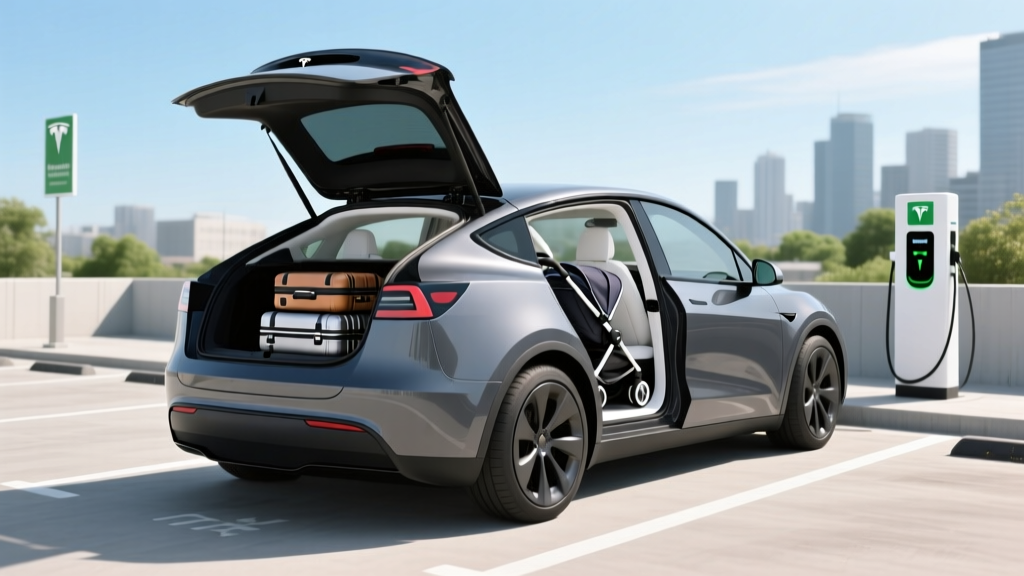
Revel's fleet primarily consists of the Tesla Model Y Long Range All-Wheel Drive — chosen for its combination of range, Supercharger network access, and interior space. Here are the exact specifications for the current model-year vehicles in the fleet:
| Specification | Value |
|---|---|
| EPA Estimated Range | 320 miles |
| Battery Capacity | ~75 kWh usable (NMC chemistry) |
| Drivetrain | Dual-Motor AWD |
| Horsepower | 384 hp (combined) |
| 0-60 mph | 4.8 seconds |
| Peak DC Fast Charge | 250 kW (CCS via adapter or NACS native on newer builds) |
| 10-80% DC Charge Time | ~25 minutes (at V3 Supercharger) |
| Level 2 Charge Rate | 11.5 kW (~44 mi/hr) |
| Efficiency | 122 MPGe combined / 28 kWh/100mi |
| Cargo Volume | 76.2 cu ft (rear seats folded), 30.2 cu ft behind 2nd row |
| Passenger Capacity | 5 (standard); some fleet units configured for 4 riders |
| Base MSRP (Long Range AWD) | $44,990 (before incentives) |
| Battery/Drive Unit Warranty | 8 years / 120,000 miles (70% minimum retention) |
Charging Logistics: How Revel Keeps Teslas on the Road 20 Hours a Day
The defining challenge of running an EV rideshare fleet is charging turnaround. Revel has addressed this through a multi-layered strategy that individual EV owners can learn from:
| Charging Method | Power | Speed | Use Case in Fleet |
|---|---|---|---|
| Tesla V3 Supercharger | Up to 250 kW | ~170 mi in 15 min (10-80% in ~25 min) | Mid-shift top-up during driver breaks |
| Tesla V4 Supercharger | Up to 250-350 kW (cabinet-dependent) | 10-80% in ~20-25 min | Newer station deployments in NYC/Miami |
| Revel Depot Level 2 | 11.5-19.2 kW | 44-70 mi/hr | Overnight charging at fleet depots |
| Revel Public Fast-Charging Hubs | Up to 320 kW (CCS/NACS) | 10-80% in ~18-22 min | Revel's own charging superstations (Brooklyn, Queens) |
Revel has invested heavily in its own charging infrastructure, including a flagship fast-charging superstation in Brooklyn capable of charging multiple vehicles simultaneously at up to 320 kW per stall. This is a critical insight for prospective EV owners: access to reliable, high-power DC fast charging near your home or workplace can make or break the EV experience — especially if you lack home Level 2 charging.
Charging curve reality: The Model Y's charge rate peaks at 250 kW only between roughly 10-30% state of charge. Above 50%, the rate tapers significantly — from ~150 kW at 50% SoC down to ~60 kW by 80%. This is why Revel instructs drivers to charge between 10-80% rather than topping off to 100%, which would add 20+ minutes for only marginal range gain. For personal owners, this same 10-80% habit preserves long-term battery health.
Driver Economics: Earnings, Costs, and the $7,500 Tax Credit Question
Revel operates under two models: a company-employed driver model (where Revel owns the vehicle and employs drivers as W-2 workers with benefits) and a driver-partner model similar to Uber/Lyft. Understanding the economics requires looking at both sides.
For Revel-employed drivers (NYC model): Drivers receive a Tesla Model Y, insurance, maintenance, and charging access. Compensation is hourly plus tips, with reported earnings in the $25-$32/hr range before tips as of early 2026. Revel covers all vehicle costs, meaning drivers bear no depreciation, insurance, or charging expense.
For independent drivers considering a similar path: If you were to purchase a Model Y Long Range AWD at $44,990 MSRP and drive for a ride-hail platform, the federal §30D clean vehicle credit becomes a critical variable. Here's the current eligibility framework:
| §30D Requirement | Model Y Long Range AWD Status |
|---|---|
| MSRP Cap (SUVs: ≤$80,000) | ✅ $44,990 — well under cap |
| Buyer Income Cap (Single: ≤$150k; Joint: ≤$300k) | Varies by buyer — must self-certify |
| Battery Component Sourcing (North America assembly) | ✅ Austin-assembled; sourcing requirements met for 2025-2026 builds |
| Critical Minerals Sourcing | ✅ Qualifies under current FEOC rules for full $7,500 |
| Point-of-Sale Transfer | ✅ Available — apply credit at purchase to reduce down payment |
| Effective Price After Full Credit | ~$37,490 (before state incentives) |
Critical caveat: Tax credit eligibility depends on your specific income, the vehicle's build date, and evolving battery-sourcing rules. The IRS updates qualified vehicle lists periodically. Always verify current eligibility at irs.gov and consult a tax professional before relying on the credit in your purchase decision.
Rider Experience: What It's Like to Hail a Revel Tesla
From the passenger seat, a Revel ride differs from a typical Uber or Lyft in several tangible ways. The Model Y's cabin is quiet, acceleration is smooth and immediate, and the minimalist interior — dominated by the 15-inch center touchscreen — gives the experience a premium feel relative to a Camry or Accord rideshare vehicle.
However, there are trade-offs. The Model Y's ride quality on NYC's rough streets can be firm, particularly in the rear seats. Rear legroom measures 41.6 inches — adequate for most adults but tighter than a Model S or an SUV like the Hyundai Ioniq 5. The glass roof provides an airy feel but offers no shade option in fleet vehicles, which some riders find uncomfortable in summer heat.
Revel riders can request a Tesla specifically through the Revel app (in NYC and Miami markets). Pricing is generally competitive with Uber Comfort or Lyft XL tiers, though surge pricing during peak hours can push fares above standard ride-hail rates. As of 2026, Revel operates exclusively in New York City's five boroughs and the greater Miami area, with no announced expansion to additional cities.
Tech and Driver Assistance: Autopilot Is Not Self-Driving
Every Model Y in the Revel fleet comes equipped with Tesla's basic Autopilot — a SAE Level 2 driver-assistance system that provides adaptive cruise control and lane-centering on highways. Some fleet vehicles may have Enhanced Autopilot, but Full Self-Driving (Supervised) capability is not standard across the fleet.
The Model Y's infotainment system — running Tesla's proprietary software — provides navigation, Spotify/Apple Music integration, and over-the-air updates that continuously add features. For fleet operators, OTA updates are a double-edged sword: they add functionality without dealer visits but can occasionally introduce UI changes that require driver re-familiarization.
Pros, Cons, and Who This Model Suits
Pros
- 320 mi EPA range covers most full shifts with one mid-day charge
- Supercharger network provides reliable, fast DC charging (250 kW peak)
- $7,500 federal tax credit eligibility brings effective price to ~$37,490
- Low operating cost: ~$0.04-$0.06/mi electricity vs ~$0.12-$0.15/mi for gas
- Strong regenerative braking reduces brake wear in city driving
- 8-year/120,000-mi battery warranty provides long-term protection
- Premium rider experience commands higher fare tier
Cons
- Real-world range drops to 200-230 mi in cold weather — may require 2 charges/shift
- Firm ride quality, especially for rear-seat passengers on rough roads
- No dedicated rideshare-optimized vehicle (e.g., no sliding doors, limited rear space vs. minivans)
- Insurance premiums for rideshare use can be 30-50% higher than personal use
- Tesla service center wait times can stretch to weeks in high-demand markets
- Charging downtime (~25 min) still longer than a 5-minute gas fill-up
- FSD monthly subscription ($99/mo) adds cost without enabling true autonomy
Who Should Consider This Path?
Choose a Revel-employed driver position if: you want EV rideshare income without the capital risk of vehicle ownership, you live in NYC or Miami, and you value benefits and predictable pay.
Choose to buy a Model Y for independent rideshare if: you qualify for the $7,500 federal credit, have reliable home Level 2 charging, drive in a market with strong EV ride demand, and plan to drive 40,000+ miles/year to maximize fuel savings over gas vehicles.
Look elsewhere if: you need a vehicle with more rear-seat room (consider the Kia EV9 or Hyundai Ioniq 5 for passengers), you lack home charging access, or you operate in a market with sparse DC fast-charging infrastructure.
Frequently Asked Questions
What is the real-world range of the Tesla Model Y in Revel's fleet?
Drivers report 240-270 miles in mixed NYC driving conditions, dropping to 200-230 miles in winter (below 35°F). The EPA estimate is 320 miles, but sustained highway speeds above 70 mph and cold temperatures reduce range by 15-30%.
How fast does the Model Y charge on DC fast chargers and at home?
At a Tesla V3 Supercharger (250 kW peak), the Model Y charges from 10-80% in approximately 25 minutes. On a Level 2 home charger at 11.5 kW, it adds about 44 miles of range per hour, requiring roughly 7-8 hours for a full charge from near-empty.
Does the Tesla Model Y qualify for the $7,500 federal EV tax credit?
As of early 2026, the Model Y Long Range AWD qualifies for the full $7,500 §30D credit, provided the buyer meets income requirements (≤$150,000 single / ≤$300,000 joint) and the vehicle's MSRP stays under the $80,000 SUV cap. The credit can be transferred at point of sale to reduce your purchase price. Always verify current eligibility at irs.gov — sourcing rules can change annually.
Is buying a Model Y for rideshare worth it vs. competitors like the Hyundai Ioniq 5 or Chevy Equinox EV?
The Model Y's Supercharger network advantage and 320-mile EPA range make it the strongest EV rideshare choice for high-mileage drivers. However, the Ioniq 5 offers faster peak charging (up to 350 kW on 800V architecture), more rear-seat room, and a lower starting price (~$42,000). The Equinox EV is cheaper (~$33,000 base) but offers less range (319 mi on the 3RS trim) and slower DC charging (~150 kW peak). For NYC/Miami rideshare specifically, Supercharger density tips the scale toward Tesla.
How does Revel's driver model differ from Uber or Lyft?
Revel employs some drivers as W-2 workers with hourly pay, benefits, and company-provided vehicles — eliminating the depreciation, insurance, and maintenance costs that independent Uber/Lyft drivers absorb. This model is more sustainable for drivers but limits availability to markets where Revel operates (currently NYC and Miami only).
What is the battery degradation like on high-mileage fleet Teslas?
Public data from high-mileage Model Y fleets suggests approximately 8-12% capacity loss after 100,000 miles, with most degradation occurring in the first 20,000-30,000 miles before stabilizing. Tesla's battery warranty guarantees 70% capacity retention for 8 years or 120,000 miles (whichever comes first) on the Long Range AWD. For fleet operators running 80,000+ miles/year, this means the warranty period may expire in under two years — a significant consideration for independent drivers.