The Short Answer on the REVA Electric Car Company
The REVA electric car company was an Indian automaker founded in 2001 that produced the G-Wiz (also called the REVAi), one of the world's first mass-produced electric city cars. REVA was acquired by Mahindra & Mahindra in 2010 and rebranded as Mahindra Reva Electric Vehicles, later becoming Mahindra Electric. The original REVA G-Wiz offered roughly 50 miles of range from an 8 kWh lead-acid (later lithium-ion) battery pack and a top speed near 50 mph. The company no longer sells vehicles under the REVA name. For 2026 EV buyers, REVA's story is a valuable case study in how far battery technology, charging infrastructure, and vehicle safety have come — and what fundamentals still matter when evaluating any electric vehicle.
REVA's Origin: Building an EV Before the Market Was Ready
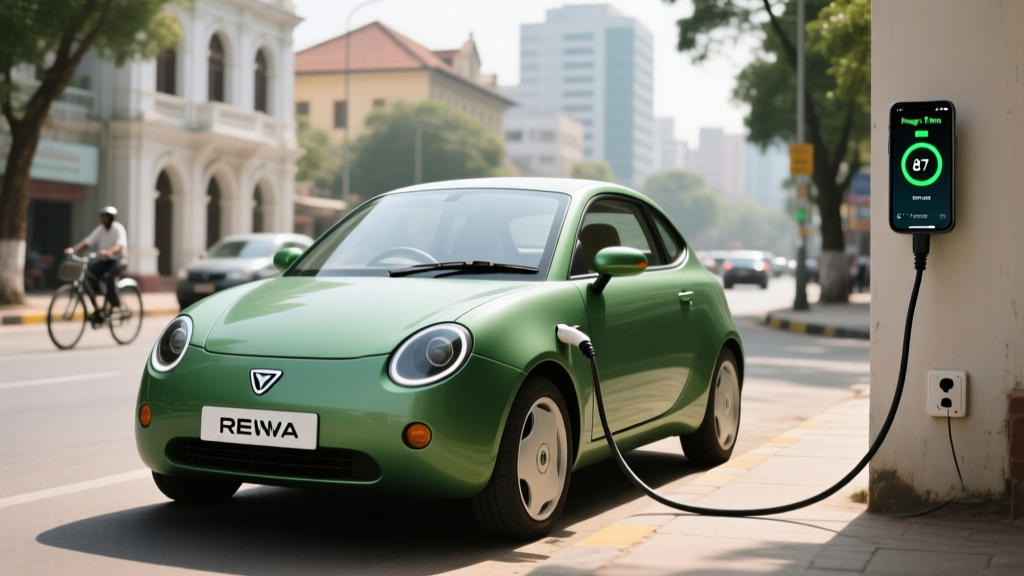
The REVA Electric Car Company was founded in Bangalore, India, as a joint venture between the Maini Group and Amerigon (later renamed Atieva, and eventually Lucid Motors). The company launched the REVAi — sold in the UK and several European markets as the G-Wiz — in 2001. At a time when Tesla was still years away from its first Roadster and the Nissan Leaf didn't exist, REVA was producing a compact, two-door electric quadricycle aimed at urban commuters.
The original specifications were modest by today's standards:
- Battery: 8 kWh usable capacity (lead-acid in early models, lithium-ion in the later REVA L-ion variant)
- Range: Approximately 50 miles (80 km) under ideal conditions; real-world city driving often yielded 35–45 miles
- Top speed: 50 mph (80 km/h)
- Charging: Standard household outlet (roughly 1.5 kW), 8–10 hours for a full charge
- Price: Approximately £7,500–£10,000 in the UK market (equivalent to roughly $12,000–$16,000 at the time)
The G-Wiz was classified as a heavy quadricycle in Europe, which exempted it from full passenger-car crash-test regulations. This classification became a point of controversy, as independent testing by the UK's Transport Research Laboratory found the vehicle offered inadequate occupant protection in collisions. This remains a critical lesson for modern EV buyers: always check IIHS and NHTSA safety ratings before purchasing any electric vehicle.
The Mahindra Acquisition and Evolution into Mahindra Electric
In May 2010, Indian automaker Mahindra & Mahindra acquired a 55.2% controlling stake in the REVA Electric Car Company for approximately ₹45 crore (roughly $10 million at the time). The company was renamed Mahindra Reva Electric Vehicles Pvt. Ltd. Under Mahindra's ownership, the company developed the e2o, launched in 2013, which represented a significant step forward:
- Battery: 10.08 kWh lithium-ion pack
- Range: Approximately 62 miles (100 km) under test conditions
- Features: Regenerative braking, smartphone connectivity, and a more conventional car body
Mahindra later launched the e-Verito electric sedan and the eKUV100, and in 2017, the subsidiary was fully integrated and rebranded as Mahindra Electric Mobility Ltd. As of 2026, Mahindra offers the XUV400 electric SUV and has announced the BE (Born Electric) platform vehicles, including the BE 6 and XEV 9e, which feature battery packs up to 79 kWh and ranges exceeding 300 miles on the WLTP cycle.
What the REVA G-Wiz Teaches 2026 EV Buyers
The REVA story highlights several principles that remain directly relevant to anyone shopping for an electric vehicle today.
Battery Chemistry and Capacity Determine Everything
The original G-Wiz used lead-acid batteries — heavy, slow to charge, and prone to rapid degradation. The later lithium-ion variant roughly doubled usable life and halved weight. In 2026, the key chemistry distinction is between LFP (lithium iron phosphate) and NMC (nickel manganese cobalt):
| Factor | REVA G-Wiz (Lead-Acid, 2001) | 2026 LFP Battery | 2026 NMC Battery |
|---|---|---|---|
| Energy density | ~30–40 Wh/kg | ~160–180 Wh/kg | ~250–300 Wh/kg |
| Typical cycle life | 300–500 cycles | 3,000–5,000+ cycles | 1,000–2,000 cycles |
| Weight for 60 kWh | Not feasible | ~375–400 kg | ~200–250 kg |
| Cost per kWh (pack-level) | N/A (different era) | ~$90–$110/kWh | ~$110–$140/kWh |
| Best for | N/A | Daily commuting, L2 charging, longevity | Long range, fast charging, cold climates |
Charging Speed Is a Deal-Maker or Deal-Breaker
The G-Wiz required 8–10 hours on a standard outlet for its 50-mile range. That's roughly 5–6 miles of range per hour of charging. Compare that to 2026 benchmarks:
| Vehicle / Era | Charging Method | Power (kW) | Miles of Range Added per Hour |
|---|---|---|---|
| REVA G-Wiz (2001) | Standard outlet (Level 1) | ~1.5 kW | ~5–6 miles |
| Typical 2026 EV (Level 2 home) | 240V / 48A wallbox | 11.5 kW | ~35–45 miles |
| Typical 2026 EV (DC fast charge) | 150 kW public charger | 150 kW (peak) | ~500+ miles/hr equivalent (10–80% in ~25 min) |
| 2026 800V architecture EV | 350 kW charger | 350 kW (peak) | 10–80% in ~18 min |
Key distinction for buyers: kW (kilowatts) measures charging power — how fast energy flows. kWh (kilowatt-hours) measures battery capacity — how much energy is stored. A 75 kWh battery charged at 11.5 kW takes roughly 6.5 hours from empty; at 150 kW DC fast charging, the same battery can go from 10% to 80% in about 25 minutes, though charging speed tapers above 80% to protect the cells.
Real Costs: What an Early REVA Owner Paid vs. a 2026 EV
Understanding total cost of ownership (TCO) is where most first-time EV buyers miscalculate. Here's how the economics have shifted:
| Cost Category | REVA G-Wiz (~2005 UK) | 2026 EV (e.g., Hyundai Ioniq 6 SE, ~$42,000 MSRP) | 2026 Gas Sedan (e.g., Toyota Camry LE, ~$29,000 MSRP) |
|---|---|---|---|
| Purchase price | ~£8,000 ($12,500) | $42,000 (before incentives) | $29,000 |
| Federal/state incentives | None at the time | Up to $7,500 federal (§30D, if eligible) + state rebates | None |
| Annual fuel/energy (12,000 mi) | ~$300–$400 (electricity) | ~$540 (at $0.15/kWh, 3.5 mi/kWh) | ~$1,560 (at $3.50/gal, 30 MPG combined) |
| Annual maintenance | ~$200 (battery replacement every 3–4 years was the hidden cost) | ~$300–$500 (no oil, fewer brake replacements due to regen) | ~$800–$1,200 |
| Insurance (annual avg) | ~$400 | ~$1,800–$2,200 (EV premiums run 15–25% higher) | ~$1,500–$1,800 |
| 5-year total (est.) | ~$18,000–$20,000 (including battery swaps) | ~$48,000–$53,000 (net of incentives) | ~$42,000–$47,000 |
The gap has narrowed considerably. A 2026 EV with a home Level 2 charger and access to the §30D federal tax credit can break even with a comparable gas car within 4–5 years for many drivers, particularly those with high annual mileage and access to cheap overnight electricity.
Tax Credit Reality Check for 2026
The §30D credit offers up to $7,500 for qualifying new EVs and up to $4,000 for qualifying used EVs. However, eligibility depends on:
- Buyer income caps: $150,000 single / $300,000 married filing jointly (modified AGI)
- MSRP caps: $55,000 for sedans; $80,000 for SUVs, pickups, and vans
- Battery sourcing: Critical minerals and battery components must meet increasing domestic-content thresholds each year
- Point-of-sale transfer: Buyers can now transfer the credit to the dealer at purchase, reducing the out-of-pocket price immediately
Always verify current-year eligibility on IRS.gov — these rules change annually, and specific model eligibility shifts as automakers adjust supply chains.
Common Misconceptions About Early EVs (and Why They Still Matter)
| Myth | Fact |
|---|---|
| "EVs can't go far enough." | The REVA G-Wiz managed ~50 miles. A 2026 Chevrolet Equus EV or Tesla Model Y offers 300+ miles EPA. However, real-world highway driving at 70+ mph and cold weather (below 32°F) can reduce range by 15–30%. Plan accordingly. |
| "EV batteries die quickly and cost a fortune to replace." | Lead-acid REVA packs degraded noticeably within 3–4 years. Modern lithium-ion packs are warranted for 8 years/100,000 miles with a minimum 70% capacity retention threshold. Real-world data from fleet operators shows most NMC packs retain 85–90% after 100,000 miles; LFP packs often exceed 90%. |
| "EVs are unsafe." | The G-Wiz's poor crash performance was partly due to its quadricycle classification and light weight (~400 kg). Modern EVs are among the highest-rated vehicles on NHTSA and IIHS — their heavy battery packs lower the center of gravity, reducing rollover risk. |
| "You can't charge without a garage." | REVA owners were largely dependent on home outlets. In 2026, public DC fast-charging networks (Tesla Supercharger, Electrify America, EVgo) cover most US highway corridors. That said, reliable daily charging without home or workplace access remains a real challenge — apartment dwellers should verify charging options before buying. |
| "EVs are always cheaper to own." | Not automatically. Higher purchase prices, elevated insurance premiums, and public DC fast-charging costs (often $0.35–$0.50/kWh) can erode savings. The math favors EVs most when you charge at home on off-peak rates and drive 10,000+ miles per year. |
Decision Framework: Should You Buy an EV in 2026?
Choose an EV if:
- You have reliable access to Level 2 home or workplace charging (240V, 30–48A circuit)
- Your daily driving is under 80 miles round-trip (covering 90%+ of US commutes within any modern EV's real-world range)
- You qualify for the §30D tax credit (check income and vehicle eligibility on IRS.gov)
- You live in a moderate or warm climate (cold-weather range loss is real — expect 20–30% reduction below 20°F without a heat pump)
- You plan to keep the vehicle 5+ years, allowing the fuel and maintenance savings to offset the higher upfront cost
Choose a hybrid (HEV) or plug-in hybrid (PHEV) if:
- You lack reliable home or workplace charging access
- You frequently drive 300+ miles in a single day through areas with sparse DC fast-charging infrastructure
- Your budget is under $30,000 and you can't absorb the EV premium even after incentives
- You live in extreme cold (regularly below 0°F) where range loss and charging speed reduction are most severe
Wait or reconsider if:
- Your apartment or condo has no charging options and your city has minimal public infrastructure
- You're buying primarily for environmental reasons but your local grid is heavily coal-dependent — a high-MPG hybrid may produce comparable lifecycle emissions in your region
- You need a vehicle for towing — while EVs can tow (the Ford F-150 Lightning handles up to 10,000 lbs), towing cuts range by 40–50%
What First-Time EV Buyers Should Know Before Signing
The REVA Electric Car Company's legacy is a reminder that EV technology has matured enormously — but smart buying still requires homework. Here are the non-negotiable steps:
- Test the real range, not the sticker. EPA estimates are a starting point. If the sticker says 310 miles, expect 250–270 miles at highway speeds in moderate weather, and 200–230 miles in freezing temperatures. Consult fueleconomy.gov for official EPA data and owner-reported figures.
- Understand your charging curve. A vehicle that "peaks at 250 kW" doesn't sustain that rate. Most EVs charge fastest between 10–50% SoC, then taper significantly. A 10–80% time of 20–25 minutes is excellent; 35+ minutes means longer road-trip stops.
- Get a home charging quote before you buy. A basic Level 2 wallbox installation on an existing 240V circuit runs $500–$1,500. If you need a panel upgrade (200A service) or a new circuit run through walls, costs can reach $2,500–$5,000. Always get a licensed electrician's assessment first.
- Budget for higher insurance. EV insurance premiums average 15–25% above comparable gas vehicles due to higher repair costs and battery replacement risk. Get quotes before committing.
- Verify the tax credit yourself. Don't rely on the dealer's verbal assurance. Check the IRS's current eligible vehicle list and confirm your income qualifies.
From REVA to 2026: The Trajectory Continues
The REVA Electric Car Company proved that an EV could be built, sold, and driven daily — even when battery technology, charging infrastructure, and consumer awareness were in their infancy. The company's evolution into Mahindra Electric mirrors the broader industry arc: from 8 kWh lead-acid packs and 50-mile range to 79 kWh lithium-ion architectures and 300+ mile capability.
For today's buyer, the fundamentals REVA had to get right — battery durability, charging practicality, real-world range honesty, and total cost of ownership — remain the exact criteria that separate a smart EV purchase from an expensive mistake. The technology has changed dramatically. The homework hasn't.
Frequently Asked Questions
Is the REVA electric car still available to buy?
No. The REVA brand was retired after Mahindra & Mahindra's acquisition in 2010. The G-Wiz/e2o are no longer in production. Mahindra currently sells EVs under the Mahindra brand, including the XUV400 and the newer BE-platform vehicles announced for global markets.
Was REVA the first electric car company?
No. Electric vehicles date to the 1830s, and several companies produced EVs in the early 20th century before gasoline cars dominated. However, REVA was among the first to mass-produce a modern, purpose-built electric city car in the early 2000s, predating Tesla's first production vehicle by several years.
What happened to REVA's partnership with Amerigon?
Amerigon, the original joint-venture partner, later changed its name to Atieva and eventually became Lucid Motors — the company behind the Lucid Air luxury electric sedan. The REVA partnership dissolved well before Amerigon's transformation.
How does the REVA G-Wiz's range compare to a 2026 city EV?
The G-Wiz offered roughly 50 miles of real-world range. A 2026 city-focused EV like the Chevrolet Equinox EV or Nissan Leaf delivers 200–250+ miles EPA — a roughly 4–5x improvement, enabled by modern lithium-ion energy density and far more efficient powertrains.
Are early EVs like the REVA G-Wiz collectible?
A small number of G-Wiz vehicles remain in private hands, primarily in the UK and India. They hold niche collector interest but have limited practical value due to obsolete battery technology, lack of parts support, and safety limitations.