The Short Answer on the Ram ProMaster EV
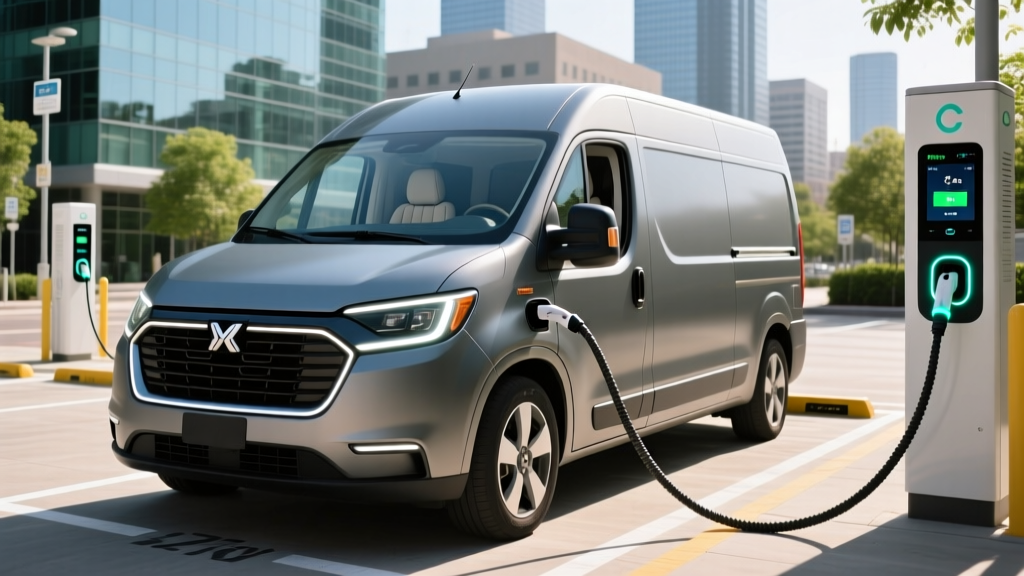
The 2026 Ram ProMaster EV is a battery-electric commercial cargo van built for predictable urban and suburban delivery routes. With an EPA-estimated 162 miles of range from a 110 kWh usable battery (LFP chemistry), it targets last-mile fleets that return to base nightly. Expect real-world range of 120–145 miles when fully loaded on highway-speed routes, and significantly less in sub-freezing climates. DC fast charging peaks at 150 kW, reaching 10–80% in roughly 40 minutes. Starting MSRP sits around $58,000 before incentives, and commercial buyers may qualify for the §45W commercial clean vehicle credit (up to $7,500 for vehicles under 14,000 lbs GVWR) rather than the consumer §30D credit. If your daily routes stay under 130 miles and you can install depot Level 2 charging, the ProMaster EV delivers meaningful fuel and maintenance savings over its gas counterpart.
Range, Battery, and Real-World Efficiency
The Ram ProMaster EV uses a 110 kWh lithium iron phosphate (LFP) battery pack mounted beneath the cargo floor. LFP chemistry trades some energy density for longer cycle life, better thermal stability, and lower degradation — a strong fit for commercial vehicles expected to log 150,000+ miles over their service life. Ram pairs this pack with a front-mounted permanent-magnet electric motor producing 268 horsepower and 302 lb-ft of torque.
EPA vs. Real-World Range
EPA estimate: 162 miles (combined city/highway, cargo area empty or lightly loaded).
Real-world expectations:
- Urban delivery (stop-and-go, 25–40 mph): ~150–160 miles — regen braking recovers energy in traffic
- Mixed suburban routes (45–55 mph): ~130–145 miles
- Highway-heavy (65+ mph, loaded): ~110–125 miles — boxy aerodynamics punish efficiency at speed
- Cold weather (below 32°F, cabin heat on): ~95–120 miles — LFP packs lose 20–35% range in deep cold without preconditioning
Efficiency lands around 2.0–2.3 kWh/mile depending on payload and speed, translating to roughly 58–65 MPGe combined per fueleconomy.gov methodology. That figure sounds low compared to passenger EVs, but it's competitive for a 5,500+ lb cargo van with the aerodynamic profile of a shipping container.
Charging: Depot Level 2 and DC Fast Specs
For fleet operators, the ProMaster EV's charging story centers on overnight depot charging with DC fast charging as a midday supplement.
| Charging Level | Power (kW) | Connector | Miles Added/Hour | Typical Use Case |
|---|---|---|---|---|
| Level 1 (120V) | 1.4 kW | J1772 / NACS | ~5–6 mi/hr | Emergency/top-up only |
| Level 2 (240V, 48A) | 11.5 kW | J1772 / NACS | ~45–50 mi/hr | Overnight depot charging (full charge in ~10 hrs) |
| DC Fast Charge | 150 kW peak | CCS1 / NACS | ~200+ mi/hr (peak) | 10–80% in ~40 min; midday top-up |
Charging curve reality: The ProMaster EV peaks near 150 kW between 10–40% state of charge, then tapers progressively. From 40–80%, expect sustained rates closer to 80–100 kW. Above 80%, charging drops below 40 kW to protect the LFP cells — don't plan DC fast charging beyond 80% unless necessary. Fleet managers should schedule depot Level 2 charging overnight (10 hours covers a full 0–100% cycle) and use DC fast charging only for midday route extensions.
Depot charging infrastructure cost: Installing a single 48A Level 2 charger (hardwired, 60A circuit) runs $2,500–$6,000 per stall including equipment ($600–$1,200 for a commercial-rated EVSE), electrician labor, and permitting — assuming your existing electrical panel has capacity. A 10-van fleet depot may need a panel upgrade or dedicated transformer, pushing total infrastructure to $30,000–$80,000. Consult a licensed commercial electrician for your site's specific requirements.
Cost Breakdown: ProMaster EV vs. Gas ProMaster
The financial case for the ProMaster EV hinges on fuel displacement, reduced maintenance, and available tax credits. Here's how the numbers stack up over a 5-year / 100,000-mile fleet ownership horizon.
| Cost Category | Gas ProMaster 2500 (V6) | 2026 Ram ProMaster EV |
|---|---|---|
| Purchase Price (base MSRP) | ~$46,000 | ~$58,000 |
| Federal Tax Credit (§45W commercial) | $0 | Up to –$7,500* |
| Net Acquisition Cost | $46,000 | ~$50,500 |
| Fuel / Electricity (100k mi) | $17,500 (14 mpg avg, $3.50/gal) | $6,000 (2.1 kWh/mi, $0.13/kWh depot rate) |
| Maintenance (oil, filters, brakes, trans) | $6,500 | $2,500 (no oil/trans; regen saves brake pads) |
| Insurance (est. annual premium) | $9,000 ($1,800/yr × 5) | $10,500 ($2,100/yr × 5) |
| Depot Charging Install (amortized/van) | $0 | $4,000 |
| Total 5-Year Cost | $79,000 | $73,500 |
*§45W commercial clean vehicle credit eligibility requires the vehicle to be used primarily in a U.S. trade or business. Credit equals the lesser of 15% of vehicle basis (30% if no tax-exempt bond financing) or the incremental cost over a comparable gas vehicle. Consult a tax professional and review IRS §45W guidelines.
Key takeaway: The ProMaster EV breaks even with the gas version in roughly 3–4 years for high-mileage urban fleets, primarily through fuel savings (~$11,500 over 5 years) and reduced maintenance (~$4,000 saved). Insurance premiums run 10–20% higher for EVs due to repair-cost data, partially offsetting those gains.
How It Compares: EV vs. Gas ProMaster for Daily Operations
| Factor | Gas ProMaster 2500 | ProMaster EV |
|---|---|---|
| Daily Range Practicality | 400+ miles; refuel in 5 min | 120–160 mi; 10-hr depot charge |
| Best Route Type | Long-haul, highway, rural | Urban stop-and-go, predictable return-to-base |
| Cold-Weather Impact | Minimal range loss; cabin heat from engine waste heat | 20–35% range reduction; cabin heat draws from battery |
| Payload Capacity | ~3,700 lbs (higher) | ~3,200 lbs (battery weight reduces payload by ~500 lbs) |
| Cargo Volume | Up to 463 cu ft (high-roof extended) | Same cargo dimensions — battery under floor |
| Driving Experience | Noisy, 9-speed auto shifts, vibration | Silent, instant torque, smoother in traffic |
| Maintenance Downtime | Oil changes, trans service, exhaust repairs | Minimal — cabin air filter, wipers, tire rotation |
| Idling / Urban Emissions | Burns fuel at stops; local NOx/particulates | Zero tailpipe emissions; quieter in neighborhoods |
Tax Credits and Incentives for Commercial EV Buyers
Commercial fleet buyers generally use the §45W Commercial Clean Vehicle Credit rather than the consumer §30D credit. Key points for 2026:
- Credit amount: Lesser of 15% of vehicle purchase price (30% if qualified financing) or the incremental cost difference vs. a comparable gas vehicle — up to $7,500 for vehicles under 14,000 lbs GVWR (the ProMaster qualifies)
- Eligibility: Vehicle must be used primarily in a U.S. trade or business; not available for personal-use purchases
- Battery sourcing: §45W does not currently impose the same critical-mineral and battery-component sourcing restrictions as the consumer §30D credit
- No MSRP or income caps: Unlike §30D, §45W has no buyer income limits or vehicle MSRP caps
- Point-of-sale: §45W is claimed on the business's tax return (Form 8936); it is not currently available as a point-of-sale transfer like §30D
- State/utility incentives: Many states and utilities offer additional commercial EV rebates — check your local utility and AFDC incentive database for specifics
Tax rules evolve. Work with a qualified tax professional to confirm your fleet's eligibility before purchasing.
Real-World Ownership: What Fleet Managers Should Know
Charging Access Is Make-or-Break
The ProMaster EV works best when vehicles return to a depot with installed Level 2 chargers every night. If your operation relies on street parking, shared lots, or public charging, the 110 kWh battery becomes a liability — a full charge on a public 50 kW DC charger takes over 2 hours, and public charging costs ($0.30–$0.50/kWh) erase most fuel savings. Depot charging at $0.10–$0.15/kWh is where the economics work.
Cold-Weather Route Planning
In northern climates (sustained temps below 32°F), plan routes at 60–70% of EPA range. A 162-mile EPA rating drops to roughly 100–115 usable miles in deep cold with cargo. Fleets in Minnesota, Chicago, or Boston should spec routes conservatively and consider midday DC fast charging for winter months. LFP chemistry is more cold-sensitive than NMC, though Ram's thermal management system mitigates some loss through battery preconditioning.
Payload and Route Limits
The battery pack adds approximately 1,200 lbs to the curb weight, reducing max payload to roughly 3,200 lbs (vs. ~3,700 lbs for the gas ProMaster 2500). If your typical loads approach max payload, the range penalty is significant — expect 10–15% range reduction at full load. For parcel delivery (light, voluminous cargo), this is rarely an issue. For dense freight (beverages, building materials), verify that payload-plus-range requirements fit within the EV's envelope.
Warranty Coverage
Ram provides a 5-year / 60,000-mile basic warranty and an 8-year / 100,000-mile battery warranty covering defects and capacity loss below 70% of original capacity. LFP batteries typically degrade more slowly than NMC packs, with industry data suggesting 85–90% capacity retention at 150,000 miles under normal use.
Common Misconceptions About the ProMaster EV
| Myth | Fact |
|---|---|
| "162 miles of range isn't enough for any real work route." | The average U.S. urban delivery van drives 70–120 miles per day (BTS data). The ProMaster EV covers most urban routes with margin — but not highway or rural routes. |
| "Electric vans cost more to own, period." | Higher upfront cost is offset by ~$11,500 in fuel savings and ~$4,000 in maintenance savings over 5 years / 100k miles. Break-even typically occurs at year 3–4. |
| "You can charge it on any public charger quickly." | 110 kWh batteries take time. Even at 150 kW peak, 10–80% takes ~40 minutes. At a 50 kW public charger, expect 1.5–2+ hours. Depot Level 2 overnight charging is the intended workflow. |
| "Cold weather makes electric vans useless." | Cold reduces range 20–35%, which is significant but manageable for fleets that plan routes around winter-adjusted range and use battery preconditioning. |
| "The battery will need replacing at 100k miles." | LFP batteries are rated for 3,000+ full charge cycles before hitting 80% capacity. At 120 miles per cycle, that's 360,000+ miles — well beyond typical van service life. |
Decision Framework: Should Your Fleet Go Electric?
Choose the Ram ProMaster EV If:
- Your daily routes are under 130 miles (or under 100 miles in cold climates)
- Vehicles return to a depot nightly where Level 2 chargers can be installed
- Your routes are primarily urban or suburban (stop-and-go maximizes regen efficiency)
- Your typical payload is under 2,500 lbs (parcel, food delivery, service calls)
- You want to reduce neighborhood noise and tailpipe emissions in dense areas
- Your business can utilize the §45W commercial tax credit to reduce acquisition cost
Stick With the Gas ProMaster If:
- Routes regularly exceed 150+ miles per day or include extended highway segments
- You operate in rural areas with no reliable charging infrastructure
- Vehicles park on streets or in shared lots without charging access
- Your payloads regularly approach 3,500+ lbs (dense/heavy freight)
- You need midday route flexibility and can't absorb 40-minute charging stops
- Your fleet is in a deep-cold climate with routes that can't be shortened in winter
Spec Summary: 2026 Ram ProMaster EV
| EPA Range | 162 miles (combined) |
| Real-World Range | ~120–145 mi (mixed); ~95–120 mi (cold weather) |
| Battery | 110 kWh usable, LFP (lithium iron phosphate) |
| Motor | Front-mounted permanent magnet; 268 hp / 302 lb-ft |
| 0–60 mph | ~8.5 seconds (est., loaded) |
| DC Fast Charging | 150 kW peak; 10–80% in ~40 min |
| Level 2 Charging | 11.5 kW (48A); 0–100% in ~10 hrs |
| Efficiency | ~2.0–2.3 kWh/mile; ~58–65 MPGe |
| Payload Capacity | ~3,200 lbs |
| Cargo Volume | Up to 463 cu ft (high-roof, extended wheelbase) |
| Base MSRP | ~$58,000 |
| Federal Tax Credit | Up to $7,500 via §45W (commercial use) |
| Battery Warranty | 8 years / 100,000 miles (≥70% capacity retention) |
Frequently Asked Questions
What is the real-world range of the Ram ProMaster EV when fully loaded?
With a full 3,200-lb payload on mixed suburban routes, expect approximately 115–130 miles. On highway-heavy routes at 65+ mph with full payload, range can drop to 100–115 miles. Urban stop-and-go routes with moderate loads return the best results, often near 140–155 miles.
Can I use the consumer §30D $7,500 tax credit for the ProMaster EV?
Generally, no. If the van is purchased for business use, the §45W Commercial Clean Vehicle Credit applies instead of §30D. The credit amount can reach $7,500 but is calculated differently (based on incremental cost vs. a gas equivalent or 15% of basis). If you purchase the ProMaster EV for personal use, §30D rules apply — including MSRP caps, income limits, and battery-sourcing requirements. Consult a tax professional for your specific situation.
How long does it take to charge the ProMaster EV overnight?
On a 48A Level 2 charger (11.5 kW), a full 0–100% charge takes approximately 10 hours. Most fleet operations won't arrive at 0% — a typical 70% daily discharge (from 90% to 20%) requires roughly 7 hours of Level 2 charging, fitting comfortably within an overnight depot window.
Is the ProMaster EV good for cold climates?
It's workable but requires planning. LFP batteries lose 20–35% range in sustained sub-freezing temperatures. A 162-mile EPA range becomes roughly 100–120 usable winter miles. Fleets in cold regions should plan routes conservatively, use battery preconditioning before departure, and consider midday DC charging for longer winter routes. Cabin heating draws directly from the traction battery, unlike gas vans that use waste engine heat.
How does the ProMaster EV compare to the Ford E-Transit?
The Ford E-Transit offers a shorter EPA range (~126 miles) from a smaller 68 kWh battery but at a lower starting price (~$52,000). The ProMaster EV's 110 kWh pack gives it a 30+ mile range advantage, making it better suited for longer urban routes. The E-Transit may be preferable for very short, high-frequency routes where the lower acquisition cost matters more than range. Both require depot charging infrastructure.
What maintenance does the ProMaster EV require?
Routine maintenance is minimal compared to the gas ProMaster: cabin air filter replacement (~$50 annually), wiper blades, tire rotation (EVs wear front tires faster due to instant torque and weight), brake fluid checks, and coolant system service. There are no oil changes, transmission fluid replacements, spark plugs, or exhaust system repairs. Regenerative braking significantly extends brake pad life — many EV fleets report original brake pads lasting 100,000+ miles.