Quick Verdict: The Electric Ram Is Finally Here
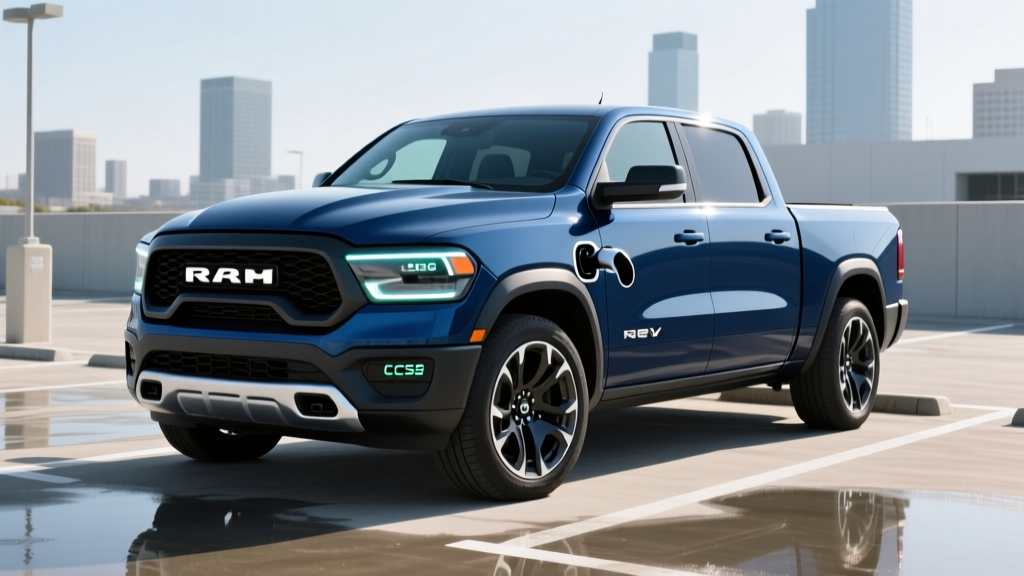
The 2026 Ram 1500 REV is Stellantis's long-awaited entry into the electric full-size pickup segment, arriving late to a party already populated by the Ford F-150 Lightning, Rivian R1T, Chevrolet Silverado EV, and Tesla Cybertruck. Built on the dedicated STLA Frame platform, the REV promises up to 350 miles of EPA-estimated range with the optional larger battery pack, a maximum towing capacity of 14,000 pounds, and a payload rating north of 2,700 pounds. But for the many Ram loyalists upgrading from older trucks — including those searching for bolt pattern 2013 Ram 1500 compatibility — there are important wheel, fitment, and spec differences to understand before making the jump.
This review covers the 2026 Ram 1500 REV in full: range, charging, battery chemistry, performance, cargo, pricing, federal tax credit eligibility, and the wheel bolt-pattern question that bridges the old and new Ram lineups.
Range, Battery, and Real-World Efficiency
The 2026 Ram 1500 REV offers two battery configurations:
| Spec | Standard Pack | Extended Pack |
|---|---|---|
| Usable Capacity | 168 kWh | 229 kWh |
| Chemistry | NMC (Nickel Manganese Cobalt) | NMC |
| EPA Range | ~230 miles | ~350 miles |
| Efficiency | ~72 kWh/100 mi | ~65 kWh/100 mi |
| MPGe (Combined) | ~47 MPGe | ~52 MPGe |
The NMC chemistry provides higher energy density than LFP, which is critical in a truck this size to keep the battery pack from becoming prohibitively heavy. However, NMC cells are more sensitive to sustained 100% State of Charge (SoC). Ram recommends daily charging to 80–90% and reserving 100% for long trips — a practice that extends long-term State of Health (SoH). Source: fueleconomy.gov.
Charging Speed: DC Fast, Level 2, and Charge-Curve Reality
Charging speed is the make-or-break spec for truck buyers planning road trips or job-site commutes. The 2026 Ram 1500 REV supports:
| Charging Level | Connector | Peak Rate | Practical Speed |
|---|---|---|---|
| Level 1 (120V) | NACS (J3400) | ~1.4 kW | ~3–4 miles/hr |
| Level 2 (240V home) | NACS / J1772 adapter | 19.2 kW | ~46 miles/hr |
| DC Fast Charge | NACS (native) | ~200 kW peak | 10–80% in ~41 min (Extended) |
Ram adopted the NACS (North American Charging Standard) connector for the REV, granting native access to the Tesla Supercharger network — the most reliable and widespread DC fast-charging infrastructure in the U.S. as of 2026. The 200-kW peak rate on the Extended Pack is respectable but not class-leading; the Silverado EV peaks closer to 350 kW on its max pack. The charge curve tapers significantly above 80% SoC, so the final 20% can take as long as the first 70%. Plan your road-trip stops to charge to 80% and move on rather than waiting for a full fill.
At home, the 19.2-kW Level 2 onboard charger is a strong point. With a 48-amp or 80-amp wall connector on a dedicated 240V circuit, you can replenish the Extended Pack from 20% to 80% overnight in roughly 7 hours. Note: a 19.2-kW home charger requires a 100-amp circuit and likely a panel upgrade if your home currently has a 100-amp or 150-amp service panel. Budget $1,500–$3,500 for a full Level 2 installation with panel work, or $500–$1,200 if your panel has adequate spare capacity.
Performance, Drivetrain, and Towing
| Spec | Value |
|---|---|
| Drivetrain | Dual-motor AWD (standard all trims) |
| Horsepower | 654 hp |
| Torque | 620 lb-ft |
| 0–60 mph | ~4.4 seconds |
| Max Towing | 14,000 lbs (properly equipped) |
| Max Payload | 2,700 lbs |
| Front Trunk (Frunk) | 15 cu ft |
The dual-motor all-wheel-drive setup delivers 654 horsepower across all trims, making the REV one of the quickest full-size pickups ever produced. The 4.4-second 0–60 time beats the F-150 Lightning Extended Range (4.5 sec) and is in the same ballpark as the Silverado EV 4WT. Torque delivery is instant and linear — there's no turbo spool or transmission lag, which makes merging onto highways with a trailer noticeably less stressful than with a gas V8.
Towing at 14,000 pounds is competitive but comes with the universal EV caveat: towing at max capacity will cut range roughly in half. Expect 140–175 miles from the Extended Pack when towing a 10,000+ lb trailer at highway speeds. For frequent heavy towing, plan your routes around DC fast chargers or consider whether a PHEV or diesel remains the more practical choice.
Bolt Pattern Compatibility: Upgrading From a 2013 Ram 1500
A common question from Ram loyalists transitioning to the 2026 REV is whether wheels from older Rams — particularly those searching for bolt pattern 2013 Ram 1500 specifications — will fit the new electric truck. Here's what you need to know:
The 2013 Ram 1500 used a 5x139.7mm (5x5.5-inch) bolt pattern with a center bore of 77.8mm and M14x1.5 lug nuts. This bolt pattern was standard on Ram 1500 models from 2009 through the end of the fourth-generation (DS/DT) platform.
The 2026 Ram 1500 REV, built on the entirely new STLA Frame platform, uses a 6-lug bolt pattern (6x139.7mm / 6x5.5-inch) with updated hub and center bore specifications. This means:
- Wheels from a 2013 Ram 1500 will NOT fit the 2026 REV. The 5-lug pattern is fundamentally incompatible with the 6-lug hub.
- Aftermarket wheels must be specifically listed for the 2026 REV or STLA Frame platform.
- The REV's heavier curb weight (~6,800+ lbs) requires wheels rated for the higher load index — do not use light-duty aftermarket wheels not rated for full-size truck GVWR.
- Brake caliper clearance on the REV is different from the DS-generation Ram; even if a 6-lug wheel physically bolts on, caliper interference is possible without verified fitment.
If you're upgrading from a 2013 Ram 1500 and hoped to carry over aftermarket wheels, plan to budget $1,200–$3,000 for a new set of REV-compatible wheels. OEM Ram REV wheels are available through Stellantis dealerships and are the safest bet for load rating and clearance verification.
Interior, Cargo, and Technology
The REV's cabin leans heavily on Ram's well-regarded interior design language, with the available 14.5-inch Uconnect 5 infotainment screen dominating the center stack. The 12.3-inch digital instrument cluster is standard, and a passenger-side 10.25-inch display is available on higher trims (Laramie, Limited, and Tungsten).
| Dimension | Measurement |
|---|---|
| Bed Length | 5 ft 7 in (67 in) |
| Bed Volume | ~61.5 cu ft |
| Frunk Volume | 15 cu ft |
| Rear Legroom (Crew Cab) | 47.3 in |
| Front Headroom | 40.9 in |
The 15-cubic-foot frunk is one of the largest in the segment, featuring a drainable floor (useful as a tailgate cooler) and lockable access. However, the bed is only available in the 5'7" length — Ram has not offered the 6'4" bed on the REV, which may deter commercial users who need maximum bed length.
Driver assistance comes via Ram's Active Driving Assist, a Level 2 system offering adaptive cruise with lane centering on divided highways. Hands-free driving on mapped highways is available on Limited and Tungsten trims. Per SAE classification, this remains a Level 2 system — the driver must remain attentive and keep hands available at all times. It is not autonomous driving.
Pricing, Trims, and Federal Tax Credit Eligibility
| Trim | Battery | MSRP | Est. After §30D Credit* |
|---|---|---|---|
| Tradesman | Standard (168 kWh) | $58,095 | ~$50,595 |
| Big Horn | Standard | $62,495 | ~$54,995 |
| Laramie | Extended (229 kWh) | $75,095 | ~$67,595 |
| Limited | Extended | $85,095 | ~$77,595 |
| Tungsten | Extended | $95,095 | ~$87,595 |
*Federal tax credit eligibility under IRS §30D is subject to multiple requirements. The credit is NOT guaranteed for every buyer.
- MSRP Cap: Pickup trucks must have an MSRP at or below $80,000. Tradesman, Big Horn, and Laramie trims qualify; Limited and Tungsten exceed the cap and are NOT eligible for the credit.
- Buyer Income Cap: Modified AGI must not exceed $150,000 (single), $225,000 (head of household), or $300,000 (joint filers).
- Battery Sourcing: A percentage of critical minerals and battery components must be sourced from the U.S. or FTA-partner countries. Ram has confirmed the REV's battery meets 2026 sourcing thresholds, but verify at purchase as rules tighten annually. Source: IRS.gov.
- Point-of-Sale Transfer: Eligible buyers can transfer the credit to the dealer at purchase, reducing the out-of-pocket cost immediately rather than waiting for a tax refund.
For buyers in the tradesman or Big Horn trims who meet income and sourcing requirements, the effective price drops into the low-to-mid $50K range — competitive with well-equipped gas Ram 1500 models once fuel savings are factored in.
Pros, Cons, and Who Should Buy
- 350-mile EPA range (Extended) is among the best for electric trucks
- NACS connector = native Tesla Supercharger access
- 15-cu-ft frunk with drainable floor
- 19.2-kW onboard Level 2 charger (fastest home charging in class)
- 654 hp with 4.4-sec 0–60 — genuine performance truck
- Competitive 14,000-lb tow rating
- Best-in-class rear-seat legroom at 47.3 inches
- Only 5'7" bed — no long-bed option
- 200-kW DC fast-charge peak lags Silverado EV's 350 kW
- Extended Pack trims push past $80K MSRP cap, losing tax credit
- No wheel compatibility with prior-gen Rams (different bolt pattern)
- Heavy curb weight impacts tire wear and efficiency
- Towing at max capacity halves real-world range
Who the 2026 Ram 1500 REV suits best: Daily commuters and job-site supervisors who want a comfortable, tech-forward truck with strong electric-only range and the ability to tow a trailer on weekends. The Tradesman and Big Horn trims offer the best value with tax credit eligibility. Families who prioritize rear-seat space will appreciate the class-leading legroom. Road-trippers who plan around Supercharger stops will find the 350-mile Extended Pack viable for most routes.
Who should look elsewhere: Commercial fleet buyers who need a long bed (the Silverado EV offers a 6'5" bed). Frequent heavy-tow users who regularly pull 10,000+ lbs over long distances — the range penalty makes a diesel or PHEV more practical. Budget buyers who want a sub-$50K truck; the REV's starting price, even with credits, remains above that threshold.
Warranty and Battery Longevity
| Coverage | Term |
|---|---|
| Basic Vehicle | 3 years / 36,000 miles |
| Powertrain | 5 years / 60,000 miles |
| Battery Pack | 8 years / 100,000 miles (retains ≥70% capacity) |
The 8-year/100,000-mile battery warranty with a 70% capacity retention floor is standard for the industry and meets the federal minimum. NMC chemistry typically degrades 10–15% over the first 100,000 miles under normal use patterns (avoiding frequent 100% charges and DC fast-charging exclusively). Ram has not yet published real-world degradation data for the STLA Frame platform, as the REV is in its first full model year.
Battery replacement cost, should it be needed out of warranty, is estimated at $20,000–$30,000 for the Extended Pack based on current NMC cell pricing and labor. However, module-level repair (replacing individual degraded modules rather than the full pack) may be available and significantly cheaper. Source: Ram Trucks.
Frequently Asked Questions
What is the real-world range of the 2026 Ram 1500 REV?
The EPA estimates 350 miles for the Extended Pack and approximately 230 miles for the Standard Pack. Real-world highway driving at 70+ mph yields roughly 280–310 miles (Extended) and 160–185 miles (Standard). Cold weather reduces these figures by an additional 20–30%.
How fast does the Ram 1500 REV charge?
On DC fast chargers, the Extended Pack peaks at approximately 200 kW, reaching 10–80% in about 41 minutes. At home on a 19.2-kW Level 2 charger, expect roughly 46 miles of range added per hour, or a full overnight replenishment.
How much does the Ram 1500 REV cost after tax credits?
The Tradesman starts at $58,095 and drops to roughly $50,595 with the $7,500 federal credit — if you meet income, MSRP, and battery-sourcing requirements. Trims above $80,000 MSRP (Limited, Tungsten) do not qualify for the federal credit.
Will wheels from my 2013 Ram 1500 fit the 2026 REV?
No. The 2013 Ram 1500 uses a 5-lug bolt pattern (5x139.7mm), while the 2026 REV uses a 6-lug pattern (6x139.7mm). They are not cross-compatible. You will need new wheels rated for the REV's load capacity.
Is the Ram 1500 REV worth buying vs the Ford F-150 Lightning?
The REV offers longer EPA range (350 vs 320 miles on the Lightning Extended), a larger frunk, and a more powerful onboard charger (19.2 kW vs 11.5 kW). The Lightning has been on sale longer, has more proven real-world data, and offers the Pro Power Onboard V2L feature. If maximum range and Supercharger access matter most, the REV has the edge. If proven reliability and V2L are priorities, the Lightning remains strong.
Does the Ram 1500 REV qualify for the federal EV tax credit?
Trims at or below $80,000 MSRP (Tradesman, Big Horn, Laramie) can qualify for the full $7,500 credit if the buyer meets income caps and battery-sourcing requirements are satisfied at time of purchase. Always verify current eligibility on IRS.gov before committing.