Quick Verdict: The Electric Ram That Crosses Over
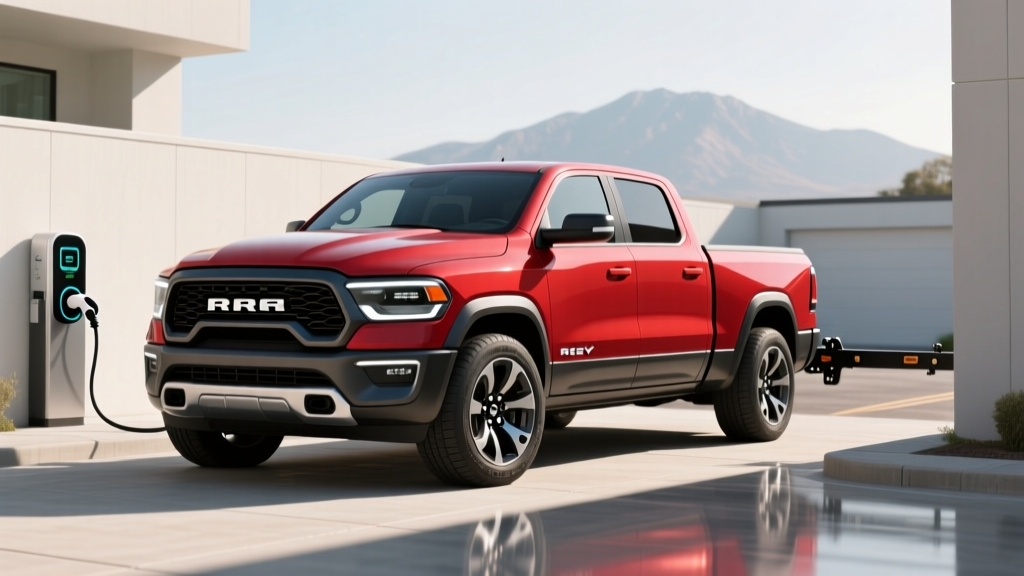
If you've been searching for information on the bolt pattern 2007 Dodge Ram 1500 owners know well — that 5x139.7mm (5x5.5-inch) lug configuration — you may be wondering whether upgrading to the new 2026 Ram 1500 REV means leaving your wheel collection behind. The answer is nuanced, and so is this truck. Ram's first battery-electric pickup arrives with a 350-mile EPA-estimated range on the large-pack model, an 800-volt architecture capable of 250 kW peak DC fast charging, and a starting MSRP around $58,000 before incentives. It's a serious contender in the electric truck space, but buyers need to understand the real-world trade-offs before signing a delivery agreement.
Range, Battery & Efficiency
The 2026 Ram 1500 REV offers two battery configurations, both using nickel-manganese-cobalt (NMC) lithium-ion chemistry chosen for its higher energy density — critical in a full-size truck where towing and payload demand substantial reserves.
| Spec | Standard Pack | Extended Pack |
|---|---|---|
| Usable Capacity | 129 kWh | 168 kWh |
| Chemistry | NMC | NMC |
| EPA Range | 230 mi | 350 mi |
| Efficiency (Combined) | ~56 kWh/100mi | ~48 kWh/100mi |
| MPGe (Combined) | ~60 MPGe | ~70 MPGe |
At roughly 48 kWh per 100 miles on the extended pack, the REV is efficient for a full-size body-on-frame truck, though it trails the aerodynamically optimized Rivian R1T dual-motor. For context, a gasoline Ram 1500 with the 5.7L Hemi V8 averages around 17 MPG combined — the REV uses the energy equivalent of roughly 48 kWh (about $6–$8 of electricity at residential rates) to cover the same 100 miles that would cost $18–$22 in gasoline.
Charging Speed: 800V Architecture Explained
Ram equips the REV with an 800-volt electrical architecture, which enables faster DC fast charging at compatible stations while reducing current (and therefore heat) through the cables. Here's what you can expect at each charging level:
| Level | Power | Rate | Notes |
|---|---|---|---|
| Level 1 (120V) | ~1.4 kW | ~3 mi/hr | Emergency/top-up only |
| Level 2 (240V, 48A) | 11.5 kW | ~23 mi/hr | Overnight home charging |
| DC Fast (peak) | 250 kW | 10–80% in ~26 min (ext. pack) | Tapers above 80% SoC |
The 10–80% time of approximately 26 minutes for the 168 kWh pack is competitive with the Ford F-150 Lightning's extended-range pack but trails the Chevrolet Silverado EV's 400-mile version, which benefits from GM's Ultium platform. Remember: peak kW is not sustained kW. The REV will pull close to 250 kW only between roughly 15–50% state of charge, then taper to ~150 kW through 70%, and below 80 kW past 80%. Always precondition the battery via the truck's navigation-routed charging for optimal speeds.
Performance, Towing & Drivetrain
Every 2026 Ram 1500 REV uses a dual-motor all-wheel-drive layout — one motor on each axle — producing a combined 654 horsepower and 620 lb-ft of torque. Ram quotes a 0–60 mph time of 4.4 seconds, which is remarkably quick for a truck with a curb weight approaching 7,000 pounds on the extended-pack model.
| Metric | Specification |
|---|---|
| Horsepower | 654 hp |
| Torque | 620 lb-ft |
| 0–60 mph | 4.4 sec |
| Drivetrain | Dual-motor AWD |
| Max Towing | 14,000 lbs (properly equipped) |
| Payload | ~1,800 lbs |
| Bidirectional Power | V2L / V2H capable |
The 14,000-pound max tow rating is the highest in the electric pickup segment as of 2026, surpassing the F-150 Lightning's 10,000-pound limit. However, towing at max capacity will cut range by 40–60%. Plan for 140–200 miles on the extended pack when pulling a heavy trailer — and factor in more frequent charging stops on long hauls.
Bolt Pattern & Wheel Compatibility: What Upgraders Need to Know
Longtime Ram owners researching the bolt pattern 2007 Dodge Ram 1500 used — that classic 5-lug, 5x139.7mm (5x5.5-inch) pattern — should note that the 2026 Ram 1500 REV uses a different bolt pattern. The REV, built on the new STLA Frame platform, switches to a 6-lug pattern (6x139.7mm / 6x5.5-inch), consistent with Ram's heavier-duty trucks and the broader industry shift for full-size platforms carrying greater mass.
This means your existing collection of 5-lug wheels from a 2007–2018 Ram 1500 will not directly bolt onto the REV. Aftermarket wheel manufacturers are already producing 6-lug options specifically for the STLA Frame platform, and hub-centric adapters exist but are not recommended for towing or heavy-load applications due to the added stress on wheel studs at the REV's higher curb weight. Budget $1,200–$3,000 for a set of compatible aftermarket wheels if that's part of your build plan.
Pricing, Trims & Federal Tax Credit
The 2026 Ram 1500 REV launches in multiple trims, with the extended-range 168 kWh battery available on mid-tier and above configurations.
| Trim | Battery | MSRP | Est. After §30D Credit |
|---|---|---|---|
| Tradesman | 129 kWh | $58,000 | $50,500* |
| Big Horn / Lone Star | 129 kWh | $63,000 | $55,500* |
| Laramie | 168 kWh | $73,000 | $65,500* |
| Limited | 168 kWh | $85,000 | $77,500* |
*Estimated after federal credit. Actual eligibility depends on buyer income, battery sourcing, and MSRP caps.
- MSRP Cap: Vans, SUVs, and pickups are capped at $80,000 MSRP — the Limited trim may exceed this threshold depending on options, disqualifying it from the credit.
- Income Caps: Modified AGI must not exceed $150,000 (single), $225,000 (head of household), or $300,000 (joint filers).
- Battery Sourcing: The full $7,500 requires meeting both critical-mineral and battery-component sourcing requirements per IRS §30D rules. Partial credit ($3,750) is available if only one requirement is met. Verify current-year compliance on the IRS website before purchase.
- Point-of-Sale Transfer: As of 2024+, eligible buyers can transfer the credit to the dealer at purchase, reducing the out-of-pocket price immediately rather than waiting for tax filing.
Interior, Cargo & Technology
The REV rides on Stellantis' STLA Frame platform, which positions the battery pack within the frame rails rather than as a skateboard beneath. This architecture enables a few unique packaging advantages:
- Front Trunk (Frunk): The REV features a powered front trunk with approximately 15 cubic feet of lockable, weather-sealed storage — large enough for a full set of power tools or several grocery bags. Ram includes a drain plug, so it doubles as a cooler.
- Bed Length: A 5-foot-7 bed is standard, slightly shorter than the ICE Ram's 6-foot-4 option, to accommodate the cab's longer dash-to-axle proportion.
- Passenger Space: Rear legroom measures 45.2 inches, among the most generous in the segment, aided by the flat floor (no transmission tunnel).
- Infotainment: A 14.5-inch center touchscreen runs Ram's Uconnect 5 system with wireless Apple CarPlay and Android Auto. An available 10.25-inch passenger display and a 12.3-inch digital cluster round out the screen array.
- Driver Assistance: The REV ships with Active Driving Assist (SAE Level 2), which provides lane-centering and adaptive cruise control. This is not autonomous driving — the driver must remain engaged with hands on the wheel. Available hands-free driving assist on mapped highways is expected as an over-the-air update.
Warranty & Long-Term Ownership
| Coverage | Term |
|---|---|
| Basic (Bumper-to-Bumper) | 3 years / 36,000 miles |
| Powertrain | 5 years / 60,000 miles |
| Battery Pack | 8 years / 100,000 miles (min. 70% capacity retention) |
| Corrosion (perforation) | 5 years / unlimited miles |
The 8-year/100,000-mile battery warranty with a 70% capacity retention floor is mandated by federal emissions warranty precedent and matches the standard set by Ford, GM, and Rivian for their electric trucks. Real-world NMC degradation data from comparable platforms suggests most owners will see 85–90% state of health at 100,000 miles under normal use. Avoid habitual DC fast charging above 90% SoC and regular deep discharges below 10% to maximize longevity.
Pros, Cons & Who Should Buy
Pros
- Best-in-class 14,000-lb tow rating for an EV
- 350-mile EPA range (extended pack) is segment-leading
- 800V architecture enables competitive 250 kW DC charging
- Massive 15 cu-ft powered frunk with drain
- V2H/V2L bidirectional power for home backup and job-site use
- Spacious rear seat with flat floor
Cons
- Base MSRP starts at $58,000; well-equipped models exceed $80K credit cap
- Shorter 5'7" bed vs. ICE Ram's available 6'4" option
- 6-lug bolt pattern breaks compatibility with older Ram 5-lug wheels
- Heavy towing cuts range by 40–60%
- Limited public DC charging infrastructure in rural/towing corridors
- First model year — expect early-production software quirks
- Homeowners with Level 2 charging access who want daily electric commuting (~30–60 mi round trip) with weekend towing capability.
- Job-site professionals who can use V2L to power tools without a generator.
- Existing Ram loyalists upgrading from older 1500s (including 2007–2018 models) who want to go electric but need truck capability — just plan for new wheels.
- NOT ideal for: Long-distance tower-towing across rural charging deserts, or buyers who need the 6'4" bed for frequent lumber/plywood hauling.
Frequently Asked Questions
What is the real-world range of the 2026 Ram 1500 REV?
The EPA rates the extended 168 kWh pack at 350 miles. Real-world highway driving at 70 mph typically yields 280–310 miles. In freezing temperatures (below 32°F), expect 240–265 miles. The standard 129 kWh pack is EPA-rated at 230 miles, with real-world highway use closer to 185–200 miles.
How fast does the Ram 1500 REV charge?
On a 250 kW DC fast charger, the extended pack charges from 10–80% in approximately 26 minutes, though peak speed is only sustained between roughly 15–50% SoC. At home on a 48-amp Level 2 charger (11.5 kW), the extended pack adds about 23 miles per hour, fully replenishing in roughly 15 hours from empty.
Does the Ram 1500 REV qualify for the federal EV tax credit?
It can, but eligibility depends on several factors under IRS §30D: your modified AGI must fall below income caps ($150K single / $300K joint), the truck's MSRP must not exceed $80,000 (which eliminates some fully optioned Limited trims), and the battery must meet critical-mineral and component-sourcing requirements for the full $7,500. Check the IRS qualified vehicle list at time of purchase, as sourcing compliance can change.
What is the bolt pattern on the 2026 Ram 1500 REV vs. older models?
The 2026 REV uses a 6-lug, 6x139.7mm (6x5.5-inch) bolt pattern on the STLA Frame platform. This differs from the 5-lug, 5x139.7mm pattern used on the 2007 Dodge Ram 1500 and subsequent ICE models through 2024. Wheels from older 5-lug Ram trucks will not fit the REV without adapters, which are not recommended for towing or heavy-load use.
How does the REV compare to the Ford F-150 Lightning and Chevy Silverado EV?
The REV's 350-mile max range and 14,000-lb tow rating exceed both the Lightning (320 mi / 10,000 lb) and the Silverado EV 4WT (400 mi / 10,000 lb towing on work trims). However, the Lightning has a more mature charging network relationship and broader dealer service footprint, while the Silverado EV offers a longer 400-mile option. The REV's advantage is the combination of range and towing — but first-year reliability remains an open question compared to the Lightning's multi-year track record.
Can the Ram 1500 REV power my home during an outage?
Yes. With the available Ram PowerBox and a compatible home energy management system, the REV's V2H capability can back-feed your home's electrical panel. The 168 kWh battery can sustain an average household (30–40 kWh/day) for approximately 3–5 days. This requires professional installation of a bidirectional charger and transfer switch — budget $3,000–$6,000 for the home-side equipment and electrician labor.
Sources: fueleconomy.gov, IRS New Clean Vehicle Credit, NHTSA, Ram Trucks official specifications.