Quick Answer: Is the Ram 1500 REV Right for You?
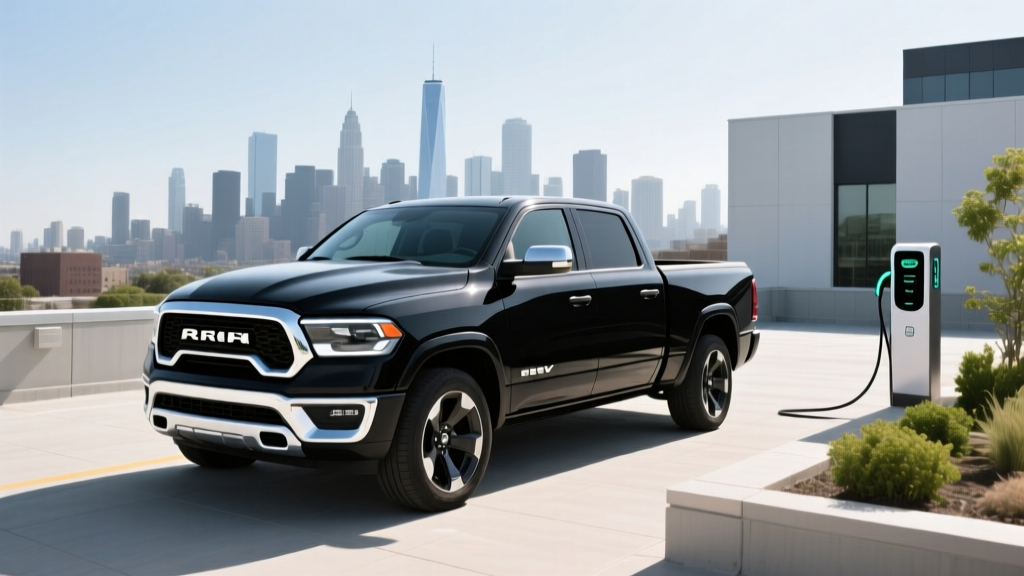
The Ram 1500 REV is Stellantis's first full-size electric pickup, targeting buyers who need truck capability without tailpipe emissions. It offers up to an estimated 350 miles of EPA range (with the larger battery pack), DC fast charging up to 350 kW, and a starting MSRP around $58,000 before incentives. It competes directly with the Ford F-150 Lightning and Rivian R1T, but with a more traditional truck design and Ram's signature ride quality. If you tow heavy loads frequently, live in a region with sparse DC fast-charging infrastructure, or lack access to home Level 2 charging, the REV demands careful consideration before purchase.
Ram 1500 REV Specs: Range, Battery, and Performance
The Ram 1500 REV is built on Stellantis's STLA Frame platform, a body-on-frame architecture designed specifically for full-size electric trucks. Ram has confirmed two battery pack options, and understanding the trade-offs between them is critical for buyers.
| Specification | Standard Range Pack | Extended Range Pack |
|---|---|---|
| Battery Capacity (usable) | ~168 kWh (estimated) | ~229 kWh (estimated) |
| Battery Chemistry | NMC (Nickel Manganese Cobalt) | NMC |
| EPA Range (est.) | ~230 miles | ~350 miles |
| Peak DC Fast Charge Rate | Up to 350 kW | Up to 350 kW |
| 10–80% DC Fast Charge Time | ~23 minutes (est.) | ~40 minutes (est.) |
| Level 2 Charging (Home) | Up to 19.2 kW | Up to 19.2 kW |
| Horsepower | ~654 hp (dual motor AWD) | ~654 hp (dual motor AWD) |
| Torque | ~620 lb-ft | ~620 lb-ft |
| 0–60 mph | ~4.4 seconds (est.) | ~4.4 seconds (est.) |
| Max Towing Capacity | ~10,000 lbs (est.) | ~10,000 lbs (est.) |
| Max Payload | ~1,800 lbs (est.) | ~1,500 lbs (est.) |
| Starting MSRP | ~$58,000 | ~$68,000+ |
Note: The Ram 1500 REV has been announced with preliminary specifications. Final EPA certification figures and production pricing may differ. Always verify with Ram's official channels before ordering.
Real-World Range vs. EPA Sticker
The EPA range estimate assumes a mix of city and highway driving at moderate temperatures. In real-world conditions, expect the following adjustments:
- Highway-only driving at 70+ mph: Reduce EPA range by 15–20%. A 350-mile sticker becomes roughly 280–300 miles.
- Cold weather (below 32°F): Battery chemistry slows and cabin heating draws significant energy. Expect 20–30% range loss, bringing the extended pack down to ~245–280 miles.
- Towing a 7,000+ lb trailer: Range can drop 40–50%. Plan for 150–200 miles between charges with a heavy trailer.
- Combined realistic daily use (mixed driving, mild climate): The extended-range pack should deliver 300–320 miles comfortably.
Charging the Ram 1500 REV: Home, Public, and What You'll Actually Pay
Charging infrastructure is the single biggest ownership variable for any EV, and it's amplified in a truck with a battery this large. The REV's massive battery packs mean longer charge times at lower power levels — a physics reality no marketing can overcome.
| Charging Level | Power (kW) | Miles Added per Hour | Full Charge Time (Extended Pack) | Typical Use Case |
|---|---|---|---|---|
| Level 1 (120V household outlet) | ~1.4 kW | ~3–4 mi/hr | ~65+ hours | Emergency top-offs only |
| Level 2 (240V home charger, 48A) | ~11.5 kW | ~28–32 mi/hr | ~10–12 hours | Overnight home charging |
| Level 2 (240V, 80A / 19.2 kW capable) | ~19.2 kW | ~47–52 mi/hr | ~6–7 hours | Faster home or workplace charging |
| DC Fast Charging (peak 350 kW) | Up to 350 kW | ~800+ mi/hr (at peak) | 10–80% in ~40 min | Road trips, highway corridors |
Understanding the Charge Curve
The "350 kW peak" figure is exactly that — a peak, not a sustained rate. Like all EVs, the Ram 1500 REV's battery management system tapers charge speed as the state of charge (SoC) climbs to protect battery health. Expect the truck to hold near peak speed only between roughly 10–40% SoC, then step down progressively. A 10–80% session on a 350 kW charger will average closer to 180–220 kW across the full session. This is normal EV behavior, not a flaw, but it means actual charging stops on road trips will take 35–45 minutes, not the 15 minutes some marketing implies.
Preconditioning Matters
The REV includes battery preconditioning — when you navigate to a DC fast charger, the truck warms or cools the battery to optimal temperature before you arrive. This can shave 5–10 minutes off your charge session and help you reach peak kW faster. Always use the built-in navigation for charging stops to enable this feature.
Home Charging Installation: What It Actually Costs
Most Ram 1500 REV owners will need a Level 2 home charger to make daily ownership practical. With a 229 kWh extended-range pack, Level 1 (120V) charging is functionally useless for regular use — it would take nearly three days to fully recharge from empty.
| Item | Typical Cost Range |
|---|---|
| Level 2 EVSE (charger unit, 48A) | $400–$800 |
| Electrician labor (240V/50A circuit install) | $800–$2,500 |
| Electrical panel upgrade (if needed, 100A→200A) | $1,500–$4,000 |
| Permits and inspection | $100–$400 |
| Total (no panel upgrade) | $1,300–$3,700 |
| Total (with panel upgrade) | $2,800–$7,700 |
Homes with existing 200-amp electrical panels and a nearby garage outlet location will be on the lower end. Older homes with 100-amp service, or those requiring long conduit runs from the panel to the garage, will hit the higher range. Get a quote from a licensed electrician before ordering your truck — this is a non-negotiable step.
Cost to Charge: Electricity vs. Gasoline
| Scenario | Ram 1500 REV (Extended) | Gas Ram 1500 (5.7L HEMI V8, 17 MPG combined) |
|---|---|---|
| Energy/Fuel Cost per Mile | $0.04–$0.06 (home charging at $0.14/kWh avg) | $0.21 (at $3.60/gallon) |
| Cost for 15,000 miles/year | $600–$900 | ~$3,180 |
| Annual Fuel/Energy Savings | $2,280–$2,580/year for the EV | |
| DC Fast Charging (road trips, $0.40/kWh avg) | $0.11–$0.15/mile | $0.21/mile |
Home charging delivers dramatic savings. However, if you rely heavily on public DC fast charging — particularly networks like Electrify America or EVgo at $0.35–$0.55/kWh — your per-mile cost rises to $0.10–$0.16, narrowing the gap significantly. The economics strongly favor owners who can charge at home overnight.
Federal Tax Credits and Incentives: What You Can Actually Claim
The Ram 1500 REV's eligibility for the federal §30D clean vehicle tax credit depends on several factors that change frequently under current IRS rules:
- MSRP cap: Vans, SUVs, and pickups must have an MSRP at or below $80,000 to qualify. The base and mid-tier REV trims should clear this threshold; fully loaded top trims may exceed it.
- Buyer income limits: Adjusted gross income must not exceed $300,000 (joint filers), $225,000 (head of household), or $150,000 (single filers).
- Battery sourcing requirements: A percentage of critical minerals and battery components must be sourced from the US or free-trade-agreement countries. These thresholds tighten annually. Ram has not confirmed full compliance for all trims.
- Point-of-sale transfer: Under current rules, eligible buyers can transfer the credit to the dealer at purchase, reducing the purchase price directly rather than waiting for a tax refund.
- Maximum credit: Up to $7,500 ($3,750 for critical minerals + $3,750 for battery components) if all requirements are met.
Key caveat: Tax credit eligibility is complex and model-year dependent. Consult a tax professional and verify current eligibility on fueleconomy.gov before assuming you'll receive the full credit. State-level incentives (California, Colorado, New York, and others) may stack on top but vary by jurisdiction — check your state's energy office for current programs.
EV Truck vs. Gas Truck: The Honest Comparison
| Factor | Ram 1500 REV (EV) | Gas Ram 1500 (V8) |
|---|---|---|
| Starting MSRP | ~$58,000 | ~$42,000 |
| Federal Tax Credit (potential) | Up to $7,500 | $0 |
| Effective Starting Price | ~$50,500 (if eligible) | ~$42,000 |
| Annual Fuel/Energy Cost | $600–$900 | ~$3,180 |
| Annual Maintenance | ~$200–$400 (no oil, fewer fluids) | ~$800–$1,200 |
| 5-Year Fuel + Maintenance | ~$4,000–$6,500 | ~$19,900–$21,900 |
| Range (realistic mixed) | 300–320 miles (extended pack) | ~450–500 miles |
| Refuel/Recharge Time | 35–45 min (DC fast, 10–80%) | ~5 min (gas station) |
| Towing Range Impact | Severe (40–50% range loss) | Moderate (30–40% MPG loss) |
| Cold-Weather Range Loss | 20–30% | Negligible |
| Insurance (average) | Higher (+10–20% vs gas equivalent) | Baseline |
The math favors the REV over time for drivers who commute daily, charge at home, and don't tow frequently. The upfront price premium of ~$8,500–$16,000 (depending on credit eligibility) is offset by roughly $2,500–$3,000 per year in fuel and maintenance savings — meaning break-even arrives around year 3–5 for typical drivers. Heavy towers and road-trippers will take longer to break even, or may never reach it.
Real-World Ownership: What First-Time EV Truck Buyers Must Know
Home Charging Access Is Non-Negotiable for Most Buyers
If you cannot install a Level 2 charger at home — whether due to renting, street parking, or HOA restrictions — owning a truck with a 229 kWh battery becomes significantly harder. Public charging infrastructure is improving but remains inconsistent outside major highway corridors. Relying solely on DC fast charging for daily needs means spending 40+ minutes per session, multiple times per week, at a cost approaching gasoline. Evaluate your charging situation honestly before purchasing.
Towing With an EV Truck Changes Everything
The Ram 1500 REV's ~10,000 lb towing rating sounds competitive, but range is the limiting factor, not capability. Towing a 7,000 lb travel trailer at highway speeds will consume energy at roughly double the normal rate. With the extended-range pack, expect 150–200 miles of range while towing — meaning stops every 2 hours on long hauls. DC fast chargers capable of 350 kW are still sparse on rural routes where many boat ramps and campgrounds are located. If you tow more than a few times per year over long distances, a diesel or gas Ram 1500 remains the more practical tool.
Battery Warranty and Longevity
Ram is expected to offer a battery warranty of at least 8 years/100,000 miles (the federal minimum for EV batteries), with coverage against capacity loss below a specified threshold (typically 70% state of health). NMC batteries in modern thermal-management systems degrade slowly — industry data suggests 10–15% capacity loss over 100,000–150,000 miles for well-managed packs. Battery replacement costs for a pack this size are substantial ($15,000–$25,000+ out of warranty), making the warranty coverage critical to understand before purchase.
Cold-Weather Reality
Lithium-ion batteries lose efficiency in freezing temperatures, and the energy demand of cabin heating (without a heat pump, which Ram has not confirmed for the REV) compounds the problem. Northern-climate owners should budget 20–30% range reduction in winter months and plan charging accordingly. Garage parking and preconditioning help mitigate this significantly.
Common Misconceptions About Electric Trucks
| Myth | Fact |
|---|---|
| "The battery will need replacing in 5 years" | Modern NMC packs with active thermal management are designed for 150,000+ miles with gradual, not sudden, degradation. Most EV batteries outlast their warranty periods with 85–90% capacity retained. |
| "EV trucks can't tow" | They can tow heavy loads — the REV targets 10,000 lbs. The issue is range while towing, not capability. Plan shorter legs and more stops. |
| "Charging is always cheaper than gas" | Home charging at average residential rates is dramatically cheaper. Public DC fast charging at $0.40–$0.55/kWh can approach or exceed gasoline cost per mile, especially in the REV's heavy, less-efficient body. |
| "I can charge from any regular outlet" | Level 1 (120V) adds only ~3–4 miles per hour. For a 229 kWh pack, a full charge would take 60+ hours. Level 2 (240V) is effectively required for daily ownership. |
| "The tax credit is guaranteed" | §30D eligibility depends on MSRP, buyer income, battery sourcing, and annual rule changes. Never assume the full $7,500 without verifying current-year rules on the IRS website. |
Decision Framework: Should You Buy the Ram 1500 REV?
Choose the Ram 1500 REV If:
- You have access to home Level 2 charging (garage or driveway with 240V circuit capability)
- Your daily driving is under 200 miles round-trip, with occasional longer road trips
- You tow infrequently or over short distances (under 100 miles per trip)
- You want truck utility with lower running costs and no tailpipe emissions
- You qualify for the federal tax credit and/or state incentives, narrowing the price gap with gas trucks
- You value instant torque, quiet operation, and the ability to "refuel" overnight at home
Stick With a Gas or Hybrid Ram 1500 If:
- You tow heavy trailers over long distances regularly (construction, farming, RV travel)
- You cannot install a Level 2 charger at home and lack reliable workplace charging
- You live in a region with extreme cold and limited DC fast-charging infrastructure
- Your budget is firm below $50,000 and you don't qualify for tax incentives
- You regularly drive 400+ miles in a single day and can't accommodate 40-minute charging stops
Frequently Asked Questions
When will the Ram 1500 REV be available to order?
Ram has announced the 1500 REV with reservations open, and production deliveries are targeted for the 2026 model year. Final pricing and EPA certification may shift before customer vehicles ship. Monitor Ram's official site and fueleconomy.gov for confirmed figures.
Will the Ram 1500 REV qualify for the $7,500 federal tax credit?
Eligibility depends on the specific trim's MSRP (must be ≤$80,000 for trucks), your income, and battery component/critical mineral sourcing compliance. Base and mid-tier trims are most likely to qualify. Verify on IRS.gov and with your tax professional before purchasing.
How long does it take to charge the Ram 1500 REV at home?
On a Level 2 charger at 11.5 kW (48A, most common home setup), the extended-range 229 kWh pack takes approximately 10–12 hours from empty to full — essentially one overnight session. Most owners charge incrementally each night rather than from 0% to 100%.
What happens to the battery in extreme cold?
Expect 20–30% range reduction in sustained sub-freezing temperatures. The battery's thermal management system will work to keep the pack in an optimal temperature window, but energy used for heating (cabin and battery) reduces available range. Preconditioning while plugged in mitigates some of this loss.
Is the Ram 1500 REV self-driving?
No. The REV will include advanced driver-assistance systems (ADAS) — likely adaptive cruise control, lane-keeping, and automated parking features — but these are SAE Level 2 systems requiring full driver attention at all times. No production consumer vehicle sold in the US is self-driving. Only Level 4 robotaxi services like Waymo operate without a human driver, and only in geofenced areas.
How does the REV compare to the Ford F-150 Lightning?
The F-150 Lightning launched earlier with proven real-world data: EPA ranges of 240–320 miles depending on pack, peak DC charging around 150–210 kW (depending on model year and pack), and a base price starting in the mid-$50,000s. The REV targets a higher peak charge rate (350 kW) and potentially more range with its larger pack option, but is newer to market with less proven ownership data. Cross-shop both with real test drives and charging-network evaluations for your specific routes.