The Ramcharger Explained: What Is an EREV Truck?
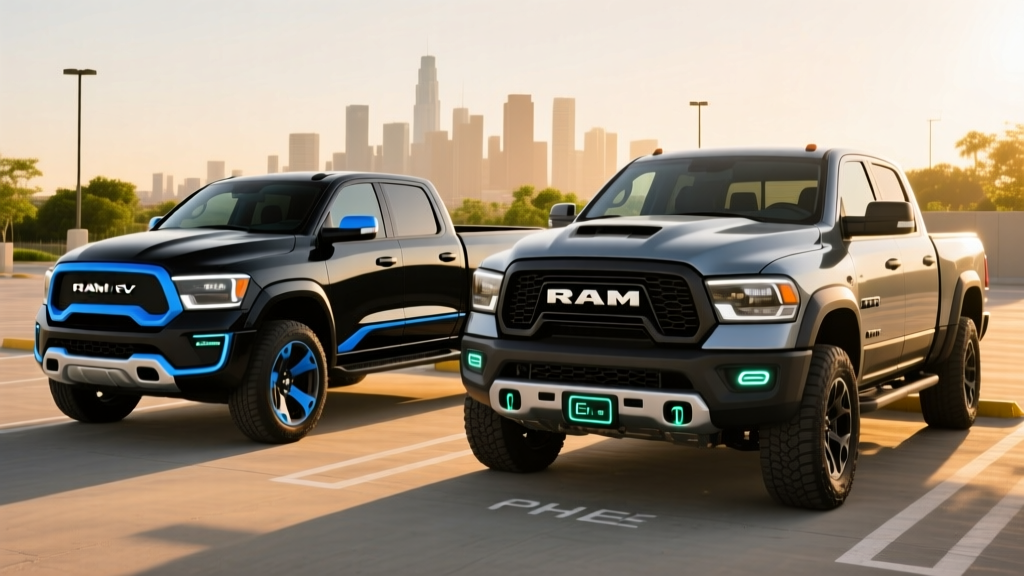
The 2026 Ram 1500 Ramcharger isn't a pure battery-electric truck, and it isn't a traditional hybrid either. It's an extended-range electric vehicle (EREV) — a full-time electric drivetrain backed by an onboard gasoline generator that exists solely to recharge the battery. The wheels are always driven by electricity; the 3.6-liter Pentastar V6 under the hood never connects to them mechanically.
For truck buyers who want electric torque and daily EV commuting but can't stomach the range compromises of a pure BEV on long hauls or trailer pulls, the Ramcharger is Stellantis's answer. It arrives alongside the fully electric Ram 1500 REV, giving Ram two distinct electrified paths. This review focuses on the Ramcharger EREV variant — the one with the range-extender generator — because it occupies a unique niche that no other full-size truck currently fills in the U.S. market.
In a plug-in hybrid (PHEV), the gas engine can drive the wheels directly. In an EREV like the Ramcharger, the gas engine only generates electricity. You get the smooth, instant-torque feel of a pure EV at all times, with the gas generator acting as a mobile power plant when the battery depletes.
Range, Battery, and Efficiency: The Numbers That Matter
The Ramcharger's headline figure is its combined electric-plus-generator range, but the battery-only range is what determines your daily operating cost and driving experience.
| Specification | Value |
|---|---|
| Battery Capacity (Usable) | ~92 kWh (NMC lithium-ion) |
| Battery-Only EPA Range | ~145 miles (estimated) |
| Total Range (Battery + Generator) | ~690 miles (estimated) |
| Fuel Tank Capacity | ~26 gallons |
| Onboard Generator | 3.6L V6, ~130 kW output |
| Combined MPGe (Battery Mode) | ~70 MPGe (estimated) |
| Generator Mode MPG | ~18-20 MPG combined (estimated) |
| Battery Chemistry | NMC (Nickel Manganese Cobalt) |
The estimated 145-mile electric-only range assumes moderate temperatures and mixed driving. Expect 115-130 miles of battery range in sustained highway driving at 70+ mph, and potentially 95-110 miles in sub-freezing winter conditions. The 92 kWh battery is large by PHEV standards but still smaller than pure BEV truck batteries (the Ram 1500 REV offers up to 229 kWh). When the generator kicks in, the combined 690-mile range is achievable under ideal conditions — towing a heavy trailer or driving in mountains will reduce that figure significantly, likely to the 450-550 mile range.
The NMC chemistry choice prioritizes energy density over the cycle-life longevity of LFP cells. For an EREV where the battery cycles less frequently than a pure BEV (the generator buffers deep discharges on long trips), NMC is a reasonable engineering trade-off.
Charging Speed: DC Fast Charge and Home Level 2
Charging is where EREV ownership gets practical. You'll charge the 92 kWh battery at home overnight and top up on DC fast chargers during road trips — though the generator means you're never truly stranded.
| Charging Level | Power / Rate | Time / Miles Added |
|---|---|---|
| Level 1 (120V household) | ~1.4 kW | ~3-4 mi/hr; full charge ~65+ hrs |
| Level 2 (240V home) | ~11.5 kW (estimated) | ~25-30 mi/hr; full charge ~8-9 hrs |
| DC Fast Charge (peak) | ~150 kW (estimated) | 10-80% in ~30 min (estimated) |
The ~150 kW DC fast-charge peak is modest compared to the 350 kW architectures on the Hyundai Ioniq 5 or the Ram 1500 REV's 800-volt system. The Ramcharger's charge curve will likely taper noticeably above 80% state of charge, as is typical with NMC packs. On a road trip, the practical play is to charge to 80% in roughly 30 minutes and let the generator handle the rest — you don't need to wait for a full battery when you have a gas-powered range extender.
At home, an 11.5 kW Level 2 charger on a 48-amp circuit will replenish the battery overnight in about 8-9 hours. Most Ramcharger owners who commute under 100 miles daily will rarely need the generator, effectively operating as a pure EV Monday through Friday.
Performance and Drivetrain
The Ramcharger uses a dual-motor all-wheel-drive layout with a combined output that puts it in serious performance territory for a full-size truck.
| Performance Spec | Value |
|---|---|
| Drivetrain | Dual-motor AWD (full-time electric) |
| Horsepower | ~663 hp (estimated, combined) |
| Torque | ~615 lb-ft (estimated) |
| 0-60 mph | ~4.4 seconds (estimated) |
| Max Towing Capacity | ~14,000 lbs (estimated) |
| Max Payload | ~2,625 lbs (estimated) |
Because the motors drive the wheels at all times, the Ramcharger delivers the instant, linear torque characteristic of EVs — no turbo lag, no transmission hunting. The 4.4-second 0-60 estimate is remarkable for a truck of this size and weight. Towing will naturally reduce both electric range and overall efficiency; expect battery-only range to drop to 50-70 miles when pulling a 7,000+ lb trailer, at which point the generator will be running frequently.
Interior, Cargo, and Technology
The Ramcharger is built on Ram's STLA Frame platform and shares its interior with the refreshed Ram 1500 lineup. The crew cab configuration is the primary offering, with a 5-foot-7 bed.
- Infotainment: Up to 14.5-inch center touchscreen with Uconnect 5, wireless Apple CarPlay and Android Auto
- Driver Display: 12-inch digital instrument cluster
- Passenger Display: Available 10.25-inch front passenger screen
- Driver Assistance: Adaptive cruise control, lane-keeping assist, active lane management, drowsy driver detection — all SAE Level 2 (driver must remain engaged)
- Hands-Free Driving: Available Active Driving Assist on mapped highways (still Level 2, eyes-on required in most conditions)
- Front Trunk (Frunk): The generator occupies the space where a BEV frunk would be — no front cargo area
- Bed Cargo Volume: ~61.5 cu ft (5'7" bed)
- Rear Legroom: ~45.2 inches (crew cab)
- V2L Capability: Pro Power-style onboard outlets expected, allowing the battery/generator to power tools or campsite equipment
Unlike the pure-electric Ram 1500 REV (which offers a lockable front trunk), the Ramcharger's 3.6L V6 generator occupies the engine bay. If lockable, weather-sealed front storage is important to you, this is a meaningful trade-off.
Pricing, Trims, and Federal Tax Credit Eligibility
The Ramcharger is positioned as a premium electrified truck, and pricing reflects that. Here's what we know about the 2026 model-year lineup:
| Trim | Est. MSRP | §30D Credit Eligibility |
|---|---|---|
| Tradesman | ~$60,000 | Potentially eligible (under $80K truck cap) |
| Laramie | ~$68,000 | Potentially eligible |
| Limited | ~$78,000 | Potentially eligible (near $80K cap) |
- MSRP Cap: Trucks, vans, and SUVs must have an MSRP at or below $80,000.
- Buyer Income Cap: Modified AGI must not exceed $150,000 (single), $225,000 (head of household), or $300,000 (joint).
- Battery Sourcing: The $7,500 credit splits into two halves — $3,750 for critical-mineral sourcing and $3,750 for battery-component manufacturing. Sourcing requirements tighten annually. Check the latest IRS eligible vehicle list before purchasing.
- Point-of-Sale Transfer: You can transfer the credit to the dealer at purchase to reduce your out-of-pocket cost, rather than waiting to claim it on your tax return.
- EREV Classification: The Ramcharger qualifies as a plug-in electric vehicle under §30D provided it meets the minimum 7 kWh battery capacity requirement (its ~92 kWh pack far exceeds this).
Consult a tax professional and verify current eligibility at fueleconomy.gov before finalizing your purchase.
Warranty Coverage
| Coverage | Term |
|---|---|
| Basic Bumper-to-Bumper | 3 years / 36,000 miles |
| Powertrain (incl. generator) | 5 years / 60,000 miles |
| Battery Pack | 8 years / 100,000 miles (estimated, retaining ≥70% capacity) |
The 8-year/100,000-mile battery warranty is consistent with federal requirements for plug-in vehicles and matches the coverage offered by Ford, GM, and most competitors. The battery replacement cost for a ~92 kWh NMC pack, out of warranty, is estimated at $12,000-$18,000 based on current cell pricing trends — a figure worth considering for second-ownership scenarios.
Ramcharger vs. the Competition
The EREV truck segment is thin in 2026, but the Ramcharger competes against both pure BEV trucks and PHEVs:
| Spec | Ram 1500 Ramcharger (EREV) | Ford F-150 Lightning (BEV) | Chevy Silverado EV (BEV) |
|---|---|---|---|
| Type | EREV | BEV | BEV |
| Battery (kWh) | ~92 | 98 / 131 | ~200 |
| EV-Only Range | ~145 mi | 230-320 mi | ~380-440 mi |
| Total Range | ~690 mi | 230-320 mi | ~380-440 mi |
| Max Tow | ~14,000 lbs | 10,000 lbs | ~13,000 lbs |
| Base MSRP | ~$60,000 | ~$55,000 | ~$57,000 |
| Frunk | No | Yes (large) | No (eTrunk on some trims) |
- Choose the Ramcharger if: You regularly drive beyond 300 miles without reliable charging access, tow heavy trailers across long distances, or live in an area with sparse DC fast-charging infrastructure. The generator eliminates range anxiety entirely.
- Choose the F-150 Lightning if: You want a proven BEV truck with a massive frunk, a strong SuperCrew cab, and access to the Ford/Tesla Supercharger network via NACS adapter.
- Choose the Silverado EV if: Maximum electric range (440 mi on 4WT) is your priority and you have reliable home and destination charging.
Pros, Cons, and Final Verdict
- ~690-mile total range eliminates range anxiety
- 145-mile EV-only range covers most daily commutes on electricity alone
- ~663 hp and instant electric torque
- ~14,000-lb towing capacity is best-in-class for electrified trucks
- No dependence on public charging infrastructure for long trips
- Potential §30D tax credit eligibility
- V2L capability for job-site and campsite power
- No frunk — generator occupies the engine bay
- DC fast-charge speed (~150 kW) trails pure BEV competitors
- Generator adds maintenance (oil changes, spark plugs) vs. pure BEV
- ~18-20 MPG on generator mode is unremarkable
- Heavy curb weight affects tire wear and braking distances
- Premium pricing; base MSRP ~$60K
- Limited real-world data as a new nameplate
The Ramcharger occupies a genuinely unique position. If you need a truck that can commute on cheap electricity during the week and tow a camper 500 miles on the weekend without planning charging stops, nothing else matches it. But if you have reliable home charging and rarely exceed 300 miles in a day, a pure BEV like the F-150 Lightning or Silverado EV will cost less to operate and maintain over time.
Frequently Asked Questions
What is the real-world range of the Ramcharger EREV truck?
On battery alone, expect approximately 115-130 miles of real-world highway range, dropping to roughly 95-110 miles in cold weather. With the generator running, total range reaches an estimated 690 miles under ideal conditions, or 450-550 miles when towing or driving in mountainous terrain.
How fast does the Ramcharger charge at home and on DC fast chargers?
On a home Level 2 charger (~11.5 kW), a full charge takes roughly 8-9 hours. On a DC fast charger, the battery should reach 10-80% in approximately 30 minutes at a peak rate of ~150 kW. The generator means you can drive away at any state of charge without waiting.
How much does the Ramcharger cost after federal tax credits?
With a base MSRP of approximately $60,000, the Ramcharger could qualify for up to $7,500 under IRS §30D — bringing the effective price to around $52,500 — provided you meet income caps ($150K single / $300K joint), the battery sourcing requirements are met, and the MSRP stays under the $80,000 truck cap. Verify eligibility on the IRS eligible models page before purchase.
Does the Ramcharger qualify for the federal EV tax credit?
It is expected to qualify as a plug-in electric vehicle under §30D because its battery far exceeds the 7 kWh minimum. However, eligibility depends on battery-component and critical-mineral sourcing rules that tighten each year, buyer income limits, and the $80,000 MSRP cap for trucks. Higher trims near the cap may require careful option selection. Always confirm with your dealer and a tax professional.
Is the Ramcharger worth buying vs. the F-150 Lightning or Silverado EV?
If you regularly drive in areas with poor charging infrastructure or tow long distances, the Ramcharger's generator-backed range is a genuine advantage. If you have reliable home charging, drive under 300 miles daily, and want lower long-term maintenance costs, a pure BEV truck will likely serve you better and cost less per mile to operate.
What maintenance does the Ramcharger require compared to a pure BEV?
Unlike a pure BEV, the Ramcharger's onboard V6 generator requires periodic oil changes, filter replacements, and spark plug service — though these intervals will be longer than a conventional gas truck since the engine runs only when the battery needs replenishing. You'll still benefit from regenerative braking (reduced brake pad wear) and no transmission fluid changes.