Quick Answer: What Is the Project Vision Electric Ship Concept?
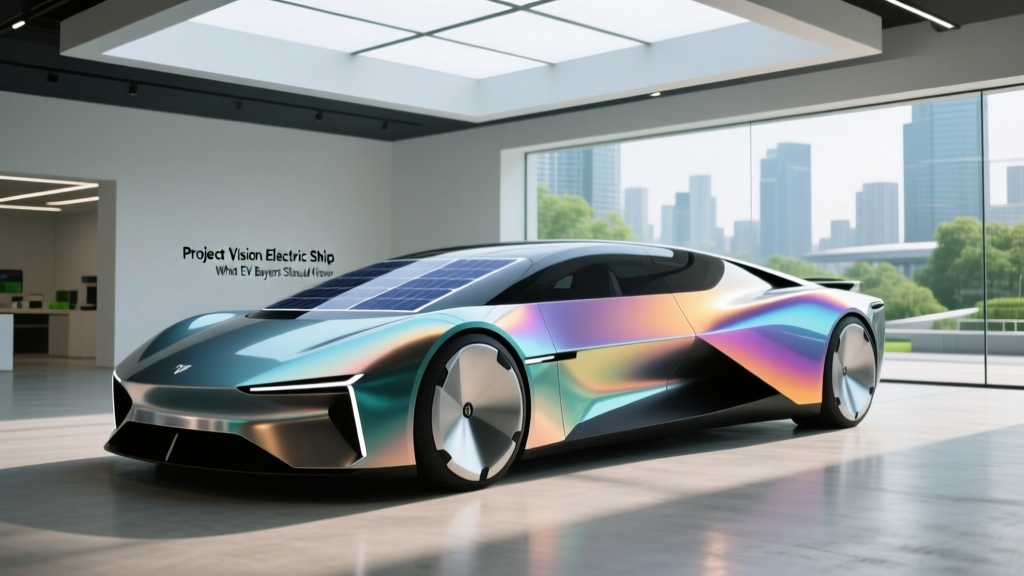
The project vision electric ship concept refers to a class of proposed zero-emission marine vessels that use large-scale lithium-ion or solid-state battery packs, electric motors, and shore-power charging infrastructure to replace diesel marine engines. While these concepts generate headlines for their environmental ambition, they share core technology — battery chemistry, thermal management, DC charging architecture, and electric drivetrains — with the EVs you can actually buy today. For EV shoppers, the real takeaway isn't about ships; it's that the same battery and charging innovations driving maritime electrification are accelerating improvements in range, charging speed, and cost for passenger vehicles.
Why an Electric Ship Concept Matters to EV Car Buyers
At first glance, a 200-passenger electric ferry or a cargo vessel concept seems distant from your daily commute. But the battery supply chain doesn't distinguish between marine and automotive applications. When a shipyard orders 10 MWh of LFP (lithium iron phosphate) cells for a coastal ferry, that demand flows through the same CATL, BYD, or Panasonic production lines supplying the Tesla Model Y, Ford F-150 Lightning, and Hyundai Ioniq 5.
The practical implications for 2026 EV buyers:
- Battery cost deflation: Marine-scale battery orders contribute to the manufacturing volume that has pushed average pack prices below $110/kWh in 2026, down from $140/kWh in 2023, according to BloombergNEF tracking.
- LFP adoption acceleration: Electric ship concepts heavily favor LFP chemistry for its thermal stability and cycle life — the same chemistry now standard in base-trim Tesla Model 3s and the Rivian R2.
- High-power DC charging infrastructure: Megawatt-level shore charging for vessels pushes development of connectors and thermal cable management that trickle down to 350+ kW passenger vehicle chargers.
The project vision electric ship concept is, in essence, a proving ground for the battery and charging technology that will define the next generation of EVs you'll drive.
The Technology Bridge: Ship Batteries vs. EV Batteries
Understanding the shared technology helps you make better EV purchase decisions. Here's how the core components compare:
| Component | Electric Ship Concept | 2026 Passenger EV (Typical) | Shared Benefit to Buyer |
|---|---|---|---|
| Battery Chemistry | LFP dominant (safety, cycle life) | LFP (base trims), NMC (performance trims) | LFP cost savings passed to consumer; expect $3,000–$5,000 lower MSRP on LFP trims |
| Pack Capacity | 2–10 MWh (2,000–10,000 kWh) | 60–120 kWh usable | Marine demand drives cell production scale, lowering per-kWh cost |
| Thermal Management | Liquid cooling, marine-grade redundancy | Liquid cooling, heat pump standard | Improved cold-weather range retention; 2026 heat pumps recover 30–40% of cold-weather loss |
| Charging Architecture | Shore-power DC, 1–5 MW per vessel | DC fast charge, 150–350 kW peak | High-power connector R&D (Megawatt Charging System) informs next-gen CCS/NACS standards |
| Cycle Life Target | 5,000–10,000 cycles (daily charge/discharge) | 1,500–3,000 cycles (consumer warranty) | Longer-lasting packs; 8-yr/100,000-mi federal warranty now a floor, not a ceiling |
The key insight: when marine applications demand 8,000+ cycle life from LFP cells, automakers inherit cells that will outlast the vehicle's body. A 2026 LFP-equipped EV driven 12,000 miles annually could realistically see less than 8% degradation over 15 years based on current cell durability data.
Real EV Ownership Costs in 2026: What the Numbers Actually Say
Maritime electrification concepts are exciting, but your budget lives on land. Here's a concrete cost breakdown comparing a representative 2026 EV, a comparable hybrid, and a gas vehicle over 5 years and 60,000 miles:
| Cost Category | 2026 EV (e.g., Tesla Model Y LR, $44,990 MSRP) | 2026 PHEV (e.g., Toyota RAV4 PHEV, $43,695 MSRP) | 2026 Gas (e.g., Toyota RAV4 LE, $30,445 MSRP) |
|---|---|---|---|
| Purchase Price (before incentives) | $44,990 | $43,695 | $30,445 |
| Federal Tax Credit (§30D, if eligible) | −$3,750 to $7,500* | −$3,750 to $7,500* | $0 |
| Fuel/Energy (60k mi) | $3,960 (at $0.14/kWh, 3.5 mi/kWh) | $4,800 (mixed electric + gas) | $7,200 (at $3.00/gal, 30 MPG combined) |
| Maintenance (5 yr) | $1,800 (tires, cabin filter, wipers) | $3,200 (oil changes + EV maintenance) | $4,500 (oil, filters, brakes, belts) |
| Insurance (5 yr avg) | $9,600 ($1,920/yr avg) | $8,400 ($1,680/yr avg) | $7,800 ($1,560/yr avg) |
| 5-Year Total Cost | ~$52,600–$56,350 | ~$55,300–$59,050 | ~$49,945 |
*Federal §30D credit eligibility depends on MSRP caps ($55,000 sedans / $80,000 SUVs/trucks), buyer income limits ($150K single / $300K joint), and battery critical-mineral sourcing requirements. Verify current rules at IRS.gov. Point-of-sale transfer is available at participating dealers.
The EV breaks even or wins on total cost when you qualify for the full credit, drive more than 10,000 miles annually, and charge primarily at home. The gas vehicle still holds a narrow upfront-price advantage, but that gap has closed to roughly $5,000–$8,000 after incentives for mainstream models.
EV vs. Gas vs. Hybrid: The Decision Matrix
Borrowing a systems-thinking approach from large-scale projects like electric ship concepts — where route distance, port charging access, and duty cycle determine feasibility — here's how to evaluate your own driving profile:
If-Then EV Decision Framework
- If you have Level 2 home charging access (240V outlet or hardwired station) AND your daily commute is under 80 miles → Choose a BEV. You'll charge overnight for $0.04–$0.06/mile and rarely visit a public charger.
- If you lack home charging AND public DC fast chargers are more than 15 minutes from your regular route → Choose a PHEV. The 30–42 mile electric-only range covers errands; the gas engine eliminates range risk.
- If you regularly drive 300+ miles in sub-30°F weather AND your route has sparse charging infrastructure → Choose a PHEV or wait. Cold weather reduces EV range 20–35% (fueleconomy.gov data), and DC charging speeds taper significantly below freezing without preconditioning.
- If you tow more than 5,000 lbs frequently → Choose a PHEV or heavy-duty EV (F-150 Lightning, Silverado EV) with the understanding that towing cuts range 40–55%.
- If your annual mileage exceeds 15,000 miles → The EV math strongly favors battery electric. Fuel savings of $3,000–$4,500 over 5 years offset higher insurance and purchase cost.
Common EV Misconceptions — Corrected with Data
Whether it's an electric ship concept promising transoceanic zero-emission voyages or an EV influencer claiming "range anxiety is dead," overselling technology helps no one. Here are the myths that actually affect your purchase decision:
| Myth | Fact (with Numbers) |
|---|---|
| "EV batteries need replacement every 5 years" | Federal warranty mandates 8 years/100,000 miles minimum capacity retention (70%+). Real-world data from fueleconomy.gov and fleet operators shows average degradation of 1.5–2.3% per year for NMC and 1.0–1.5% for LFP. At year 10, expect 85–90% of original capacity. |
| "Charging takes too long for road trips" | A 2026 Hyundai Ioniq 5 peaks at 240 kW DC, charging 10–80% in ~18 minutes with battery preconditioning. Plan 20-minute stops every 180–200 highway miles. Yes, it's longer than a 5-minute gas fill — but you're also not paying $3.00/gallon. |
| "The grid can't handle mass EV adoption" | The US Department of Energy estimates that even at 50% EV adoption, total electricity demand increases only 10–15%. Most charging occurs overnight during off-peak hours when grid capacity is underutilized. Smart charging and V2G (vehicle-to-grid) further flatten demand curves. |
| "EVs are worse for the environment due to battery mining" | Lifecycle analyses from Argonne National Laboratory show that even on the dirtiest US grid regions, an EV breaks even on carbon within 1.5–2 years of driving vs. a comparable gas car. Over 15 years, the EV produces 50–70% fewer lifecycle emissions. |
| "All EVs qualify for the $7,500 tax credit" | As of 2026, most vehicles qualify for a partial credit of $3,750 (meeting either the critical-mineral OR battery-component requirement, not both). Full $7,500 eligibility is limited. Buyer income caps ($150K single/$300K joint) and MSRP caps apply. Check the latest list at fueleconomy.gov. |
First-Time EV Buyer Checklist: What You Must Know Before Signing
Large-scale electrification projects — from electric ship concepts to municipal bus fleets — succeed or fail on infrastructure planning. Your EV purchase is no different. Before you commit:
1. Audit Your Charging Situation
Home charging is the single biggest determinant of EV satisfaction. If you own a home with a garage or dedicated parking:
- A Level 2 (240V) home charger installation costs $800–$2,500 if your electrical panel has capacity, or $2,500–$5,000+ if a panel upgrade (to 200A) is needed.
- Expect 25–44 miles of range added per hour of Level 2 charging (7.2–11.5 kW), depending on the vehicle's onboard charger.
- Level 1 (120V standard outlet) adds 3–5 miles per hour — sufficient only if you drive under 30 miles daily.
If you rent or lack dedicated parking: Prioritize PHEVs or check whether your workplace offers Level 2 charging. Relying exclusively on public DC fast charging costs 2–3× more per mile ($0.12–$0.18/mile vs. $0.04–$0.06/mile at home) and accelerates battery degradation if used daily.
2. Understand Real-World Range
EPA range stickers assume mixed driving at moderate temperatures. Reality differs:
- Highway driving at 75 mph: Expect 85–90% of EPA range.
- Cold weather (below 30°F): Expect 65–80% of EPA range without a heat pump; 75–85% with one.
- Combined highway + cold: Budget for 60–70% of EPA range on the worst-case trip you'll actually take.
A 310-mile EPA rating is comfortable for most, but if your longest regular trip is 280 miles in January, you'll want a 350+ mile EPA vehicle or a well-planned charging stop.
3. Verify Tax Credit Eligibility BEFORE Purchase
The §30D credit is not automatic. Key 2026 requirements:
- MSRP cap: $55,000 for sedans/wagons; $80,000 for SUVs/pickups/vans.
- Income cap: Modified AGI ≤ $150,000 (single) / $225,000 (head of household) / $300,000 (joint).
- Battery sourcing: Critical minerals and battery components must meet phased-in domestic/free-trade thresholds. This disqualifies some otherwise eligible models.
- Point-of-sale transfer: You can apply the credit as a down-payment reduction at the dealer rather than waiting for a tax refund.
4. Budget for Insurance
EV insurance premiums run 15–25% higher than comparable gas vehicles due to higher repair costs (specialized body shops, battery replacement procedures). Get quotes before purchasing — the difference can be $300–$600/year.
Frequently Asked Questions
Does the project vision electric ship concept affect which EV I should buy?
Not directly, but indirectly yes. Marine electrification accelerates LFP battery production scale and high-power charging R&D. If you're choosing between NMC and LFP trims, know that LFP benefits most from this cross-industry demand — offering longer cycle life, lower cost, and superior thermal safety at the trade-off of slightly lower energy density (meaning a marginally heavier pack for the same range).
Should I wait for solid-state batteries before buying an EV?
Solid-state batteries are in limited production for 2026 in select models (Toyota has announced limited deployment), but broad availability at mainstream pricing is not expected until 2029–2031. Current LFP and NMC batteries already deliver 250–350 miles of range with 8-year warranties. Waiting means 3–5 more years of gas expenses. For most buyers, the math favors buying now.
What happens if my EV battery degrades significantly?
Federal law requires manufacturers to warrant the battery for at least 8 years/100,000 miles (10 years/150,000 miles in CARB states like California, New York, and others). The warranty typically guarantees 70% capacity retention. If your 300-mile EV drops below 210 miles of range within that window, the manufacturer replaces or repairs the pack at no cost. Out-of-warranty replacement costs range from $8,000–$18,000 depending on pack size, though prices continue declining.
Is a PHEV a better bridge than a full EV for someone in a rural area?
For rural drivers without reliable home charging access and limited public infrastructure, a PHEV is genuinely the better choice in 2026. You get 30–42 miles of electric range for daily errands (charged from any standard 120V outlet overnight) and a gas engine for 300+ mile trips. The Toyota RAV4 PHEV (42 mi electric, 38 MPG gas) and Jeep Wrangler 4xe (22 mi electric, 20 MPG gas) remain the segment leaders. Just understand you're maintaining two powertrains — oil changes still apply when the gas engine runs regularly.
How does charging cost compare to gas per mile in 2026?
At the US average residential electricity rate of $0.16/kWh and a typical EV efficiency of 3.5 miles/kWh, home charging costs approximately $0.046/mile. At $3.00/gallon and 30 MPG combined, gas costs $0.10/mile. The EV saves roughly $0.054/mile, or $3,240 over 60,000 miles. Public DC fast charging at $0.35–$0.50/kWh narrows this advantage to $0.01–$0.03/mile savings, which is why home charging access remains the critical variable.