Why the Pre Owned Tesla Model Y Dominates the Used EV Market
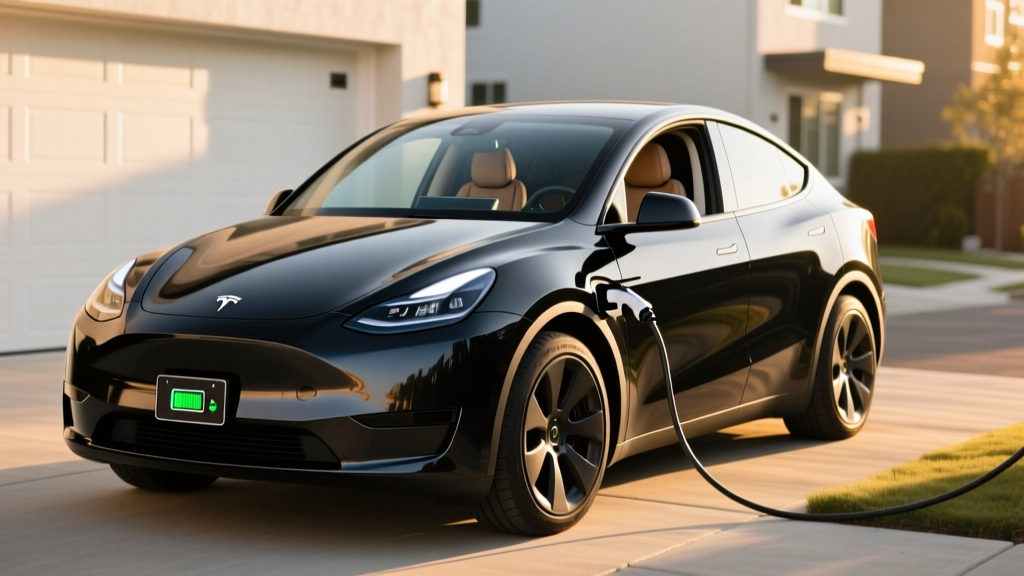
The Tesla Model Y is the best-selling EV in history, and that volume has created a massive secondary market. If you're evaluating a pre owned Tesla Model Y, you're looking at a vehicle that benefits from Tesla's Supercharger network, over-the-air updates, and class-leading efficiency — but also one with significant variation between model years, battery chemistries, and build-quality eras. This guide cuts through the noise with exact specs, real-world range data, and the inspection checklist every used Model Y buyer needs.
Unlike buying new, where you pick a trim and go, the used Model Y market spans the 2020 launch year through current 2025-2026 Juniper-refresh models. Battery chemistry changed mid-production. Range estimates shifted. Even the heat pump — critical for cold-weather efficiency — wasn't standard until late 2021. Knowing exactly what you're getting is the difference between a great deal and a costly mistake.
| Spec | Long Range AWD (2023-2025) | Rear-Wheel Drive (2024-2025) | Performance (2023-2025) |
|---|---|---|---|
| EPA Range | 310-330 mi | 260-310 mi | 285-303 mi |
| Battery (usable) | ~75 kWh (NMC) | ~57.5 kWh (LFP) | ~75 kWh (NMC) |
| Peak DC Fast Charge | 250 kW | 170 kW | 250 kW |
| 10-80% DC Time | ~27 min | ~30 min | ~27 min |
| Level 2 Home Charge | 11.5 kW (~37 mi/hr) | 11.5 kW (~37 mi/hr) | 11.5 kW (~37 mi/hr) |
| 0-60 mph | 4.8 sec | 6.6 sec | 3.5 sec |
| Horsepower | 384 hp | 295 hp | 456 hp |
| Drivetrain | Dual-Motor AWD | RWD | Dual-Motor AWD |
| EPA Efficiency | 122 MPGe (28 kWh/100mi) | 125 MPGe (27 kWh/100mi) | 111 MPGe (30 kWh/100mi) |
Sources: EPA fueleconomy.gov, Tesla specifications. Figures vary by model year.
Real-World Range: What the EPA Sticker Doesn't Tell You
EPA Estimate: 310-330 miles (Long Range AWD, 2023-2025)
Real-World Expectation:
- City/commute (moderate climate): 290-320 mi — regen braking recovers energy efficiently
- Highway (70-75 mph, 70°F): 260-285 mi — aerodynamic drag dominates at speed
- Highway in cold weather (30°F, heater on): 210-245 mi — expect 25-35% reduction from EPA
- Extreme cold (below 15°F, short trips): 180-220 mi — battery heating and cabin demand compound losses
The Model Y's efficiency is among the best in its class, but physics still applies. The LFP-equipped Rear-Wheel Drive variants sacrifice some range for a lower entry price and a battery chemistry that tolerates daily 100% charging without accelerated degradation — a significant ownership advantage for commuters who need every mile every day.
If you're buying pre owned, ask the seller for the car's State of Health (SoH) percentage, visible in the Tesla app or service menu. A 2021 Long Range with 50,000 miles showing 92-95% SoH is typical and healthy. Anything below 88% on a vehicle with under 80,000 miles warrants scrutiny and may indicate repeated deep-cycle abuse or thermal stress.
Battery Chemistry Matters: LFP vs NMC in Used Model Y Trims
This is where many used Model Y buyers get tripped up. Tesla quietly shifted battery chemistry across model years and trims, and it affects how you should charge and maintain the vehicle:
| Factor | NMC (Nickel Manganese Cobalt) | LFP (Lithium Iron Phosphate) |
|---|---|---|
| Found In | Long Range, Performance (all years) | RWD Standard Range (2022+), some 2024+ RWD |
| Energy Density | Higher — more range per kg | Lower — heavier pack for same kWh |
| Daily Charging Recommendation | 80% (to limit degradation) | 100% (Tesla recommends weekly 100% calibration) |
| Cycle Life | ~1,500-2,000 full cycles to 80% SoH | ~3,000+ full cycles to 80% SoH |
| Cold-Weather Performance | Better energy delivery in cold | More range loss in freezing temps, slower cold charging |
| Cost to Replace (out of warranty) | $12,000-$16,000 | $10,000-$13,000 |
For a pre owned buyer, this means:
- Long Range/Performance (NMC): If the previous owner charged to 100% daily, expect slightly higher degradation. Ask for charging history if available.
- RWD (LFP): More tolerant of varied charging habits. Ideal for buyers who want simplicity and don't need 300+ miles of range.
Charging Speed and Infrastructure: What Pre Owned Buyers Need to Know
One of the strongest arguments for a used Model Y over competitors is access to Tesla's Supercharger network — now partially opened to other brands, but still offering the most seamless plug-and-charge experience for Tesla vehicles. Here's what to expect at different charging levels:
| Charging Level | Power | Speed (Long Range) | Use Case |
|---|---|---|---|
| Level 1 (120V outlet) | ~1.4 kW | ~3-5 mi/hr | Emergency/trickle only |
| Level 2 (240V, 48A) | 11.5 kW | ~37 mi/hr | Home daily charging — full charge in ~8-9 hrs |
| Level 2 (240V, 32A) | 7.7 kW | ~25 mi/hr | Common portable/mobile connector setup |
| DC Fast (V3 Supercharger) | 250 kW peak | ~162 mi in 15 min | Road trips — 10-80% in ~27 min |
| DC Fast (V2 Supercharger) | 150 kW peak | ~120 mi in 15 min | Older stations — 10-80% in ~38 min |
| DC Fast (CCS adapter, EA/others) | Up to 250 kW | Varies by station | Non-Tesla networks — requires CCS adapter ($175 from Tesla) |
Charging curve reality check: The 250 kW peak on V3 Superchargers only holds between roughly 10-30% State of Charge. By 50%, you're seeing ~120 kW. By 80%, it tapers to ~50 kW. The "10-80% in 27 minutes" figure is accurate, but going from 80-100% can add another 25-30 minutes. Plan road-trip stops to leave at 80% unless you need the full range to reach the next charger.
For home charging, budget $600-$1,200 for a Tesla Wall Connector installed on an existing 60A circuit. If your home needs a panel upgrade (common in older homes with 100A service), add $1,500-$3,000. The Wall Connector delivers the full 11.5 kW (48A) that the Model Y's onboard charger supports.
Pricing, Tax Credits, and What a Pre Owned Model Y Actually Costs
The used Model Y market in 2026 spans a wide range depending on year, mileage, trim, and condition. Here's what you'll encounter:
| Model Year / Trim | Typical Market Price | Federal Used EV Credit (§25E) | Net Cost |
|---|---|---|---|
| 2020-2021 Long Range AWD | $22,000-$27,000 | Up to $4,000 (30% of sale price, capped) | $18,000-$23,000 |
| 2022 Long Range AWD | $26,000-$31,000 | Up to $4,000 | $22,000-$27,000 |
| 2023 Long Range AWD | $30,000-$36,000 | Up to $4,000 | $26,000-$32,000 |
| 2024 RWD (LFP) | $32,000-$37,000 | Up to $4,000 | $28,000-$33,000 |
| 2024 Long Range AWD | $35,000-$42,000 | Up to $4,000 | $31,000-$38,000 |
| 2025 Juniper Refresh LR AWD | $40,000-$48,000 | Up to $4,000 | $36,000-$44,000 |
Prices reflect early-2026 market averages from major listing platforms. Actual prices vary by region, mileage, and condition.
Used EV Tax Credit (§25E) Eligibility Checklist
The federal Previously Owned Clean Vehicle Credit (IRS §25E) is separate from the new-vehicle §30D credit and has its own rules. Per IRS guidelines, you must meet all of the following:
- Sale price cap: Vehicle must sell for $25,000 or less
- Credit amount: 30% of sale price, maximum $4,000
- Buyer income limits: AGI ≤ $75,000 (single), $112,500 (head of household), $150,000 (joint)
- Vehicle age: Must be at least 2 model years old (e.g., 2024 or older purchased in 2026)
- Dealer requirement: Must be purchased from a licensed dealer (private-party sales excluded)
- Weight: Gross vehicle weight under 14,000 lbs (Model Y qualifies at ~4,400 lbs)
- First transfer: The credit applies only on the first qualified resale after the vehicle becomes eligible — a given VIN can only trigger the credit once
- Frequency limit: One used-EV credit per taxpayer every 3 years
Key implication: Many 2023-2025 Model Y listings exceed the $25,000 sale-price cap, making them ineligible for §25E. The sweet spot for the credit is 2020-2022 Long Range models and higher-mileage 2023 examples priced at or below $25K. Always confirm with a tax professional before relying on the credit.
Pre-Purchase Inspection: What to Check on a Used Model Y
Unlike a gas car, there's no engine compression test or transmission fluid inspection. But a pre owned Model Y has its own checklist:
Battery and Drivetrain
- State of Health (SoH): Request the battery health report from Tesla Service or via the in-car menu. Healthy is 90%+ at 50K miles, 85%+ at 100K miles.
- Warranty transfer: Tesla's battery and drive unit warranty (8 years / 100,000 miles for Long Range/Performance; 8 years / 120,000 miles for some years) transfers automatically with the VIN. Confirm remaining coverage on Tesla's website using the VIN.
- Charge logs: If the owner shares their Tesla app data, look for repeated 100% charges on NMC vehicles — this accelerates degradation.
Build Quality and Known Issues
- 2020-2021 panel gaps: Early Fremont-built Model Ys are notorious for uneven panel gaps, trunk misalignment, and wind noise. Inspect door seals and trunk alignment carefully.
- Heat pump (2020-2021): Early Model Ys had heat pump reliability issues in extreme cold. Tesla issued service bulletins; check if the unit was replaced under warranty.
- Suspension: Pre-2023 models had softer suspension that some owners found floaty. Post-2023 models received revised dampers. Test-drive on rough pavement and listen for clunks.
- 12V battery: Tesla switched to a lithium-ion 12V auxiliary battery in late 2021. Earlier models use a lead-acid 12V that may need replacement every 3-4 years (~$300).
Software and Features
- Autopilot/FSD status: Basic Autopilot (lane centering + adaptive cruise) is included with every Model Y. Enhanced Autopilot ($6,000) and Full Self-Driving (Supervised) ($8,000 or $99/mo) are one-time purchases tied to the vehicle — but Tesla has occasionally not transferred FSD on resale. Verify in the car's Software menu that purchased features are active.
- OTA updates: Confirm the vehicle is receiving current software. A Model Y stuck on an old firmware version may have connectivity or hardware issues.
Important — Autopilot/FSD is NOT self-driving. Tesla's Autopilot and Full Self-Driving (Supervised) are SAE Level 2 driver-assistance systems. You must keep your hands on the wheel and eyes on the road at all times. The vehicle does not drive itself. Only Level 4 robotaxi services (Waymo, Zoox) operate without a human driver. FSD (Supervised) handles more scenarios than basic Autopilot — including stop signs, traffic lights, and some city streets — but still requires active supervision and can make errors.
Cargo, Interior, and Daily Livability
The Model Y's crossover form factor is a major reason for its sales dominance. Here's the space you're working with:
- Cargo (rear seats up): 30.2 cu ft — fits two large suitcases and a stroller easily
- Cargo (rear seats folded): 72.1 cu ft — near-flat load floor, competitive with midsize SUVs
- Front trunk (frunk): 4.1 cu ft — useful for charging cables, groceries, or a small bag
- Rear legroom: 40.5 inches — generous for adults on longer trips
- Front headroom: 41.0 inches — airy cabin with the glass roof
The minimalist interior means everything routes through the 15-inch center touchscreen — climate, mirrors, glovebox, and speedometer. Some buyers love it; others find it distracting. There are no physical buttons for wipers, turn signals (on 2025+ Juniper models, turn signals moved to steering-wheel buttons, which has drawn mixed reviews), or climate. Plan for a learning curve if you're coming from a traditional vehicle.
Towing: The Model Y is rated for 3,500 lbs when equipped with the factory tow hitch ($1,000 option). This covers a small utility trailer or a pair of jet skis but not a large boat or camper. Towing reduces range by 30-50% depending on speed and terrain.
Pros, Cons, and the Verdict for Used Buyers
Pros
- Best-in-class Supercharger network access — most reliable DC fast-charging experience in the US
- Industry-leading efficiency (27-30 kWh/100mi) means lower charging costs per mile
- Over-the-air updates continue adding features years after purchase
- Strong safety ratings — 5-star NHTSA overall, IIHS Top Safety Pick+ on 2022+ models
- Transferable 8-year/100K-mile battery warranty provides long-term peace of mind
- Massive used inventory means competitive pricing and negotiation leverage
Cons
- Early (2020-2021) build quality issues — panel gaps, heat pump failures, wind noise
- Minimalist interior frustrates some drivers; no physical buttons or traditional instrument cluster
- Insurance costs run 15-30% higher than comparable gas SUVs (get quotes before buying)
- Out-of-warranty battery replacement is $12,000-$16,000 if needed after 8 years / 100K miles
- 2025+ Juniper models make 2020-2024 versions look dated to some buyers, affecting resale trajectory
- No Apple CarPlay or Android Auto — Tesla's proprietary system is the only option
Who Should Buy a Pre Owned Model Y?
Choose a used Model Y Long Range AWD if: You need 280+ real-world miles for road trips, live in a cold climate (AWD + heat pump are essential), and want Supercharger convenience. Target 2022-2023 models for the best value-to-range ratio.
Choose a used Model Y RWD (LFP) if: You're a daily commuter with home charging, drive under 200 miles per day, and want the longest-lasting battery chemistry with 100% daily charging tolerance. Target 2023-2024 examples.
Consider a competitor instead if: You want physical buttons (Hyundai Ioniq 5), need a third row (Kia EV9), or prioritize ride comfort over sportiness (Ford Mustang Mach-E with available suspension tuning).
Frequently Asked Questions
What is the real-world range of a pre owned Tesla Model Y?
For a 2023 Long Range AWD with an EPA rating of 330 miles, expect 260-285 miles on the highway in moderate weather, 290-320 miles in city driving, and 210-245 miles in freezing conditions with the heater running. LFP-equipped RWD models with a 260-mile EPA rating deliver roughly 210-230 miles highway, 240-255 city, and 170-200 miles in deep cold.
How fast does a used Model Y charge at home and on the road?
At home on a Level 2 Tesla Wall Connector (11.5 kW / 48A), you'll add roughly 37 miles of range per hour — a full overnight charge from 20% takes about 7-8 hours. On a V3 Supercharger (250 kW peak), the Long Range charges from 10-80% in approximately 27 minutes. The RWD LFP model peaks at 170 kW, taking about 30 minutes for the same 10-80% session.
Does a pre owned Tesla Model Y qualify for a federal tax credit?
It may qualify for the §25E Previously Owned Clean Vehicle Credit — up to $4,000 (30% of sale price). However, the vehicle must sell for $25,000 or less, be at least 2 model years old, be purchased from a licensed dealer, and the buyer must fall under income caps ($75K single / $150K joint). Many 2023-2025 Model Y listings exceed the price cap. Consult a tax professional and IRS guidelines before relying on this credit.
Is it worth buying a used Model Y vs a new Hyundai Ioniq 5 or Ford Mach-E?
A 2022-2023 Model Y Long Range at $27,000-$32,000 (after potential credit) competes directly with a new Ioniq 5 SE ($42,000 MSRP) or Mach-E Select ($39,000). The Model Y wins on Supercharger network access, cargo space (72 vs 54 cu ft max), and efficiency. The Ioniq 5 wins on charging architecture (800V — 10-80% in 18 min on a 350 kW charger), physical buttons, and a more refined ride. The Mach-E offers a more traditional cockpit feel and BlueCruise hands-free driving on approved highways. Your priority — charging network vs ride quality vs interior ergonomics — should drive the decision.
How long will the battery last on a pre owned Model Y?
Tesla warranties the battery for 8 years or 100,000 miles (120,000 on some RWD/LFP trims), guaranteeing at least 70% capacity retention during that period. Real-world data from high-mileage Teslas shows NMC batteries typically retain 85-92% capacity at 100,000 miles with normal charging habits. LFP batteries show even less degradation, often 90%+ at similar mileage. A well-maintained Model Y battery should comfortably last 200,000+ miles before falling below 80% capacity.
Should I buy Tesla's Extended Service Agreement on a used Model Y?
Tesla offers an Extended Service Agreement on eligible used vehicles purchased through Tesla. It covers major components beyond the basic 4-year/50,000-mile warranty. If you're buying a 2021-2022 model nearing the end of its basic warranty, the $3,000-$4,500 cost can be worthwhile — the heat pump, drive unit, and touchscreen are expensive out-of-pocket repairs. For vehicles still well within the 8-year battery warranty, you may choose to self-insure and save the money.