The Short Answer
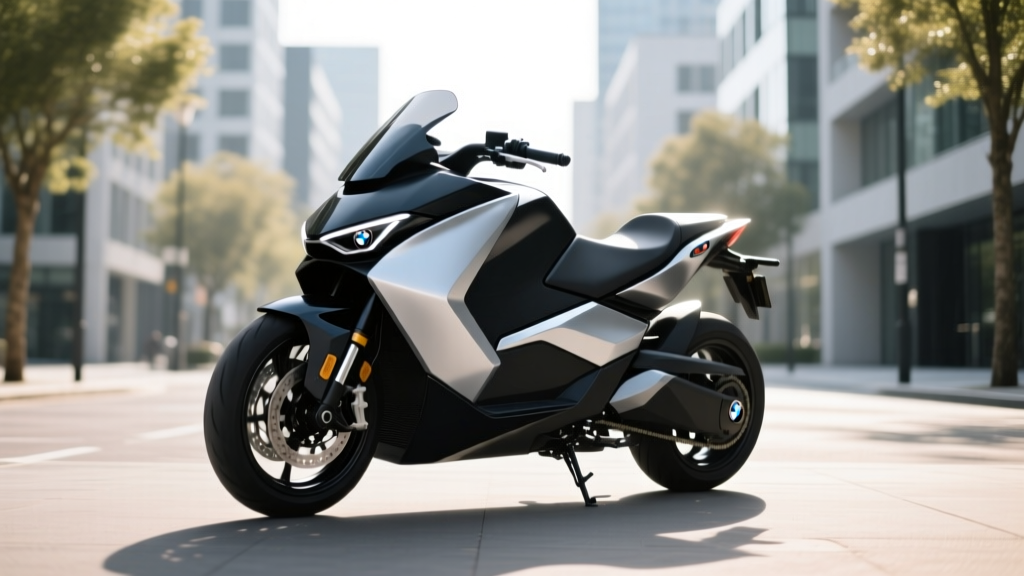
The BMW CE 04 is the brand's flagship electric scooter, offering an EPA-estimated 80 miles of range, a 142 km/h (88 mph) top speed, and a liquid-cooled permanent-magnet motor producing 42 hp (31 kW) continuous. It charges from 0–80% in about 1 hour 40 minutes on a Level 2 wallbox, or roughly 4 hours 40 minutes on a standard 120V household outlet. Starting at approximately $11,795 MSRP, the CE 04 is priced at a premium compared to gas scooters, but offers dramatically lower operating costs and zero tailpipe emissions. Important scope note: AutoEdgeView primarily covers electric cars, trucks, and SUVs. This guide addresses the BMW CE 04 to serve readers researching the keyword, while providing a broader framework for evaluating electric two-wheelers versus their gas counterparts.
BMW CE 04: The Electric Scooter That Started the Conversation
When BMW Motorrad unveiled the CE 04, it signaled a serious commitment to urban electric mobility. Unlike the smaller CE 02 (a lighter, more affordable city runabout aimed at younger riders with roughly 55 miles of range and ~4 hp), the CE 04 is a full-size maxi-scooter designed for daily commuting and suburban errands.
| Spec | Value |
|---|---|
| Motor Output (continuous / peak) | 31 kW (42 hp) / 31 kW peak sustained |
| Torque | 62 Nm (46 lb-ft) |
| Battery Capacity | 8.9 kWh (usable) |
| Battery Chemistry | NMC (Nickel Manganese Cobalt) |
| EPA-Estimated Range | ~80 miles (130 km) |
| Real-World Range (mixed city/hwy) | ~60–70 miles |
| Top Speed | 120 km/h (75 mph) – electronically limited; 142 km/h (88 mph) in Sport mode |
| 0–50 km/h (0–31 mph) | 2.6 seconds |
| Level 1 Charging (120V household) | ~4 hr 40 min (0–100%) |
| Level 2 Charging (240V wallbox) | ~1 hr 40 min (0–80%) |
| Onboard Charger | 2.3 kW (standard) / optional fast-charge upgrade |
| Seat Height | 780 mm (30.7 in) |
| Curb Weight | 231 kg (509 lbs) |
| Base MSRP (U.S.) | $11,795 |
| Warranty (battery) | 5 years / 50,000 km (31,000 miles) |
Real-World Range Reality
The CE 04's 80-mile EPA estimate assumes moderate city riding. In practice, expect 60–70 miles in mixed riding that includes highway segments at 65+ mph, where aerodynamic drag hammers efficiency. In cold weather (below 40°F / 4°C), lithium-ion batteries lose performance; plan for a 20–30% range reduction, bringing usable distance down to roughly 50–55 miles. If your round-trip commute exceeds 50 miles, you'll need mid-day charging access or should consider a different vehicle class.
BMW CE 04 vs. Gas Scooter: Cost & Efficiency Comparison
The most common question from prospective buyers: does the electric premium pay for itself? Let's compare the CE 04 against a typical 300cc gas maxi-scooter (e.g., BMW C 400 GT or a comparable Yamaha XMAX 300) over a 5-year, 30,000-mile ownership period.
| Cost Category | BMW CE 04 (Electric) | 300cc Gas Scooter |
|---|---|---|
| Purchase Price (MSRP) | $11,795 | $7,500 |
| Fuel / Electricity | $540 (at $0.15/kWh, ~12 kWh/100 mi) | $2,250 (at $3.75/gal, 60 MPG avg) |
| Maintenance (oil, filters, belts, valves) | $400 (brake pads, tires, cabin air) | $2,800 (oil changes, belt, rollers, valve checks) |
| Insurance (avg annual × 5) | $3,500 ($700/yr) | $2,750 ($550/yr) |
| Estimated Resale Value (Year 5) | –$5,500 | –$3,500 |
| Net 5-Year Cost | $10,735 | $11,800 |
The CE 04's higher purchase price is offset by dramatically lower fuel and maintenance costs. Electricity at $0.15/kWh yields a per-mile energy cost of roughly $0.018, compared to $0.063 per mile for a 60 MPG gas scooter at $3.75/gallon. Over 30,000 miles, that's a $1,710 fuel savings alone. Maintenance savings add another $2,400, since electric motors have no oil, no valve adjustments, no CVT belt replacements, and no spark plugs.
However, insurance tends to run 15–25% higher for electric two-wheelers due to higher repair costs for battery and motor components. And the CE 04's resale value remains uncertain — the used electric scooter market is still immature, and early depreciation data is sparse.
Charging at Home and On the Go: What You Actually Need
Charging infrastructure is the single biggest practical concern for electric two-wheeler buyers. Unlike electric cars, which benefit from the expanding NACS/CCS DC fast-charging network, electric scooters almost universally rely on Level 1 and Level 2 AC charging.
| Level | Voltage / Power | Time (0–80%) | Miles Added per Hour |
|---|---|---|---|
| Level 1 (standard outlet) | 120V / ~1.0 kW | ~3 hr 50 min | ~17 miles/hr |
| Level 2 (wallbox / public AC) | 240V / 2.3 kW (onboard limit) | ~1 hr 25 min | ~47 miles/hr |
| DC Fast Charge | Not supported | N/A | N/A |
Home charging is essential. If you have a garage or dedicated parking spot with a standard 120V outlet, overnight charging fully replenishes the CE 04's battery. A Level 2 wallbox (240V, ~$500–$1,200 installed by a licensed electrician) cuts that time significantly, making mid-day top-ups practical.
Public charging is limited. Most public charging stations are designed for cars, with parking layouts and connector heights that don't accommodate scooters easily. The CE 04 uses a standard automotive J1772 connector (Type 1), which means you can technically plug into any public Level 2 station — but finding scooter-friendly parking at a charging spot is hit-or-miss. For riders who rely entirely on street parking without home charging access, an electric scooter is not yet practical in most U.S. markets.
Who Should Buy an Electric Scooter (and Who Shouldn't)
The CE 04 and electric two-wheelers in general are not for everyone. Here's a practical decision framework based on real ownership patterns:
Choose an Electric Scooter (BMW CE 04) If:
- Your daily round-trip commute is under 50 miles
- You have reliable home charging access (garage, driveway, or dedicated outlet)
- You ride primarily in urban or suburban environments at speeds under 70 mph
- You want to eliminate routine engine maintenance (oil, filters, belts, valve checks)
- You value near-silent operation and zero tailpipe emissions in dense traffic
- You're willing to pay a ~$4,000–$5,000 upfront premium for long-term operating savings
Stick with a Gas Scooter If:
- Your daily riding exceeds 70 miles or includes frequent highway trips at 75+ mph
- You lack home charging access and rely on street parking
- You ride in extreme cold (below 20°F) regularly, where range loss exceeds 30%
- You need maximum cargo/passenger versatility for longer touring rides
- Your budget is under $8,000 and you need a proven, widely serviceable platform
Common Misconceptions About Electric Motorbikes
| Myth | Fact |
|---|---|
| "Electric scooters are slow." | The CE 04 hits 31 mph in 2.6 seconds — faster than most 300cc gas scooters off the line. Its 42 hp continuous output provides strong city acceleration, though it lacks top-end passing power above 65 mph. |
| "The battery will need replacing in a few years." | BMW warranties the CE 04 battery for 5 years/50,000 km. NMC lithium-ion cells in scooters typically retain 80%+ capacity after 500–800 full charge cycles, which translates to 40,000–64,000 miles of riding before significant degradation. |
| "You can charge it at any public station." | While the CE 04 uses a J1772 connector compatible with public Level 2 stations, most stations are designed for cars. Parking a scooter at a car-sized charging spot risks damage and may violate station rules. Home charging is the primary strategy. |
| "Federal tax credits apply to electric motorbikes." | The IRS §30D Clean Vehicle Credit applies to four-wheeled vehicles only. Electric motorcycles and scooters do not qualify for the $7,500 federal credit. Some states and local utilities offer separate two-wheeler incentives — check your state energy office and utility provider for current programs. |
| "Electric scooters cost nothing to maintain." | While you eliminate engine maintenance, you still need tire replacements (every 5,000–8,000 miles), brake fluid changes, brake pad replacement, and suspension service. Budget $80–$100/year for consumables. |
Federal and State Incentives: What Actually Applies
This is where many buyers get confused. The IRS §30D Clean Vehicle Credit applies exclusively to four-wheeled plug-in vehicles meeting specific battery-sourcing, MSRP, and buyer-income requirements. The BMW CE 04, as a two-wheeled vehicle, does not qualify for the federal $7,500 credit.
However, several states and municipalities offer separate incentives for electric two-wheelers:
- California: The California Air Resources Board (CARB) has historically offered rebates through the Clean Cars 4 All and similar programs, though two-wheeler-specific rebates vary by year and funding availability.
- Utility rebates: Many electric utilities (e.g., PG&E, ConEdison, Xcel Energy) offer $200–$500 rebates for purchasing electric motorcycles or scooters. Check with your local provider.
- State tax credits: A handful of states offer their own EV credits that may include two-wheelers. These change frequently — consult your state's department of revenue or energy office for current-year rules.
For riders comparing the CE 04 against a four-wheeled EV like the Chevrolet Equinox EV or Nissan Leaf, remember that four-wheeled EVs may qualify for the full §30D credit (up to $7,500, subject to MSRP caps of $55,000 for sedans/$80,000 for SUVs/trucks, buyer income limits of $150K single/$300K joint, and critical-mineral/battery-sourcing requirements). That credit can make a used or entry-level electric car cheaper than a new CE 04 on a net-cost basis.
BMW CE 04 Ownership: Real-World Considerations
Climate matters. If you ride year-round in the Pacific Northwest, Northeast, or Mountain West, cold temperatures will compress your range by 20–30%. The CE 04's battery thermal management system is adequate but not as sophisticated as the active liquid heating/cooling found in modern electric cars. Preconditioning the battery while plugged in (a feature BMW supports via the Connected app) helps mitigate cold-weather losses.
Insurance costs are higher. Expect annual premiums of $600–$900 depending on your riding record, location, and coverage level. The CE 04's $11,795 MSRP and specialized electric drivetrain components push rates above comparable gas scooters. Get quotes before purchasing.
Service network is limited. Not every BMW Motorrad dealer has technicians trained on the CE 04's high-voltage system. Before buying, confirm that your nearest dealer can perform warranty service and battery diagnostics. In rural areas, this may mean a 100+ mile ride (or trailer trip) to the nearest qualified shop.
Cargo and practicality. The CE 04's flat floorboard and under-seat storage accommodate a full-face helmet and a small bag. The optional top case adds cargo capacity. However, the 509-lb curb weight and 30.7-inch seat height make it a substantial machine — shorter riders should test-sit before committing.
Alternatives to the BMW CE 04
If the CE 04's price or range doesn't fit your needs, consider these alternatives:
- BMW CE 02 (~$4,995 MSRP): Lighter, more affordable, ~55 miles range, aimed at younger urban riders. Less power (~4 hp), but far easier to manage in dense city traffic.
- Zero SR/S (~$23,995 MSRP): A full-size electric sportbike with 110+ hp, 160+ mile range, and DC fast-charging capability. For riders who want highway-capable performance, not just city commuting.
- Honda PCX / Yamaha NMAX (gas, ~$4,000–$4,500 MSRP): Proven 150cc gas scooters with 80+ MPG, 200+ mile range per tank, and ubiquitous dealer service. Still the pragmatic choice for riders without home charging.
- Used Nissan Leaf or Chevrolet Bolt EV: A four-wheeled EV with 150–250 miles of range, climate control, weather protection, and potential §30D tax credit eligibility. For riders whose primary goal is electrified commuting rather than the two-wheel experience.
Frequently Asked Questions
How long does the BMW CE 04 battery last before needing replacement?
BMW warranties the battery for 5 years or 50,000 km (31,000 miles), guaranteeing a minimum capacity retention (typically 70–80%). In practice, NMC lithium-ion cells in moderate-use scooter applications retain 80%+ capacity after 500–800 full charge cycles — roughly 40,000–64,000 miles. Full battery replacement, if needed out of warranty, is estimated at $3,000–$5,000 based on current BMW Motorrad parts pricing, though exact costs vary by market.
Can I charge the BMW CE 04 at a Tesla Supercharger or Electrify America station?
No. DC fast-charging networks like Tesla Supercharger, Electrify America, and EVgo deliver DC power via CCS or NACS connectors at 50–350 kW. The CE 04 only accepts AC charging via a J1772 connector at a maximum of 2.3 kW. You can use public Level 2 AC stations (ChargePoint, Blink, etc.) with the J1772 connector, but charging will take over an hour for a meaningful top-up.
Is the BMW CE 04 highway-legal and safe at speed?
Yes. The CE 04 is fully street-legal in all 50 states and can reach 75–88 mph depending on mode. It includes ABS, traction control, and multiple ride modes (Eco, Rain, Road, Sport). However, sustained highway riding at 70+ mph drains the battery rapidly — plan for roughly 45–55 miles of real-world range at highway speeds, and note that wind blast on a scooter at 75 mph is fatiguing compared to an enclosed car.
Does the BMW CE 04 qualify for any federal tax credit?
No. The IRS §30D Clean Vehicle Credit requires a vehicle to have four wheels. Electric motorcycles and scooters are excluded from this federal incentive. Some state and utility programs offer separate two-wheeler rebates — check your local programs. For the most current rules, refer to the IRS Clean Vehicle Credit page.
What does it cost to charge a BMW CE 04 at home?
The CE 04's 8.9 kWh battery costs roughly $1.34 to fully charge at the U.S. average residential electricity rate of $0.15/kWh. That translates to about $0.017 per mile — roughly one-quarter the per-mile fuel cost of a 60 MPG gas scooter at $3.75/gallon. Over a year of 6,000 miles of riding, expect about $100–$110 in electricity costs.
Should I buy a BMW electric motorbike or a small EV car for commuting?
If your priority is weather protection, cargo space, passenger capacity, and access to the federal §30D tax credit, a small EV like the Nissan Leaf ($28,140 MSRP, 149-mile range) or used Chevrolet Bolt EV may offer better overall value. If you specifically want the two-wheel riding experience, lane-splitting capability (where legal), and minimal parking footprint, the CE 04 is a compelling — if premium-priced — electric scooter.