Quick Answer: Are Pre Owned EV Offers Worth It in 2026?
Yes — if you buy right. A qualifying used EV purchased from a licensed dealer can net you up to $4,000 in federal tax credit (30% of the sale price, capped at $4,000) under IRS §25E. That makes a 2- to 4-year-old EV with 200+ miles of EPA range one of the best value propositions in the car market. The catch: the vehicle must cost $25,000 or less, the buyer must meet income caps ($75,000 single / $150,000 joint), and the car must be at least two model years old. Battery health, charging access, and cold-weather range loss are the deal-makers or deal-breakers you need to verify before signing.
Why the Used EV Market Is Surging Right Now
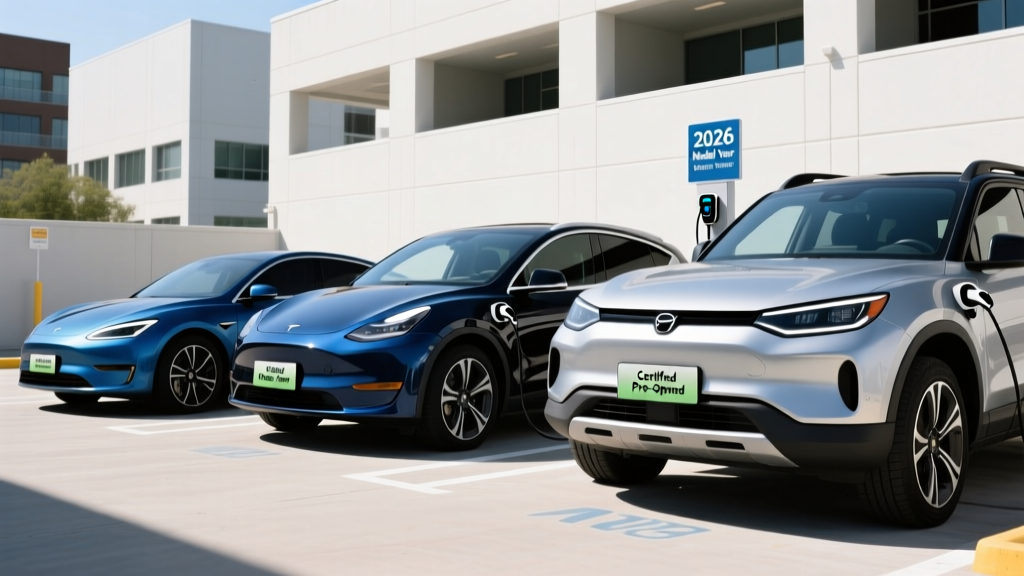
The first wave of mainstream EVs — Tesla Model 3 and Model Y, Hyundai Ioniq 5, Ford Mustang Mach-E, Chevrolet Bolt EV/EUV, Volkswagen ID.4 — are now aging out of their initial leases and flooding the used market. Many 2021–2023 models that originally stickered for $42,000–$55,000 are now landing in the $18,000–$25,000 range, putting them squarely in the sweet spot for the federal used-EV tax credit.
According to IRS guidelines on the §25E credit, the vehicle must be sold by a licensed dealer for $25,000 or less, and the credit can be transferred to the dealer at the point of sale — meaning you can take it as an immediate price reduction rather than waiting to claim it on your tax return.
That $4,000 reduction transforms the economics. A used 2022 Chevrolet Bolt EV with an EPA range of 259 miles, priced at $19,500, drops to an effective $15,500 after the credit. That buys you a 200-hp, DC-fast-chargeable EV with real-world range around 220–240 miles for less than a new Honda Civic.
What the $4,000 Used-EV Tax Credit Actually Requires
The §25E credit has strict eligibility rules that trip up many buyers. Here is the complete checklist:
- Vehicle price cap: Sale price must be $25,000 or less (before taxes, fees, or add-ons).
- Vehicle age: Must be at least two model years old (so 2024 or older for a 2026 purchase).
- Vehicle type: Battery electric (BEV), plug-in hybrid (PHEV), or fuel cell — must have a battery capacity of at least 7 kWh.
- Buyer income caps: Modified adjusted gross income (MAGI) cannot exceed $75,000 (single), $112,500 (head of household), or $150,000 (married filing jointly).
- Dealer requirement: Must be purchased from a licensed dealer — private-party sales do not qualify.
- First transfer: The credit applies to the first qualified sale of that specific vehicle after August 16, 2022. If someone already claimed the credit on that VIN, it's gone.
- Point-of-sale transfer: You can elect to transfer the credit to the dealer for an upfront price reduction, or claim it on your tax return using IRS Form 8936.
Pro tip: Ask the dealer to confirm the VIN's credit eligibility through the IRS Energy Credits Online portal before you sign. Some vehicles have already had their credit claimed by a prior buyer.
Real Costs: Pre Owned EV vs. Comparable Gas Car
Numbers beat opinions. Here's a five-year cost comparison between a representative used EV and a similarly priced used gas sedan, based on 12,000 miles per year.
| Cost Category (5 Years) | Used 2022 Chevy Bolt EV (259 mi EPA) | Used 2022 Toyota Camry LE (32 MPG combined) |
|---|---|---|
| Purchase price (after credit) | $15,500 | $19,000 |
| Fuel / electricity | $3,150 (home charging at $0.14/kWh, 28 kWh/100mi) | $6,560 (at $3.50/gal, 32 MPG) |
| Maintenance | $1,200 (tire rotations, cabin filter, brake fluid) | $3,200 (oil changes, filters, brakes, spark plugs) |
| Insurance (avg.) | $7,800 | $6,600 |
| Estimated depreciation | $5,500 | $7,000 |
| 5-year total | $33,150 | $42,360 |
The used Bolt EV saves roughly $9,200 over five years, even factoring in higher insurance premiums — a common EV ownership reality. The fuel savings alone ($3,410) nearly cover the entire cost differential at purchase.
For context on efficiency figures, fueleconomy.gov lists the 2022 Bolt EV at 120 MPGe combined with a 65 kWh usable battery (NMC chemistry).
Which Pre Owned EV Models Offer the Best Value?
Not every used EV is a bargain. Here are the models that consistently appear in the sub-$25,000 market and what you need to know about each.
Chevrolet Bolt EV / EUV (2020–2023)
EPA range: 259 mi (EV) / 247 mi (EUV) | Battery: 65 kWh NMC | DC fast charge: 55 kW peak (10–80% in ~50 min) | Typical used price: $16,000–$22,000
The Bolt is the undisputed value king. Its biggest weakness is slow DC fast charging — 55 kW peak is painfully slow on road trips. If you primarily drive locally and charge at home, the Bolt's combination of range, interior space, and low price is unbeatable. Note that 2020–2022 models were subject to a battery recall for fire risk; confirm the recall repair was completed before buying.
Hyundai Ioniq 5 (2022–2023)
EPA range: 220–303 mi (depending on trim/drivetrain) | Battery: 58 or 77.4 kWh NMC | DC fast charge: 240 kW peak on Long Range (10–80% in ~18 min) | Typical used price: $22,000–$25,000
The Ioniq 5's 800-volt architecture means it charges at speeds that rival Tesla Superchargers. The Long Range RWD model with 303 miles EPA is the one to hunt for. Real-world highway range at 75 mph drops to about 250–270 miles. The Ioniq 5 has NACS adapter compatibility for Tesla Supercharger access as of 2025.
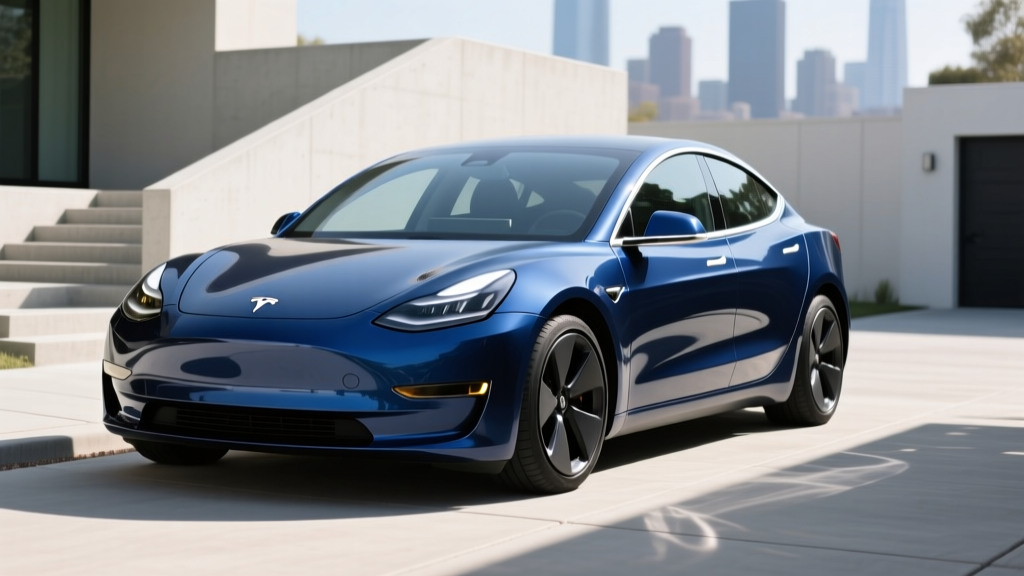
Tesla Model 3 (2019–2022)
EPA range: 263–358 mi (Standard Range to Long Range) | Battery: 50–82 kWh (NMC or LFP depending on year/trim) | DC fast charge: 170–250 kW peak (10–80% in ~20–30 min) | Typical used price: $18,000–$25,000
The Model 3 remains the best-selling used EV by volume. The 2021+ Standard Range models use LFP (lithium iron phosphate) batteries, which degrade more slowly and tolerate regular 100% charging — a significant longevity advantage. Supercharger access is native, and the charging network is the most reliable in the country. Watch for high-mileage examples (80,000+ miles) where suspension components may need attention.
Ford Mustang Mach-E (2021–2023)
EPA range: 230–314 mi | Battery: 70 or 91 kWh usable NMC | DC fast charge: 115–150 kW peak (10–80% in ~35–45 min) | Typical used price: $21,000–$25,000
The Mach-E offers a car-like driving experience with strong performance and a practical hatchback layout. The Extended Range versions are the most desirable. Ford has issued several OTA updates improving charging curves and range estimates since launch.
Volkswagen ID.4 (2021–2023)
EPA range: 249–275 mi | Battery: 82 kWh (77 kWh usable) NMC | DC fast charge: 125–135 kW peak (10–80% in ~30 min) | Typical used price: $19,000–$24,000
The ID.4 is a comfortable, spacious crossover that many buyers overlook. Early models had software glitches, but most were resolved via OTA updates. The Pro S AWD with 249 miles EPA is a solid family hauler. VW included three years of free Electrify America charging on new models — check if any free-charging balance transfers to second owners.
The Battery Health Question: What to Check Before You Buy
The battery is the single most expensive component in any EV — replacement costs range from $8,000 to $22,000 depending on the model. Here's how to assess battery health on a used EV.
Check State of Health (SoH)
State of Health measures remaining battery capacity as a percentage of original. A new EV has 100% SoH; most manufacturers warranty the battery to retain at least 70% capacity over 8 years or 100,000 miles (whichever comes first).
On a Tesla, you can check SoH by comparing the current displayed range at 100% charge to the original EPA figure. If a 2020 Model 3 Long Range (original EPA 322 mi) now shows 290 miles at 100%, that's roughly 90% SoH — normal and healthy. Below 85% on a vehicle under 60,000 miles warrants concern.
For Hyundai, Kia, and VW models, a dealer can pull a battery diagnostic report. Request this before purchase. Third-party tools like OBD-II scanners with EV-specific apps (such as Leaf Spy for Nissan, or Torque Pro with EV PIDs) can also read battery health data.
Understand the Warranty Transfer
Federal law mandates that EV battery warranties transfer to subsequent owners. An 8-year/100,000-mile battery warranty on a 2022 model covers you through 2030 or 100,000 miles — regardless of whether you're the first or third owner. Confirm warranty status with the manufacturer using the VIN.
LFP vs. NMC: What Chemistry Is Inside?
| Factor | LFP (Lithium Iron Phosphate) | NMC (Nickel Manganese Cobalt) |
|---|---|---|
| Energy density | Lower (~160 Wh/kg) — slightly less range per pound | Higher (~250 Wh/kg) — more range in same space |
| Cycle life | 3,000+ cycles to 80% SoH | 1,000–2,000 cycles to 80% SoH |
| Charging to 100% | Recommended regularly — helps BMS calibration | Better kept at 80% daily; 100% only for trips |
| Cold-weather performance | Greater range loss in freezing temps (30–40%) | Moderate cold-weather loss (20–30%) |
| Found in | Tesla Model 3/Y RWD, some BYD models | Most other EVs (Hyundai, Ford, VW, Tesla LR) |
If longevity is your priority, an LFP-equipped Tesla Model 3 is arguably the safest used-EV battery bet. NMC batteries offer more range but require more careful charging habits to maximize lifespan.
Common Myths About Buying a Used EV — Debunked
| Myth | Fact |
|---|---|
| "The battery will need replacing soon and cost $20,000." | Most EV batteries lose only 8–15% capacity in the first 100,000 miles. Degradation curves flatten after year 3. A 2022 model with 40,000 miles likely has 90%+ SoH and years of useful life remaining. |
| "Used EVs are unreliable." | EVs have far fewer moving parts than gas cars — no transmission, no exhaust system, no timing belt. Consumer Reports data consistently shows EVs require less maintenance than ICE vehicles. |
| "Charging infrastructure isn't ready." | If you can charge at home (Level 2, 240V), daily charging is solved. For road trips, the Tesla Supercharger network now serves NACS-equipped Teslas and, via adapter, Ford, GM, Rivian, Hyundai, and other brands as of 2025–2026. |
| "A used EV won't qualify for any tax credit." | The §25E used-EV credit provides up to $4,000 for qualifying purchases. Many 2- to 4-year-old EVs under $25,000 qualify. |
| "I'll be stuck with a car I can't take on road trips." | A used Ioniq 5 or Model 3 with 250+ real-world miles and 150+ kW DC fast charging can handle 300-mile road-trip days with one 20–30 minute charge stop. |
Real-World Ownership: What First-Time EV Buyers Must Know
Home Charging Is the Make-or-Break Factor
Over 80% of EV charging happens at home. A Level 2 home charger (7–11 kW, 240V) adds 25–45 miles of range per hour of charging, meaning any EV is fully replenished overnight. Installation costs typically range from $800 to $2,500 including the charger unit and electrician labor, assuming your electrical panel has sufficient capacity. If you need a panel upgrade (from 100A to 200A), add $1,500–$3,000.
If you live in an apartment or lack garage access, public charging becomes your primary fueling method. This is viable but more expensive — DC fast charging costs roughly $0.30–$0.50/kWh at networks like Electrify America or EVgo, compared to $0.10–$0.18/kWh at home. Factor this into your cost calculations.
Cold Weather Cuts Range — Plan for It
If you live in a region with sustained freezing temperatures (below 32°F), expect 20–40% range loss depending on severity and whether your EV has a heat pump. LFP batteries are more affected than NMC. A 259-mile Bolt EV might deliver only 160–180 real-world miles in January in Minnesota. Preconditioning the battery while plugged in mitigates some of this loss.
Insurance Costs More — Budget for It
EV insurance premiums run 10–25% higher than equivalent gas cars, driven by higher repair costs after collisions and the specialized labor required. Get insurance quotes before finalizing your purchase. Companies like Geico, Progressive, and State Farm now offer EV-specific policies, and some insurers discount vehicles with advanced ADAS features.
Your Decision Framework: Which Pre Owned EV Offer Is Right for You?
Choose a Used Chevrolet Bolt EV/EUV if:
- Your budget is under $20,000 (after credit)
- You drive under 50 miles per day and rarely road-trip
- You have reliable Level 2 home charging
- Fast DC charging speed is not a priority
Choose a Used Tesla Model 3 if:
- You take regular road trips and want Supercharger access
- You value the lowest degradation risk (LFP models, 2021+)
- You want the best software and OTA update ecosystem
- You're comfortable with a minimalist interior
Choose a Used Hyundai Ioniq 5 if:
- Fastest DC charging speed matters to you (240 kW, 10–80% in ~18 min)
- You want a spacious crossover with modern design
- You value V2L (vehicle-to-load) capability for powering devices
- Your budget is $22,000–$25,000
Choose a Used Ford Mach-E if:
- You want a performance-oriented EV with car-like dynamics
- You prefer a traditional dealer service network
- You need a roomy rear seat and cargo area
- BlueCruise hands-free highway driving appeals to you (Level 2 — driver must remain engaged)
Skip the Used EV and Consider a PHEV if:
- You cannot install home charging and public infrastructure is sparse in your area
- You regularly drive 400+ miles in a single day in rural areas
- You live in extreme cold (-20°F regularly) and range loss is unacceptable
Frequently Asked Questions
Can I get the $4,000 used-EV tax credit if I buy from a private seller?
No. The §25E credit requires purchase from a licensed dealer. Private-party sales, auctions, and direct-from-owner transactions do not qualify. The dealer must report the sale through the IRS Energy Credits Online system.
How do I verify that a used EV's battery is healthy before buying?
Request a battery health report from the dealer or a brand-certified service center. On Teslas, check the displayed range at 100% SoC against the original EPA figure. For other brands, an OBD-II scanner with EV-specific software can read State of Health data. A vehicle with 90%+ SoH and under 60,000 miles is generally a safe bet.
Do I need a home charger to own a used EV?
You don't strictly need one, but ownership is significantly easier and cheaper with home Level 2 charging. Without it, you'll rely on public DC fast chargers ($0.30–$0.50/kWh) or slower public Level 2 stations, which adds cost and time. If you can install a 240V outlet or dedicated charger, it pays for itself within 12–18 months versus public charging.
What happens if the battery fails outside of warranty?
Out-of-warranty battery replacement costs $8,000–$22,000 depending on the model and pack size. However, complete battery failure is rare — most degradation is gradual. Individual module replacement (on models that support it) can cost $2,000–$5,000. Third-party battery refurbishers are becoming more common and offer lower-cost alternatives to OEM replacement.
Are pre owned EV offers from Tesla's official inventory better than third-party dealers?
Tesla's used inventory includes vehicles that have been inspected and refurbished, often with an additional limited warranty. However, Tesla does not participate in the §25E point-of-sale credit transfer the same way traditional dealers do — you would claim the credit on your tax return. Third-party dealers can offer the credit as an immediate price reduction, which may result in a lower effective cost despite less refurbishment.
What's the biggest mistake people make when buying a used EV?
Ignoring the charging situation. Buyers focus on range and price but fail to confirm they can charge at home or that their daily route has adequate public charging. Before buying, map your typical week of driving, confirm your electrical panel can support a Level 2 charger, and identify the nearest reliable DC fast chargers for road trips. According to NHTSA and owner surveys, charging access — not range — is the top predictor of EV ownership satisfaction.