The Bottom Line for US EV Buyers
Ford CEO Jim Farley says Chinese EVs devastate American manufacturing — and the data backs up his concern. Chinese-built electric vehicles from BYD, NIO, and Zeekr routinely undercut US-made EVs by $10,000–$15,000 on price while matching or exceeding them on range and technology. However, a 100% tariff on Chinese-made EVs (enacted in 2024 and sustained through 2026) effectively blocks these vehicles from the US market. For American buyers, this means your realistic choices remain domestic, Korean, European, and Japanese EVs — and the competitive pressure from China is already forcing those brands to cut prices, improve range, and accelerate feature rollouts. The real question isn't whether you can buy a Chinese EV (you mostly can't), but how the threat is reshaping the EVs you can buy.
Why Jim Farley Is Sounding the Alarm on Chinese EVs
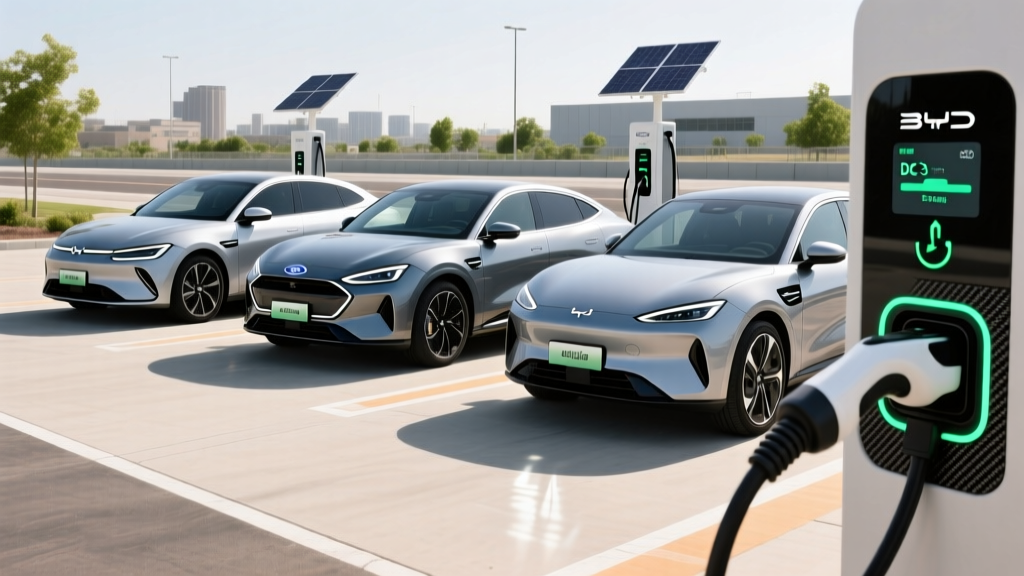
Farley's warnings aren't abstract. BYD, the world's largest EV and plug-in hybrid manufacturer, sells vehicles like the Dolphin (starting around $18,000 equivalent in export markets) and the Seal sedan (roughly $30,000 equivalent) with specifications that rival or exceed American competitors costing 40–60% more. In markets without prohibitive tariffs — Australia, Southeast Asia, parts of Europe — Chinese EVs have captured significant market share within 18–24 months of entry.
The cost advantage comes from vertical integration. BYD manufactures its own Blade LFP battery cells, electric motors, and semiconductors, controlling the entire supply chain. According to Reuters industry analysis, Chinese battery production costs run approximately $100/kWh compared to $130–$150/kWh for Western suppliers. That translates directly to a $2,400–$5,000 advantage on a 75–80 kWh battery pack before the vehicle even reaches the assembly line.
For US manufacturing, the threat is twofold: direct competition in export markets where American EVs now compete, and the potential erosion of the domestic market if tariff policy ever shifts. Farley has cited this pressure as a key driver behind Ford's restructuring of its EV division and its pivot toward smaller, more affordable EV platforms.
What the Tariff Wall Means for Your Purchase Decision
The current US tariff structure effectively prices Chinese EVs out of the market:
| Vehicle Class | Chinese MSRP (Pre-Tariff) | 100% Tariff Added | Effective US Price | Comparable US-Made EV | US MSRP |
|---|---|---|---|---|---|
| Compact Hatchback | $18,000 | +$18,000 | $36,000 | Chevrolet Equinox EV | $33,600 |
| Midsize Sedan | $30,000 | +$30,000 | $60,000 | Tesla Model 3 RWD | $38,990 |
| Midsize SUV | $35,000 | +$35,000 | $70,000 | Ford Mustang Mach-E | $42,995 |
| Full-Size SUV | $45,000 | +$45,000 | $90,000 | Rivian R1S | $75,900 |
As the table shows, the tariff erases the Chinese cost advantage entirely. A BYD Seal that might sell for $30,000 in Thailand becomes a $60,000 vehicle in the US — suddenly far more expensive than a Tesla Model 3 or Hyundai Ioniq 6. This is precisely the policy intent: protect domestic manufacturing while the US EV supply chain scales.
The EVs You Can Actually Buy: How Competition Is Lowering Prices
Chinese EV pressure hasn't been wasted. American and allied-market automakers have responded with aggressive pricing, better standard equipment, and faster product cycles. Here's what the competitive landscape looks like for key segments in 2026:
| Model | Base MSRP | EPA Range | Battery (kWh) | Peak DC Charge | 10–80% Time | Federal Credit Eligible? |
|---|---|---|---|---|---|---|
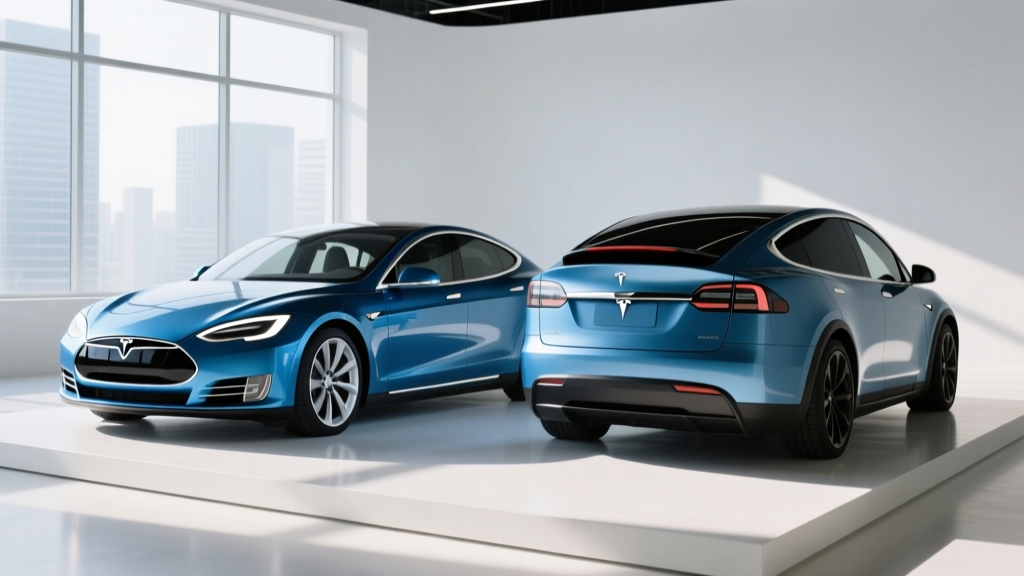
| Tesla Model 3 RWD | $38,990 | 272 mi | 60 (LFP) | 170 kW | ~25 min | Yes (§30D) |
| Chevrolet Equinox EV 2LT | $33,600 | 319 mi | 85 (NMC) | 150 kW | ~32 min | Yes (§30D) |
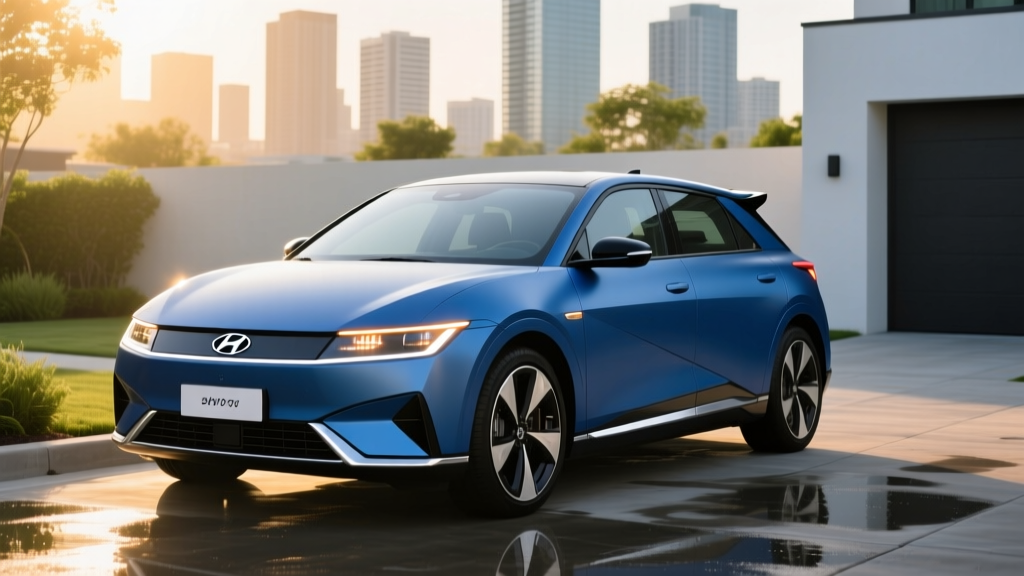
| Hyundai Ioniq 5 SE | $42,400 | 303 mi | 77.4 (NMC) | 240 kW | ~18 min | Yes (§30D) |
| Ford Mustang Mach-E Select | $42,995 | 250 mi | 72 (NMC) | 150 kW | ~30 min | Yes (§30D) |
| Volkswagen ID.4 Pro | $39,995 | 275 mi | 82 (NMC) | 175 kW | ~28 min | Yes (§30D) |
Real-world range caveat: expect 15–25% reduction from EPA figures in sustained highway driving above 70 mph, and 20–35% reduction in sub-freezing temperatures. A 319-mile Equinox EV may deliver 240–270 miles on a cold-weather road trip. Always plan charging stops around 70–75% of the EPA sticker to maintain a safety margin.
Total Cost of Ownership: EV vs. Gas vs. Hybrid in 2026
Regardless of where your EV is manufactured, the ownership economics follow the same physics and math. Here's a five-year cost breakdown comparing a typical EV (Chevrolet Equinox EV 2LT), a comparable gas SUV (Toyota RAV4 LE AWD), and a hybrid (Toyota RAV4 Hybrid XLE):
| Cost Category | Chevy Equinox EV 2LT | Toyota RAV4 LE AWD (Gas) | Toyota RAV4 Hybrid XLE |
|---|---|---|---|
| Purchase Price (MSRP) | $33,600 | $30,090 | $33,595 |
| §30D Federal Tax Credit | −$7,500* | $0 | $0 |
| Effective Purchase | $26,100 | $30,090 | $33,595 |
| Energy/Fuel (60k mi) | $3,480** | $7,500*** | $5,250**** |
| Maintenance (5 yr) | $1,200 | $3,500 | $3,200 |
| Insurance (5 yr avg) | $9,500 | $7,200 | $7,400 |
| 5-Year Total | $40,280 | $48,290 | $49,445 |
*§30D credit eligibility requires meeting income caps ($150k single / $300k joint), MSRP caps ($55k SUVs / $80k trucks & vans), and battery sourcing requirements. Verify current-year rules at IRS.gov. Credit may be applied at point of sale.
**Based on $0.145/kWh national avg home charging, 3.2 mi/kWh efficiency.
***Based on $3.50/gal, 30 MPG combined.
****Based on $3.50/gal, 40 MPG combined.
The EV wins on five-year cost by $8,000–$9,000, but the savings depend heavily on three factors: qualifying for the full tax credit, having access to affordable home charging, and not paying a significant insurance premium surcharge. If you cannot charge at home and must rely entirely on public DC fast charging at $0.35–$0.50/kWh, your energy cost jumps to $6,500–$9,300 over five years, narrowing the gap substantially.
First-Time EV Buyer: What You Must Know Before Signing
Your EV Readiness Checklist
If you can install a Level 2 home charger (240V, 32–48A) → You're an ideal EV candidate. Budget $500–$2,000 for the charger and electrical work (more if your panel needs an upgrade to 200A). Home charging at $0.10–$0.18/kWh delivers the lowest cost per mile and the most convenience.
If you live in an apartment or lack dedicated parking → Proceed cautiously. Map your nearest reliable public chargers (Electrify America, EVgo, ChargePoint, Tesla Supercharger). If your daily round-trip commute is under 60 miles and you can DC fast-charge weekly, an EV can work — but expect higher energy costs and time investment.
If you regularly drive 400+ miles in a day or tow heavy loads → A PHEV (plug-in hybrid) like the Toyota RAV4 Prime (42 mi electric-only, 38 MPG gas) may serve you better than a BEV, eliminating range anxiety on long hauls while still electrifying daily driving.
If you live in a region with extreme cold (sustained below 20°F) → Budget 25–35% range loss in winter. A vehicle with a heat pump (standard on Hyundai Ioniq 5, Tesla Model 3, VW ID.4) recovers some efficiency. Consider an EV with 300+ EPA miles to ensure adequate winter range.
Common Misconceptions About Chinese EVs and the US Market
| Myth | Fact |
|---|---|
| "Chinese EVs are cheap and low quality." | BYD, NIO, and Zeekr vehicles score well in Euro NCAP crash testing (multiple 5-star ratings) and use advanced LFP Blade or NMC cell designs. Build quality in 2024–2026 models rivals Korean and European competitors. The cost advantage comes from supply-chain control, not corner-cutting. |
| "The US tariff means Chinese EV tech won't affect me." | Chinese battery technology (especially LFP chemistry) is already licensed to Western manufacturers. Ford itself licensed CATL's LFP technology for its Michigan battery plant. The competitive pressure drives faster innovation and lower prices from all brands you can buy. |
| "I should wait for cheap Chinese EVs to arrive." | The 100% tariff has no announced sunset date. Even if reduced, Chinese brands would need 2–3 years to establish US dealer networks, service infrastructure, and parts supply. Waiting is not a practical strategy for a near-term purchase. |
| "American EVs are overpriced because there's no Chinese competition." | US EV prices have dropped 15–25% since 2023 precisely because of competitive pressure — from Tesla's price cuts, from Chinese EVs winning globally, and from legacy automakers scaling production. The Equinox EV at $33,600 would have been unimaginable in 2022. |
| "All EV batteries are the same regardless of origin." | Chemistry matters. LFP (lithium iron phosphate) batteries, where Chinese manufacturers lead, offer longer cycle life (3,000+ cycles vs. 1,500–2,000 for NMC) and lower degradation, but sacrifice 15–20% energy density. NMC offers more range per kilogram but degrades faster if routinely charged to 100%. Know which chemistry your EV uses. |
The Federal Tax Credit: Your Biggest Cost Variable
The §30D Clean Vehicle Credit remains the single largest factor in EV affordability, but eligibility is complex and rules tighten annually. For 2026, the key requirements include:
- Income caps: Modified AGI must not exceed $150,000 (single), $225,000 (head of household), or $300,000 (joint filing).
- MSRP caps: Vans, SUVs, and pickup trucks must have an MSRP at or below $80,000; sedans and other vehicles at or below $55,000.
- Battery sourcing: Increasingly strict critical-mineral and battery-component requirements must be met, with percentages rising each year. Vehicles using Chinese-sourced battery components above threshold levels are disqualified.
- Point-of-sale transfer: You may transfer the credit to the dealer at purchase, reducing your out-of-pocket cost immediately rather than waiting for tax filing.
The irony is that the same policy designed to block Chinese EVs from the US market also disqualifies some American-sold EVs that rely on Chinese battery components. Always verify your specific vehicle's eligibility at fueleconomy.gov before committing to a purchase.
Your Decision Framework: Which EV (or Electrified Vehicle) Fits You?
Choose a full EV (BEV) if: You have home Level 2 charging access, your daily driving is under 200 miles round-trip, you want the lowest per-mile operating cost, and you qualify for the §30D credit. Best current values: Chevrolet Equinox EV ($33,600, 319 mi), Tesla Model 3 ($38,990, 272 mi), Hyundai Ioniq 5 ($42,400, 303 mi).
Choose a PHEV if: You want electric commuting (25–45 mi electric-only range) but need gas flexibility for long trips, towing, or unreliable charging access. Best options: Toyota RAV4 Prime (42 mi EV, $43,690), Jeep Wrangler 4xe (22 mi EV, $49,995).
Choose a conventional hybrid (HEV) if: You cannot charge at home, don't want to rely on public infrastructure, but still want 40+ MPG efficiency. No plug, no range anxiety, no tax credit. Best option: Toyota RAV4 Hybrid (40 MPG combined, $33,595).
Wait if: Your current vehicle is reliable, you're unsure about charging access, and you want to see how solid-state battery commercialization (expected 2027–2029 from Toyota and Samsung SDI) affects range and pricing.
Frequently Asked Questions
Can I buy a BYD or NIO vehicle in the United States in 2026?
No. Neither BYD nor NIO sells vehicles through US dealerships, and the 100% tariff on Chinese-made EVs makes importing one economically impractical. Even if you could import one, it would lack EPA certification, NHTSA compliance, and any US service/parts network.
Will Chinese EV competition eventually lower prices for US buyers?
It already has. Tesla cut Model 3 pricing by over $10,000 between 2023 and 2025. Chevrolet launched the Equinox EV at $33,600 — a price point that would have been impossible without competitive pressure. Ford, Hyundai, and Volkswagen have all introduced lower-priced trims. You benefit from Chinese competition even without buying a Chinese vehicle.
Is it risky to buy an American-made EV given the industry upheaval?
Brand longevity risk is real but manageable. Federal law mandates that EV battery warranties cover at least 8 years/100,000 miles for capacity retention (typically 70% of original capacity). Major brands like Ford, GM, Hyundai, and Tesla have extensive dealer networks. The greater risk is buying from a startup with limited service infrastructure — check NHTSA recall and complaint data for any model you consider.
How does LFP battery chemistry (common in Chinese EVs) compare to NMC?
LFP offers longer cycle life (can handle daily 100% charging without significant degradation), lower cost, and better thermal stability. The trade-off is lower energy density — meaning a heavier or physically larger pack for the same range. Tesla uses CATL-sourced LFP in the Model 3 RWD, and Ford is building LFP capacity in Michigan. It's proven, reliable chemistry.
What's the single most important thing to verify before buying an EV?
Your charging situation. Confirm you can install a Level 2 charger at home (or have reliable, affordable public charging within 1–2 miles of your daily routine). Without convenient charging, EV ownership becomes frustrating and expensive regardless of the vehicle's price, range, or origin. Get a quote from a licensed electrician before signing a purchase agreement.