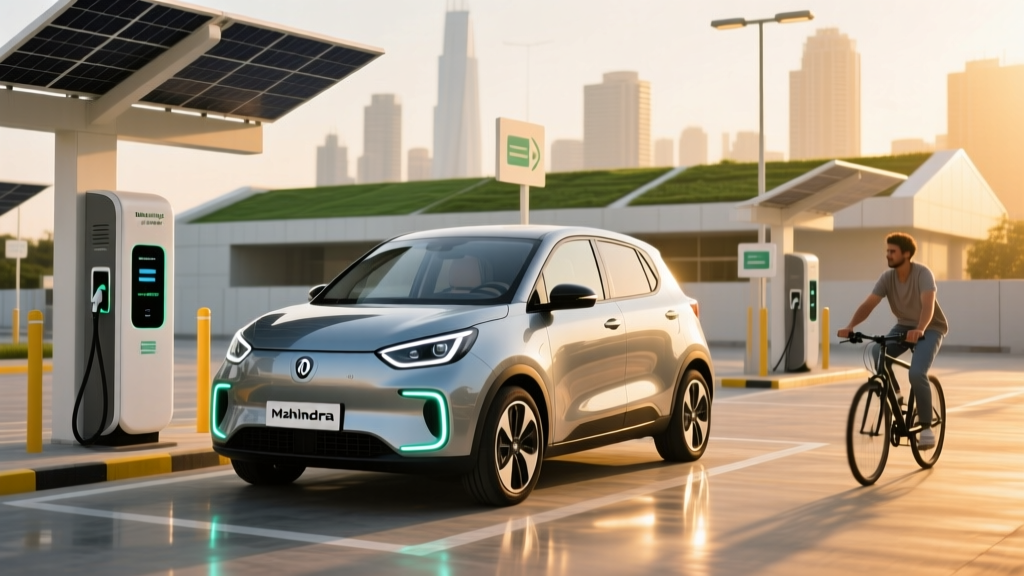
If you're searching for the Mahindra Reva electric in 2026, here's the direct answer: the Reva (also known as the G-Wiz in export markets) was a low-speed, two-door microcar originally launched in 2001 and discontinued years ago. It is not available as a new vehicle in the US or most global markets. Used examples surface occasionally, typically with 40–50 miles of degraded range, lead-acid or early lithium batteries, and no modern safety or charging infrastructure compatibility. If you're considering one as a budget EV, the real costs and severe limitations make modern alternatives far more practical. Read on for a complete ownership breakdown.
Quick Verdict: Mahindra Reva Electric in 2026
- Original EPA-equivalent range: ~49 miles (new, lead-acid variant)
- Real-world used range today: 20–35 miles (battery degradation)
- Battery: 9.6 kWh (lead-acid) / 48 kWh (later lithium variant, limited production)
- Top speed: ~50 mph (governed)
- New MSRP (historical): ~$10,000–$15,000 equivalent
- US availability: Discontinued; used market only
- Verdict: Not recommended for daily use; consider a used Nissan Leaf, Chevy Bolt, or Mini Cooper SE instead
What Is the Mahindra Reva Electric?
The Mahindra Reva (branded as the REVAi, G-Wiz, or Reva L-ion depending on variant and market) was one of the earliest mass-produced electric cars. Manufactured by Reva Electric Car Company in Bangalore, India — later acquired by Mahindra & Mahindra in 2010 — the Reva was sold primarily in India and the UK between 2001 and approximately 2012.
It was classified as a neighborhood electric vehicle (NEV) or quadricycle in many jurisdictions, meaning it was exempt from full crash-test standards but also restricted from highways. The original Reva used eight 6V lead-acid batteries (9.6 kWh total), while the later Reva L-ion variant adopted lithium-ion cells offering roughly double the range.
For context, Mahindra's current electric strategy focuses on the Mahindra XUV400 and Born Electric platform vehicles, which are modern, highway-capable SUVs with CCS charging and 200+ mile ranges — entirely different products from the original Reva.
Mahindra Reva Electric: Spec Breakdown
| Specification | Reva (Lead-Acid) | Reva L-ion | 2026 Comparison: Nissan Leaf S |
|---|---|---|---|
| Usable Battery | 9.6 kWh (lead-acid) | ~16 kWh (lithium-ion) | 40 kWh (NMC) |
| EPA-Equiv. Range | ~49 mi (new) | ~75 mi (new) | 149 mi |
| Real-World Range (used, 2026) | 20–35 mi | 40–55 mi | 130–145 mi |
| Top Speed | ~50 mph | ~50 mph | ~95 mph |
| 0–30 mph | ~7 sec | ~6 sec | ~3.5 sec (0–60: 7.4 sec) |
| Motor Output | 13 kW (17 hp) | 13 kW (17 hp) | 110 kW (147 hp) |
| AC Charge Rate | ~2.3 kW (16A) | ~3.3 kW | 6.6 kW (Level 2) |
| DC Fast Charging | None | None | 50 kW (CHAdeMO) |
| Charge Time (full) | ~8 hours (120V) | ~6 hours (240V) | ~7 hours (L2); 40 min (DC 10–80%) |
| Curb Weight | ~1,650 lbs | ~1,650 lbs | ~3,700 lbs |
| Seats | 2+2 (tight) | 2+2 (tight) | 5 |
| Safety Ratings | None (NEV class) | None (NEV class) | NHTSA 5-star |
Real-World Ownership Costs: Reva vs. Gas vs. Modern EV
The Reva's appeal was always its low purchase price and operating cost. But in 2026, a used Reva carries hidden expenses that erase any perceived savings. Here's how the numbers actually work over a 5-year ownership period, assuming 5,000 miles/year (realistic for a 30-mile-range vehicle).
| Cost Category | Used Mahindra Reva | Used Gas Car (e.g., 2015 Honda Fit) | Used 2020 Nissan Leaf |
|---|---|---|---|
| Purchase Price | $3,000–$6,000 | $8,000–$12,000 | $14,000–$18,000 |
| Battery Replacement | $2,500–$5,000 (lead-acid, 3–5 yr life) | $0 | $0–$6,500 (if needed after warranty) |
| Fuel/Energy (5 yr) | $600 (electricity, $0.13/kWh) | $4,500 (gas, $3.50/gal, 30 MPG) | $1,950 (electricity) |
| Maintenance (5 yr) | $800 (minimal) | $2,500 (oil, brakes, filters) | $600 (tires, cabin filter, brakes) |
| Insurance (5 yr) | $2,500 (specialty/collector) | $4,500 | $5,000 |
| Registration | $500 | $750 | $750 |
| 5-Year Total | $9,900–$15,400 | $20,250–$24,250 | $22,300–$26,300 |
| Cost Per Mile | $0.40–$0.62 | $0.81–$0.97 | $0.89–$1.05 |
Key insight: The Reva's low purchase price is offset by the near-certainty of a battery replacement within your ownership window. Lead-acid EV batteries degrade rapidly — expect 50% capacity loss within 3 years of regular use. Lithium-ion Reva variants fare better but are extremely rare. Neither qualifies for any federal §30D tax credit due to age, battery sourcing, and MSRP requirements.
Charging the Reva: What You Need to Know
The Reva predates modern charging standards. It uses a standard household outlet (Level 1 equivalent) with a built-in charger, drawing approximately 2.3 kW from a 120V/16A circuit. There is no J1772, CCS, NACS, or CHAdeMO connector — meaning you cannot use any public charging station.
Home charging reality: You'll need a dedicated 120V outlet near your parking spot. A full charge takes approximately 8 hours. If your home electrical panel is older, consult a licensed electrician before running sustained 16A draws — a 20A circuit is recommended.
No public charging compatibility means the Reva is strictly a home-base vehicle. Your effective radius is roughly 15–20 miles from home (accounting for round trips and degradation), making it unsuitable for anything beyond neighborhood errands.
Common Misconceptions About the Mahindra Reva
| Myth | Fact |
|---|---|
| "The Reva gets 80+ miles of range" | Only the rare L-ion variant approached 75 miles when new. Lead-acid models topped out at ~49 miles EPA-equivalent, and used examples in 2026 deliver 20–35 miles at best. |
| "It's a great cheap EV for commuting" | Its 50 mph top speed makes it illegal and unsafe on most roads above 35 mph. It's classified as a NEV/quadricycle, not a full passenger vehicle. |
| "I can charge it at public stations" | The Reva has no standard EV connector (J1772/CCS/NACS). It charges only from a household outlet. |
| "Battery replacement is cheap" | A set of lead-acid batteries costs $2,500–$5,000 and lasts 3–5 years — a significant recurring cost that makes the Reva more expensive per mile than many modern used EVs. |
| "Mahindra still sells the Reva" | Mahindra discontinued the Reva around 2012. Their current EV lineup (XUV400, BE series) are entirely different, modern vehicles not yet sold in the US. |
First-Time EV Buyer? Why the Reva Is the Wrong Starting Point
If the Mahindra Reva electric caught your eye because of its low price, understand what you're actually buying: a 15–25-year-old microcar with obsolete battery chemistry, no safety ratings, no highway capability, and no public charging access. For first-time EV buyers, the learning curve of range management, charging logistics, and battery health monitoring is far better served by a modern, supported vehicle.
What a first-time buyer actually needs:
- Minimum 150+ miles of range to handle daily driving plus detours and cold-weather loss (which typically reduces range 20–40% below freezing)
- Standard J1772/NACS connector for home Level 2 charging and public station access
- DC fast charging (CCS or NACS) for road trips and quick top-ups
- NHTSA/IIHS safety ratings — the Reva has none
- Battery warranty or known State of Health (SoH) — used Reva batteries are unmonitored and degraded
- Parts and service availability — Reva parts are essentially unavailable outside India
Decision Framework: Should You Buy a Mahindra Reva Electric?
If / Then Guide
- If you want a cheap EV for daily commuting → Skip the Reva. Buy a used 2018–2022 Nissan Leaf (40 kWh, ~130 mi range, $12,000–$16,000) or Chevy Bolt EV (259 mi range, $14,000–$18,000). Both have J1772/CCS charging, safety ratings, and available parts.
- If you want a neighborhood runabout for errands → A used Reva can work if you have home charging, accept the 20-mile radius, and budget $3,000–$5,000 for an eventual battery swap. But a used Smart EQ Fortwo or Fiat 500e offers far more capability and safety for similar money.
- If you're a collector or EV history enthusiast → The Reva has novelty value as one of the first mass-produced EVs. Budget $4,000–$6,000 for purchase plus $3,000 for battery refurbishment. Don't expect daily-driver reliability.
- If you need highway capability or road-trip potential → The Reva is not an option. Look at a used Tesla Model 3 (Standard Range, ~$18,000–$22,000), Hyundai Kona Electric (~$16,000–$20,000), or a new Chevy Equinox EV ($33,000, 315 mi range, potentially eligible for the §30D credit).
- If you're outside the US (India/UK) → Used Reva parts are more accessible, but the same range and safety limitations apply. Mahindra's XUV400 (130 mi range, ~₹18 lakh / £25,000 equivalent) is a dramatically better modern option.
Better Alternatives to the Mahindra Reva Electric
| Vehicle | Price (Used/New) | EPA Range | Charging | Why It's Better |
|---|---|---|---|---|
| 2020 Nissan Leaf S | $12,000–$16,000 | 149 mi | J1772 + CHAdeMO 50 kW | Real highway car, 5 seats, safety-rated |
| 2020 Chevy Bolt EV | $14,000–$18,000 | 259 mi | J1772 + CCS 55 kW | Best used-EV range per dollar |
| 2021 Mini Cooper SE | $18,000–$22,000 | 114 mi | J1772 + CCS 50 kW | Fun to drive, premium feel, standard connectors |
| 2025 Hyundai Kona Electric | $32,975 (new) | 261 mi | NACS + CCS adapter, 100+ kW DC | Modern tech, long warranty, fast charging |
| 2025 Chevy Equinox EV | $33,000 (new) | 315 mi | NACS, 150 kW DC | Spacious, affordable, potential §30D credit |
All of these alternatives offer standard charging connectors, DC fast charging, modern battery management systems with State of Health monitoring, NHTSA safety ratings, and dealer service networks. For the price of a used Reva plus its inevitable battery replacement, you can own a far more capable and safer electric vehicle.
Frequently Asked Questions
Is the Mahindra Reva electric still being made?
No. Mahindra discontinued the Reva around 2012, replacing it with the e2o (also discontinued). Mahindra's current EV lineup includes the XUV400 and upcoming Born Electric platform vehicles, none of which are currently sold in the US market.
What is the real-world range of a used Mahindra Reva in 2026?
Expect 20–35 miles for lead-acid models and 40–55 miles for the rare L-ion variant. Battery degradation is severe in older lead-acid packs — many used Revas have lost 40–60% of their original capacity. Cold weather (below 40°F) can cut these figures by another 20–30%.
Can I charge the Mahindra Reva at a public charging station?
No. The Reva uses a proprietary onboard charger that plugs into a standard household outlet. It has no J1772, CCS, NACS, or CHAdeMO connector, making it incompatible with all public Level 2 and DC fast-charging networks.
How much does it cost to replace the Reva's battery?
A replacement lead-acid battery set costs approximately $2,500–$5,000 and lasts 3–5 years under regular use. Lithium-ion retrofit options are not widely available. This recurring cost significantly increases the Reva's true cost of ownership.
Does the Mahindra Reva qualify for any EV tax credit?
No. Under current IRS §30D rules, the federal clean vehicle credit applies only to new EVs meeting battery sourcing, critical mineral, MSRP cap, and buyer income requirements. The used EV credit (§25E) applies to vehicles at least 2 model years old sold by dealers for under $25,000, but the Reva's age, lack of dealer availability, and battery chemistry make eligibility extremely unlikely.
Is the Reva safe to drive?
The Reva was never crash-tested by NHTSA, IIHS, or Euro NCAP. As a NEV/quadricycle, it was exempt from standard passenger-vehicle safety requirements. It lacks airbags, ABS, stability control, and crumple zones. It is not recommended for roads with speed limits above 35 mph.
What's the best cheap EV to buy instead of the Reva?
The used 2020 Chevy Bolt EV offers the best value: 259 miles of EPA range, CCS DC fast charging, 5 seats, NHTSA 5-star safety, and prices between $14,000–$18,000. For new buyers, the 2025 Chevy Equinox EV at $33,000 with 315 miles of range and potential §30D credit eligibility is the current affordability leader.