Quick Verdict: The Fastest Porsche Ever Built Is Electric
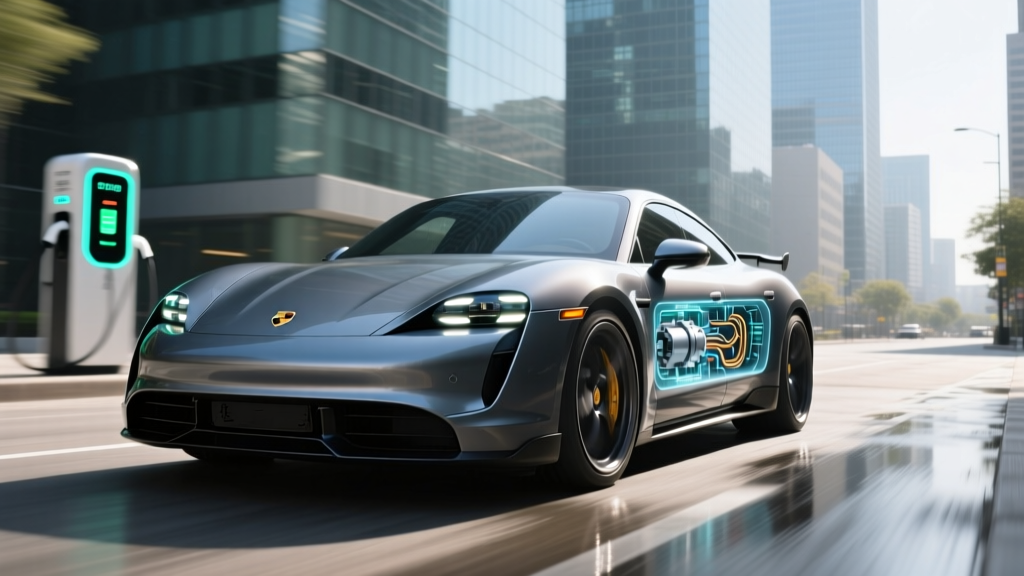
The 2025 Porsche Taycan Turbo GT with the Weissach Package posts a manufacturer-claimed 0-60 mph time of 2.1 seconds — making it the quickest-accelerating Porsche in the brand's history and one of the fastest production cars on the planet, period. But reducing this car to a single number does it a disservice. The Turbo GT pairs that brutal acceleration with a 1,019-horsepower dual-motor all-wheel-drive system, an active aerodynamics suite, and the updated J1 performance platform's 320 kW DC fast-charging capability. The trade-off? An EPA range of just 269 miles (with the Weissach Package), a starting price north of $230,000, and zero federal tax credit eligibility. This is a track weapon that happens to be electric — not an efficiency play.
| Attribute | Turbo GT | Turbo GT w/ Weissach Package |
|---|---|---|
| EPA Range | 269 mi | 269 mi |
| Battery (Gross / Net Usable) | 105 kWh / ~97 kWh | 105 kWh / ~97 kWh |
| Battery Chemistry | NMC (Nickel Manganese Cobalt) | NMC |
| Drivetrain | Dual-motor AWD | Dual-motor AWD |
| Horsepower (Launch Control) | 1,019 hp | 1,019 hp |
| 0-60 mph | 2.1 sec | 2.1 sec |
| Top Speed | 180 mph | 190 mph |
| Max DC Fast Charge | 320 kW | 320 kW |
| 10-80% DC Charge Time | ~18 min | ~18 min |
| Level 2 Home Charge | 11 kW (AC) | 11 kW (AC) |
| EPA Efficiency | 76 MPGe (44 kWh/100mi) | 76 MPGe (44 kWh/100mi) |
| Cargo Volume (rear + frunk) | 14.3 + 2.9 cu ft | 14.3 + 2.9 cu ft |
| Curb Weight | ~5,045 lb | ~4,971 lb |
| Base MSRP | $230,000 | $252,000 (est. package add) |
| Federal §30D Tax Credit | Not eligible | Not eligible |
| Battery Warranty | 8 yr / 100,000 mi | 8 yr / 100,000 mi |
EPA Range vs. Real-World Expectations
EPA Estimated Range: 269 miles (Turbo GT and Weissach Package)
Real-World Expectation: Plan for 220-240 miles on mixed highway driving at 70-80 mph. In cold weather (below 40°F), expect 180-200 miles. Aggressive track or canyon driving can deplete the pack in under 100 miles.
The Taycan Turbo GT uses Porsche's updated Performance Battery Plus — a 105 kWh gross (approximately 97 kWh net usable) NMC lithium-ion pack. The 269-mile EPA rating is identical to the Turbo GT with Weissach Package, despite the latter shedding roughly 75 pounds through carbon-fiber bucket seats, deleted rear seats, and lightweight glass.
That EPA figure deserves context. The Taycan has historically beaten its EPA range estimates in real-world highway testing — a rarity among EVs. In controlled 70-mph highway loops conducted by independent testers, the pre-refresh Taycan Turbo S returned 275 miles against a 222-mile EPA sticker. The updated model's improved efficiency and larger battery suggest the Turbo GT could similarly exceed its 269-mile sticker in moderate conditions. However, this is a 1,019-horsepower performance car: sustained high-speed driving and hard acceleration will dramatically reduce range. The car's thermal management system is track-focused, prioritizing battery cooling over cabin efficiency.
For daily commuting with access to home charging, 269 miles is more than adequate. For road trips, you'll be stopping every 150-180 miles at highway speeds — but with 320 kW charging, those stops are brief.
Charging Performance: 320 kW Peak, Real-World Curve
The 2025 Taycan lineup's headline charging upgrade is the 320 kW peak DC fast-charge rate — up from 270 kW on the pre-refresh model. This is enabled by the 800-volt architecture Porsche has used since the Taycan's 2020 launch, which allows high charging power at lower amperage, reducing heat and cable weight.
| Charge Level | Power / Voltage | Speed (Approx.) | Use Case |
|---|---|---|---|
| Level 1 (120V household) | ~1.4 kW | ~3 mi/hr | Emergency trickle only |
| Level 2 (240V home, 48A) | 11 kW (AC) | ~28 mi/hr | Overnight full charge (~10 hr) |
| DC Fast Charge (800V) | Peak 320 kW | 10-80% in ~18 min | Road trips, track days |
| DC Fast Charge (400V station) | Up to ~150 kW | 10-80% in ~33 min | Older CCS stations |
Charging curve reality: The 320 kW peak is not sustained across the entire session. Porsche's charge curve typically holds above 250 kW from roughly 10% to 40% State of Charge (SoC), then tapers progressively. From 80% to 100%, charging slows dramatically to protect the NMC cells. For road trips, the optimal strategy is short 10-80% bursts — about 18 minutes at a 350 kW-capable Electrify America or IONITY station — rather than topping up to full.
One practical note: the Taycan uses a CCS1 connector in North America. Porsche has not adopted the Tesla NACS connector for the current J1 platform. This means access to Tesla Superchargers requires an adapter (Porsche provides one with new vehicles as of late 2024). At home, the onboard 11 kW AC charger is adequate for overnight replenishment but slower than the 19.2 kW chargers found on the Ford F-150 Lightning or Rivian R1T.
Performance: Decoding the 2.1-Second 0-60
The Taycan Turbo GT 0-60 time of 2.1 seconds (with Weissach Package, using Launch Control) requires several conditions: the battery must be at optimal temperature (the car's preconditioning function handles this), SoC should be above 50%, and the surface must offer high grip. Porsche rates this with a rollout adjustment typical of manufacturer claims, but independent testing by outlets like Car and Driver has historically validated Porsche's acceleration figures within a tenth.
For context, 2.1 seconds matches or beats:
- Rimac Nevera: 1.85 sec (limited-production hypercar, ~$2.4M)
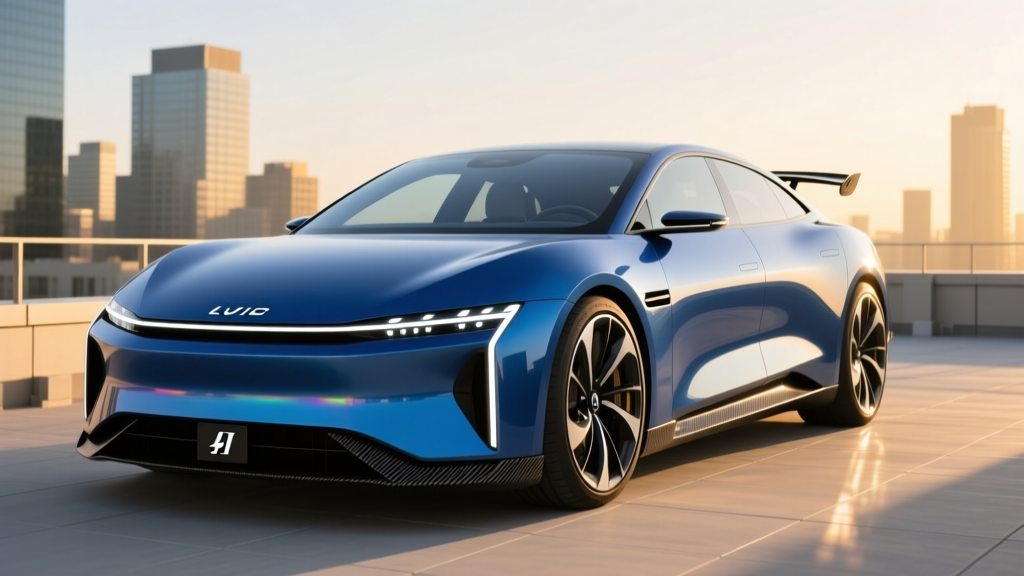
- Lucid Air Sapphire: 1.89 sec (sedan, $249,000)
- Tesla Model S Plaid: 1.99 sec (sedan, $89,990)
- Pininfarina Battista: 1.79 sec (hypercar, ~$2.8M)
The Taycan Turbo GT's dual-motor AWD system produces 1,019 hp and 988 lb-ft of torque in overboost mode (Launch Control engaged). The rear motor uses a two-speed transmission — a Porsche hallmark — with a short first gear for explosive launches and a tall second gear for efficiency at highway speed. The front motor is a single-speed unit.
Beyond straight-line speed, the Turbo GT's Weissach Package deletes the rear seats, adds carbon-fiber interior and exterior components, and fits carbon-ceramic brakes. The active rear wing and underbody aero generate meaningful downforce at track speeds. This is a car engineered to lap the Nürburgring (it holds the production EV sedan record there), not just drag-race at stoplights.
Pricing, Trims, and Tax Credit Reality
The 2025 Porsche Taycan Turbo GT starts at $230,000 MSRP before destination. The Weissach Package — which adds the carbon-fiber aero, weight reduction, and 190-mph top-speed unlock — pushes the price to approximately $252,000. With options like Porsche Exclusive Manufaktur paint, ceramic brakes (standard on Weissach), and the Burmester audio system, as-tested pricing routinely reaches $265,000-$280,000.
| Trim | Base MSRP | §30D Federal Credit | Effective Price |
|---|---|---|---|
| Turbo GT | $230,000 | $0 (exceeds MSRP cap) | $230,000+ |
| Turbo GT w/ Weissach | $252,000 (est.) | $0 (exceeds MSRP cap) | $252,000+ |
Federal tax credit: Not eligible. Under current IRS §30D rules, the new clean vehicle credit caps eligible sedans at an MSRP of $55,000. The Taycan Turbo GT's $230,000+ price tag disqualifies it entirely — regardless of buyer income, battery sourcing, or assembly location. This is a car for buyers who prioritize performance over incentives. State-level incentives (such as California's CVRP, which has its own MSRP limits) are similarly unavailable at this price point.
Interior, Tech, and Daily Livability
The Taycan's cabin uses Porsche's curved 12.6-inch digital instrument cluster, a 10.9-inch central infotainment touchscreen, and an optional 10.9-inch passenger display. The infotainment system runs Porsche Communication Management (PCM) with wireless Apple CarPlay and Android Auto. The center console uses haptic touch controls rather than physical buttons — a polarizing choice that some owners find imprecise while driving.
Passenger and cargo space:
- Front headroom: 38.0 inches
- Front legroom: 41.3 inches
- Rear headroom: 36.5 inches (tight for taller passengers)
- Rear legroom: 32.7 inches (sports-sedan tight)
- Rear trunk: 14.3 cubic feet
- Front trunk (frunk): 2.9 cubic feet
The Turbo GT with Weissach Package deletes the rear seats entirely, replacing them with a carbon-fiber shelf and helmet storage area. This makes it a strict two-seater — a critical consideration if you ever need to carry rear passengers. The standard Turbo GT retains rear seats.
Driver assistance: Porsche equips the Taycan with InnoDrive adaptive cruise control with active lane guidance, ParkAssist with surround-view cameras, and night vision assist. These are SAE Level 2 driver-assist features — the driver must remain fully engaged. Porsche does not market these as autonomous or "self-driving" systems, and there is no hands-free mode comparable to GM's Super Cruise or Ford's BlueCruise.
Ownership Costs, Warranty, and Efficiency
The Taycan Turbo GT's efficiency rating of 76 MPGe combined (44 kWh/100 miles) is unremarkable for its class — the Tesla Model S Plaid achieves 116 MPGe — but efficiency is not the mission here. At the national average electricity rate of $0.17/kWh, driving 100 miles costs approximately $7.48. The same distance in a comparable gas-powered 911 Turbo S (17 MPG combined) at $3.50/gallon would cost about $20.59. Even a $230,000 EV saves money at the pump.
Warranty coverage:
- New vehicle limited warranty: 4 years / 50,000 miles
- Battery warranty: 8 years / 100,000 miles (retains ≥70% capacity)
- Corrosion warranty: 12 years, unlimited miles
- Porsche Scheduled Maintenance: 1 year / 10,000 miles (first service included)
The 8-year/100,000-mile battery warranty with a 70% capacity retention threshold is industry-standard, matching BMW, Mercedes, and Tesla. Porsche's NMC cells have demonstrated strong longevity in the Taycan fleet — early 2020 models with high mileage have shown degradation in the 5-8% range, well within warranty tolerance. The battery is liquid-cooled with an advanced thermal management system that preconditions during navigation to DC chargers and during track driving.
Taycan Turbo GT vs. Key Competitors
| Spec | Porsche Taycan Turbo GT (Weissach) | Tesla Model S Plaid | Lucid Air Sapphire |
|---|---|---|---|
| 0-60 mph | 2.1 sec | 1.99 sec | 1.89 sec |
| Horsepower | 1,019 hp | 1,020 hp | 1,234 hp |
| EPA Range | 269 mi | 396 mi | 427 mi |
| Max DC Charge | 320 kW | 250 kW | 300 kW |
| Base MSRP | ~$252,000 | $89,990 | $249,000 |
| Nürburgring Focus | Yes (production EV sedan record) | No | No |
| Build Quality | Porsche-grade | Tesla (variable) | Luxury-tier |
The Model S Plaid wins on straight-line acceleration, range, and price. The Lucid Air Sapphire offers more horsepower, vastly more range, and a comparable price. But neither matches the Taycan Turbo GT's chassis dynamics, braking feel, or track-day credibility. The Porsche is the driver's choice; the others are the spec-sheet winners.
Choose the Taycan Turbo GT if: You prioritize handling, build quality, and track capability above all else. You want a Porsche with EV performance and have home charging access. You rarely carry rear passengers.
Choose the Model S Plaid if: You want maximum straight-line speed per dollar, need 390+ miles of range, and value over-the-air updates and Supercharger access.
Choose the Lucid Air Sapphire if: You want hypercar acceleration with luxury-sedan range (427 mi EPA), more interior space, and don't need track-day durability.
Pros
- 2.1-second 0-60 — among the fastest production cars ever made
- 320 kW DC fast charging on 800V architecture
- Nürburgring-capable chassis with genuine track durability
- Porsche build quality, materials, and dealer network
- Two-speed rear transmission for both launch and efficiency
- Strong battery thermal management and low degradation
Cons
- 269-mile EPA range is the lowest in its price class
- $230,000+ starting price; no federal tax credit eligibility
- Weissach Package deletes rear seats (two-seater only)
- CCS1 connector requires adapter for Tesla Superchargers
- Haptic touch controls can be imprecise while driving
- Insurance premiums are among the highest for any EV
Frequently Asked Questions
What is the real-world range of the Taycan Turbo GT?
The EPA rates the Taycan Turbo GT at 269 miles. In real-world mixed driving at moderate speeds, expect 240-280 miles — Porsche's EVs historically exceed their EPA estimates. At sustained 80-mph highway speeds, plan for 220-240 miles. In cold weather below freezing, range can drop to 180-200 miles due to battery heating demands and reduced cell efficiency.
How fast does the Taycan Turbo GT charge at home and on the road?
At a 350 kW DC fast charger, the Taycan Turbo GT peaks at 320 kW and charges from 10-80% in approximately 18 minutes. At home on a Level 2 (240V, 48A) charger, the 11 kW onboard charger adds about 28 miles of range per hour — a full overnight charge takes roughly 10 hours. Level 1 (120V) trickle charging adds only about 3 miles per hour and is practical only for emergencies.
Does the Taycan Turbo GT qualify for the federal EV tax credit?
No. Under current IRS §30D rules, the new clean vehicle credit caps sedan eligibility at $55,000 MSRP. The Taycan Turbo GT starts at $230,000, far exceeding this cap. Buyer income limits ($150,000 single / $300,000 joint) and battery critical-mineral sourcing requirements are irrelevant here — the MSRP alone disqualifies it. Always consult a tax professional for your specific situation.
Is the Taycan Turbo GT worth buying over the Tesla Model S Plaid?
They serve different purposes. The Model S Plaid is faster to 60 mph (1.99 sec), offers 396 miles of EPA range, and costs $89,990 — a fraction of the Turbo GT's price. But the Taycan Turbo GT delivers superior chassis balance, braking performance, build quality, and track-day durability. If you want a daily-drivable luxury sedan with savage acceleration, the Plaid wins on value. If you want a track weapon that happens to be electric, the Turbo GT is unrivaled.
What battery chemistry does the Taycan Turbo GT use?
The Taycan Turbo GT uses an NMC (nickel manganese cobalt) lithium-ion battery with a gross capacity of 105 kWh and approximately 97 kWh net usable. NMC offers higher energy density than LFP (lithium iron phosphate), which is critical in a performance sedan where weight and packaging matter. The trade-off is that NMC cells benefit from not being held at 100% SoC for extended periods — Porsche's battery management system includes a configurable charge limit to support long-term health.
Can I daily-drive the Taycan Turbo GT?
Yes, with caveats. The ride quality in Normal mode is compliant for a performance car, and the 269-mile range covers most commutes easily if you charge at home. The Weissach Package's carbon bucket seats are firm for long trips, and the deleted rear seats eliminate passenger flexibility. Insurance will be expensive — expect $4,000-$7,000 annually depending on your profile and location. If you have a second vehicle for mundane tasks, the Turbo GT is a remarkably capable daily driver.