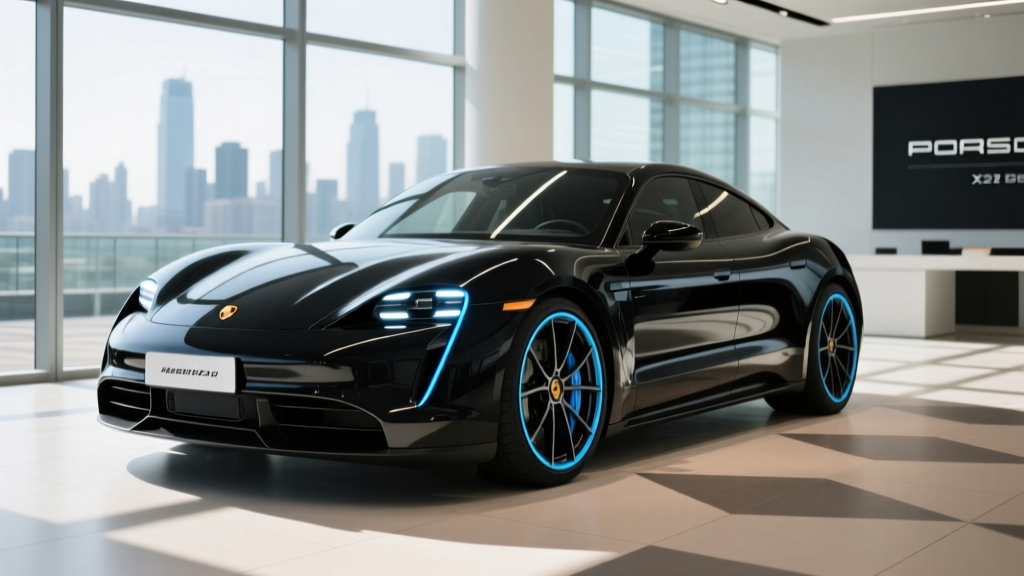
The 2026 Porsche Taycan enters its second full model year after a comprehensive mid-cycle refresh that transformed its battery capacity, charging architecture, and powertrain output. For buyers researching Porsche Taycan specs, the numbers tell a story of an EV sports sedan that now competes on efficiency and charging speed—not just badge prestige and handling dynamics. But how do those specs translate to real-world ownership? We break down every critical figure, from EPA range to DC fast-charge curves, so you know exactly what you're buying.
2026 Porsche Taycan Core Specs at a Glance
| Specification | Base RWD | 4S AWD | Turbo S AWD |
|---|---|---|---|
| EPA Range | 292 mi | 318 mi (Performance Battery Plus) | 284 mi |
| Battery (Usable) | 82.3 kWh (NMC) | 97.0 kWh (NMC, Plus pack) | 97.0 kWh (NMC) |
| Horsepower (Launch Control) | 402 hp | 590 hp | 939 hp |
| 0–60 mph | 4.6 sec | 3.5 sec | 2.4 sec |
| Top Track Speed | 143 mph | 155 mph | 162 mph |
| Peak DC Fast Charge | 270 kW | 320 kW | 320 kW |
| 10–80% DC Charge Time | ~22 min | ~18 min | ~18 min |
| Level 2 AC Charge Rate | 11 kW | 11 kW (22 kW optional) | 11 kW (22 kW optional) |
| MPGe (Combined) | 84 MPGe | 87 MPGe | 77 MPGe |
| kWh / 100 mi | 40 | 39 | 44 |
| Drivetrain | RWD, single motor | AWD, dual motor | AWD, dual motor |
| Base MSRP | $99,400 | $113,500 | $197,500 |
| Battery Warranty | 8 years / 100,000 miles | ||
Source: EPA fueleconomy.gov and Porsche USA specifications. Figures reflect 2026 model year.
Real-World Range: What the EPA Number Doesn't Tell You
Real-World Expectation: ~250–275 miles on highway road trips at 70–80 mph; ~210–230 miles in cold weather (below 32°F) with cabin heating. City driving with regenerative braking can approach or slightly exceed the EPA figure.
The Taycan's EPA numbers improved dramatically for the refreshed generation, largely thanks to the larger 97.0 kWh usable battery (up from 83.7 kWh in the pre-refresh Performance Battery Plus). The 4S equipped with the Plus pack and 19-inch Aero wheels achieves the lineup-best 318 miles. However, Porsche's thermal management system prioritizes performance consistency over maximum efficiency, meaning the Taycan's real-world highway range tends to fall further below its EPA sticker than some competitors like the Lucid Air or Hyundai Ioniq 6.
In independent highway loop testing at sustained 75 mph speeds in moderate temperatures (65–75°F), the Taycan 4S typically delivers between 255 and 275 miles before reaching 10% state of charge. Drop ambient temperatures to freezing or below, and expect a 20–25% reduction—putting winter highway range in the 210–230 mile window. This isn't unusual for a performance-oriented EV, but buyers in cold climates should factor it into road-trip planning.
The base RWD model's 292-mile EPA rating is respectable, but its smaller 82.3 kWh battery means less buffer in adverse conditions. For maximum range confidence, the 4S with the Performance Battery Plus and the standard 19-inch wheel package is the sweet spot.
Charging Speed: 320 kW Peak and the 800-Volt Advantage
The Taycan's 800-volt architecture remains one of its defining engineering features, enabling DC fast-charge rates that most 400-volt competitors simply cannot match. For the 2026 model year, Porsche has further optimized the charge curve on models equipped with the Performance Battery Plus.
| Charging Level | Power | Miles Added per Hour | Notes |
|---|---|---|---|
| Level 1 (120V household) | ~1.4 kW | ~3–4 mi/hr | Emergency/trickle only |
| Level 2 (240V, 48A) | 11 kW | ~30–33 mi/hr | Standard onboard charger |
| Level 2 (240V, optional) | 22 kW | ~60–65 mi/hr | Requires 100A circuit; optional upgrade |
| DC Fast Charge (peak) | 320 kW (Plus pack) 270 kW (base pack) | ~200+ mi in 10 min (ideal) | Requires 350 kW+ CCS/NACS station |
Understanding the charge curve: The 320 kW peak rate is not sustained across the entire session. On a 350 kW-capable Electrify America or Ionity station, the Taycan 4S with the Plus pack will pull peak power roughly between 10% and 40% state of charge, then progressively taper. The 10–80% time of approximately 18 minutes is competitive with the fastest-charging EVs on the market (Hyundai Ioniq 5, Kia EV6, Lotus Eletre). Above 80%, charging slows dramatically to protect the NMC cells—expect 80–100% to take another 15–20 minutes. For road trips, the practical strategy is to charge in the 10–80% window and move on.
For home charging, the standard 11 kW onboard charger replenishes the 97.0 kWh battery from 10% to 100% in roughly 9 hours—fine for overnight charging. The optional 22 kW onboard charger (a $1,620 upgrade) cuts that to about 4.5 hours but requires a dedicated 100-amp circuit and a hardwired Level 2 unit like the ChargePoint Home Flex or FLO Home X8. Most owners will find 11 kW perfectly adequate for daily use.
The Taycan uses the CCS1 connector standard for North America. Porsche has confirmed NACS (Tesla-style) adapter compatibility for Supercharger network access, though native NACS ports are not yet standard on the 2026 Taycan. Owners can use the included adapter at Tesla Superchargers capable of CCS communication.
Performance: From 402 hp to 939 hp
The Taycan lineup spans a wide performance envelope. The base RWD model, reintroduced for the US market, uses a single rear-mounted motor producing 402 hp (with launch control engaged). It's the lightest Taycan variant and delivers 0–60 mph in 4.6 seconds—a time that would have been considered supercar territory just a decade ago.
The 4S dual-motor AWD variant steps up to 590 hp and a 3.5-second 0–60 time, striking the balance most buyers want: all-weather capability, serious acceleration, and the highest range in the lineup. The GTS sits at 690 hp and 3.1 seconds, while the Turbo and Turbo S push into hypercar territory at 890 hp and 939 hp respectively, with the Turbo S hitting 60 mph in a verified 2.4 seconds.
All Taycan variants feature a two-speed transmission on the rear axle—a unique engineering choice in the EV space. First gear provides explosive launch acceleration, while second gear optimizes high-speed efficiency. The result is strong passing power at highway speeds without the efficiency penalty that single-speed EVs experience at sustained high velocity.
Porsche's regenerative braking system recovers up to 290 kW of energy, among the highest regen rates in production. In practice, this means aggressive deceleration when lifting off the accelerator, though Porsche stops short of true one-pedal driving—the car will not come to a complete stop without touching the brake pedal. This is a deliberate choice to preserve the brake feel that Porsche enthusiasts expect.
Pricing, Trims, and Federal Tax Credit Eligibility
| Trim | Base MSRP | As-Tested Typical | Federal §30D Credit |
|---|---|---|---|
| Taycan (Base RWD) | $99,400 | $108,000–$115,000 | Not eligible (MSRP exceeds $55,000 sedan cap) |
| Taycan 4S | $113,500 | $125,000–$140,000 | Not eligible |
| Taycan GTS | $141,800 | $155,000–$165,000 | Not eligible |
| Taycan Turbo | $175,200 | $185,000–$195,000 | Not eligible |
| Taycan Turbo S | $197,500 | $210,000–$230,000 | Not eligible |
| Taycan Cross Turismo 4S | $116,900 | $128,000–$145,000 | Not eligible (exceeds $80,000 SUV/truck cap) |
Federal tax credit reality check: Under IRS §30D rules, new clean vehicle credits are capped at $55,000 MSRP for sedans and $80,000 for SUVs, vans, and trucks. Every 2026 Taycan variant exceeds these thresholds, meaning no Taycan qualifies for the $7,500 federal purchase credit. Additionally, buyer income caps ($150,000 single / $300,000 joint modified AGI) and critical-mineral/battery-component sourcing requirements would further complicate eligibility even if MSRP allowed it.
Buyers should also check state-level incentives independently—some states (California, Colorado, Massachusetts) offer their own EV rebates that may not carry the same MSRP restrictions. Consult your state's energy office or a tax professional for current local programs.
The Cross Turismo (wagon/estate body style) and Sport Turismo variants carry a modest price premium over their sedan equivalents but add practical cargo space. All trims share the same 8-year/100,000-mile battery and powertrain warranty, with a 4-year/50,000-mile limited vehicle warranty.
Interior Space, Cargo, and Daily Practicality
The Taycan is a driver's car first, and interior dimensions reflect that priority. Front legroom measures 41.4 inches—generous for a low-slung sports sedan. Rear legroom, at 32.7 inches, is tight for adults on longer trips and best suited for children or occasional use. The sloping roofline also cuts into rear headroom, making the Taycan less practical for tall rear passengers than a Tesla Model S or Mercedes EQS.
Cargo space is a known compromise. The rear trunk offers 14.3 cubic feet (sedan), supplemented by a front trunk (frunk) of 2.8 cubic feet. Total storage is roughly 17.1 cu ft—adequate for a weekend trip for two but limited for family use. The Cross Turismo wagon variant expands rear cargo to 15.7 cu ft (44.6 cu ft with seats folded), a significant improvement for those who can accept the styling.
The infotainment system runs on a 12.6-inch curved digital instrument cluster and a 10.9-inch central touchscreen, with an optional 10.9-inch passenger display. Wireless Apple CarPlay and Android Auto are standard. The available head-up display projects navigation and speed data with augmented-reality overlays. Driver assistance features include adaptive cruise control with stop-and-go, lane-keeping assist, and Porsche InnoDrive (predictive cruise that uses navigation data to adjust speed for upcoming curves and speed limits). These are SAE Level 2 systems requiring full driver engagement—not autonomous driving.
Taycan vs. Key Competitors: Is It Worth the Premium?
Pros
- Class-leading 800V charging architecture (320 kW peak, 10–80% in ~18 min)
- Exceptional driving dynamics and steering feel—still the benchmark EV sports sedan
- Repeatable performance with minimal thermal derating
- Strong build quality and material finishes
- Two-speed rear transmission for launch and highway efficiency
- Up to 318 miles EPA range (4S with Plus pack)
Cons
- No federal tax credit eligibility (MSRP exceeds §30D caps)
- Rear seat space and cargo volume trail competitors
- High entry price—base RWD starts near $100K before options
- Real-world highway range falls noticeably below EPA estimates
- No true one-pedal driving mode
- Optional equipment adds up quickly (22 kW charger, rear-axle steering, PDCC)
Choose the Taycan if: Driving engagement, build quality, and charging speed are your top priorities, and you don't need maximum rear-seat or cargo space. The Taycan remains the EV that best bridges the sports-sedan and electric worlds, and its 800-volt charging means less time at DC fast chargers on road trips.
Consider alternatives if: You need family practicality (Tesla Model S, Lucid Air), maximum range per dollar (Lucid Air Pure, Hyundai Ioniq 6), or federal tax credit eligibility (any EV sedan under $55K MSRP). The BMW i5 M60 offers similar performance with more rear-seat room, and the Mercedes-AMG EQS sedan provides luxury and range at a comparable price point.
Who Should Buy the 2026 Porsche Taycan?
The Taycan is best suited for the enthusiast-commuter: someone who values driving dynamics above all else, has access to home Level 2 charging, and wants an EV that can deliver repeatable track-level performance without the thermal fade that affects many competitors. The 4S trim with the Performance Battery Plus hits the optimal balance of range, power, and value in the lineup.
It is not the right choice for large families (rear seat and cargo limitations), budget-conscious buyers (no tax credit, high MSRP), or those whose primary concern is maximizing EPA range per dollar. For road-trip-heavy owners in the western US, the Taycan's charging speed is a genuine advantage on Electrify America's 350 kW stations. In regions with sparse DC fast-charging infrastructure, the Taycan's real-world highway range of 250–275 miles means more careful route planning than a Lucid Air Grand Touring or Tesla Model S Long Range would require.
Frequently Asked Questions
What is the real-world range of the 2026 Porsche Taycan?
The EPA rates the Taycan 4S with Performance Battery Plus at 318 miles. In real-world highway driving at 70–80 mph in moderate temperatures, expect approximately 250–275 miles. In cold weather (below freezing), that drops to roughly 210–230 miles. City driving with regenerative braking can match or slightly exceed the EPA figure.
How fast does the Taycan charge at home and on the road?
On a 350 kW DC fast charger, the Taycan with the Performance Battery Plus peaks at 320 kW and charges from 10–80% in approximately 18 minutes. At home on a standard 240V Level 2 charger (11 kW), expect roughly 30–33 miles of range per hour of charging, or a full overnight replenishment. The optional 22 kW onboard charger doubles home charging speed but requires a 100-amp dedicated circuit.
Does the 2026 Porsche Taycan qualify for the federal EV tax credit?
No. Under current IRS §30D regulations, the federal new clean vehicle credit is limited to sedans with an MSRP under $55,000 and SUVs/trucks under $80,000. All Taycan trims exceed these caps. State-level incentives may still apply—check your state's EV rebate program.
What battery chemistry does the Taycan use?
The 2026 Taycan uses NMC (nickel-manganese-cobalt) lithium-ion cells in both the standard (82.3 kWh usable) and Performance Battery Plus (97.0 kWh usable) packs. NMC offers higher energy density than LFP (lithium iron phosphate), which is why Porsche uses it in a performance-focused, space-constrained platform. The trade-off is that NMC batteries benefit more from keeping state of charge between 20–80% for daily use, whereas LFP can be routinely charged to 100%.
Is the Taycan a good EV for road trips?
Yes, with caveats. Its 320 kW peak charging speed means short stops at 350 kW DC stations—typically 18 minutes for 10–80%. However, real-world highway range of 250–275 miles means you'll stop more frequently than in a Lucid Air (400+ miles real-world). Route planning with apps like A Better Routeplanner is recommended for trips through areas with sparse charging infrastructure.
How does the Taycan's warranty compare to competitors?
Porsche covers the Taycan's battery and electric powertrain for 8 years or 100,000 miles, whichever comes first, with a capacity retention threshold of 70%. This matches the industry standard set by Tesla, BMW, and Mercedes-Benz. The limited vehicle warranty is 4 years / 50,000 miles—shorter than Hyundai/Kia's 5-year/60,000-mile bumper-to-bumper coverage.