Quick Verdict: Is the Porsche Taycan Reliable in 2026?
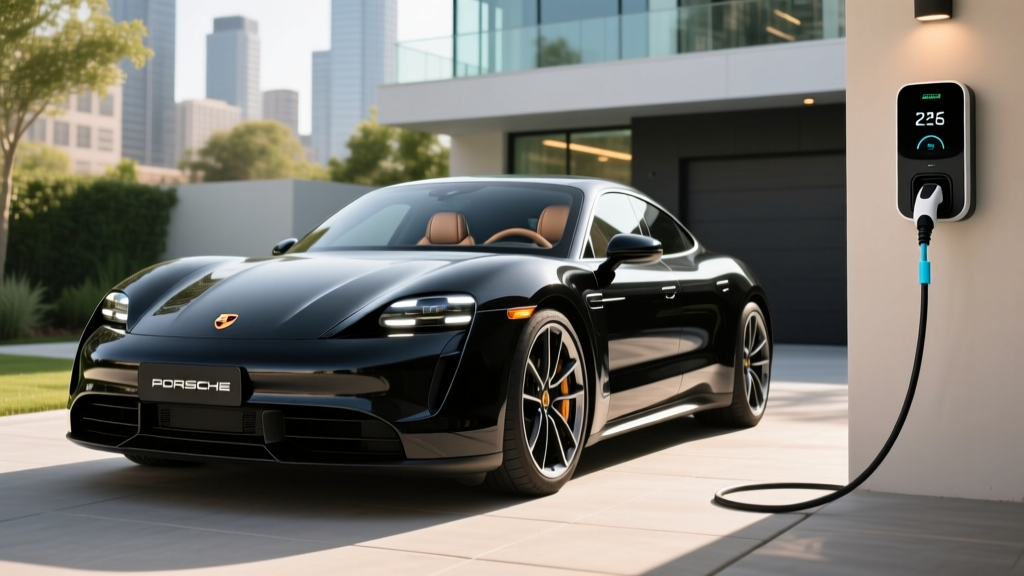
If you've searched "Porsche Taycan reliable" and landed here, you're likely weighing one of the best-driving EVs on the market against the fear of German luxury repair bills. The short answer: the second-generation Taycan (refreshed for 2025, carried into 2026) is mechanically stout, benefits from Porsche's 8-year/100,000-mile battery warranty, and has shed most of the early-production software gremlins that plagued 2020–2022 models. But "reliable" for a $100K+ performance sedan means something different than it does for a Toyota — you're trading low breakdown risk for high maintenance and insurance costs.
The 2026 Taycan lineup spans the base rear-wheel-drive model to the 1,019-hp Turbo GT, with EPA ranges from 225 to 318 miles. Porsche's 800-volt architecture still leads the industry in real-world DC fast-charging speed, and the updated battery chemistries deliver better longevity than the first generation. Let's dig into the numbers that actually matter for ownership.
2026 Porsche Taycan Core Specs at a Glance
| Spec | Taycan (Base RWD) | Taycan 4S | Taycan Turbo | Taycan Turbo GT |
|---|---|---|---|---|
| Drivetrain | RWD (single motor) | AWD (dual motor) | AWD (dual motor) | AWD (dual motor) |
| Horsepower (Launch Control) | 402 hp | 590 hp | 870 hp | 1,019 hp |
| 0–60 mph | 4.6 sec | 3.5 sec | 2.5 sec | 2.1 sec |
| Battery (usable, kWh) | 89 kWh (Performance Plus) | 89 kWh | 89 kWh | 89 kWh |
| Chemistry | NMC (nickel manganese cobalt) | NMC | NMC | NMC |
| EPA Range | 318 mi | 283 mi | 279 mi | 269 mi |
| MPGe (combined) | 94 MPGe | 87 MPGe | 84 MPGe | 79 MPGe |
| kWh/100 mi | 36 kWh | 39 kWh | 40 kWh | 42 kWh |
| Max DC Fast Charge | 320 kW | 320 kW | 320 kW | 320 kW |
| 10–80% DC Time | ~18 min | ~18 min | ~18 min | ~18 min |
| Level 2 Home Charge (kW) | 11 kW (~37 mi/hr) | 11 kW | 11 kW | 11 kW |
| Cargo (rear + frunk, cu ft) | 14.3 + 2.9 | 14.3 + 2.9 | 14.3 + 2.9 | 14.3 + 2.9 |
| Rear Legroom | 32.7 in | 32.7 in | 32.7 in | 32.7 in |
| Base MSRP | $99,400 | $125,200 | $175,000 | $230,000 |
| Battery/Powertrain Warranty | 8 yr / 100,000 mi | 8 yr / 100,000 mi | 8 yr / 100,000 mi | 8 yr / 100,000 mi |
Source: fueleconomy.gov and Porsche USA 2026 spec sheets.
Real-World Range vs. EPA Sticker: What to Actually Expect
EPA sticker (Taycan base RWD): 318 miles
Real-world highway (70–80 mph): ~245–270 miles
Real-world city/mixed: ~275–300 miles
Cold weather (below 32°F): ~210–240 miles (20–25% loss typical for NMC packs without aggressive preconditioning)
Performance trims (4S/Turbo): Subtract 30–50 miles from the base RWD estimates above.
Porsche has historically under-promise, over-delivered on range, and the 2026 Taycan continues that pattern — though the gap is narrower now. The base RWD with the Performance Plus battery (89 kWh usable, up from 79.2 kWh in the pre-refresh) achieves an EPA 318 miles, which is genuinely competitive with the Tesla Model S Long Range. But the Taycan is a heavy, wide-tired performance sedan: at sustained highway speeds above 75 mph, aerodynamic drag and rolling resistance eat into that number fast.
The Taycan's heat pump (standard on all 2026 trims) helps mitigate cold-weather losses compared to the first-gen car, but NMC chemistry still suffers in sub-freezing temps. If you live in the upper Midwest or Northeast, plan for 20–25% range loss in winter unless you precondition the battery while plugged in — a feature Porsche supports via the My Porsche app.
Ownership insight: The Taycan's regenerative braking system recovers up to 290 kW — among the highest in the industry — which means city and stop-and-go driving can actually extend your range beyond the EPA estimate. On mountain descents, owners report gaining 10–15 miles of range from regen alone.
Charging Speed: Still the 800V Benchmark
| Charging Level | Power / Rate | Miles Added per Hour | Notes |
|---|---|---|---|
| Level 1 (120V outlet) | ~1.4 kW | ~4 mi/hr | Emergency/trickle only; 80+ hours for full charge |
| Level 2 (240V, 48A) | 11 kW | ~37 mi/hr | Full charge in ~9.5 hours; standard Porsche Mobile Charger Connect |
| DC Fast (peak) | 320 kW | ~200+ mi in 10 min | Requires 800V station (Electrify America, IONNA); tapers sharply above 80% |
| DC Fast (50 kW station) | 50 kW | ~16 mi/min (~160 mi/hr) | Common at older CCS stations; Taycan can accept this but it's far from peak |
The 2026 Taycan's 800-volt architecture remains one of the most capable charging platforms in production. At a 350 kW-capable Electrify America or IONNA station, the Taycan can peak at 320 kW — but here's the nuance most reviews skip: peak kW is not sustained kW. The Taycan's charge curve holds above 270 kW from roughly 10% to 40% SoC, then tapers to ~180 kW by 60%, and drops further to ~90 kW by 80%. The 10–80% time of ~18 minutes is achievable at a well-maintained 350 kW stall in moderate temperatures (50–80°F).
In cold weather (below 40°F), expect 10–80% to stretch to 25–30 minutes unless you use the Taycan's navigation-based battery preconditioning, which warms the pack en route to a charger. This feature works reliably when you set a DC fast charger as your navigation destination.
Home charging reality: The 11 kW onboard charger means a full 0–100% charge at home takes roughly 9.5 hours. For most owners charging from 20% to 80% overnight, that's about 5.5 hours — easily done on a Level 2 home setup. A 48-amp, 240V circuit (60-amp breaker) is recommended; budget $800–$2,000 for professional installation depending on your electrical panel's capacity.
Source: Porsche USA Taycan specifications
Reliability & Warranty: What the Data Actually Shows
When buyers ask "is the Porsche Taycan reliable?", they're really asking three things: Will it break down? How much will maintenance cost? And what happens when the battery degrades?
Mechanical & Build Reliability
The 2026 Taycan benefits from Porsche's second-generation J1 platform, which addressed most of the 2020–2022 model year complaints (12V battery failures, coolant leaks, software crashes). J.D. Power's 2025 Initial Quality Study placed Porsche above the industry average, and the Taycan specifically has seen a marked decline in reported issues post-refresh. The two-speed rear transmission (unique among EVs) has proven durable, with no widespread failure reports through model year 2025.
That said, the Taycan is a complex vehicle with adaptive air suspension, rear-axle steering, active anti-roll bars (on higher trims), and a dual-screen interior. These systems are well-built but expensive to repair out of warranty. An air strut replacement runs $1,800–$2,500 per corner; a PCM infotainment screen replacement can exceed $3,000.
Battery Degradation & Warranty
Porsche warrants the Taycan's high-voltage battery for 8 years or 100,000 miles, guaranteeing at least 70% capacity retention. This is the industry-standard threshold, matching Tesla, BMW, and Hyundai. Real-world data from European Taycan fleets (taxis and company cars with 80,000+ miles) shows degradation in the 5–8% range — well within warranty limits. The updated NMC cells in the 2025+ refresh use improved thermal management that should further reduce long-term wear.
Out-of-warranty battery replacement cost: If you plan to keep the Taycan beyond 100,000 miles, a full battery pack replacement currently runs $25,000–$35,000 at a Porsche dealer. This is the single biggest financial risk of long-term ownership.
Maintenance Costs
The Taycan has no oil changes, no spark plugs, and minimal brake wear (regen handles most deceleration). Porsche recommends service every 10,000 miles or annually, with typical costs of $400–$700 per visit for cabin air filters, brake fluid checks, and tire rotations. However, the Taycan's wide, performance-spec tires (255/45R19 front, 285/40R20 rear on the 4S) wear quickly — expect $1,200–$1,800 for a set of four every 15,000–25,000 miles depending on driving style.
Pricing, Tax Credits & Total Cost of Ownership
| Trim | Base MSRP | Typical As-Tested | §30D Federal Credit | Effective Price |
|---|---|---|---|---|
| Taycan (Base RWD) | $99,400 | $108,000–$115,000 | $0 (exceeds MSRP cap) | $99,400+ |
| Taycan 4S | $125,200 | $135,000–$148,000 | $0 (exceeds MSRP cap) | $125,200+ |
| Taycan Turbo | $175,000 | $190,000–$210,000 | $0 (exceeds MSRP cap) | $175,000+ |
| Taycan Turbo GT | $230,000 | $245,000+ | $0 (exceeds MSRP cap) | $230,000+ |
The 2026 Porsche Taycan does NOT qualify for the $7,500 federal EV tax credit under IRS §30D. The reason: the §30D credit caps eligible sedans at an MSRP of $55,000. Even the base Taycan starts at $99,400 — nearly double the limit. Additionally, buyer income caps ($150K single / $300K joint AGI) would exclude many Taycan buyers regardless. Porsche's battery sourcing and critical mineral supply chains also do not currently meet the domestic-content thresholds required for the full credit.
Always verify current rules at IRS.gov §30D — regulations evolve. Consult a tax professional before making purchase decisions based on credits.
5-Year Ownership Cost Estimate
Even without a tax credit, the Taycan's running costs are lower than a comparable Porsche Panamera or BMW M5. Here's a realistic 5-year/60,000-mile estimate for a Taycan 4S:
- Electricity (home + DC fast): ~$5,400 (at $0.14/kWh home, $0.45/kWh DCFC average)
- Maintenance: ~$3,500 (annual service + two tire sets)
- Insurance: ~$18,000–$24,000 ($300–$400/month for a $130K EV)
- Depreciation: ~$52,000–$60,000 (Taycan retains ~55% at 5 years per Kelley Blue Book)
- Total 5-year cost: ~$79,000–$93,000
For comparison, a gas-powered BMW M5 (similar performance tier) would cost $95,000–$115,000 over the same period, driven primarily by fuel ($9,000+), higher maintenance, and steeper depreciation.
Tech, Interior & Daily Livability
The 2026 Taycan's interior is a study in contrasts: premium materials and build quality meet a sometimes-frustrating touchscreen-heavy interface. Porsche's PCM 7 infotainment system (updated for the refresh) runs on a 12.6-inch curved instrument cluster and a 10.9-inch central touchscreen, with an optional 10.9-inch passenger display. Wireless Apple CarPlay and Android Auto are standard. The system is responsive but requires too many taps for basic climate adjustments — a common complaint carried over from the first gen.
Driver Assistance (SAE Level 2 — Not Self-Driving)
The Taycan offers Porsche InnoDrive with Active Lane Keeping, adaptive cruise control, and traffic-sign recognition. This is a solid SAE Level 2 system — meaning you must keep your hands on the wheel and eyes on the road at all times. It is not autonomous. InnoDrive is competent on highways but less aggressive than Tesla Autopilot or GM Super Cruise in lane-change execution. The Taycan does not offer a hands-free driving mode comparable to Ford BlueCruise or GM Super Cruise on mapped highways.
Cargo & Passenger Space
With 14.3 cubic feet of rear cargo (hatchback-style trunk) and a 2.9 cu-ft frunk, the Taycan offers practical luggage space for two adults on a week-long trip. However, rear legroom at 32.7 inches is tight for adults over 6 feet — this is a sports sedan, not a limousine. The Cross Turismo wagon variant (if available for 2026) adds ~4 cu ft of rear cargo and slightly more headroom, making it the better pick for families.
Standout Features
- Two-speed rear transmission: Provides explosive launch acceleration while maintaining highway efficiency — unique in the EV world
- 800V architecture: Consistently the fastest-charging production EV platform at public DC stations
- Adaptive air suspension (standard on 4S+): Excellent ride quality in Normal mode, track-capable in Sport Plus
- Rear-axle steering (optional/standard by trim): Shrinks the turning circle and adds high-speed stability
Notable Drawbacks
- Touchscreen-heavy climate and media controls require too many taps
- Rear seat legroom is below competitors (Model S: 40.5 in; Lucid Air: 41.3 in)
- No hands-free highway driving mode (unlike Super Cruise/BlueCruise)
- High insurance premiums ($300–$400/month typical)
- Expensive tire wear on performance trims
Porsche Taycan vs. Key Competitors: Which Should You Buy?
| Attribute | Porsche Taycan 4S | Tesla Model S LR | BMW i5 M60 | Lucid Air Pure+ |
|---|---|---|---|---|
| Base MSRP | $125,200 | $79,990 | $84,100 | $77,400 |
| EPA Range | 283 mi | 402 mi | 274 mi | 419 mi |
| 0–60 mph | 3.5 sec | 3.1 sec | 3.7 sec | 3.4 sec |
| Max DC Charge | 320 kW | 250 kW | 205 kW | 300 kW |
| §30D Credit Eligible | No | Partial* | No | No |
| Rear Legroom | 32.7 in | 40.5 in | 36.6 in | 41.3 in |
*Tesla Model S eligibility depends on battery sourcing and buyer income; verify at IRS.gov.
Choose the Taycan if: Driving dynamics matter most. You want the best-handling EV sedan, fastest real-world DC charging, and Porsche build quality — and you accept the range and price trade-offs.
Choose the Model S if: Range is your priority (402 mi EPA), you need rear-seat space for adults, or you want access to the Supercharger network natively (NACS connector).
Choose the BMW i5 if: You want a traditional luxury sedan experience with EV powertrain and the best interior tech interface (iDrive 8.5).
Choose the Lucid Air if: You want maximum range (419 mi EPA) and rear-seat space at a lower price, and you're comfortable with a newer brand's service network.
Who the 2026 Porsche Taycan Suits Best
- Performance-oriented commuters who prioritize driving feel over maximum range and can charge at home nightly
- Current Porsche owners transitioning to electric who value dealer service relationships and brand heritage
- DC fast-charging road trippers who value 10–80% in 18 minutes over total range (the Taycan charges faster than it goes far)
- Not ideal for: Families needing spacious rear seats, budget-conscious buyers (no tax credit, high insurance), or those in charging-desert regions without reliable DC fast-charger access
Pros & Cons at a Glance
- Class-leading DC fast-charging speed (320 kW peak)
- Best-in-class driving dynamics and steering feel
- 8-year/100,000-mi battery warranty with strong real-world degradation data
- Heat pump standard; excellent cold-weather preconditioning
- Two-speed rear axle unique in EV segment
- Strong build quality post-2025 refresh
- No federal tax credit eligibility (MSRP cap)
- EPA range trails Model S and Lucid Air by 100+ miles
- Rear seat legroom is tight for adults (32.7 in)
- Touchscreen-heavy interior controls
- High insurance and tire replacement costs
- No hands-free Level 2+ highway driving mode
Frequently Asked Questions
What is the real-world range of the 2026 Porsche Taycan?
The base RWD Taycan achieves an EPA-rated 318 miles, but expect 245–270 miles on sustained highway drives at 70–80 mph, and 210–240 miles in freezing weather. The 4S trim drops to an EPA 283 miles, with real-world highway figures around 220–250 miles. City driving with regen can push closer to the EPA sticker.
How fast does the Taycan charge at home and on the road?
At home on a Level 2 (240V, 48A) charger, the Taycan adds roughly 37 miles of range per hour, reaching a full charge in about 9.5 hours. On DC fast chargers, it peaks at 320 kW and can go from 10% to 80% in approximately 18 minutes at a 350 kW-capable station in moderate temperatures.
Does the Porsche Taycan qualify for the $7,500 federal EV tax credit?
No. Under current IRS §30D rules, the Taycan exceeds the $55,000 MSRP cap for sedans, disqualifying all trims. Buyer income limits and battery-sourcing requirements would further exclude most buyers. Always verify at IRS.gov before purchasing.
Is the Porsche Taycan reliable long-term?
The 2025+ refresh Taycan has shown strong initial quality, with fewer reported issues than 2020–2022 models. The 8-year/100,000-mile battery warranty covers capacity loss below 70%, and real-world fleet data shows only 5–8% degradation at 80,000 miles. Out-of-warranty battery replacement costs $25,000–$35,000 — a factor if you plan to keep the car beyond 100K miles.
Is the Taycan worth buying vs. a Tesla Model S or Lucid Air?
If driving dynamics, build quality, and charging speed are your top priorities, the Taycan is unmatched. If range, rear-seat space, or price-per-mile matter more, the Model S or Lucid Air deliver better value. The Taycan is a sports sedan that happens to be electric; its competitors are electric sedans that happen to be quick.
How much does insurance cost for the Taycan?
Expect $300–$400 per month ($3,600–$4,800/year) for a Taycan 4S, depending on your state, driving record, and coverage level. Turbo and Turbo GT trims can exceed $500/month. Always get quotes before purchasing — EV insurance premiums are typically 20–40% higher than comparable gas vehicles.
Safety data: Check NHTSA.gov and IIHS.org for the latest crash-test ratings on the 2026 Taycan. The pre-refresh model earned IIHS Top Safety Pick status; 2026 results may vary.