Quick Verdict: The Driver's EV Wagon, Priced Like One
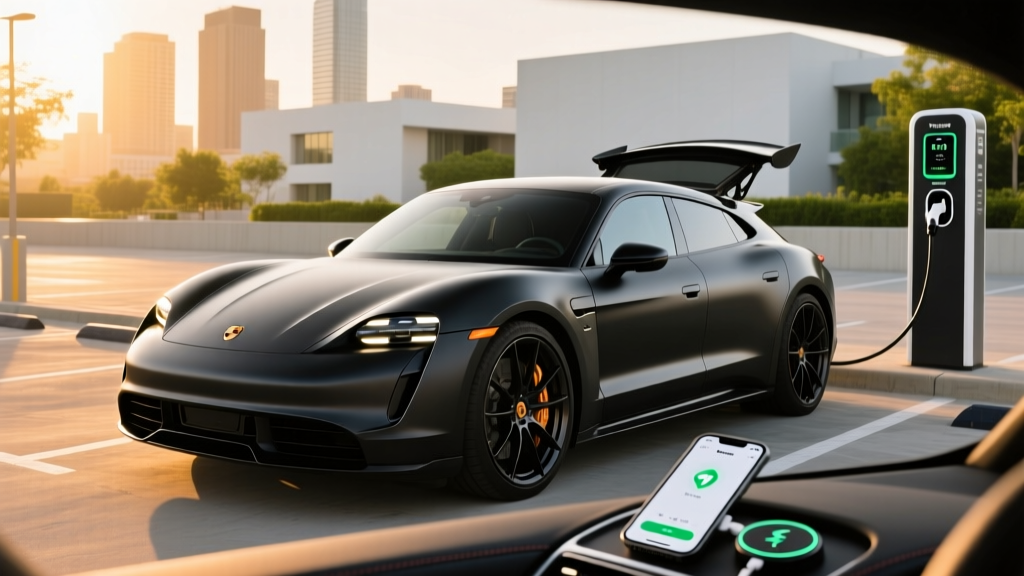
The Porsche Taycan GTS Sport Turismo occupies a narrow but compelling lane: it's the closest thing to a practical, all-electric sports wagon that still delivers on the Porsche driving promise. For the 2025 model year (carried into 2026 production), the refreshed Taycan GTS Sport Turismo pairs a 105 kWh gross battery pack with dual-motor all-wheel drive, producing up to 690 horsepower in overboost via Launch Control. It's not the longest-range EV wagon on the market — the Audi A6 Avant e-tron and upcoming competitors challenge it — but it remains the sharpest-handling one.
This review covers EPA data, real-world range observations, DC fast-charging behavior (including the charge curve taper), home charging economics, cargo practicality, and the current state of federal tax credit eligibility under IRS §30D rules.
Range and Efficiency: EPA Sticker vs. Real-World Miles
Real-World Expectation: Plan for 240–260 miles in mixed highway/city driving at moderate temperatures. At sustained 75+ mph highway speeds, expect closer to 220–235 miles. In sub-30°F winter conditions with cabin heating, range can dip to 200–215 miles unless you precondition the battery and use seat heaters strategically.
The 2025-refresh Taycan GTS Sport Turismo carries a 105 kWh gross / 97 kWh usable lithium-ion battery pack using NMC (nickel manganese cobalt) chemistry. Porsche moved to this larger pack across the Taycan lineup for the refresh, replacing the older 93.4 kWh Performance Battery Plus. The result is a meaningful bump in both range and sustained charging throughput.
| Metric | Value |
|---|---|
| EPA Range (combined) | 277 miles |
| Battery Gross / Usable | 105 kWh / 97 kWh |
| Chemistry | NMC (Nickel Manganese Cobalt) |
| Efficiency (EPA combined) | 87 MPGe / 39 kWh/100mi |
| Drivetrain | Dual-motor AWD |
| 0–60 mph (Launch Control) | 3.3 seconds |
| Peak Horsepower (overboost) | 690 hp |
| Top Speed | 155 mph |
| Curb Weight | ~5,137 lbs |
Efficiency at 39 kWh per 100 miles is competitive for a 5,100+ lb performance wagon but falls short of lighter EVs like the Tesla Model S Long Range (32 kWh/100mi). The trade-off is the GTS's chassis hardware, wider tires, and AWD system — all of which add mass but also add capability.
Charging: 270 kW Peak, but Watch the Curve
The Taycan's 800-volt architecture remains one of its strongest ownership advantages. The refreshed GTS Sport Turismo supports a peak DC fast-charge rate of 320 kW (up from 270 kW on the pre-refresh model), enabled by improved thermal management and the larger battery's ability to absorb higher C-rates.
| Charging Level | Power / Rate | Time / Miles Added |
|---|---|---|
| DC Fast Charge (peak) | 320 kW (CCS / NACS adapter) | 10–80% in ~18 minutes |
| DC Fast Charge (sustained avg.) | ~240 kW average to 80% | Curve tapers sharply above 80% |
| Level 2 Home (11 kW onboard) | 11 kW AC (48A / 240V) | ~9 hours 0–100%; ~32 mi/hr |
| Level 1 (120V household) | ~1.4 kW | ~4 mi/hr — emergency use only |
Charging curve reality check: Like all EVs, the Taycan does not sustain peak kW for the full session. On a 350 kW Electrify America or IONITY charger with a preconditioned battery, you'll see 300+ kW from roughly 10–30% State of Charge (SoC), then a stepped taper through the mid-range, and a steep drop above 80%. The 10–80% time of approximately 18 minutes is excellent and among the fastest production EVs available. Charging from 80–100% can add another 20+ minutes — plan your road-trip stops around the 10–80% window.
For home charging, the Taycan's 11 kW onboard charger is a strong point. On a properly installed 60A/48A continuous Level 2 circuit (like a ChargePoint Home Flex or Porsche Mobile Charger Connect), you'll add roughly 32 miles of range per hour. A full overnight charge from 10% is realistic in a single 9-hour sleep cycle. Note: homes with older 100A electrical panels may require a panel upgrade ($1,500–$3,000) to support a dedicated 60A EV circuit — factor this into your installation budget.
Performance and Driving Dynamics
The GTS badge in Porsche's hierarchy sits between the 4S and the Turbo — it's the driver-focused sweet spot. The dual-motor AWD system provides 690 hp and 590 lb-ft of torque in overboost (Launch Control engaged). The 0–60 mph time of 3.3 seconds is legitimately sports-car territory, and more importantly, the Taycan GTS delivers that acceleration repeatedly without the thermal throttling that plagues some competitors.
The Sport Turismo body style adds roughly 0.5 inches of rear headroom over the sedan and a more usable cargo area, but it's the chassis tuning that defines the GTS. Adaptive air suspension with Porsche Active Suspension Management (PASM), rear-axle steering (standard on GTS), and Porsche Torque Vectoring Plus give this wagon cornering composure that defies its 5,100-lb curb weight. The steering feel — a common EV weakness — is among the best in the electric segment thanks to Porsche's electromechanical calibration.
Regenerative braking is handled through Porsche's Recuperation Management system, offering up to 0.39g of regen deceleration. Unlike some EVs, Porsche does not offer true one-pedal driving to a full stop by default; the car will creep at low speeds unless you configure the regen settings through the PCM. This is intentional — Porsche's philosophy is that blending regen with friction braking produces more consistent pedal feel. Some EV veterans accustomed to one-pedal driving may find this annoying; others will appreciate the more natural brake modulation.
Interior, Cargo, and Daily Practicality
The Sport Turismo wagon profile gives the Taycan its most practical form factor. Here's what you're working with:
- Rear cargo volume: 15.7 cu ft (behind rear seats); ~42.8 cu ft with rear seats folded
- Front trunk (frunk): 2.9 cu ft — fits a charging cable bag and a small duffel
- Rear legroom: 32.7 inches — adequate for adults on shorter trips, tight for tall passengers on long hauls
- Rear headroom: 37.8 inches (improved over sedan)
- Seating: 5-passenger capacity; 4+1 configuration (standard) or optional 4-seat with full rear console
The 15.7 cu ft rear cargo area is competitive with a BMW 3 Series Touring but falls well short of a Tesla Model S (26.3 cu ft behind rear seats). The Taycan's cargo floor is also higher due to the battery pack beneath, so you're loading items up and over rather than sliding them in flat. For a weekend trip for two with soft luggage, it works. For a family of four with strollers and groceries, you'll feel the squeeze.
The interior tech centers on Porsche's curved 12.6-inch digital instrument cluster and a 10.9-inch central PCM touchscreen, with an optional 10.9-inch front passenger display. Wireless Apple CarPlay and Android Auto are standard. The available head-up display with augmented-reality navigation overlays is one of the better implementations on the market. Build quality, material selection, and switchgear are all at the price-point standard you'd expect — real aluminum, available Race-Tex (Alcantara-like) microfiber, and tight panel gaps throughout.
Pricing, Trims, and Federal Tax Credit Eligibility
| Trim / Configuration | Base MSRP | Typical As-Tested | §30D Credit Eligible? |
|---|---|---|---|
| Taycan GTS Sport Turismo | $136,900 | $145,000–$165,000 (w/ options) | No — exceeds MSRP cap |
| Taycan 4S Sport Turismo (for reference) | $111,100 | $120,000–$135,000 | No — exceeds MSRP cap |
| Taycan (base RWD sedan, for reference) | $99,400 | $105,000+ | No — exceeds MSRP cap |
Federal tax credit reality: Under current IRS §30D rules, new clean vehicle credits are capped at $55,000 MSRP for sedans and $80,000 MSRP for SUVs, vans, and trucks (see IRS.gov §30D guidance). The Taycan GTS Sport Turismo, classified as a sedan/wagon, far exceeds the $55,000 MSRP cap. It does not qualify for the up-to-$7,500 federal new EV tax credit regardless of buyer income or battery sourcing.
Buyer income caps also apply under §30D: modified adjusted gross income cannot exceed $300,000 (joint filers), $225,000 (head of household), or $150,000 (single). Even if the MSRP cap didn't disqualify the Taycan GTS, many buyers in this price range would exceed the income threshold.
State and local incentives vary widely and may still apply — some states offer rebates or HOV lane access regardless of MSRP. Check your state's energy office or DMV for current programs. Additionally, the used EV credit (up to $4,000 under §25E) may apply if you purchase a qualifying pre-owned Taycan from a dealer, subject to a $25,000 maximum sale price and lower income caps.
Warranty, Ownership Costs, and Long-Term Outlook
- New vehicle limited warranty: 4 years / 50,000 miles
- Battery warranty: 8 years / 100,000 miles (capacity retention guaranteed above 70% State of Health)
- Maintenance: Porsche offers 2 years / 20,000 miles of complimentary scheduled maintenance on new EVs
- Insurance: Expect $3,500–$5,500/year depending on state, driving record, and coverage levels — performance EVs carry premium insurance rates
- Tires: The GTS typically ships with Michelin Pilot Sport EV or Pirelli P Zero Elect tires (20" or 21"); budget $1,600–$2,800 for a set of four at replacement
Porsche's 8-year/100,000-mile battery warranty with a 70% capacity retention floor is industry-standard, matching Tesla, BMW, and Audi. NMC chemistry typically shows 8–12% degradation over the first 100,000 miles based on fleet data from earlier Taycan models, well within the warranty threshold. To maximize battery longevity, Porsche recommends daily charging to 80% (configurable in the vehicle settings) and reserving 100% charges for road trips.
Compared to a BMW M5 Touring or Audi RS6 Avant (both mild-hybrid ICE wagons), the Taycan GTS Sport Turismo will cost significantly less in fuel/energy (roughly $0.04–$0.06 per mile on home Level 2 vs. $0.18–$0.22/mi on premium gas) but more in insurance, tire wear, and upfront purchase price.
Pros
- Best-in-class driving dynamics for an EV wagon — steering feel, chassis balance, repeatable performance
- 320 kW peak DC charging with 10–80% in ~18 minutes among the fastest production EVs
- 800V architecture enables superior sustained charge rates vs. 400V competitors
- Wagon practicality with 15.7 cu ft cargo + frunk
- Build quality and material selection at luxury tier
- Strong real-world range of 240–260 miles in mixed driving
Cons
- No federal §30D tax credit — MSRP far exceeds $55K sedan cap
- Rear seat legroom (32.7") is tight for adults on long trips
- Cargo floor is high; total volume trails Tesla Model S and Audi e-tron GT
- No true one-pedal driving to a stop by default
- Insurance and tire replacement costs are premium-tier
- Options packages escalate price quickly past $160K
Who Should Buy the Taycan GTS Sport Turismo?
Choose the Taycan GTS Sport Turismo if: You prioritize driving engagement and chassis feedback above all else in an EV, you need wagon cargo flexibility without moving to an SUV, you have reliable home Level 2 charging, and your budget comfortably accommodates a $140K–$165K vehicle without relying on federal incentives.
Look elsewhere if: Maximum range is your top priority (consider the Lucid Air Touring at 425 mi EPA), you need genuine 5-adult seating comfort (Tesla Model S or Mercedes EQS), you're counting on the $7,500 federal credit to make the math work, or you need a vehicle for frequent 400+ mile road trips in cold-weather regions where charging infrastructure is sparse.
The Taycan GTS Sport Turismo competes most directly with the Audi RS e-tron GT (shares the J1 platform but is a sedan, not a wagon), the Tesla Model S Plaid (more range, more cargo, less refinement), and the BMW i5 M60 (more affordable, less dynamic). Against all three, the Porsche's advantage is the sum of its parts: it's the one that feels most like a driver's car first and an EV second.
Frequently Asked Questions
What is the real-world range of the Porsche Taycan GTS Sport Turismo?
The EPA rates it at 277 miles combined. In real-world mixed driving at moderate temperatures, expect 240–260 miles. Sustained highway driving at 75+ mph drops this to roughly 220–235 miles, and sub-freezing winter conditions can reduce range to 200–215 miles without battery preconditioning.
How fast does the Taycan GTS Sport Turismo charge?
On a 350 kW DC fast charger with a preconditioned battery, it peaks at 320 kW and charges from 10–80% in approximately 18 minutes. On a home Level 2 charger (11 kW / 48A), it adds about 32 miles of range per hour, with a full 0–100% charge taking roughly 9 hours. Level 1 (120V) charging is impractical at about 4 miles per hour.
Does the Porsche Taycan GTS Sport Turismo qualify for the federal EV tax credit?
No. Under IRS §30D rules, the new vehicle clean energy credit is capped at $55,000 MSRP for sedans (and $80,000 for SUVs/trucks/vans). The Taycan GTS Sport Turismo starts at $136,900 MSRP, far exceeding the cap. Buyer income limits ($150K single / $300K joint MAGI) also disqualify many buyers in this price segment. State-level incentives may still apply — check your local programs.
How does the Taycan GTS Sport Turismo compare to the Tesla Model S?
The Model S Long Range offers significantly more EPA range (402 mi), more cargo space (26.3 cu ft), and a lower starting price (~$79,990). The Taycan GTS counters with superior build quality, far better steering feel and chassis dynamics, faster peak charging (320 kW vs. 250 kW), and a more premium interior. It's a choice between practicality and value (Model S) versus driving engagement and luxury refinement (Taycan).
What is the battery warranty on the Taycan GTS?
Porsche covers the high-voltage battery for 8 years or 100,000 miles, whichever comes first, guaranteeing that the battery will retain at least 70% of its original usable capacity. If degradation falls below this threshold within the warranty period, Porsche will repair or replace the battery at no cost.
Is the Taycan GTS Sport Turismo good for road trips?
Yes, with planning. The 10–80% charge time of ~18 minutes at a 350 kW station means road-trip stops are brief. However, the real-world range of 220–260 miles means you'll stop every 2.5–3 hours on the highway. In regions with sparse DC fast-charging infrastructure (rural stretches of I-70, I-90, or I-10), this requires more careful route planning than a 350+ mile EV. The Porsche Charging Planner in the navigation system handles this automatically, routing through compatible chargers and preconditioning the battery ahead of each stop.