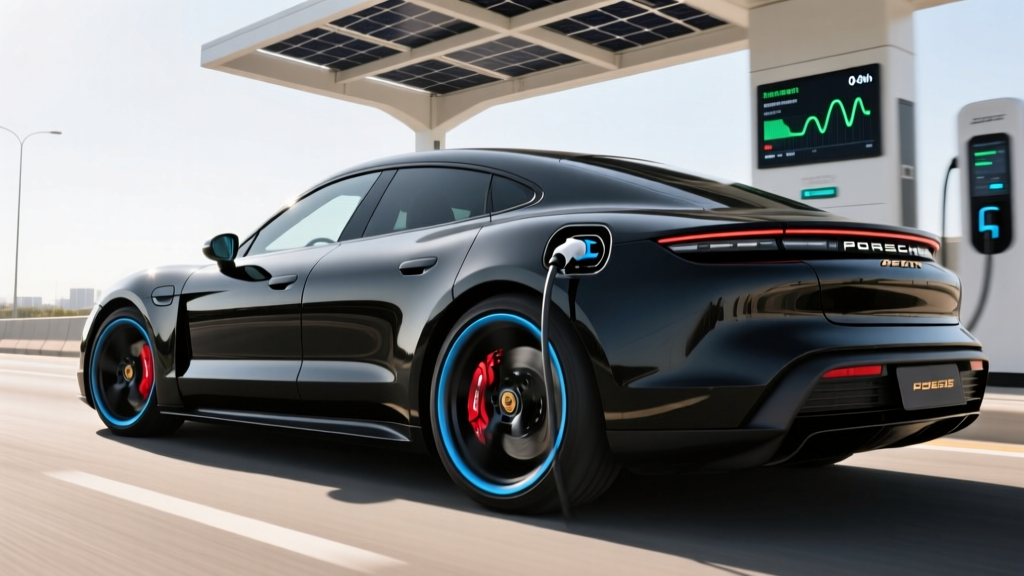
The Porsche Taycan GTS occupies a very specific slot in the electric sports sedan hierarchy: it's the driver-focused sweet spot between the Taycan 4S and the Turbo variants. For 2026, Porsche has refined the second-generation Taycan platform with an updated 105 kWh battery (Performance Battery Plus), revised thermal management, and a tweaked powertrain that pushes the GTS's launch-control 0-60 mph time down to an estimated 3.5 seconds. But beyond the stopwatch numbers, the real question for prospective buyers is whether the Taycan GTS delivers as a daily-drivable EV—on road trips, in cold weather, and at the public charger.
We've compiled the exact specs, real-world range expectations, charging curves, pricing, and ownership economics so you can decide if the 2026 Taycan GTS earns its six-figure sticker.
2026 Taycan GTS: Core Specifications at a Glance
| Spec | Value |
|---|---|
| EPA Estimated Range | 268 miles (est. based on updated platform) |
| Battery (Usable) | ~105 kWh (Performance Battery Plus), NMC chemistry |
| Drivetrain | Dual-motor AWD |
| Horsepower (Overboost w/ Launch Control) | ~590 hp |
| 0-60 mph | 3.5 seconds (with Launch Control) |
| Top Speed | 155 mph (electronically limited) |
| Peak DC Fast Charge Rate | 320 kW |
| 10-80% DC Fast Charge Time | ~18 minutes (under ideal conditions) |
| Level 2 Home Charging (11 kW onboard) | ~11 kW / ~33 miles per hour of charging |
| MPGe (Combined) | ~83 MPGe (est.) |
| Efficiency | ~40 kWh/100 mi |
| Cargo (Rear Trunk + Frunk) | 14.3 cu ft (rear) + 2.9 cu ft (frunk) |
| Rear Legroom | 32.7 inches |
| Base MSRP | $113,100 (before destination) |
| Battery / Powertrain Warranty | 8 years / 100,000 miles |
Note: Some 2026 model-year figures carry over from the updated second-generation platform introduced for MY2025. Always confirm final specs on Porsche's official configurator before ordering.
0-60 and Performance: How Quick Is the Taycan GTS Really?
The headline number—3.5 seconds to 60 mph—requires Launch Control engaged, which temporarily unlocks overboost output of approximately 590 horsepower and maximum torque to both axles. Without Launch Control, expect roughly 3.8-4.0 seconds, which is still ferociously quick for a ~5,100-lb sedan.
The dual-motor AWD system uses a two-speed transmission on the rear axle (a Porsche hallmark since the original Taycan). First gear provides aggressive off-the-line acceleration, while second gear optimizes highway efficiency and top-end pulls. This engineering choice gives the Taycan GTS a tangible edge in repeatable acceleration compared to single-speed rivals.
On public roads, the GTS-specific tuning tightens the adaptive air suspension and sharpens throttle response versus the 4S. The rear-axle steering (optional or standard depending on package) shrinks the effective wheelbase at low speeds and adds stability above 50 mph. It's a meaningful upgrade for canyon roads and tight urban maneuvering alike.
Real-World Range: What to Expect Beyond the EPA Sticker
EPA Estimated: 268 miles
Real-World Highway (70-75 mph, moderate temps): ~220-240 miles
Real-World City / Mixed Driving: ~250-265 miles
Cold Weather (below 32°F, highway): ~180-210 miles
The Taycan's 800-volt architecture and heat pump help mitigate cold-weather losses, but any EV loses 15-30% range in freezing temperatures at highway speeds. The GTS's wider 21-inch optional wheels and stickier tires also reduce efficiency versus the base Taycan.
Porsche's efficiency rating of roughly 40 kWh per 100 miles (approximately 83 MPGe combined) places the Taycan GTS in the middle of the luxury EV performance sedan pack. It's less efficient than a Tesla Model S Long Range (~28 kWh/100mi) but comparable to the Audi e-tron GT. The trade-off is chassis capability: the Taycan GTS prioritizes handling precision over hypermiling.
For a confirmed EPA figure, check fueleconomy.gov once the 2026 model is officially listed. Porsche's range estimates have historically tracked closely with EPA results, unlike some competitors whose real-world numbers fall short.
Charging Speed: 320 kW Peak and the Curve Behind It
The Taycan GTS uses Porsche's 800-volt architecture, enabling a peak DC fast-charge rate of 320 kW at compatible chargers. That headline number, however, requires context about charge curves.
| Charging Level | Power / Rate | Miles Added per Hour | Notes |
|---|---|---|---|
| Level 1 (120V household) | ~1.4 kW | ~3-4 mi/hr | Emergency / trickle only |
| Level 2 (240V, 48A home charger) | 11 kW (onboard limit) | ~33 mi/hr | Full charge in ~10 hours |
| DC Fast (50 kW station) | 50 kW | ~100 mi/hr | Older CCS stations |
| DC Fast (150 kW station) | ~150 kW (sustained) | ~280 mi/hr | Common Electrify America hardware |
| DC Fast (320 kW peak) | 320 kW → tapering | ~550 mi/hr (peak) | 10-80% in ~18 min (ideal conditions) |
The 320 kW peak only holds between roughly 10-30% state of charge (SoC) under ideal thermal conditions. Above 50%, the rate tapers progressively—dropping to ~150 kW by 60% SoC and ~50 kW past 80%. This is physics, not a flaw: lithium-ion cells must limit current as they approach full charge to prevent damage.
Practical takeaway: On a road trip, plan your stops around 10-80% charges (~18 minutes at a 320 kW station). Charging past 80% adds disproportionately more time. Preconditioning the battery via the car's navigation system is essential—without it, peak rates may be 50-80 kW lower in cold weather.
At home, the 11 kW onboard charger means a full 0-100% charge takes about 10 hours on a 48-amp Level 2 circuit. Most owners will plug in nightly and rarely see a depleted battery, making home charging the practical backbone of Taycan ownership.
Pricing, Tax Credits, and Ownership Economics
| Item | Amount |
|---|---|
| Base MSRP | $113,100 |
| Destination Charge | $1,650 |
| As-Tested (with typical options: PCCB brakes, 21" wheels, Sport Chrono) | ~$128,000-$135,000 |
| Federal §30D Tax Credit | $0 — MSRP exceeds $55,000 sedan cap |
| Estimated Annual Insurance | $3,200-$4,500 (varies by profile) |
The Taycan GTS does not qualify for the federal §30D clean vehicle tax credit. The IRS caps the credit at sedars with an MSRP below $55,000, and the GTS starts at $113,100—more than double the threshold. The battery-sourcing and critical-mineral requirements, while relevant for eligible vehicles, are moot here.
Some states offer their own EV rebates or HOV-lane access that apply regardless of price (California's Clean Fuel Rebate, for instance, has been discontinued for high-income buyers, but check your state-specific incentives). Consult a tax professional for your specific situation.
Five-year estimated ownership cost (assuming 12,000 miles/year, $0.15/kWh home electricity, $3.50/gal gas equivalent): Fuel savings versus a comparable gas Porsche Panamera GTS (~$18,000 over 5 years) partially offset higher insurance and the lack of a federal credit. The Taycan GTS is a passion purchase, not a cost-saving play.
Interior, Tech, and Daily Livability
The Taycan GTS interior balances Porsche's traditional build quality with a screen-heavy dashboard. The 12.6-inch curved instrument cluster, 10.9-inch central touchscreen, and available 10.9-inch passenger display dominate the dash. Physical buttons are scarce—climate controls live on a haptic-touch panel below the center screen, which draws criticism for requiring too much attention while driving.
Standout tech features:
- Porsche Communication Management (PCM) with wireless Apple CarPlay and Android Auto
- Adaptive cruise control with stop-and-go (Level 2 SAE driver-assist — driver must remain engaged)
- Surround-view camera with 3D rendering
- Available head-up display with navigation overlay
- Over-the-air update capability for powertrain and infotainment
Notable drawbacks:
- Rear seat legroom (32.7 inches) is tight for adults on long trips
- Frunk (2.9 cu ft) is small—barely fits a charging cable bag
- Haptic climate controls are distracting
- No Tesla Supercharger access (CCS1 port only; NACS adapter not yet offered by Porsche as of early 2026)
The Taycan's InnoDrive adaptive cruise and lane-centering system is an SAE Level 2 driver-assist feature. It does NOT drive itself. You must keep your hands on the wheel and eyes on the road at all times. There is no hands-free mode comparable to GM's Super Cruise or Ford's BlueCruise on this platform.
Pros and Cons: The Honest Scorecard
- 3.5-second 0-60 with repeatable performance (no thermal derating on back-to-back launches)
- Best-in-class chassis dynamics among EV sedans
- 320 kW peak DC charging is among the fastest available
- 800V architecture enables consistent charge performance
- Build quality and materials exceed Tesla and most rivals
- Heat pump standard for cold-climate efficiency
- 8-year/100,000-mile battery warranty
- $113K+ base price, no federal tax credit
- 268-mile EPA range trails Model S, Lucid Air, and i5
- Rear seat is cramped for a car this size
- CCS-only (no native NACS or Supercharger access)
- Haptic-touch climate controls frustrate on the move
- Options push price toward $140K quickly
- Insurance costs 30-50% more than a comparable gas sedan
Who Should Buy the Taycan GTS (and Who Shouldn't)
Best for: Driving enthusiasts who want an EV that rewards on back roads, track days, and Autobahn-style high-speed cruising. Commuters with home charging who prioritize handling over maximum range. Porsche loyalists transitioning from a Panamera or 911 who want electric performance without sacrificing build quality.
Look elsewhere if: You need family-hauler rear-seat space (consider the Lucid Air or BMW i7). You want maximum range per dollar (Tesla Model S at 402 miles EPA). You rely on Tesla Supercharger infrastructure for road trips. You need the federal tax credit to justify the purchase.
- Choose the Taycan GTS if: You value chassis feedback, 800V charging speed, and Porsche badge prestige above range-per-dollar.
- Choose the Audi e-tron GT if: You want similar underpinnings at a slightly lower price with a more spacious rear seat.
- Choose the Tesla Model S Plaid if: Straight-line speed and Supercharger access matter more than steering feel.
- Choose the BMW i5 M60 if: You want a more practical daily driver with better range and rear-seat comfort.
Frequently Asked Questions
What is the real-world range of the 2026 Taycan GTS?
Expect approximately 220-240 miles on the highway at 70-75 mph in moderate temperatures, and up to 265 miles in mixed city driving. In freezing weather at highway speeds, plan for 180-210 miles. The EPA sticker reads 268 miles, but real-world driving—especially at speed—reduces that figure meaningfully.
How fast does the Taycan GTS charge at home and on the road?
At home on a Level 2 (240V/48A) charger, the Taycan GTS adds roughly 33 miles of range per hour, reaching a full charge in about 10 hours. On a 320 kW DC fast charger, a 10-80% charge takes approximately 18 minutes under ideal conditions. At more common 150 kW stations, expect 25-30 minutes for the same 10-80% session.
Does the Taycan GTS qualify for the federal EV tax credit?
No. The IRS §30D clean vehicle credit caps sedan eligibility at $55,000 MSRP. The Taycan GTS starts at $113,100, making it ineligible. State-level incentives may still apply depending on your jurisdiction—check the Alternative Fuels Data Center for your state's rules.
Is the Taycan GTS worth it versus the Tesla Model S or Audi e-tron GT?
If driving dynamics, build quality, and 800V charging speed are your top priorities, the Taycan GTS is arguably the best EV sports sedan on the market. If range (Model S at 402 mi EPA) or rear-seat space (e-tron GT) matter more, those alternatives make a stronger case. The Taycan is a driver's car first and an EV second—and that's precisely its appeal.
What battery chemistry does the Taycan GTS use, and how long will it last?
The Performance Battery Plus uses NMC (nickel manganese cobalt) chemistry, which offers higher energy density than LFP at the cost of slightly faster long-term degradation. Porsche warranties the battery for 8 years or 100,000 miles, guaranteeing it will retain at least 70% of its original capacity during that period. Real-world data from first-generation Taycans (2020-2024) shows degradation of roughly 5-8% over 100,000 miles with normal charging habits.
Can the Taycan GTS use Tesla Superchargers?
As of early 2026, Porsche has not announced a NACS adapter program or native Supercharger access for the Taycan. The GTS uses a CCS1 port. You'll rely on Electrify America, EVgo, ChargePoint, and other CCS-compatible networks. This is a meaningful disadvantage for road-trippers in regions where Tesla's network dominates.