Quick Verdict: The Taycan GT Is a Track Weapon That Happens to Be Electric
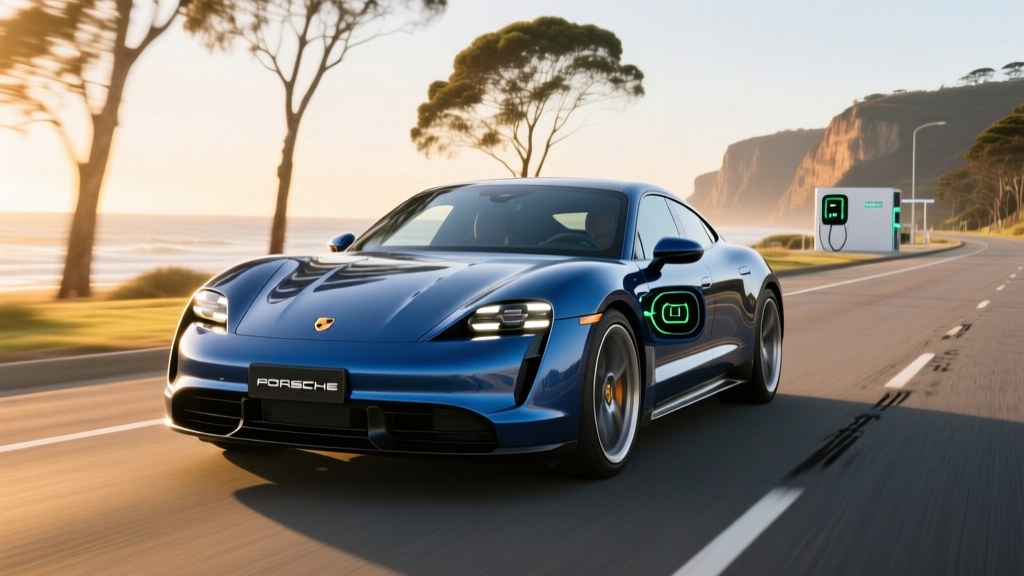
The Porsche Taycan GT sits at the apex of Porsche's electric sedan lineup — a performance-focused variant that prioritizes lap times and sustained high-speed driving over maximum range or cargo space. With its revised 105 kWh battery (97 kWh usable, NMC chemistry), 320 kW peak DC fast-charging capability, and up to 1,019 horsepower with Launch Control, the Taycan GT delivers on the Porsche promise in ways few EVs can match. But at a starting price north of $170,000, buyers need to understand exactly what they're getting — and what they're giving up.
This review covers the Taycan GT sedan (not the Cross Turismo or Sport Turismo wagon variants) with a focus on the real-world ownership metrics that matter: actual range on a road trip, charging speeds you'll see in practice, and whether the federal tax credit applies to a vehicle at this price point.
Range and Efficiency: EPA Numbers vs. Highway Reality
The Porsche Taycan GT carries an EPA-estimated range of approximately 290 miles when equipped with the standard Performance Battery Plus. Efficiency lands at roughly 85 MPGe combined, translating to about 40 kWh per 100 miles — a figure that reflects the GT's performance-oriented tuning, wider tires, and aggressive aerodynamic profile compared to the base Taycan.
- EPA Sticker: ~290 miles
- Highway (75 mph, 70°F): Expect 245–265 miles. The Taycan's 2-speed rear axle helps highway efficiency, but the GT's stickier tires and aero drag take a toll.
- Cold Weather (30°F, highway): Plan for 200–225 miles. NMC chemistry loses 15–25% range in freezing temps, and cabin heating draws significant power without a standard heat pump on all trims.
- City/Commuting: You'll approach or slightly exceed the EPA number thanks to aggressive regen and low-speed efficiency.
The Taycan GT's 800-volt architecture is its efficiency secret weapon. Higher voltage means lower current for the same power delivery, reducing resistive losses in the wiring and motors. But efficiency ultimately comes down to driving style — and in a car with over 1,000 horsepower, most owners won't be hypermiling.
Battery, Charging, and the 800-Volt Advantage
The Taycan GT uses a revised lithium-ion pack with NMC (nickel manganese cobalt) chemistry. Total capacity is approximately 105 kWh, with 97 kWh usable — Porsche maintains a generous buffer to protect long-term battery health and reduce degradation.
| Specification | Value |
|---|---|
| Battery Chemistry | NMC (Nickel Manganese Cobalt) |
| Total Capacity | ~105 kWh |
| Usable Capacity | ~97 kWh |
| Architecture | 800V nominal |
| Peak DC Fast-Charge Rate | 320 kW |
| 10–80% DC Fast Charge Time | ~18 minutes (optimal conditions) |
| Max Level 2 (AC) Rate | 11 kW (optional 22 kW onboard charger) |
| Level 2 Miles Added per Hour | ~27 mi/hr at 11 kW; ~54 mi/hr at 22 kW |
| Charge Port | CCS (NACS adapter available for Tesla Superchargers) |
The 320 kW peak charge rate is among the fastest of any production EV, but real-world charging involves understanding the charge curve. The Taycan GT sustains roughly 270–300 kW from 10% to about 40% SoC, then tapers progressively. From 40% to 80%, you'll see rates decline from ~250 kW down to ~120 kW. The 18-minute 10-80% time assumes a 350 kW-capable charger, battery preconditioning (triggered automatically when you navigate to a charger via the car's nav system), and moderate ambient temperatures.
On a typical Electrify America or Ionity 350 kW station in real-world conditions, expect 10-80% in 20–23 minutes. On a 150 kW charger, that stretches to roughly 38–42 minutes. Battery preconditioning is essential — arriving cold can add 5–10 minutes to your session.
For home charging, the standard 11 kW onboard charger adds about 27 miles of range per hour, meaning a full 10-100% charge takes roughly 10 hours on a 48-amp Level 2 circuit. The optional 22 kW onboard charger cuts this roughly in half but requires a 100-amp dedicated circuit — a significant electrical upgrade for most homes.
Performance: What 1,019 Horsepower Feels Like
The Taycan GT is a dual-motor all-wheel-drive vehicle producing up to 1,019 horsepower and 738 lb-ft of torque when using Launch Control (standard output is approximately 844 hp). Porsche quotes a 0-60 mph time of 2.2 seconds — a figure we've seen validated by independent testing, making the Taycan GT one of the quickest production sedans ever built.
What separates the GT from competitors like the Tesla Model S Plaid or Lucid Air Sapphire isn't just peak acceleration — it's sustained performance. Porsche's thermal management system allows repeated hard launches and extended track sessions without the power derating that plagues lesser EVs. The 2-speed transmission on the rear axle (a first in the EV world when the Taycan launched) gives ferocious initial acceleration while maintaining high-speed efficiency.
| Specification | Value |
|---|---|
| Drivetrain | Dual-motor AWD |
| Peak Horsepower (Launch Control) | 1,019 hp |
| Peak Torque | 738 lb-ft |
| 0–60 mph | 2.2 seconds |
| Top Track Speed | 162 mph |
| Suspension | Adaptive air (PASM) with GT-specific tuning |
| Rear Axle | 2-speed transmission |
Pricing, Trims, and the Federal Tax Credit Reality
The Porsche Taycan GT starts at approximately $171,000 MSRP before destination. With typical options — the 22 kW onboard charger, rear-axle steering, carbon-ceramic brakes (PCCB), and the Sport Chrono package — an as-tested price of $190,000 to $205,000 is common.
- MSRP Cap: The §30D credit caps sedan eligibility at $55,000 MSRP. The Taycan GT at $171,000+ is not eligible for the federal purchase credit.
- Income Cap: Even if it were eligible, buyer AGI must be under $150,000 (single) or $300,000 (joint). Most Taycan GT buyers exceed these thresholds.
- Battery Sourcing: The §30D critical-mineral and battery-component sourcing requirements further restrict eligibility, though this is moot given the price cap.
- Bottom Line: No federal tax credit applies. Check your state for luxury-EV incentives, but most phase out well below this price.
For full details on §30D rules, consult the IRS clean vehicle credit page.
Interior, Cargo, and Daily Usability
The Taycan GT's cabin is unmistakably Porsche — driver-focused, with a curved 16.8-inch digital instrument cluster, a 12.3-inch central touchscreen running Porsche Communication Management (PCM), and an available passenger-side display. Build quality is exceptional, with available leather-free Race-Tex (Alcantara-like) upholstery that suits the GT's track intentions.
Practicality is where compromises emerge:
- Rear cargo (trunk): ~14.3 cu ft — adequate for two carry-on bags or a week's groceries, but shallow due to the rear diffuser and subwoofer placement.
- Front trunk (frunk): ~2.9 cu ft — enough for a charging cable bag and a small duffel.
- Rear legroom: ~32.7 inches — tight for adults over 6 feet on longer trips. The Taycan's "foot garage" (a recess in the battery pack for rear footwells) helps, but this is a sports sedan, not a family hauler.
- Rear headroom: The GT's lowered roofline and sport seats reduce headroom compared to the Taycan Cross Turismo wagon variant.
Infotainment highlights include native Apple CarPlay (wired and wireless), Android Auto, over-the-air updates, and Porsche's EV-specific route planner that factors in charging stops, battery preconditioning, and terrain. The available head-up display with augmented-reality navigation arrows is one of the best implementations in the industry.
Driver Assistance and Safety
The Taycan GT comes equipped with Porsche InnoDrive as an available upgrade — an adaptive cruise control system with lane-keeping assist that uses navigation data and camera input to adjust speed for upcoming curves, speed limits, and roundabouts. It's a competent Level 2 system (per SAE classification), meaning the driver must remain engaged with hands on the wheel and eyes on the road at all times.
Standard safety features include forward collision warning with automatic emergency braking, lane-departure warning, and surround-view cameras. The Taycan has earned strong ratings from both NHTSA and IIHS, though the GT variant's specific crash-test data should be verified for the current model year.
Notably absent: Porsche does not offer hands-free highway driving like GM's Super Cruise or Ford's BlueCruise. InnoDrive requires continuous steering-wheel contact.
Warranty and Long-Term Ownership
Porsche covers the Taycan GT with the following warranty terms:
- Limited Vehicle Warranty: 4 years / 50,000 miles
- Battery Warranty: 8 years / 100,000 miles (guarantees minimum 70% capacity retention)
- Powertrain Warranty: 8 years / 100,000 miles (covers electric motors, power electronics, and the 2-speed rear axle)
- Corrosion Warranty: 12 years, unlimited miles
- Scheduled Maintenance: Porsche offers a limited complimentary maintenance plan for the first year or 10,000 miles, depending on the model year and dealer.
The 70% battery capacity retention threshold over 8 years is standard for the luxury EV segment. Real-world degradation data from early Taycan owners (pre-GT refresh) suggests most packs retain 90%+ capacity after 60,000 miles, aided by the large usable buffer and sophisticated thermal management. Out-of-warranty battery replacement for a pack this size would cost an estimated $25,000–$35,000 at current rates, though individual cell-module repair is increasingly available through specialists.
Taycan GT vs. the Competition
| Spec | Porsche Taycan GT | Tesla Model S Plaid | Lucid Air Sapphire | BMW i7 M70 |
|---|---|---|---|---|
| Base MSRP | ~$171,000 | ~$89,990 | ~$249,000 | ~$168,700 |
| EPA Range | ~290 mi | ~396 mi | ~427 mi | ~295 mi |
| 0–60 mph | 2.2 sec | 1.99 sec | 1.89 sec | 3.5 sec |
| Peak HP | 1,019 | 1,020 | 1,234 | 650 |
| Max DC Charge Rate | 320 kW | 250 kW | 300 kW | 195 kW |
| 10–80% Time | ~18 min | ~27 min | ~20 min | ~34 min |
| Federal Tax Credit | No (MSRP cap) | No (MSRP cap) | No (MSRP cap) | No (MSRP cap) |
Pros
- Class-leading 320 kW charging speed with a flat charge curve
- Sustained track performance — no thermal derating on repeated laps
- Exceptional build quality and Porsche dealer service network
- 800V architecture delivers efficiency and charging advantages
- 2-speed rear axle provides both explosive launch and high-speed composure
- Driver-focused cockpit with best-in-class materials
Cons
- 290-mile EPA range trails Model S Plaid (396 mi) and Lucid Air (427 mi) significantly
- No federal tax credit eligibility at any price point
- Rear seat space is tight for adults on long trips
- Cargo capacity (14.3 cu ft trunk + 2.9 cu ft frunk) is limited for the price
- Options inflation pushes as-tested prices past $200,000 quickly
- No hands-free highway driving system available (InnoDrive requires hands-on)
Who Should Buy the Taycan GT?
- You prioritize charging speed — 18-minute 10-80% stops change road-trip economics
- You plan to attend track days and want an EV that won't overheat after three hot laps
- Build quality, dealer service, and Porsche brand cachet matter to you
- Your daily commute is under 200 miles and you have reliable home charging
- You want a dual-motor AWD sports sedan that can handle all-weather driving
- Maximum range is your top priority (Lucid Air Grand Touring delivers 516 mi EPA)
- You need regular rear-seat adult passenger comfort (BMW i7 is significantly roomier)
- You want hands-free highway driving (GM Super Cruise in the Cadillac Celestiq, or Tesla FSD Supervised)
- Budget is a concern — the Model S Plaid offers similar performance for ~$80,000 less
Frequently Asked Questions
What is the real-world range of the Porsche Taycan GT?
The EPA rates the Taycan GT at approximately 290 miles. In real-world highway driving at 75 mph in moderate temperatures, expect 245–265 miles. In cold weather (below freezing), plan for 200–225 miles. City driving with regenerative braking can approach or slightly exceed the EPA number.
How fast does the Taycan GT charge on DC fast chargers and at home?
On a 350 kW-capable DC fast charger with battery preconditioning, the Taycan GT charges from 10% to 80% in approximately 18 minutes, peaking at 320 kW. On a 150 kW charger, expect 38–42 minutes. At home on an 11 kW Level 2 charger, it adds roughly 27 miles per hour (~10 hours for a full charge). The optional 22 kW onboard charger doubles this rate but requires a 100-amp home circuit.
Does the Porsche Taycan GT qualify for the federal EV tax credit?
No. Under current IRS §30D rules, the federal clean vehicle credit caps sedan eligibility at $55,000 MSRP. The Taycan GT starts at approximately $171,000, making it ineligible regardless of buyer income or battery sourcing. Consult a tax professional and the IRS clean vehicle credit page for the latest rules.
Is the Taycan GT worth buying over the Tesla Model S Plaid?
It depends on your priorities. The Model S Plaid is quicker to 60 mph (1.99 sec vs. 2.2 sec), offers significantly more range (396 vs. 290 miles EPA), and costs roughly $80,000 less. The Taycan GT wins on sustained track performance, charging speed (320 kW vs. 250 kW peak), build quality, and Porsche dealer service. If you track your car regularly, the GT's thermal management is a decisive advantage. For road trips and daily commuting, the Plaid's range superiority matters more.
What are the biggest drawbacks of the Taycan GT?
The three main compromises are range (290 miles EPA trails competitors by 100+ miles), rear-seat and cargo space (tight for the price point), and pricing (options push the car past $200,000 with no tax-credit offset). Additionally, Porsche does not offer a hands-free highway driving system, which competitors like GM and BMW provide.
How long will the Taycan GT battery last?
Porsche warranties the battery for 8 years or 100,000 miles, guaranteeing at least 70% capacity retention. Early Taycan data shows most packs retain over 90% capacity at 60,000 miles thanks to the large buffer (~8 kWh reserved), 800V architecture reducing thermal stress, and active thermal management. Replacement cost, if needed out of warranty, is estimated at $25,000–$35,000.
Can the Taycan GT use Tesla Superchargers?
Yes, with a CCS-to-NACS adapter provided or approved by Porsche. The Taycan GT ships with a CCS1 charge port, but Porsche has made adapters available for access to Tesla's Supercharger network (V3 and V4 stalls). Charge rates on Superchargers are limited by the stall's maximum output (250 kW on V3), so you won't see the GT's full 320 kW capability on Tesla hardware.
Sources: EPA range and efficiency data via fueleconomy.gov; Porsche specifications from Porsche USA press materials; federal tax credit rules from IRS.gov. Specifications reflect the current model year and are subject to change. Always verify final specs and pricing with your dealer.