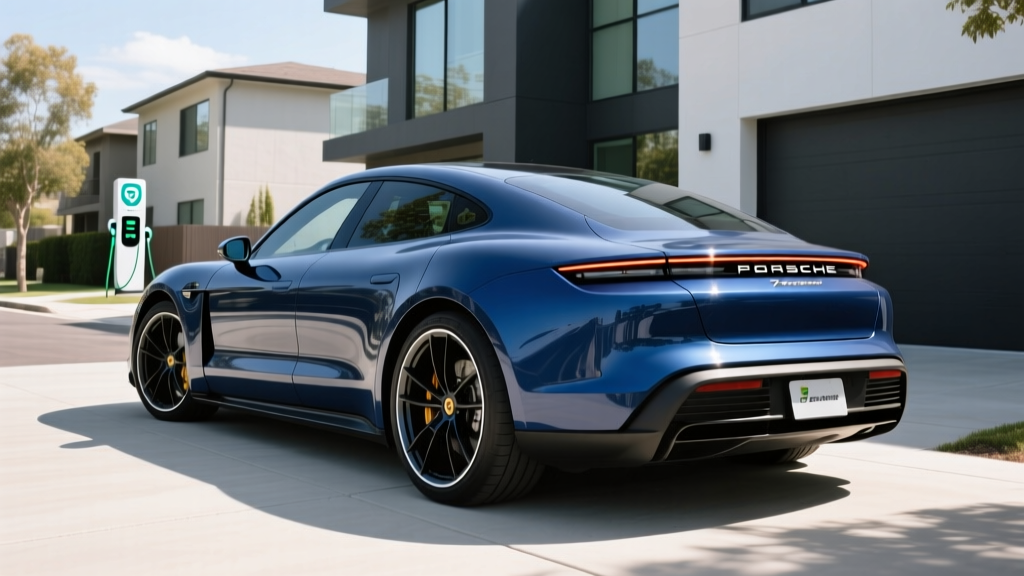
Quick Verdict: The Taycan That Started the 800-Volt Revolution
The 2021 Porsche Taycan was Porsche's first production battery-electric vehicle, and it arrived with a clear mission: prove that an EV could deliver the driving dynamics the brand is known for without compromising on charging speed or build quality. Five years later, the 2021 model year remains one of the most compelling used EVs on the premium market — particularly for buyers who prioritize handling precision and sustained highway performance over maximum EPA range.
From a 2026 ownership perspective, the 2021 Taycan occupies a sweet spot. Depreciation has brought base models into the mid-$40,000 range, potentially unlocking the used-EV federal tax credit (up to $4,000 under IRS §25E), and Porsche's 800-volt architecture still outpaces many newer competitors on sustained DC fast-charging performance. But the range figures — especially on the base and 4S trims — require honest context before you sign a purchase agreement.
Range and Efficiency: EPA Sticker vs. Real-World Reality
The 2021 Taycan lineup shipped with two battery options: the standard Performance Battery (79.2 kWh usable, NMC chemistry) and the larger Performance Battery Plus (93.4 kWh usable, NMC). Porsche was conservative with its EPA submissions, and real-world testing consistently beats the sticker numbers — a rarity in the EV market.
| Trim | Battery | EPA Range | MPGe (Combined) | kWh/100 mi |
|---|---|---|---|---|
| Taycan (RWD) | 79.2 kWh | 200 mi | 79 MPGe | 43 |
| Taycan (RWD) | 93.4 kWh | 225 mi | 84 MPGe | 40 |
| Taycan 4S | 79.2 kWh | 199 mi | 79 MPGe | 43 |
| Taycan 4S | 93.4 kWh | 227 mi | 84 MPGe | 40 |
| Taycan Turbo | 93.4 kWh | 212 mi | 79 MPGe | 43 |
| Taycan Turbo S | 93.4 kWh | 201 mi | 75 MPGe | 45 |
The key takeaway: if your daily commute is under 80 miles round-trip and you have home charging, the range is perfectly livable. If you regularly drive 300+ mile highway legs, you will need to plan at least one DC fast-charge stop — but that stop will be brief.
Charging Performance: 800-Volt Architecture Still Shines
The 2021 Taycan's 800-volt electrical architecture was a defining feature at launch and remains a genuine advantage in 2026. While most competitors ran 400V systems (limiting sustained charge rates), the Taycan can accept up to 270 kW peak DC fast charging on the Performance Battery Plus models, and 225 kW on the standard battery.
| Charging Level | Power | Speed / Time | Notes |
|---|---|---|---|
| Level 1 (120V) | ~1.4 kW | ~3 mi/hr | Emergency/trickle only |
| Level 2 (240V, 48A) | 11.5 kW | ~30 mi/hr; 0–100% in ~9 hr | Onboard charger max: 11 kW (19.2 kW optional on 4S+) |
| DC Fast (CCS) | 270 kW peak (93.4 kWh) | 10–80% in ~22.5 min | Sustains above 200 kW to ~55% SoC, then tapers |
| DC Fast (CCS) | 225 kW peak (79.2 kWh) | 10–80% in ~22.5 min | Similar curve shape, slightly lower peak |
The charge curve is where the Taycan earns its reputation. Unlike many EVs that spike to a peak kW and immediately taper, the Taycan with the 93.4 kWh pack sustains over 200 kW from roughly 10% to 55% State of Charge before gradually stepping down. On a 350 kW Electrify America or Ionity stall with battery preconditioning enabled (via the navigation system's charging-stop routing), a 10–80% charge takes approximately 22–23 minutes. Without preconditioning — for example, arriving at a charger without the car expecting a stop — the curve is noticeably slower in the first 5–10 minutes, particularly in cold weather.
The optional 19.2 kW onboard AC charger (available on 4S, Turbo, and Turbo S) is worth seeking out on the used market. It cuts Level 2 home charging time nearly in half versus the standard 11 kW unit — meaning a full overnight charge in roughly 5 hours instead of 9. If you're installing a 100-amp circuit with a hardwired Level 2 station like a ChargePoint Home Flex or Tesla Wall Connector (with a CCS adapter), this option maximizes your home setup.
Performance: 0-60, Horsepower, and Drivetrain Configurations
Porsche engineered the Taycan around a two-speed transmission on the rear axle — first gear for explosive launches, second gear for highway efficiency — paired with a single-speed front motor on AWD models. The result is acceleration that matches or beats the EPA-quoted numbers in real-world conditions.
| Trim | Drivetrain | Peak HP (Launch Control) | 0–60 mph | Top Speed |
|---|---|---|---|---|
| Taycan (RWD) | Rear-wheel drive | 402 hp | 5.1 sec | 143 mph |
| Taycan 4S | Dual-motor AWD | 562 hp | 3.8 sec | 155 mph |
| Taycan Turbo | Dual-motor AWD | 670 hp | 3.0 sec | 161 mph |
| Taycan Turbo S | Dual-motor AWD | 750 hp | 2.6 sec | 162 mph |
The Turbo S's 2.6-second 0–60 time was verified independently by multiple publications at launch and remains competitive with the fastest production sedans in 2026. But what distinguishes the Taycan from rivals like the Tesla Model S Plaid is repeatable performance: the 800V system's thermal management allows multiple consecutive hard launches without power derating — something the Model S struggled with in early testing.
The RWD base Taycan, added for the 2021 model year, is the lightest and most approachable variant. At 402 hp and 5.1 seconds to 60, it's hardly slow, and its rear-drive balance appeals to enthusiasts who don't need AWD traction. The 4S is the volume seller and the best all-around value in the used market, combining 562 hp with the available Performance Battery Plus for optimal range and charging speed.
Interior, Cargo, and Technology
The Taycan's cabin is unmistakably Porsche: minimalist, material-rich, and oriented around the driver. The instrument cluster is a curved 16.8-inch digital display, and the center stack features a 10.9-inch touchscreen with an optional 8.4-inch lower touch panel for climate and handwriting input. A passenger-side 10.9-inch display was available as an option.
Practicality is the Taycan's weakest category relative to competitors:
- Rear trunk: 14.3 cu ft (4S/Turbo/Turbo S); 12.9 cu ft (RWD base)
- Front trunk (frunk): 2.8 cu ft — enough for a small bag or charging cables
- Rear legroom: 32.7 inches — tight for adults over 6 feet on longer trips
- Front headroom: 39.3 inches; rear headroom: 36.5 inches (the sloping roofline compromises rear space)
The Cross Turismo body style (introduced for 2021) offers marginally more rear headroom and a slightly larger cargo area with seats folded, making it the more practical choice for buyers who need versatility. If cargo and rear-seat comfort are priorities, the Tesla Model S (28 cu ft rear cargo) or the Mercedes EQS (larger rear cabin) are more accommodating.
Driver-assistance tech on the 2021 Taycan includes adaptive cruise control with stop-and-go, lane-keeping assist, and Porsche InnoDrive (predictive cruise that uses navigation data to adjust speed for curves and speed limits). These are SAE Level 2 systems — the driver must remain fully engaged and hands on the wheel. Porsche does not offer a hands-free or eyes-off system comparable to GM's Super Cruise or Ford's BlueCruise on this model year.
Pricing, Tax Credits, and Total Ownership Cost
The 2021 Taycan launched with aggressive pricing for a Porsche, and depreciation has made it significantly more accessible in the 2026 used market.
| Trim | Original Base MSRP | Typical 2026 Used Price | Federal Used-EV Credit (§25E) |
|---|---|---|---|
| Taycan (RWD) | $79,900 | $42,000–$50,000 | Up to $4,000 (30% of sale price, max $4,000) |
| Taycan 4S | $103,800 | $52,000–$65,000 | Up to $4,000 |
| Taycan Turbo | $150,900 | $72,000–$90,000 | Up to $4,000 |
| Taycan Turbo S | $185,000 | $90,000–$115,000 | Up to $4,000 |
- Credit equals 30% of the sale price, capped at $4,000
- Vehicle must be purchased from a licensed dealer for $25,000 or more
- Vehicle must be at least 2 model years old (2021 qualifies in 2026)
- Buyer income caps: AGI ≤ $75,000 (single), $112,500 (head of household), $150,000 (joint)
- Vehicle must be used primarily in the United States
- Credit is non-refundable — it can reduce your tax liability to zero but not generate a refund
- Point-of-sale transfer is available for §25E beginning in 2024, allowing the dealer to apply the credit at purchase
Source: IRS.gov §25E. Consult a tax professional for personal eligibility.
For buyers above the income caps, the 2021 Taycan does not qualify for the new-vehicle §30D credit (which expired for this model year and had MSRP caps of $55,000 for sedans — far below any Taycan's price). The used-EV credit is the primary federal incentive available.
Warranty coverage on the 2021 Taycan includes:
- Basic vehicle: 4 years / 50,000 miles
- Battery and electric powertrain: 8 years / 100,000 miles (capacity retention guaranteed above 70%)
- Corrosion: 12 years unlimited miles
When buying used in 2026, verify the remaining battery warranty via a Porsche dealer VIN lookup. A 2021 model with under 100,000 miles should still have battery coverage through 2029 or the mileage limit, whichever comes first.
Pros, Cons, and Who Should Buy
- Class-leading 800V DC charging: 10–80% in ~22 min with preconditioning
- Repeatable high performance — no thermal derating on consecutive launches
- Real-world range often exceeds EPA estimates by 15–25%
- Porsche build quality, materials, and chassis tuning
- Two-speed rear transmission optimizes both launch and highway efficiency
- Used-EV tax credit (up to $4,000) available for eligible buyers
- EPA range (200–227 mi) trails Tesla Model S, Lucid Air, and Mercedes EQS
- Rear seat and cargo space are tight for the class
- Optional 19.2 kW AC charger was expensive new — verify on used inventory
- CCS1 connector (no native NACS) — requires adapter for Tesla Superchargers
- No hands-free driving assist (Level 2 only, hands-on-wheel required)
- Insurance costs remain elevated for high-performance EVs
- Choose the Taycan if: You prioritize driving dynamics, sustained high-speed performance, and ultra-fast DC charging over maximum range. You have reliable home Level 2 charging and your daily driving is under 150 miles. You want a luxury EV that drives like a Porsche should.
- Look elsewhere if: You need 350+ miles of range (consider Lucid Air or Tesla Model S), you regularly carry four adults (the Model S or EQS offer more rear space), or you want hands-free highway driving (GM Super Cruise or Ford BlueCruise vehicles).
2021 Taycan vs. Key 2026 Competitors
In the used luxury EV sedan market at the $50,000–$80,000 range, the 2021 Taycan 4S competes directly with:
- Tesla Model S Long Range (2021): 405 mi EPA, 15-min Supercharger stops, more cargo and rear space, but less polished interior and inconsistent panel gaps. The Taycan wins on build quality and charging consistency; the Model S wins on range and software.
- Mercedes EQS 450+ (2022): 350 mi EPA, luxurious cabin, more rear-seat room, but slower charging (~200 kW peak, 31-min 10–80%). The EQS is a better luxury cruiser; the Taycan is a better driver's car.
- BMW i4 M50 (2022): 270 mi EPA, ~$55K used, sporty but smaller and less powerful. A strong value alternative if you don't need the Taycan's performance ceiling.
Frequently Asked Questions
What is the real-world range of the 2021 Porsche Taycan?
With the 93.4 kWh Performance Battery Plus, expect 250–280 miles in mixed driving at moderate temperatures. Highway-only at 75 mph yields roughly 220–240 miles. In cold weather below 30°F, plan for 190–210 miles. The EPA sticker (200–227 mi depending on trim) is conservative.
How fast does the 2021 Taycan charge at home and on DC fast chargers?
On DC fast chargers, the Taycan peaks at 270 kW (93.4 kWh pack) and charges 10–80% in approximately 22–23 minutes with battery preconditioning. At home on Level 2, the standard 11 kW onboard charger adds about 30 miles per hour; the optional 19.2 kW charger nearly doubles that rate.
Does the 2021 Porsche Taycan qualify for any federal tax credit in 2026?
It does not qualify for the new-vehicle §30D credit (MSRP caps were far below Taycan pricing). However, it may qualify for the used-EV credit under IRS §25E: up to $4,000 (30% of sale price) if purchased from a dealer and the buyer's AGI falls within income limits ($75K single / $150K joint). Consult a tax professional and verify eligibility at IRS.gov.
Is the 2021 Taycan worth buying versus newer EVs in 2026?
Yes, if driving dynamics and charging speed are your priorities. The 800V architecture, two-speed transmission, and Porsche chassis tuning remain competitive with 2026 offerings. The main trade-offs are lower EPA range versus a Lucid Air or Model S and tighter rear-seat packaging. For a used luxury EV under $65,000, the 4S with the larger battery is arguably the best performance-per-dollar proposition in the segment.
What connector does the 2021 Taycan use, and can it charge at Tesla Superchargers?
The 2021 Taycan uses a CCS1 connector for DC fast charging and a J1772 inlet for Level 2 AC. It cannot natively charge at Tesla Superchargers (NACS). However, Porsche and third-party CCS-to-NACS adapters are available, enabling access to Tesla's V3 and V4 Supercharger network — verify adapter compatibility with your specific VIN before purchasing.
How long will the 2021 Taycan battery last?
Porsche warranties the battery for 8 years / 100,000 miles with a minimum 70% capacity retention guarantee. NMC chemistry in the Taycan has shown moderate degradation in early owner reports — typically 5–8% loss over the first 50,000 miles. Following best practices (avoiding prolonged 100% SoC, using preconditioning for DC fast charging, limiting repeated 0% drains) should keep the battery healthy well beyond 150,000 miles.