The Short Answer: What Is the Porsche Panamera Electric Car?
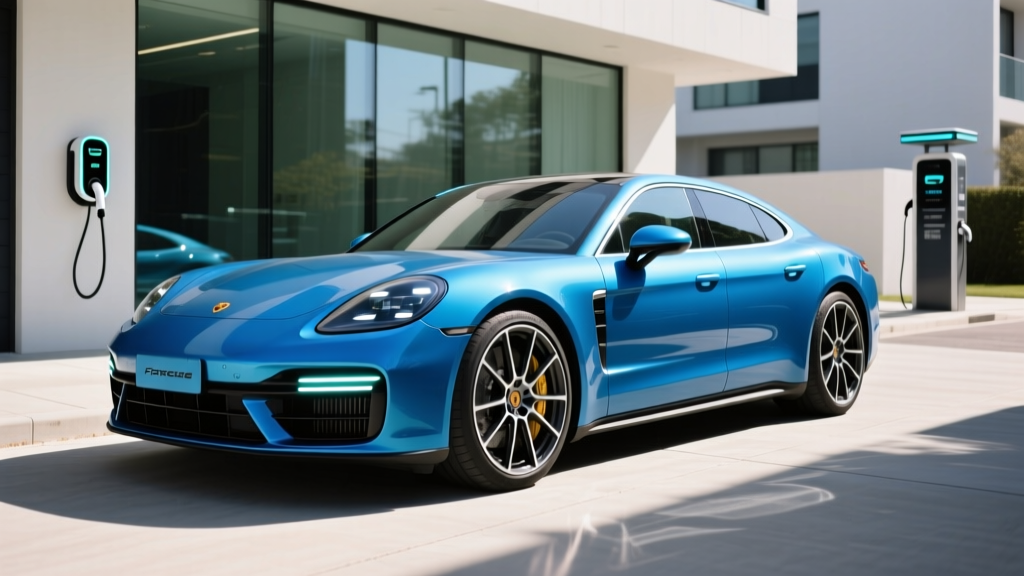
There is no fully electric (BEV) Porsche Panamera for 2026. The "Porsche Panamera electric car" buyers search for is actually the Porsche Panamera E-Hybrid lineup — a plug-in hybrid (PHEV) pairing a twin-turbo V6 or V8 with an electric motor and a 25.9 kWh (gross) battery. The 2026 Panamera 4 E-Hybrid delivers an EPA-estimated 45–49 miles of electric-only range and starts around $107,000, while the Turbo S E-Hybrid pushes 761 hp and starts above $200,000. A fully electric Taycan-based successor is rumored for the next generation, but for now, the E-Hybrid is Porsche's electrified Panamera.
2026 Porsche Panamera E-Hybrid: The Full Lineup at a Glance
Porsche offers multiple E-Hybrid trims for the current-generation (972) Panamera, which was redesigned for 2024 and continues into 2026 with minor updates. All share the same 25.9 kWh lithium-ion battery pack (located under the trunk floor) and a redesigned electric motor integrated into the 8-speed PDK transmission. Here's how the lineup stacks up:
| Spec | Panamera 4 E-Hybrid | Panamera 4S E-Hybrid | Panamera Turbo S E-Hybrid |
|---|---|---|---|
| Powertrain | 2.9L TT V6 + E-Motor | 2.9L TT V6 + E-Motor | 4.0L TT V8 + E-Motor |
| Combined HP | 463 hp | 553 hp | 761 hp |
| Combined Torque | 516 lb-ft | 553 lb-ft | 737 lb-ft |
| 0–60 mph | 4.3 sec | 3.5 sec | 2.7 sec |
| Battery (gross/usable) | 25.9 kWh / ~21.5 kWh | 25.9 kWh / ~21.5 kWh | 25.9 kWh / ~21.5 kWh |
| EPA Electric Range | 45–49 mi | 44–47 mi | 41–44 mi |
| MPGe (combined) | 52 MPGe | 50 MPGe | 48 MPGe |
| Gas-Only MPG (combined) | 22 mpg | 21 mpg | 19 mpg |
| Max DC Charge Rate | ~11 kW (AC only, no DCFC) | ~11 kW (AC only) | ~11 kW (AC only) |
| AC Charge Time (0–100%) | ~2.5 hrs @ 11 kW | ~2.5 hrs @ 11 kW | ~2.5 hrs @ 11 kW |
| Base MSRP (est.) | $107,100 | $124,900 | $203,600 |
| Federal Tax Credit (§30D) | Not eligible (MSRP & sourcing) | Not eligible | Not eligible |
Key takeaway: The E-Hybrid's electric range is designed for daily commuting — roughly 45 miles covers the average American's round-trip commute (source: fueleconomy.gov). But this is a PHEV, not a BEV: once the battery depletes, you're driving a heavy gas-powered luxury sedan at 19–22 mpg combined.
Real-World Electric Range: What to Actually Expect
The EPA electric range of 45–49 miles is achievable under ideal conditions — moderate temperatures, city-speed driving, and a full charge. In real-world ownership, expect variation:
EPA Sticker: 45–49 miles (depending on trim and wheel size)
Real-World City (65°F): ~40–46 miles — close to EPA thanks to regenerative braking
Real-World Highway (70 mph): ~30–35 miles — higher speeds drain the battery faster
Cold Weather (20°F): ~28–33 miles — battery chemistry and cabin heating reduce usable capacity by 25–35%
With Preconditioning: Add ~3–5 miles back by preconditioning the battery while plugged in
The Panamera E-Hybrid does not support DC fast charging — a significant limitation. You're restricted to Level 2 AC charging at a maximum of 11 kW. That means a full 0–100% charge takes about 2.5 hours on a 48-amp Level 2 home charger, or roughly 7–8 hours on a standard 120V household outlet (Level 1). For most owners, overnight Level 2 charging is the practical routine: plug in when you get home, wake up to a full battery every morning.
Panamera E-Hybrid vs. Gas Panamera vs. Porsche Taycan: A Cost & Capability Comparison
The "Porsche Panamera electric car" question often comes down to three options: the Panamera E-Hybrid (PHEV), the conventional gas Panamera, or the fully electric Porsche Taycan. Here's how they compare on the metrics that matter for ownership decisions:
| Metric | Panamera 4 E-Hybrid (PHEV) | Panamera 4 (Gas) | Taycan 4S (BEV) |
|---|---|---|---|
| Base MSRP | $107,100 | $102,100 | $105,300 |
| Electric-Only Range | 45–49 mi | 0 mi | 246–277 mi (EPA) |
| Total Range (gas + electric) | ~430 mi | ~420 mi | ~277 mi (electric only) |
| Combined Efficiency | 52 MPGe / 22 mpg gas | 21 mpg combined | 85 MPGe (2.4 kWh/mi) |
| Fuel/Energy Cost (15k mi/yr) | ~$2,100–$2,800* | ~$3,400 | ~$900–$1,400* |
| Annual Maintenance (est.) | ~$800–$1,200 | ~$900–$1,400 | ~$400–$600 |
| Home Charging Needed? | Strongly recommended | No | Essential |
| 0–60 mph | 4.3 sec | 4.5 sec | 3.8 sec |
| Federal Tax Credit | Not eligible | Not eligible | Not eligible (MSRP cap) |
*Cost estimates assume 50% electric / 50% gas driving for the E-Hybrid, $3.50/gal premium fuel, and $0.14/kWh home electricity. Actual costs vary significantly by driving pattern and local rates.
The E-Hybrid makes the most financial sense if you can charge at home and your daily commute falls within the 45-mile electric window. In that scenario, you might use gas only on weekend road trips, dramatically cutting fuel costs. But if you can't charge at home, the E-Hybrid premium over the gas Panamera ($5,000) pays back slowly — and the added ~300 lbs of battery mass slightly compromises handling dynamics.
If you want a fully electric Porsche, the Taycan is the answer — but it's a different vehicle class: less cargo space, no hatchback practicality, and a higher reliance on public charging infrastructure for road trips. The Panamera E-Hybrid is the bridge for buyers who want electric commuting without range anxiety on long trips.
Real Ownership Costs: 5-Year Breakdown
Luxury PHEV ownership involves trade-offs. Here's a realistic 5-year / 75,000-mile cost projection for the Panamera 4 E-Hybrid versus the gas Panamera 4, assuming 15,000 miles per year, $3.50/gal premium fuel, and $0.14/kWh home electricity:
| Cost Category (5 yr) | Panamera 4 E-Hybrid | Panamera 4 (Gas) |
|---|---|---|
| Purchase Price (base MSRP) | $107,100 | $102,100 |
| Fuel / Electricity | $12,000 | $17,000 |
| Maintenance | $5,000 | $6,000 |
| Insurance (avg.) | $18,000 | $16,500 |
| Depreciation (est. 55%) | $58,905 | $56,155 |
| Total 5-Year Cost | ~$201,005 | ~$197,755 |
What this reveals: The E-Hybrid saves roughly $6,000 on fuel and maintenance over five years, but the higher purchase price, slightly steeper insurance premiums, and heavier depreciation (complex PHEV systems can spook used-car buyers) nearly erase the savings. The E-Hybrid is not a budget play — it's for buyers who value the electric-commute experience, instant torque, and reduced tailpipe emissions, and who can absorb the upfront premium.
Home charging installation is an additional cost if you don't already have a 240V circuit. Budget $600–$1,800 for a licensed electrician to install a NEMA 14-50 outlet or hardwired Level 2 charger, or $2,500–$5,000+ if your electrical panel needs a 200-amp upgrade. The Porsche Mobile Charger Connect (included with the car) supports up to 11 kW on a 48-amp circuit.
Common Misconceptions About the Panamera E-Hybrid
| Myth | Fact |
|---|---|
| "The Panamera electric car is a full EV with 300+ miles of range." | It's a plug-in hybrid with 45–49 miles of electric-only range. A fully electric Panamera does not exist as of 2026. |
| "It qualifies for the $7,500 federal tax credit." | It does not. The Panamera E-Hybrid exceeds the §30D MSRP cap ($55,000 for sedans) and likely fails battery-sourcing requirements. |
| "I can DC fast-charge it on road trips." | The Panamera E-Hybrid has no DC fast-charging port. Maximum charge rate is 11 kW AC only — Level 2 home or public AC chargers only. |
| "I don't need home charging — I'll just use gas." | You can, but you'll sacrifice the core benefit. Without regular charging, you're carrying 300+ lbs of dead battery weight and getting 22 mpg — worse than the gas-only Panamera's efficiency per dollar. |
| "The battery will need expensive replacement soon." | Porsche warranties the high-voltage battery for 8 years / 100,000 miles (capacity retention above 70%). PHEV batteries experience less deep cycling than BEVs, and real-world degradation data on the 972 generation is minimal at this stage. |
| "It's basically a Taycan with a gas engine." | Different platforms entirely. The Panamera uses the MSB architecture; the Taycan uses the J1 platform. Driving dynamics, interior, and cargo layouts differ substantially. |
Who Should Buy the Panamera E-Hybrid — and Who Shouldn't
Buy the Panamera E-Hybrid if:
- You have reliable home Level 2 charging (or can install it)
- Your daily commute is under 40 miles round-trip — you'll drive electric ~80% of weekdays
- You take road trips 4+ times per year and don't want to plan around DC fast-charging networks
- You want Porsche performance (463–761 hp) with lower weekday fuel costs
- You value hatchback/wagon cargo space that the Taycan sedan can't match
Consider the gas Panamera instead if:
- You live in an apartment or lack access to home or workplace charging
- Your daily driving exceeds 60+ miles — the battery depletes quickly and you're running on gas anyway
- You want the lowest upfront cost and simplest maintenance profile
Consider the Porsche Taycan (BEV) instead if:
- You have home charging and want zero tailpipe emissions
- Your road trips are infrequent or within the 250–280-mile range (or you're comfortable with DC fast-charging stops)
- You prioritize lower running costs and less maintenance over hatchback utility
First-Time EV/PHEV Buyer Checklist
If the Panamera E-Hybrid is your first electrified vehicle, here's what to prepare before delivery day:
- Audit your electrical panel. Confirm you have capacity for a 60-amp breaker (supporting a 48-amp continuous charger). If your panel is 100-amp or older, budget for an upgrade.
- Install a Level 2 charger before the car arrives. A ChargePoint Home Flex, Emporia V2, or Porsche Mobile Charger Connect on a 240V/48-amp circuit will fully replenish the 25.9 kWh battery in ~2.5 hours.
- Set a charging schedule. Use Porsche Connect or your charger's app to charge during off-peak utility hours (typically 11 PM – 6 AM) for the lowest per-kWh rates.
- Understand the drive modes. E-Power (electric only), Hybrid Auto (system decides), E-Hold (saves battery for later), and E-Charge (engine charges battery). For commuters: E-Power in the city, Hybrid Auto on the highway.
- Don't ignore the gas engine. PHEVs still need oil changes, spark plugs, and fuel-system maintenance. Porsche recommends service every 10,000 miles or 12 months.
- Factor in insurance. Luxury PHEVs carry higher premiums. Get quotes before purchasing — expect $250–$400/month depending on your profile and state.
Frequently Asked Questions
Will Porsche make a fully electric Panamera?
Porsche has confirmed an all-electric successor to the Panamera is in development, likely arriving for the 2028–2030 model year based on the PPE (Premium Platform Electric) architecture shared with the electric Macan and Audi Q6 e-tron. Until then, the E-Hybrid is the most electrified Panamera available.
Can I charge the Panamera E-Hybrid at a Tesla Supercharger?
No. The Panamera E-Hybrid does not support DC fast charging at all — no CCS, no NACS, no CHAdeMO. It can only accept AC charging via its J1772/Type 2 port at up to 11 kW. Tesla Superchargers, Electrify America, and other DC networks are not compatible.
What happens if I never plug it in?
The car functions as a conventional hybrid, using regenerative braking and the engine to manage the small battery. You'll get roughly 22 mpg combined — similar to a mild hybrid. But you'll have paid a $5,000+ premium for a PHEV system you never use, and the added weight slightly reduces handling precision versus the gas-only model.
Does the Panamera E-Hybrid qualify for any tax credits?
Not the federal §30D credit. The IRS rules cap sedan eligibility at $55,000 MSRP, and the Panamera starts at $107,100. Some states offer their own PHEV incentives (e.g., California's CVRP was discontinued in 2023, but local utility rebates for charger installation may apply). Consult a tax professional for your specific situation.
How long does the high-voltage battery last?
Porsche warranties the HV battery for 8 years or 100,000 miles, whichever comes first, with a capacity-retention threshold of 70%. Because PHEV batteries are smaller and rarely deep-cycled (the engine takes over when the battery depletes), degradation is typically slower than in BEVs. A replacement battery, if needed out of warranty, is estimated at $8,000–$14,000 including labor based on prior-generation Panamera E-Hybrid data.
Is the Panamera E-Hybrid good in cold weather?
Electric range drops 25–35% in freezing temperatures due to battery chemistry limitations and cabin-heating energy demands. Expect ~30 miles of electric range at 20°F versus ~45 miles at 65°F. The gas engine mitigates range anxiety — it kicks in seamlessly — but your winter fuel costs will rise as the electric share of your driving shrinks. Preconditioning the cabin and battery while plugged in recovers some of this loss.