The Short Answer: No Full-EV Panamera Exists Yet
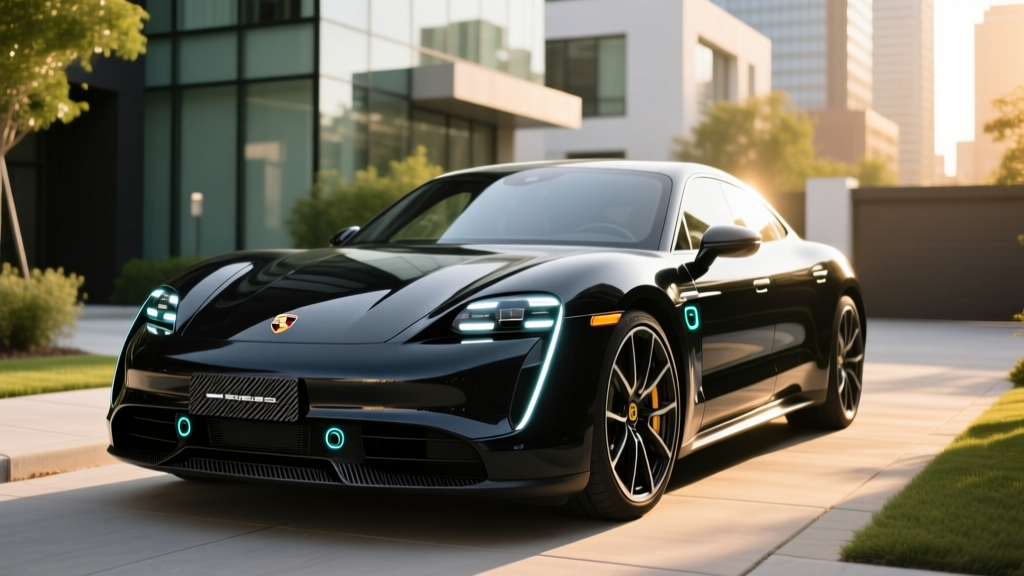
As of the 2026 model year, there is no Porsche Panamera all electric variant on sale. The Panamera lineup continues exclusively as a plug-in hybrid (PHEV) and conventional hybrid platform. Buyers searching for a battery-electric Porsche sedan should look to the Porsche Taycan, which remains the brand's dedicated EV four-door. Porsche has confirmed that an all-electric Panamera successor is in development, but no production timeline or specs have been officially released.
The search for a "Porsche Panamera all electric" model is one of the most common queries among luxury EV shoppers — and for good reason. The Panamera nameplate represents Porsche's benchmark for a full-size performance sedan, and electrification seems like the natural next step. But the reality of Porsche's 2026 lineup requires some unpacking, especially for buyers weighing whether to purchase a Panamera E-Hybrid now, opt for a Taycan, or wait for a future battery-electric Panamera.
This guide breaks down exactly what's available, what's coming, how the current PHEV Panamera stacks up against pure EVs, and what ownership actually costs.
The 2026 Porsche Panamera Lineup: PHEV, Not BEV
The 2026 Panamera is offered in several E-Hybrid trims, all built on Porsche's MSB platform with a plug-in hybrid powertrain. These are not mild hybrids — they pair a turbocharged V6 or V8 with a substantial electric motor and a battery pack capable of meaningful electric-only driving.
| Specification | Panamera 4 E-Hybrid | Panamera Turbo S E-Hybrid |
|---|---|---|
| Powertrain | 2.9L Twin-Turbo V6 + Electric Motor | 4.0L Twin-Turbo V8 + Electric Motor |
| Combined Output | ~463 hp | ~717 hp |
| Battery Capacity (usable) | ~25.9 kWh (NMC) | ~25.9 kWh (NMC) |
| EPA Electric-Only Range | ~30-35 mi (est.) | ~28-32 mi (est.) |
| Combined Fuel Economy (hybrid mode) | ~48 MPGe (est.) | ~42 MPGe (est.) |
| 0-60 mph | ~4.1 sec | ~2.9 sec |
| Level 2 AC Charging | Up to 11 kW | Up to 11 kW |
| Base MSRP | ~$110,000 | ~$195,000 |
| Powertrain Warranty | 4 yr / 50,000 mi | 4 yr / 50,000 mi |
| Hybrid Battery Warranty | 8 yr / 100,000 mi | 8 yr / 100,000 mi |
The E-Hybrid trims offer genuine electric-only commuting capability. With roughly 30 miles of EV range, many owners can complete daily round-trip commutes without engaging the combustion engine — provided they charge at home overnight. But this is fundamentally different from a battery-electric vehicle (BEV) with 250+ miles of range and no gas tank.
Porsche Panamera PHEV vs. Taycan BEV: Which Fits Your Needs?
If you're cross-shopping a potential Porsche Panamera all electric model against what's actually available, you're really deciding between the Panamera E-Hybrid (PHEV) and the Porsche Taycan (BEV). These serve different use cases.
| Factor | Panamera 4 E-Hybrid (PHEV) | Taycan 4S (BEV) |
|---|---|---|
| Drivetrain | Plug-in hybrid (gas + electric) | Full battery electric |
| Total Range (gas + electric) | ~450+ mi combined | ~283 mi EPA (electric only) |
| Electric-Only Range | ~30-35 mi | ~283 mi |
| Home Charging | Level 2 (11 kW, ~3 hr full charge) | Level 2 (up to 19.2 kW, ~5 hr 10-100%) |
| DC Fast Charging | Not available | Up to 270 kW, 10-80% in ~23 min |
| Fuel/Charging Cost (per mile) | Varies by EV vs gas mode split | ~$0.04-$0.06/mi (home charging) |
| Maintenance | Oil changes, spark plugs, exhaust + EV systems | Minimal — no engine, no transmission fluid |
| Cargo Volume | ~17.6 cu ft (trunk) | ~14.3 cu ft (rear) + ~2.9 cu ft (frunk) |
| Base MSRP | ~$110,000 | ~$100,000 |
| Federal Tax Credit (§30D) | Up to $3,750 (PHEV, battery <16 kWh may limit) | Up to $7,500 (subject to sourcing/income rules) |
The Taycan offers the full EV experience: zero tailpipe emissions, DC fast charging for road trips, and dramatically lower per-mile energy costs if you charge at home. The Panamera E-Hybrid offers range flexibility — you'll never be stranded looking for a charger on a remote highway — and a more traditional luxury sedan layout with a larger trunk.
Real Ownership Costs: Panamera E-Hybrid vs. Taycan vs. Gas Sedan
Luxury sedan buyers often focus on MSRP, but five-year total cost of ownership (TCO) tells a more complete story. Below is an estimated breakdown assuming 12,000 miles/year, national average electricity at $0.16/kWh, and premium gasoline at $4.50/gallon.
| Cost Category | Panamera 4 E-Hybrid | Taycan 4S | BMW 740i (Gas Baseline) |
|---|---|---|---|
| Purchase Price (base MSRP) | $110,000 | $100,000 | $97,000 |
| Federal Tax Credit | -$3,750 (est.) | -$7,500 (if eligible) | $0 |
| Fuel/Energy (5 yr) | ~$8,500 (mixed EV/gas) | ~$4,200 (home charging) | ~$14,400 (premium gas) |
| Maintenance (5 yr) | ~$4,500 | ~$2,200 | ~$5,000 |
| Insurance (5 yr avg.) | ~$18,000 | ~$17,500 | ~$15,000 |
| Estimated Depreciation | ~$55,000 | ~$50,000 | ~$48,000 |
| 5-Year TCO (est.) | ~$192,250 | ~$166,400 | ~$179,400 |
The Taycan's lower energy and maintenance costs give it a meaningful TCO advantage over both the Panamera E-Hybrid and a comparable gas sedan, even before accounting for the larger federal tax credit. However, insurance for both Porsche models runs significantly higher than mainstream vehicles — expect $250-$350/month depending on your profile and state.
Home charging access is the critical variable. If you can install a Level 2 charger at home (a 240V NEMA 14-50 outlet or hardwired wallbox), the Taycan's per-mile cost drops to roughly $0.05/mile. Without home charging and relying on public DC fast charging at $0.35-$0.48/kWh, the Taycan's energy cost rises to $0.10-$0.14/mile — still cheaper than premium gasoline but substantially more expensive than home electrons.
The All-Electric Panamera: What We Know About Porsche's Plans
Porsche has signaled that its larger sedan lines will eventually transition to battery-electric platforms. The brand's Strategy 2030 roadmap targets over 80% of new vehicle deliveries being electric by 2030, and the Panamera — sitting in the premium D-segment alongside the Taycan — is a logical candidate for electrification.
However, several factors complicate a near-term all-electric Panamera:
- Platform constraints: The current Panamera rides on the MSB (Modular Standard Architecture) platform, which was engineered primarily for combustion and hybrid powertrains. A full BEV Panamera likely requires migration to Porsche's upcoming SSP Sport (Scalable Systems Platform) architecture, shared with the next-generation Cayenne EV and potentially a larger sedan.
- Taycan cannibalization: Porsche must carefully position an electric Panamera against the Taycan, which already serves as the brand's electric sports sedan. An all-electric Panamera would likely be larger, more comfort-oriented, and positioned above the Taycan in both price and interior space.
- Market timing: The current-generation Panamera (introduced for 2024) is early in its lifecycle. Porsche typically runs 7-8 year product cycles, meaning a next-generation all-electric Panamera would likely arrive no earlier than 2030-2031.
For buyers who want a Porsche electric sedan today, the Taycan is the answer. For those who need the Panamera's larger footprint and rear-seat comfort, the E-Hybrid remains the closest electrified option.
Common Misconceptions About an Electric Panamera
| Myth | Fact |
|---|---|
| "The Panamera E-Hybrid is basically an EV." | It's a PHEV with ~30 miles of electric range. Beyond that, the V6/V8 engine engages. There is no DC fast charging capability. |
| "Porsche already makes an all-electric Panamera." | No. The Taycan is Porsche's BEV sedan, but it is a distinct model — shorter, sportier, and on a different platform (J1). |
| "I'll get the full $7,500 tax credit on a Panamera E-Hybrid." | PHEVs qualify for up to $3,750 under IRS §30D rules, and only if the battery meets critical-mineral and sourcing requirements. The Panamera E-Hybrid's battery capacity (~25.9 kWh) does qualify for PHEV credit, but MSRP caps and buyer income limits apply. |
| "An electric Panamera will be here in 2027." | No official timeline has been announced. Industry estimates point to 2030 or later for a dedicated BEV Panamera on a new platform. |
| "PHEVs have the same maintenance savings as full EVs." | PHEVs still require oil changes, spark plug replacements, exhaust system service, and transmission maintenance on the combustion side. BEVs eliminate nearly all of these. |
Decision Framework: What Should You Actually Buy?
Choose the Panamera 4 E-Hybrid if:
- You need a full-size luxury sedan with generous rear-seat space and trunk volume
- You frequently drive routes longer than 300 miles where charging infrastructure is uncertain
- You want some electric commuting capability but aren't ready to go fully electric
- You value the Panamera's specific driving dynamics and interior layout over the Taycan's
Choose the Porsche Taycan if:
- You want a true battery-electric Porsche with DC fast charging (up to 270 kW)
- You have reliable home Level 2 charging access
- Your typical road trips are under 250 miles between stops, or you're comfortable planning DC fast-charge stops
- You want lower five-year ownership costs and minimal maintenance
- You want to qualify for the full $7,500 federal EV tax credit (subject to eligibility)
Wait for a future electric Panamera if:
- You specifically need a large-format Porsche electric sedan (larger than the Taycan)
- You're comfortable waiting until approximately 2030+
- Your current vehicle meets your needs and there's no urgency to switch
First-Time EV Buyer Essentials (If You're Leaning Toward the Taycan)
If the Taycan is your entry point into Porsche electrification, here's what matters before you sign:
- Home charging is non-negotiable for cost savings. Budget $500-$2,000 for a Level 2 home charger installation (240V, 40-48 amp circuit). A licensed electrician should assess your panel capacity — older homes may need a 200-amp panel upgrade ($1,500-$3,000 additional).
- Real-world range vs. EPA sticker. The Taycan 4S EPA rating of ~283 miles is conservative in mild weather; expect 250-270 miles in real-world highway driving at 70+ mph, and 200-220 miles in sub-freezing temperatures due to battery chemistry limitations and cabin heating demands.
- DC fast charging taper. The Taycan's 270 kW peak rate applies only at low state-of-charge and optimal battery temperature. Expect sustained rates of 150-200 kW through the 10-80% window, with significant tapering above 80%. A typical 10-80% session takes approximately 23 minutes at a functioning 350 kW charger.
- NACS adapter access. Porsche has confirmed NACS (Tesla Supercharger) adapter compatibility for Taycan models, expanding your fast-charging network options significantly in 2026.
- Precondition your battery. When navigating to a DC fast charger, the Taycan's thermal management system preconditions the battery for optimal charge speed. Skipping this step (e.g., charging at a station not set as your navigation destination) can reduce peak charge rates by 30-50%.
Frequently Asked Questions
Will Porsche make an all-electric Panamera?
Porsche has indicated that its sedan lineup will eventually electrify, but no official production date for a battery-electric Panamera has been announced. Industry analysts estimate 2030 or later, contingent on the rollout of the SSP Sport platform.
How much electric range does the 2026 Panamera E-Hybrid have?
The 2026 Panamera E-Hybrid trims are estimated to deliver approximately 30-35 miles of EPA-rated electric-only range on a full charge of the ~25.9 kWh battery pack. Real-world range may vary based on temperature, driving style, and terrain.
Can I DC fast charge a Panamera E-Hybrid?
No. The Panamera E-Hybrid supports only Level 2 AC charging (up to 11 kW). DC fast charging is exclusive to battery-electric vehicles like the Taycan. A full Level 2 charge on the Panamera takes approximately 2.5-3 hours.
Does the Panamera E-Hybrid qualify for the federal EV tax credit?
Plug-in hybrids may qualify for a partial credit under IRS §30D, typically up to $3,750 depending on battery capacity and critical-mineral sourcing requirements. The buyer must also meet income caps ($150,000 single / $300,000 joint) and the vehicle must be under the MSRP cap ($80,000 for sedans — note: the Panamera exceeds this, which may disqualify it). Consult a tax professional for your specific situation.
Is the Taycan a better buy than the Panamera E-Hybrid?
For pure EV buyers with home charging, the Taycan offers lower running costs, stronger federal tax credit potential, and zero tailpipe emissions. For buyers who need maximum range flexibility, more rear-seat space, or who lack reliable charging access, the Panamera E-Hybrid provides a practical compromise with its 450+ mile total range.
What's the real-world range of the Taycan in cold weather?
In sustained sub-32°F driving, expect the Taycan 4S to deliver roughly 200-220 miles of real-world range — a 20-25% reduction from its EPA rating. This is consistent with NMC lithium-ion chemistry behavior across the EV industry. Using the heat pump (standard on most trims) and preconditioning the battery helps mitigate losses.
Note: All specifications, pricing, and tax credit information reflect estimates and data available as of early 2026. Final MSRP, EPA ratings, and §30D eligibility may vary. Always verify current figures on fueleconomy.gov and irs.gov before making a purchase decision.