Is the Porsche Macan EV Worth It in 2026?
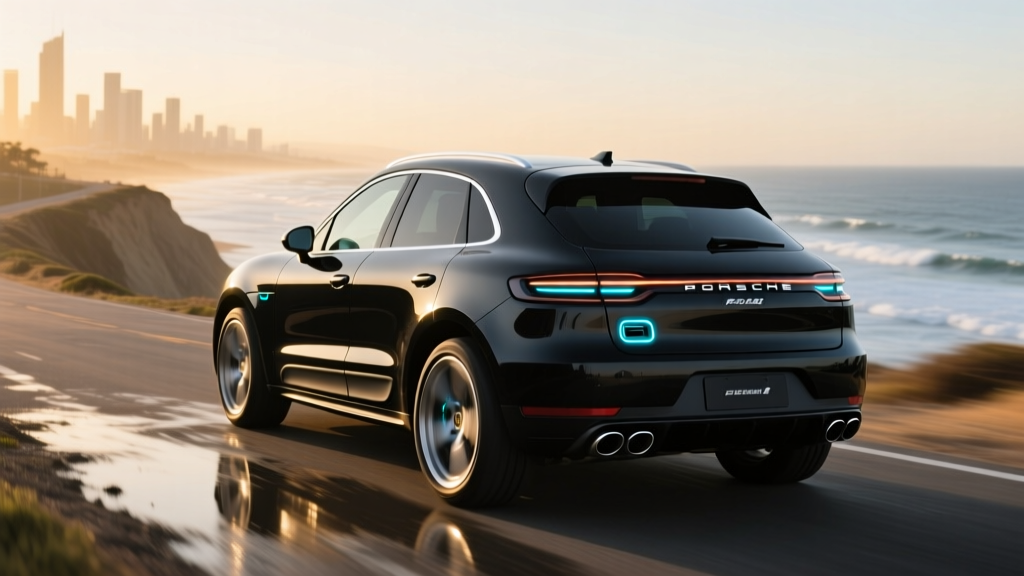
The Porsche Macan EV delivers up to 308 miles of EPA range (Macan 4), peaks at 270 kW DC fast charging (10–80% in ~21 minutes), and starts at $78,800 before incentives. It costs roughly $1,200–$1,800 less per year to fuel than a gas Macan S for a 12,000-mile driver, but carries higher insurance premiums and requires reliable Level 2 home charging to realize its convenience advantage. It qualifies for no federal §30D tax credit due to its MSRP exceeding the $80,000 SUV cap on higher trims and battery-sourcing rules — though point-of-sale lease incentives may apply. Buy it if you want a performance-luxury EV SUV with best-in-class charging speed and don't need third-row seating; consider the gas Macan or a rival like the BMW iX if budget or credit eligibility is a priority.
Porsche Macan EV at a Glance: Trims, Range & Performance
Porsche launched the all-electric Macan on the new Premium Platform Electric (PPE) architecture co-developed with Audi. For the 2025–2026 model years, three trims are available in the U.S. All use a 100 kWh gross (roughly 95 kWh usable) NMC lithium-ion battery with an 800-volt architecture — the same voltage class as the Taycan and Hyundai Ioniq 5, enabling exceptionally fast DC charging.
| Spec | Macan (Base) | Macan 4 | Macan Turbo |
|---|---|---|---|
| EPA Range | ~300 mi | 308 mi | 288 mi |
| Battery (usable) | ~95 kWh NMC, 800V | ||
| Horsepower | 335 hp | 402 hp | 630 hp (Launch Control) |
| 0–60 mph | 5.2 sec | 4.4 sec | 3.1 sec |
| Peak DC Charge Rate | 270 kW | ||
| 10–80% DC Fast Charge | ~21 min (ideal conditions) | ||
| Level 2 (AC) Charge Rate | 11 kW (std) / 22 kW (optional onboard) | ||
| Base MSRP | $78,800 | $84,900 | $105,300 |
| Battery Warranty | 8 yr / 100,000 mi (70% capacity retention) | ||
Real-World Range Expectations
The Macan 4's 308-mile EPA rating is strong for a performance SUV, but real-world results vary. Expect 250–275 miles in mixed highway driving at 70–80 mph, and 200–230 miles in sustained sub-freezing temperatures without preconditioning. The Turbo trim's wider tires and higher output drop range to roughly 240–260 miles on the highway. Porsche's thermal management system and standard heat pump help mitigate cold-weather loss compared to rivals without one.
Charging the Macan EV: Home, Public & What You'll Actually Experience
The Macan EV's 800V architecture is its standout ownership feature. On a 350 kW-capable Electrify America or Tesla Supercharger (NACS adapter required for non-Tesla networks post-2025), the Macan can sustain over 200 kW well past 50% state of charge — a charge curve most 400V rivals can't match. Here's what that translates to in practice:
| Charging Level | Power (kW) | Miles Added per Hour | Typical Use Case |
|---|---|---|---|
| Level 1 (120V outlet) | ~1.4 kW | ~4–5 mi/hr | Emergency / overnight trickle |
| Level 2 (240V, 48A home) | ~11 kW | ~35–40 mi/hr | Daily home charging (full charge ~9 hrs) |
| Level 2 (optional 22 kW onboard) | ~22 kW | ~70–80 mi/hr | Requires 80A+ circuit; rare in homes |
| DC Fast (150 kW station) | ~150 kW | ~450+ mi/hr | Road-trip stop: 10–80% in ~28 min |
| DC Fast (350 kW station) | ~270 kW peak | ~800+ mi/hr | Road-trip stop: 10–80% in ~21 min |
Home charging reality: Most Macan EV buyers will need a professionally installed Level 2 home charger (240V, 60A circuit / 48A continuous). Budget $800–$2,500 for a quality smart charger (ChargePoint Home Flex, Emporia Level 2, or Porsche's own Mobile Charger Connect) plus $500–$2,000 for electrician labor, depending on panel proximity. If your home has a 100A electrical panel, a $2,000–$4,000 panel upgrade to 200A may be required — a common surprise for first-time EV buyers in older homes.
Charging connector note: For 2025–2026, Porsche equips the Macan EV with a NACS charge port in North America, granting native access to Tesla's Supercharger network. A CCS1 adapter is included for non-Tesla public chargers. Verify your local charging infrastructure before purchase — PlugShare is the best tool for mapping stations near your home and commute.
Macan EV vs. Gas Macan: Total Cost of Ownership Over 5 Years
The electric Macan carries a higher sticker price than its gas counterpart, but fuel and maintenance savings narrow the gap significantly. Here's a realistic 5-year / 60,000-mile comparison for a Macan 4 EV versus a comparably equipped gas Macan S (MSRP ~$68,000):
| Cost Category | Macan 4 EV ($84,900) | Gas Macan S ($68,000) |
|---|---|---|
| Purchase Price (before incentives) | $84,900 | $68,000 |
| Federal §30D Tax Credit | $0 (MSRP/sourcing ineligible) | $0 |
| Fuel / Energy (60k mi) | $3,600 (home L2, $0.13/kWh avg) | $10,800 (19 MPG, $3.40/gal) |
| Maintenance (60k mi) | $1,200 (cabin filter, fluid top-offs, tire rotation) | $4,500 (oil changes, brakes, spark plugs) |
| Insurance (5-yr avg) | $12,500 (~$2,500/yr) | $9,500 (~$1,900/yr) |
| Estimated Depreciation (5 yr) | ~$38,000 (45%) | ~$30,000 (44%) |
| Total 5-Year Cost | ~$140,200 | ~$122,800 |
Key takeaway: The Macan 4 EV saves roughly $10,500 in fuel and maintenance over 5 years, but the higher purchase price, steeper insurance, and potentially greater depreciation mean the gas Macan S still costs less overall. The EV makes financial sense if you secure a lease incentive (Porsche Financial sometimes offers $5,000–$7,500 lease cash that effectively substitutes for the tax credit), drive more than 15,000 miles/year, or have access to cheap home solar charging.
According to fueleconomy.gov, the Macan 4 achieves 86 MPGe combined, translating to roughly 34 kWh per 100 miles. Compare that to the gas Macan S at 21 MPG combined — the EV uses roughly one-third the energy cost per mile when charging at home.
Federal Tax Credit & Incentive Reality for the Macan EV
This is where many Porsche buyers encounter disappointment. Under current IRS §30D rules, the Macan EV faces multiple eligibility barriers:
- MSRP Cap: SUVs must be under $80,000 MSRP to qualify. The base Macan ($78,800) technically clears this — but only before destination charges and before any options push it over. The Macan 4 ($84,900) and Turbo ($105,300) are ineligible.
- Buyer Income Cap: Modified adjusted gross income must not exceed $300,000 (joint), $225,000 (head of household), or $150,000 (individual).
- Battery Sourcing: Critical minerals and battery components must meet phased-in percentages from U.S. or free-trade-agreement partners. Porsche's supply chain has not consistently met these thresholds for the Macan EV as of early 2026.
- Point-of-Sale Transfer: If eligible, the credit can be transferred to the dealer at purchase for an immediate price reduction — but only if all above criteria are met.
Lease loophole: Under §45W commercial clean vehicle credit rules, leasing a Macan EV through Porsche Financial Services may allow the lessor to claim the credit and pass savings to you as reduced monthly payments. This has been a common strategy for luxury EVs that don't qualify for direct purchase credits. Ask your dealer about current lease cash offers.
Common Macan EV Misconceptions — Fact vs. Fiction
| Myth | Fact |
|---|---|
| "The Macan EV gets the full $7,500 tax credit." | Most trims exceed the $80K SUV MSRP cap, and battery-sourcing rules further limit eligibility. Only a base-trim purchase by a qualifying-income buyer might qualify — and even that is uncertain for 2026. |
| "It charges to 80% in 15 minutes." | Porsche's 21-minute 10–80% claim requires a functioning 350 kW charger with battery preconditioning active. On a 150 kW station, expect 28–32 minutes. Real-world charging curves taper above 80% — a 10–100% session takes ~45 minutes. |
| "I can charge on any Tesla Supercharger." | With the native NACS port (2025+), yes — but only at V3 (250 kW) and V4 Superchargers that support non-Tesla vehicles. Some older urban Superchargers remain Tesla-only. Check the Tesla app for site compatibility. |
| "The battery will need replacing in 5 years." | Porsche warranties the battery for 8 years / 100,000 miles with a 70% capacity retention guarantee. Industry data from similar 800V NMC packs shows ~5–8% degradation at 100K miles. Full replacement, if ever needed, is estimated at $18,000–$25,000 out of warranty. |
| "It handles like a gas Macan." | The EV is ~500 lbs heavier due to the battery, which you'll feel in tight corner transitions. However, the lower center of gravity and instant torque delivery make it feel quicker and more planted on straights. It's a different flavor of performance — not a direct 1:1 replacement. |
Who Should Buy the Macan EV — Decision Framework
Buy the Porsche Macan EV If:
- You have Level 2 home charging (or can install it) and drive under 250 miles/day.
- You value best-in-class DC charging speed for road trips (270 kW is faster than the BMW iX, Audi Q8 e-tron, and Mercedes EQE SUV).
- You want a performance-luxury EV SUV and are willing to pay $80K–$110K for it.
- You lease rather than buy, potentially capturing incentive savings without §30D eligibility headaches.
- You live in a region with robust NACS/Supercharger coverage (most of the U.S. outside rural corridors).
Consider the Gas Macan or a Rival If:
- You cannot install home charging (apartment, street parking) and rely solely on public infrastructure.
- You regularly drive in extreme cold (below 10°F) where range drops 25–35%.
- You need a federal tax credit to make the math work — look at the Tesla Model Y, Ford Mustang Mach-E, or Hyundai Ioniq 5, which may still qualify.
- You want third-row seating — the Macan EV is strictly a 5-seater with 17.7 cu ft of cargo space behind the rear seats (48.7 cu ft folded), less than the Kia EV9 or Rivian R1S.
- Budget is under $70K — the gas Macan starts lower and the BMW iX xDrive50 offers similar range at a comparable price point.
First-Time EV Buyer Checklist for the Macan
If the Macan EV is your first electric vehicle, prepare for these ownership realities before signing:
- Electrical panel assessment: Have a licensed electrician evaluate your panel capacity before ordering. A 200A panel with space for a 60A breaker is ideal.
- Utility rate plan: Enroll in a time-of-use (TOU) plan if your utility offers one. Charging overnight at $0.08–$0.12/kWh vs. peak rates of $0.25+ saves hundreds annually.
- Preconditioning habit: Use the Porsche app to precondition the battery before DC fast charging sessions. This warms the pack to optimal temperature and unlocks the full 270 kW charge curve — without it, cold-soaked batteries may peak at 100–150 kW.
- Tire budget: The Macan EV's weight and instant torque wear tires faster than gas counterparts. Budget $1,200–$2,000 for a set of EV-rated tires (Michelin Pilot Sport EV or Pirelli P Zero Elect) every 25,000–35,000 miles.
- Insurance quotes: Get quotes before purchase. Porsche EVs carry 20–35% higher premiums than gas equivalents due to repair costs and battery replacement risk. Bundling with home insurance and a clean record helps.
- Route planning apps: Download A Better Routeplanner (ABRP) and PlugShare for road trips. The Porsche Communication Management (PCM) nav system handles routing well, but third-party apps offer more granular charger reliability data.
Frequently Asked Questions
Does the Porsche Macan EV have a frunk?
Yes, but it's small — roughly 2.9 cu ft, enough for a charging cable bag or a small duffel. The rear cargo area offers 17.7 cu ft (48.7 cu ft with rear seats folded). Total storage is competitive with the BMW iX but less than the Rivian R1S or Tesla Model X.
Can I tow with the Macan EV?
Yes. The Macan EV is rated to tow up to 4,400 lbs (braked trailer) when equipped with the factory tow package. Expect range to drop 30–50% while towing at highway speeds — plan charging stops accordingly.
How does the Macan EV compare to the Audi Q6 e-tron?
Both share the PPE 800V platform and similar battery packs, but the Macan EV is tuned for sharper handling and faster charging (270 kW vs. the Q6's 270 kW peak, though the Porsche sustains higher rates longer). The Q6 e-tron starts lower (~$65,000) and may qualify for more incentives, while the Macan offers a more driver-focused interior and Porsche brand cachet.
What happens if the battery degrades past the warranty threshold?
If your Macan EV's battery falls below 70% of original capacity within 8 years or 100,000 miles, Porsche will repair or replace it under warranty. Out-of-warranty replacement is estimated at $18,000–$25,000 based on current NMC pack pricing, though costs are expected to decline as battery manufacturing scales.
Is Porsche's InnoDrive adaptive cruise worth the upgrade?
Porsche InnoDrive is a SAE Level 2 driver-assistance system — it handles adaptive cruise and lane centering well on highways, but requires your hands on the wheel and eyes on the road at all times. It is not autonomous driving. If you frequently drive long highway stretches, the $2,500–$3,000 package reduces fatigue significantly, but it doesn't match the hands-free capability of GM's Super Cruise or Ford's BlueCruise on mapped roads.
Will the Macan EV hold its resale value?
Porsche historically leads luxury brands in resale value retention, but EV depreciation is less predictable. Early data suggests the Macan EV will depreciate roughly 40–50% over 5 years — slightly worse than the gas Macan (~40–44%) due to rapid EV tech advancement and battery health concerns among used buyers. Leasing transfers this risk to the lessor.