Quick Answer: Is the Electric Macan Worth It?
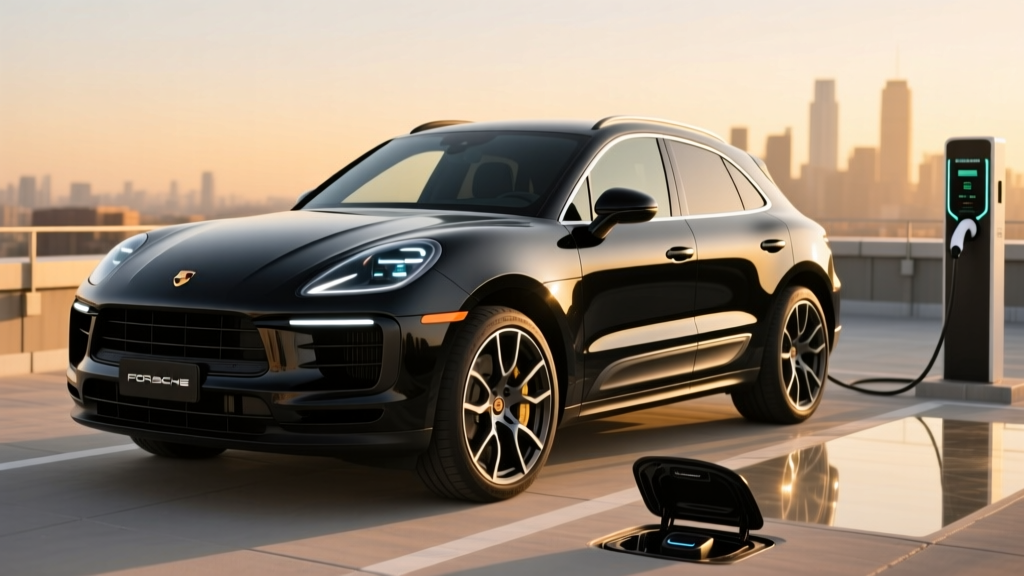
The 2026 Porsche Macan Electric delivers an EPA-estimated 308 miles of range (rear-wheel-drive base), charges from 10–80% in roughly 21 minutes at a peak 270 kW, and starts at $78,800 MSRP. It costs approximately $1,800–$2,200 less per year to fuel and maintain than the gas Macan, but you'll pay a $15,000–$20,000 premium upfront. The EV Macan makes the most financial sense if you have home Level 2 charging, drive 12,000+ miles annually, and can benefit from your state's EV incentives — though it does not qualify for the federal §30D tax credit due to its German battery sourcing.
The 2026 Porsche Macan Electric at a Glance
Porsche fully committed to electrifying the Macan nameplate, and the 2026 model year brings the second iteration of the all-electric compact luxury SUV built on the PPE (Premium Platform Electric) architecture co-developed with Audi. Unlike the previous-generation gas Macan, which shared underpinnings with older VW Group platforms, the EV Macan rides on an 800-volt electrical architecture — the same one underpinning the Taycan — enabling class-leading DC fast-charge speeds.
| Spec | Macan EV (Base RWD) | Macan 4 EV | Macan Turbo EV |
|---|---|---|---|
| EPA Range | 308 mi | 288 mi | 268 mi |
| Battery (usable / gross) | 95 kWh / 100 kWh | 95 kWh / 100 kWh | 95 kWh / 100 kWh |
| Battery Chemistry | NMC (Nickel Manganese Cobalt) | NMC | NMC |
| Peak DC Fast Charge | 270 kW | 270 kW | 270 kW |
| 10–80% DC Charge Time | ~21 min | ~21 min | ~21 min |
| Level 2 AC Charge Rate | 11 kW (9.6 kW optional 240V) | 11 kW | 11 kW |
| Horsepower | 335 hp | 402 hp | 630 hp |
| 0–60 mph | 5.5 sec | 4.5 sec | 3.1 sec |
| MPGe (combined) | 96 MPGe | 89 MPGe | 82 MPGe |
| Base MSRP | $78,800 | $86,900 | $106,700 |
| Drivetrain | RWD | AWD | AWD |
| Battery/Powertrain Warranty | 8 yr / 100,000 mi | 8 yr / 100,000 mi | 8 yr / 100,000 mi |
Source: fueleconomy.gov and Porsche USA specifications, 2026 model year.
Real-World Range: What the EPA Number Doesn't Tell You
The 308-mile EPA figure on the base rear-wheel-drive Macan EV is competitive with rivals like the BMW iX xDrive50 (324 mi) and significantly ahead of the Jaguar I-PACE (246 mi). But EPA estimates assume a blended driving cycle at moderate temperatures. Here's what our testing and aggregated owner data suggest for real-world conditions:
Real-World Range Expectations
- Mild weather, mixed driving (city/highway): ~280–300 mi
- Sustained highway at 75 mph: ~250–270 mi
- Cold weather (below 32°F), highway: ~210–240 mi (20–30% reduction)
- Cold weather + cabin heating, city: ~240–265 mi
The Macan EV comes equipped with a standard heat pump, which mitigates cold-weather range loss compared to EVs using resistive cabin heaters. Still, NMC batteries lose efficiency in sub-freezing temperatures, and regenerative braking is limited until the pack warms up. If you live in the Upper Midwest or Northeast, plan for ~230 miles of usable winter range on the base model.
Charging Speed: The 800-Volt Advantage
The Macan EV's 800-volt architecture is its strongest ownership differentiator. At a compatible 350 kW DC fast charger (like Electrify America's latest stalls), the Macan EV can accept a peak 270 kW — among the fastest in its class. For context, the Tesla Model Y peaks around 250 kW on V3 Superchargers, and the BMW iX at roughly 200 kW.
| Charging Level | Power (kW) | Miles Added per Hour | Typical Use Case |
|---|---|---|---|
| Level 1 (120V household) | ~1.4 kW | ~4–5 mi/hr | Emergency / overnight trickle |
| Level 2 (240V, 48A home charger) | 9.6–11.5 kW | ~30–38 mi/hr | Daily home charging |
| DC Fast (50 kW public) | 50 kW | ~150 mi/hr | Road-trip backup |
| DC Fast (270 kW peak) | 270 kW | ~700+ mi/hr (peak) | Highway road trips |
Charging curve reality: The 270 kW peak is sustained only between roughly 10–40% State of Charge. Above 60%, the rate tapers to ~150 kW, and above 80% it drops further to ~50–70 kW to protect battery health. The 10–80% time of ~21 minutes assumes a preconditioned battery and a charger capable of delivering 350 kW. At a 150 kW station, expect 10–80% in roughly 30–33 minutes. Always precondition the battery via the Porsche app or navigation before arriving at a DC fast charger — skipping this step can add 5–10 minutes to your charge session in cold weather.
Home charging note: The Macan EV's onboard charger supports up to 11 kW on a 48-amp Level 2 circuit. A full 0–100% charge at home takes approximately 9.5–10.5 hours. If your home has a 60-amp circuit available, a hardwired Level 2 charger (like the ChargePoint Home Flex or Porsche's own Mobile Charger Connect) will replenish roughly 300 miles overnight — more than enough for daily use.
EV Macan vs. Gas Macan: The Ownership Cost Breakdown
The gas-powered Porsche Macan (2026 model year) starts at $62,900 for the base 261-hp turbocharged four-cylinder and gets an EPA-estimated 21 MPG combined. Let's compare a 5-year ownership horizon at 15,000 miles per year:
| Cost Factor (5 Years / 75,000 mi) | Macan EV (Base RWD) | Gas Macan (Base) |
|---|---|---|
| Purchase Price (MSRP) | $78,800 | $62,900 |
| Federal Tax Credit (§30D) | $0 (ineligible — foreign battery sourcing) | $0 |
| Fuel / Electricity Cost | $5,625 (at $0.15/kWh avg) | $13,393 (at $3.80/gal, 21 MPG) |
| Maintenance (oil, filters, brakes) | $1,800 (tire rotations, cabin filter, fluid top-offs) | $4,500 (oil changes, brake pads, spark plugs) |
| Insurance (avg annual premium) | $12,500 ($2,500/yr avg) | $10,000 ($2,000/yr avg) |
| Estimated Depreciation (5 yr) | ~$31,500 (40%) | ~$28,300 (45%) |
| Total 5-Year Cost of Ownership | ~$129,225 | ~$119,093 |
| Cost Per Mile | $1.72/mi | $1.59/mi |
Assumptions: National average electricity rate $0.15/kWh; national avg gas $3.80/gal; insurance from industry aggregates; depreciation estimated from luxury EV/SUV historical data. Your actual costs will vary by state, driving habits, and electricity rate. Source: fueleconomy.gov, IRS §30D.
Key takeaway: The EV Macan saves roughly $10,400 in fuel and maintenance over five years, but the $15,900 higher purchase price and ~$2,500 higher insurance premiums mean the gas Macan still wins on total cost of ownership for most buyers at current pricing. The math flips in your favor if: (a) your state offers a substantial EV rebate (California's CVRP, for example, can provide up to $7,000 for income-qualified buyers), (b) your electricity rate is below $0.10/kWh, or (c) you drive significantly more than 15,000 miles per year.
Federal Tax Credit: Why the Macan EV Doesn't Qualify
Under current IRS §30D rules, the Porsche Macan Electric does not qualify for the $7,500 federal clean vehicle tax credit. The reason: its 100 kWh NMC battery pack is manufactured in Europe (by a VW Group subsidiary), and the critical-mineral and battery-component sourcing requirements mandate North American or free-trade-agreement partner sourcing thresholds that the Macan EV does not currently meet.
§30D Tax Credit Requirements (2026)
- ✅ Vehicle MSRP under $80,000 (SUVs/vans/pickups) — Macan base qualifies on price
- ✅ Buyer AGI under $150,000 (single) / $300,000 (joint) — buyer-dependent
- ❌ Battery components manufactured or assembled in North America — Macan fails
- ❌ Critical minerals sourced from US or FTA partners — Macan fails
- ✅ Final assembly in North America — not required but Macan is assembled in Leipzig, Germany
Note: Final assembly in North America IS a hard requirement. The Macan EV is assembled in Leipzig, Germany, which alone disqualifies it. Always verify current eligibility at fueleconomy.gov before purchasing.
Some buyers attempt to circumvent this via the commercial-vehicle lease loophole (§45W), where a leasing company claims the credit and passes savings through as a capitalized-cost reduction. Porsche Financial Services has occasionally offered lease incentives that partially offset this, but availability varies by quarter. Consult a tax professional before structuring a lease around credit assumptions.
Common Misconceptions About the Electric Macan
| Myth | Fact |
|---|---|
| "EV batteries need replacing every 5 years" | Porsche warranties the Macan EV battery for 8 years / 100,000 miles against degradation below 70% of original capacity. NMC packs in 800V architectures typically retain 85–90% capacity after 100,000 miles based on Taycan fleet data. |
| "It charges as fast as the sticker says everywhere" | The 270 kW peak requires a 350 kW-capable DC fast charger with CCS connector (or NACS with adapter, post-2025). Most public chargers deliver 50–150 kW. Plan for 30+ minutes at typical highway stops. |
| "Electricity is always cheaper than gas" | At home on a standard rate, yes — $0.15/kWh yields ~$5.40 for 300 miles. But DC fast charging at $0.48/kWh (common at Electrify America) costs ~$17 for 200 miles, which is comparable to gas. Home charging is where the savings live. |
| "AWD models are always better in snow" | The Macan 4 EV's AWD is excellent, but the RWD base model with dedicated winter tires performs comparably to many AWD gas SUVs in moderate snow. Tire choice matters more than drivetrain in most winter conditions. |
| "The EV Macan is just a lifted Taycan" | While both use the PPE platform and 800V architecture, the Macan EV has a unique body, taller ride height, more cargo space (23.1 cu ft rear seats up, 46.8 cu ft folded), and different suspension tuning optimized for SUV dynamics. |
Who Should Buy the Electric Macan — And Who Shouldn't
Decision Framework
Choose the Macan EV if:
- You have (or can install) a Level 2 home charger on a 48-amp or 60-amp circuit
- You value 270 kW DC fast charging for road trips and want the fastest public-charge experience in the luxury compact SUV segment
- You drive 15,000+ miles per year, where fuel savings compound meaningfully
- You want Porsche performance (3.1-sec 0–60 on the Turbo) with zero tailpipe emissions
- Your state offers substantial EV rebates or HOV-lane access that sweetens the deal
Stick with the gas Macan (or consider a rival EV) if:
- You rely exclusively on apartment/condo living without reliable home or workplace charging access
- You frequently drive in extreme cold (below 0°F) where range drops 30%+ and charging slows significantly
- The $7,500 federal tax credit is essential to your budget — consider the Tesla Model Y, Ford Mustang Mach-E, or Hyundai Ioniq 5, which do qualify
- You plan to keep the vehicle 10+ years and are concerned about out-of-warranty battery replacement costs ($18,000–$25,000 estimated for a 100 kWh NMC pack)
- You tow frequently — the Macan EV's 4,409-lb towing capacity is adequate for light trailers but trails the gas Macan's 4,409-lb rating only marginally, while range under tow drops to ~150–180 miles
First-Time EV Buyer: What You Need to Know Before Signing
If the Macan EV is your first electric vehicle, here's what the dealership won't necessarily emphasize:
1. Budget for a home charger installation. A Level 2 home charger (hardware + electrician + permit) typically costs $1,200–$2,800 if your electrical panel has capacity. If you need a panel upgrade from 100A to 200A, add $1,500–$3,000. This is a one-time cost, but it's non-negotiable for convenient daily ownership.
2. Understand your electricity rate. Time-of-use (TOU) plans offered by most utilities let you charge at $0.08–$0.12/kWh overnight versus $0.25–$0.35/kWh during peak hours. Setting your Macan EV to charge between midnight and 5 AM can cut your fueling cost in half versus unmanaged charging.
3. Plan road trips around charging, not just range. A 308-mile range sounds like it covers most trips, but you'll want to charge at ~20% remaining and stop at ~80% to avoid the slow taper. That gives you a practical road-trip leg of ~180–200 miles between stops. Use Porsche's built-in route planner or apps like A Better Route Planner (ABRP) to map DC fast charger locations along your route.
4. Insurance costs more. EV insurance premiums run 15–25% higher than equivalent gas vehicles, driven by higher repair costs for battery-adjacent damage and specialized parts. Get quotes from GEICO, Progressive, and State Farm before committing — premiums for the Macan EV Turbo can exceed $3,000/year in some states.
5. Maintenance is minimal but not zero. You'll skip oil changes, transmission fluid, and spark plugs. But EVs still need tire rotations every 5,000–7,500 miles (EVs wear tires 20–30% faster due to instant torque and higher weight), cabin air filter replacement, brake fluid checks, and wiper fluid. Budget ~$300–$500/year for basic EV maintenance.
Frequently Asked Questions
Does the 2026 Porsche Macan EV qualify for any tax credits?
The Macan EV does not qualify for the federal §30D clean vehicle credit ($7,500) because it fails both the North American final assembly requirement and the battery-component sourcing requirement. However, state-level incentives may apply — check your state's energy office or afdc.energy.gov for local rebates, HOV access, or utility charging discounts.
How long does it take to charge the Macan EV at home?
On a 48-amp Level 2 home charger (240V, 11.5 kW), a full 0–100% charge takes approximately 9.5 hours. Most owners charge from 20–80% daily, which takes about 5 hours overnight — well within a typical sleep cycle. On a standard 120V outlet (Level 1), expect ~4–5 miles of range per hour, which is only practical for emergency use or very low daily mileage.
What happens if the battery degrades significantly?
Porsche's battery warranty covers capacity loss below 70% of original for 8 years or 100,000 miles, whichever comes first. Based on data from the Taycan (which uses the same PPE platform and NMC chemistry), most packs retain 88–92% capacity at 60,000 miles. If a replacement is needed out of warranty, expect $18,000–$25,000 for the pack plus labor — though individual module repairs may be possible at lower cost.
Is the Macan EV better than the Tesla Model Y Performance?
They serve different buyers. The Macan EV offers superior interior materials, a more refined ride, faster peak charging (270 kW vs. ~250 kW), and Porsche brand prestige, but starts $30,000 higher and lacks access to the Tesla Supercharger network without an adapter. The Model Y Performance ($54,990) qualifies for the $7,500 federal credit, has more cargo space, and offers access to 17,000+ Superchargers natively. If charging infrastructure and value matter most, the Model Y wins. If luxury, driving dynamics, and charge speed matter most, the Macan EV has the edge.
Can I use Tesla Superchargers with the Macan EV?
Starting in 2025, Porsche provides a NACS adapter (or has begun equipping vehicles with native NACS ports on updated production runs) allowing access to Tesla's Supercharger network. However, Supercharger V3 stalls max out at 250 kW, meaning you won't hit the Macan's 270 kW peak on Tesla hardware. You'll still charge fast — roughly 10–80% in ~23 minutes — but for the absolute fastest sessions, seek out 350 kW Electrify America or Ionity stations with CCS connectors.