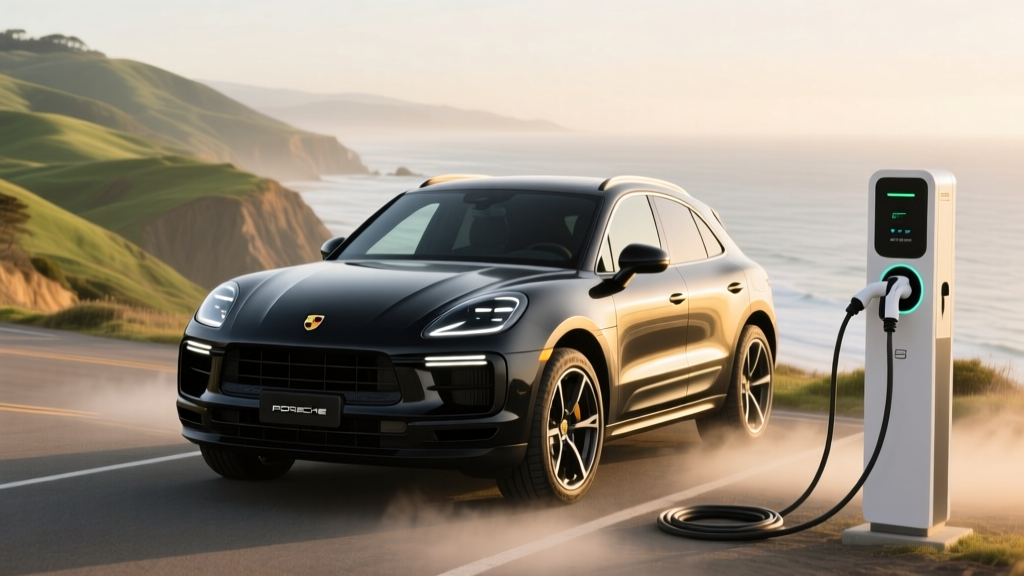
The Porsche Macan Electric arrived as a ground-up EV built on the Premium Platform Electric (PPE) architecture co-developed with Audi. It is not a converted gas Macan — it is a purpose-built electric luxury crossover that targets driving enthusiasts who want Porsche dynamics without tailpipe emissions. After spending time with the Macan 4 and Macan Turbo trims, here is a data-driven look at what this EV delivers — and where it falls short for the price.
Quick Verdict: Who Should Buy the Porsche Macan Electric SUV?
The Macan Electric is the right pick if you prioritize handling precision, build quality, and 800-volt fast-charging architecture over maximum cargo space or bargain pricing. It competes directly with the Tesla Model Y Performance, BMW iX3, Genesis GV60, and Audi Q6 e-tron. Buyers who need three rows, maximum range per dollar, or a sub-$50,000 entry point should look elsewhere. For everyone else, the Macan Electric is one of the best-driving luxury EV crossovers on the market.
EPA Range and Real-World Efficiency
- Macan 4: EPA 308 miles (100 kWh battery, 94.9 kWh usable)
- Macan Turbo: EPA 288 miles (same battery, higher output)
- Real-world highway (70-80 mph): Expect ~245–265 miles
- Cold-weather (below 32°F): Plan for 20–30% reduction — roughly 215–245 miles
The Macan Electric's NMC (nickel manganese cobalt) lithium-ion battery is liquid-cooled with an advanced thermal management system that preconditions the pack for fast charging. Efficiency lands around 87–92 MPGe combined depending on trim, or roughly 36–38 kWh/100 miles — competitive for a 5,300+ lb performance SUV.
On a mixed-temperature road trip at highway speeds with climate control active, the Macan 4 consistently returned 2.5–2.7 miles per kWh, translating to approximately 240–260 miles before needing a charge stop. City driving with regenerative braking engaged pushes that closer to the EPA sticker. The heat pump (standard on all trims) helps mitigate winter range loss, but physics is physics — cold batteries and cabin heating take a toll on any EV.
Charging Speed: 800-Volt Architecture Pays Off
| Charging Level | Power / Rate | Speed (Approx.) | Notes |
|---|---|---|---|
| Level 1 (120V) | 1.2 kW | ~4 miles/hour | Emergency/trickle only |
| Level 2 (240V, 48A) | 11.5 kW | ~38 miles/hour | Full charge in ~9.5 hours |
| DC Fast Charge (peak) | 270 kW | 10–80% in ~21 min | Requires 350 kW CCS station |
| DC Fast Charge (50 kW) | 50 kW | 10–80% in ~85 min | Common older stations |
The Macan Electric's 800-volt architecture is one of its strongest practical advantages. At a 350 kW Electrify America or Tesla Supercharger (with NACS adapter, available from Porsche), the Macan sustains above 200 kW well past 50% state of charge before tapering. The 10–80% sprint in roughly 21 minutes is among the fastest in the luxury EV segment and meaningfully reduces road-trip downtime.
At home on a Level 2 hardwired charger (recommended: 48-amp circuit on a 60-amp breaker), the onboard 11.5 kW charger refills the battery in about 9.5 hours from empty — easily overnight for most owners. Porsche includes access to the Electrify America network for complimentary charging during an initial ownership period; check current terms at purchase.
Performance and Driving Dynamics
| Specification | Macan 4 | Macan Turbo |
|---|---|---|
| Drivetrain | Dual-motor AWD | Dual-motor AWD |
| Horsepower (Launch Control) | 402 hp | 630 hp |
| Torque | 479 lb-ft | 833 lb-ft |
| 0–60 mph | 4.9 seconds | 3.3 seconds |
| Top Speed | 136 mph | 161 mph |
| Curb Weight | ~5,315 lbs | ~5,475 lbs |
The Macan Turbo's 3.3-second 0–60 time puts it in sports-car territory, and it feels it. Launch Control engages both motors at maximum output with traction-optimized torque vectoring. The rear-biased AWD system, available rear-axle steering (optional on Macan 4, standard on Turbo), and adaptive air suspension with Porsche Active Suspension Management (PASM) give this SUV cornering composure that defies its 5,400-pound curb weight.
Regenerative braking offers multiple modes including a true one-pedal driving option that brings the car to a complete stop. The brake pedal feel — often a weak point in EVs — is firm and linear, a testament to Porsche's blending calibration between regen and friction brakes.
Interior, Cargo, and Technology
The Macan Electric cabin centers on a 12.6-inch curved digital instrument cluster and a 10.9-inch central touchscreen running Porsche Communication Management (PCM). An optional 10.9-inch passenger display adds a dedicated screen for navigation and media. The augmented-reality head-up display projects navigation arrows and speed onto the windshield with impressive clarity.
Cargo space measures 18.4 cubic feet behind the rear seats and 54.3 cubic feet with the 40/20/40 split rear seats folded. A small front trunk (frunk) adds 2.9 cubic feet — enough for a charging cable bag or a small duffel. Rear legroom is 33.5 inches, adequate for adults on shorter trips but tighter than a Model Y or Ioniq 5 for long-distance rear-seat passengers.
Driver assistance includes adaptive cruise control with stop-and-go, lane-keeping assist, intersection assist, and Park Assist with surround-view cameras. These are SAE Level 2 systems — the driver must remain attentive and hands must stay near the wheel. Porsche's InnoDrive predictive cruise uses navigation data to adjust speed for upcoming curves and speed limits, which works seamlessly on winding roads.
Pricing, Trims, and Federal Tax Credit
| Trim | Base MSRP | As-Tested (Typical Options) | §30D Credit Eligible? |
|---|---|---|---|
| Macan 4 | $78,800 | $88,000–$95,000 | No — exceeds MSRP cap |
| Macan Turbo | $105,300 | $115,000–$130,000 | No — exceeds MSRP cap |
The IRS §30D federal tax credit imposes an MSRP cap of $80,000 for SUVs and trucks. The Macan 4 starts at $78,800, but destination charges and even minimal options push it above the threshold. The Macan Turbo is well above it. Additionally, buyer income caps apply ($300,000 joint / $150,000 single for new vehicles), and the battery must meet critical-mineral and component-sourcing requirements that shift annually. Consult a tax professional and check the latest fueleconomy.gov listings before relying on credit eligibility.
Some buyers may qualify for the EV lease loophole — a $7,500 commercial credit passed through by the leasing company. Porsche Financial Services has offered lease incentives on the Macan Electric; terms vary by month and region.
Warranty and Long-Term Ownership
Porsche covers the Macan Electric with:
- New vehicle warranty: 4 years / 50,000 miles
- Battery warranty: 8 years / 100,000 miles (retains ≥70% capacity)
- Maintenance plan: 1 year / 10,000 miles (first scheduled service)
The 8-year/100,000-mile battery warranty with a 70% capacity retention floor is industry-standard for luxury EVs. NMC chemistry in the Macan's pack offers high energy density; long-term degradation data is still accumulating given the platform's 2024 launch, but the 800V system's thermal management should support healthy cycle life. Porsche's 4-year basic warranty is shorter than Hyundai/Genesis (5-year) and matches BMW and Mercedes.
Pros and Cons
- Class-leading handling and steering feel for an EV crossover
- 270 kW peak DC charging with sustained high-rate curve
- 800V architecture future-proofs fast-charging access
- Excellent build quality and materials
- AR head-up display and triple-screen option
- Quiet cabin with well-isolated road noise
- High starting price; most builds exceed $80K tax-credit cap
- Rear seat legroom is tight vs. competitors (33.5 in.)
- Cargo space adequate but not class-leading (18.4 cu ft)
- No single-motor/RWD lower-price entry point
- Options and packages add cost quickly
- Real-world highway range ~245–265 mi, not 308
Frequently Asked Questions
What is the real-world range of the Porsche Macan Electric SUV?
The EPA rates the Macan 4 at 308 miles and the Turbo at 288 miles. In real-world highway driving at 70–80 mph, expect 245–265 miles. In cold weather below freezing, plan for 215–245 miles. The heat pump and battery preconditioning help, but high speeds and low temperatures reduce range on every EV.
How fast does the Macan Electric charge at home and on the road?
On DC fast charging at a 350 kW station, the Macan peaks at 270 kW and charges 10–80% in approximately 21 minutes. At home on a Level 2 charger (11.5 kW / 48 amps), a full charge takes about 9.5 hours. The 800-volt architecture keeps charge rates high deeper into the session compared to 400V competitors.
Does the Porsche Macan Electric qualify for the federal EV tax credit?
Likely not for most buyers purchasing outright. The §30D credit caps SUV MSRP at $80,000, and most Macan 4 builds (starting at $78,800 before destination and options) exceed this. The Turbo is well above it. Lease customers may benefit from the commercial credit pass-through. Always verify current rules at irs.gov and consult a tax professional.
Is the Macan Electric worth buying over the Tesla Model Y or BMW iX?
If driving dynamics, interior refinement, and 800V charging speed matter more than maximum range per dollar or Autopilot-style driver assist, yes. The Model Y offers more cargo space, lower pricing, and Supercharger network convenience. The BMW iX provides more rear-seat room and a more luxurious ride but less sporty handling. The Macan Electric occupies a niche: the driver's EV crossover.
What are the biggest drawbacks of the Macan Electric?
The primary trade-offs are price (most configurations exceed the tax credit cap), rear-seat space (33.5 inches of legroom is snug for tall adults on long trips), and cargo volume that trails segment leaders. There is also no lower-priced single-motor variant — AWD with dual motors is the only configuration.
Does the Macan Electric have a frunk?
Yes, a modest 2.9-cubic-foot front trunk. It fits a mobile charger, tire inflator kit, or small bag. It is not large enough for a full grocery run — that cargo duty falls to the 18.4 cu ft rear area.