The Porsche Macan Electric Lease Equation: What You're Actually Paying For
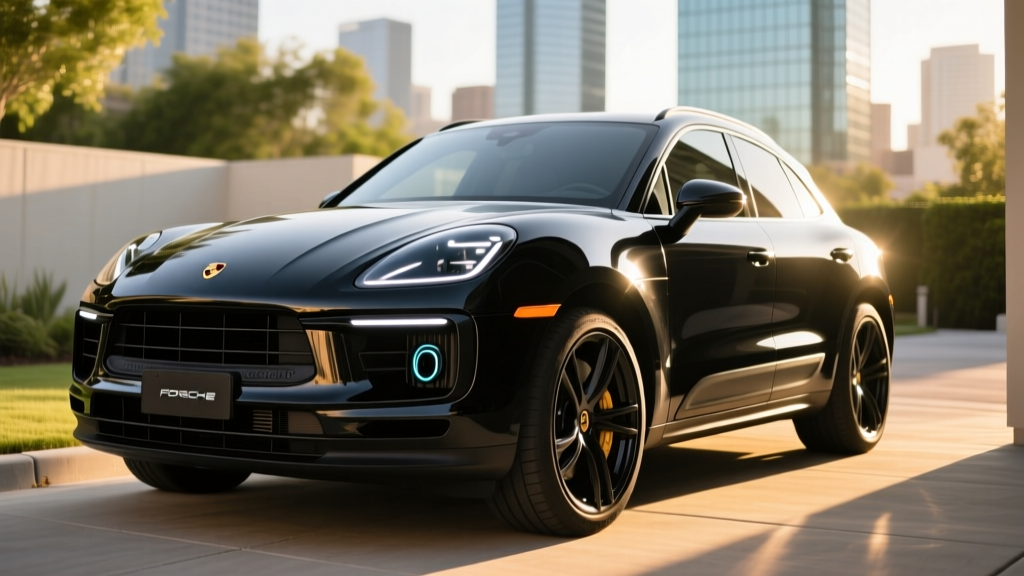
The 2026 Porsche Macan Electric is a performance luxury SUV that happens to be battery-electric — and if you're considering a lease, the math is different than buying outright. A lease shields you from EV depreciation risk, bundles maintenance in some cases, and may unlock a $7,500 federal incentive via the commercial clean vehicle credit loophole. But the monthly payment is only part of the story. Charging costs, insurance premiums, and real-world range all shape your total spend over a 36-month term.
Let's break down what a Porsche Macan Electric lease actually costs over five years of ownership-equivalent time, including every dollar that leaves your bank account beyond the monthly payment.
| Base MSRP | Macan Electric: ~$78,800 | Macan 4S: ~$98,800 |
| EPA Range | Up to 308 mi (base RWD); ~285 mi (4S AWD) |
| Battery | 100 kWh gross (~95 kWh usable), NMC lithium-ion |
| DC Fast Charging | Peak 270 kW (800V architecture); 10–80% in ~21 min |
| Level 2 Charging | 11 kW onboard charger |
| Horsepower | 335 hp (base) / 402 hp (4S) / 576 hp (Turbo) |
| 0–60 mph | 5.4 sec (base) / 4.9 sec (4S) / 3.3 sec (Turbo) |
| Efficiency | ~85 MPGe combined (base) |
| Battery Warranty | 8 years / 100,000 miles (70% capacity retention) |
Source: Porsche USA, fueleconomy.gov
5-Year Total Cost of Ownership: Macan Electric vs. Gas Macan
To understand whether a Macan Electric lease makes financial sense, you need to see the full five-year picture. Even if your lease runs 36 months, modeling five years captures the full ownership cycle including post-lease purchase decisions or a second lease. Below, we compare the Macan Electric (base, ~$78,800 MSRP) against a gas-powered Porsche Macan S (~$68,000 MSRP) to isolate the EV premium and the savings that offset it.
| Cost Category (5 Years) | Macan Electric (Base) | Gas Macan S | Difference |
|---|---|---|---|
| Purchase / Lease Total (est.) | $52,800 (36-mo lease + down) | $46,200 (36-mo lease + down) | +$6,600 |
| Fuel / Charging | $4,320 | $11,250 | –$6,930 |
| Maintenance | $2,100 | $5,400 | –$3,300 |
| Insurance (5-yr total) | $16,500 | $13,200 | +$3,300 |
| Federal Tax Credit (§30D or §45W) | –$7,500 (if eligible via lessor) | $0 | –$7,500 |
| Depreciation / Residual Risk | Shielded by lease | Shielded by lease | — |
| Estimated 5-Year Total | $68,220 | $76,050 | –$7,830 |
Assumptions: 12,000 miles/year, home charging at $0.16/kWh average, gas at $3.75/gallon, Macan S at 21 MPG combined. Lease payments estimated at current market rates with $7,500 due at signing. Insurance based on national luxury SUV averages. Actual figures vary by location, driving habits, and electricity rates.
Federal Tax Credit: Does the Macan Electric Qualify?
The federal EV tax credit is the single largest incentive available, but eligibility is anything but straightforward in 2026. Here's the critical distinction for leasing: when you lease an EV, the vehicle is technically purchased by the leasing company (the lessor). This means the lessor — not you — claims the credit under IRC §45W (Commercial Clean Vehicle Credit), which does not have the same MSRP caps, income limits, or battery-sourcing requirements as the consumer §30D credit. Most reputable lessors pass this savings through as a capitalized-cost reduction (lowering your monthly payment), but they are not legally required to do so.
If you purchase instead of lease, the §30D consumer credit applies, and the rules are stricter:
- ✅ MSRP Cap: SUVs must be under $80,000 MSRP — the base Macan Electric (~$78,800) qualifies; the 4S and Turbo trims do not
- ✅ Income Limits: Modified AGI must not exceed $150,000 (single), $225,000 (head of household), or $300,000 (joint filers)
- ⚠️ Battery Sourcing: Critical minerals and battery components must meet phased-in percentages from US/free-trade-agreement countries — verify current-year compliance on IRS.gov
- ✅ Point-of-Sale Transfer: You can transfer the credit to the dealer at purchase for an immediate price reduction (effective Jan 2024 onward)
- ⚠️ Tax Liability: The credit is non-refundable — you must owe at least $7,500 in federal taxes to capture the full amount (unless transferred at point of sale)
The lease advantage: Because the §45W commercial credit sidesteps MSRP caps, income limits, and sourcing rules, leasing a Macan Electric 4S ($98,800 MSRP — over the §30D cap) can still yield a $7,500 credit passed through by the lessor. This is one of the most compelling reasons buyers choose to lease high-end EVs rather than purchase.
Source: IRS Clean Vehicle Credits
Charging Cost vs. Gas: The Per-Mile Math
This is where the Macan Electric earns back its price premium. Electricity costs a fraction of premium gasoline per mile, and the gap widens if you charge at home on off-peak rates.
| Metric | Macan Electric | Gas Macan S |
|---|---|---|
| Energy Efficiency | ~3.2 mi/kWh (85 MPGe) | 21 MPG combined |
| Fuel/Energy Cost | $0.16/kWh (home avg.) | $3.75/gal (premium 93 oct.) |
| Cost Per Mile | $0.05/mi | $0.179/mi |
| Annual Fuel Cost (12,000 mi) | $600 | $2,143 |
| 5-Year Fuel Total | $3,000 (home only) | $10,715 |
Important nuance: The $0.16/kWh figure assumes predominantly home Level 2 charging. Public DC fast charging costs significantly more — typically $0.35–$0.55/kWh at networks like Electrify America or EVgo. If you rely heavily on public charging (say, 50% of your miles), your per-mile cost jumps to roughly $0.10–$0.12/mi. That's still cheaper than gas, but the savings narrow considerably.
The Macan Electric's 800V architecture is a genuine advantage here: it can accept up to 270 kW at a compatible DC fast charger, meaning a 10–80% session takes roughly 21 minutes. That's among the fastest in the luxury SUV segment, and it means less time idling at chargers on road trips — time that has its own cost.
Maintenance Savings: Fewer Parts, Less Spending
EVs have dramatically fewer moving parts than internal-combustion vehicles, and the Macan Electric is no exception. There's no engine oil to change, no transmission fluid to flush, no spark plugs, no exhaust system, and no timing belt. Regenerative braking also significantly reduces wear on the friction brake pads and rotors.
| Maintenance Item | Macan Electric | Gas Macan S |
|---|---|---|
| Oil Changes (5 yrs) | $0 | $1,250 (5× at ~$250) |
| Brake Pads/Rotors | $400 (rear only, ~60k mi) | $1,800 (front+rear, 2× sets) |
| Transmission Service | $0 | $600 |
| Coolant/Fluid Flushes | $200 | $500 |
| Tire Rotation/Replacement | $1,500 (EV tires wear faster) | $1,250 |
| 5-Year Maintenance Total | ~$2,100 | ~$5,400 |
The tire caveat: EVs are heavier (the Macan Electric weighs approximately 5,200 lbs) and deliver instant torque, both of which accelerate tire wear. Budget for tire replacement sooner than you would on a gas Macan. Porsche-spec EV tires (like the Michelin Pilot Sport EV) run $300–$400 per corner.
Insurance: The Hidden EV Premium
Here's where the Macan Electric costs more, and there's no way around it. EV insurance premiums run 15–25% higher than equivalent gas vehicles, driven by three factors:
- Higher repair costs: Battery pack damage in a collision often requires full replacement ($20,000–$30,000+), and insurers price this risk into premiums
- Higher vehicle value: The Macan Electric's MSRP is higher than the gas Macan, increasing comprehensive and collision coverage costs
- Specialized labor: High-voltage system repairs require certified EV technicians, which are scarcer and more expensive
Expect to pay $2,800–$3,600/year for full coverage on a Macan Electric, compared to $2,200–$2,900 for a gas Macan S. That's roughly $600–$900 more per year, or $3,000–$4,500 over five years. Some insurers (Geico, Progressive, State Farm) offer EV-specific discounts that can narrow this gap — always compare quotes from at least three carriers before signing a lease.
Depreciation and Resale Value: Why Leasing Makes Sense
EV depreciation has been volatile. Between 2023 and 2025, aggressive price cuts by Tesla and an influx of new models compressed resale values across the segment. Luxury EVs in particular saw 50–60% depreciation over three years, compared to 35–45% for comparable gas luxury SUVs.
The Macan Electric faces specific depreciation headwinds:
- Rapid tech advancement: Solid-state batteries and faster-charging architectures arriving in 2027+ could make current-gen 800V/NMC packs feel dated
- Luxury EV market saturation: More competitors entering every year (BMW iX3, Mercedes EQC successor, Audi Q6 e-tron) pressures residuals
- Brand strength: Porsche's badge equity and build quality historically support stronger residuals than mass-market EVs, partially offsetting the above
Why leasing is strategic here: A 36-month lease transfers all depreciation risk to Porsche Financial Services. If the Macan Electric holds 50% of its value at lease-end, your buyout option is attractive. If it holds only 38%, you walk away and let the lessor absorb the loss. For a first-generation EV in a rapidly evolving segment, this risk mitigation is arguably the single strongest argument for leasing over buying.
Beyond the federal credit, many states and utilities offer additional rebates. Examples (always verify current availability):
- California: CVRP rebate up to $2,000 (income-dependent) + utility rebates for home charger installation
- Colorado: State tax credit up to $5,000 for EVs under $80,000 MSRP
- New York: Drive Clean Rebate up to $2,000 (point-of-sale)
- Utility rebates: Many utilities (PG&E, ConEdison, Xcel Energy) offer $250–$1,000 rebates for Level 2 home charger purchase/installation and off-peak charging rates as low as $0.08/kWh
Check afdc.energy.gov for your state's current incentives.
Lease vs. Buy Decision Framework
- You want to capture the $7,500 credit via §45W without worrying about income caps, MSRP caps, or battery-sourcing rules
- You want protection from EV depreciation volatility in a fast-moving market
- You plan to upgrade every 3 years to the latest tech
- You drive 10,000–12,000 miles/year (within standard lease limits)
- You want lower monthly payments vs. financing a $78,800+ vehicle
- You qualify for the full §30D credit (base trim under $80K, income under caps, sourcing compliant)
- You drive 15,000+ miles/year (lease overage penalties add up fast at $0.25–$0.30/mile)
- You plan to keep the vehicle 6+ years to amortize the purchase price
- You want unlimited customization and no wear-and-tear lease-return scrutiny
- You want to build equity in a vehicle you can sell or trade on your terms
Frequently Asked Questions
How much does a Porsche Macan Electric lease cost per month in 2026?
Typical 36-month leases with $7,500 due at signing range from approximately $950–$1,100/month for the base Macan Electric and $1,250–$1,500/month for the 4S, depending on money factor, residual value, and whether the lessor passes through the $7,500 federal credit as a cap-cost reduction. Always negotiate the capitalized cost (sale price) and money factor separately.
Can I get the $7,500 tax credit if I lease the Macan Electric?
Yes, but indirectly. When you lease, the lessor claims the credit under §45W (Commercial Clean Vehicle Credit), which has no MSRP cap, no income cap, and no battery-sourcing restrictions. Most lessors pass this through as a lower monthly payment, but confirm this in writing before signing. If you buy instead, §30D rules apply — the base trim qualifies (under $80K MSRP) but the 4S and Turbo do not.
How much will I save on fuel by driving the Macan Electric?
At 12,000 miles/year with home charging at $0.16/kWh, you'll spend roughly $600/year on electricity versus $2,143/year on premium gasoline for a gas Macan S. That's about $1,543 saved annually, or $7,715 over five years. Savings shrink if you rely heavily on public DC fast charging at $0.35–$0.55/kWh.
Is the Macan Electric more expensive to insure than the gas Macan?
Yes. Expect insurance premiums 15–25% higher than the gas Macan S, typically $2,800–$3,600/year for full coverage. The higher cost reflects the battery replacement risk in collisions, the vehicle's higher MSRP, and the specialized labor required for high-voltage repairs. Shop quotes from multiple insurers — EV-specific discounts can narrow the gap.
What happens if the battery degrades during or after my lease?
During your lease, battery issues are covered under Porsche's 8-year/100,000-mile battery warranty (70% capacity retention threshold). Because most leases run 36 months, you'll return the vehicle well within warranty coverage. If you purchase at lease-end, you retain the remaining warranty. NMC batteries in 800V architectures with active thermal management (like the Macan Electric's) typically show 5–8% degradation over 3 years/36,000 miles based on current industry data.
Do I need a home charger to lease the Macan Electric?
No, but you'll want one. Relying exclusively on public DC fast charging is more expensive ($0.35–$0.55/kWh vs. $0.16/kWh at home), less convenient, and can accelerate battery wear if done daily. A Level 2 home charger (240V, 40–48 amps) adds roughly 30–35 miles of range per hour of charging and costs $500–$1,500 installed depending on your electrical panel capacity. Many utilities offer rebates that offset this cost.