The Porsche Macan Electric Estate Lease: What You're Actually Signing Up For
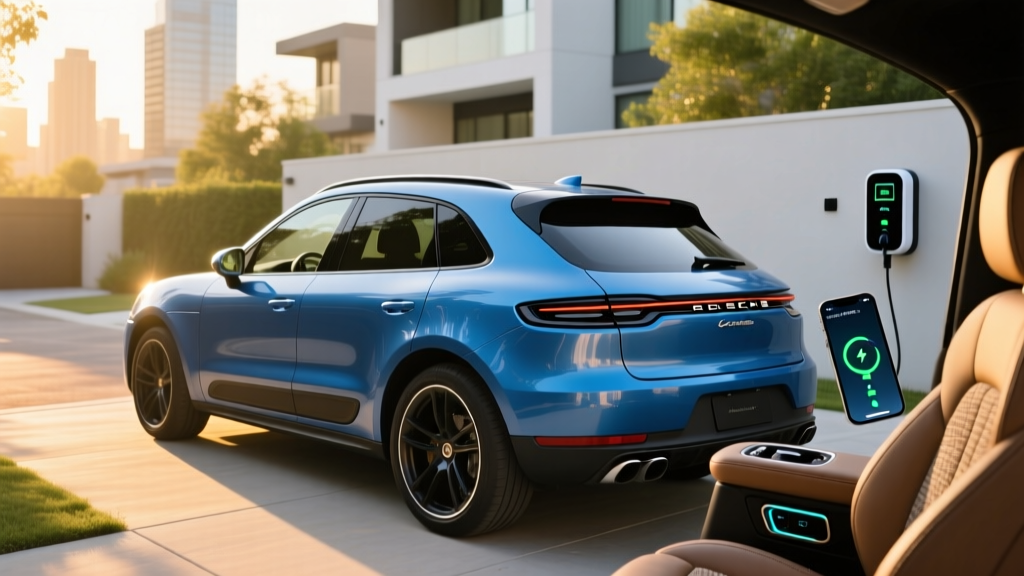
The 2026 Porsche Macan Electric Estate (known as the Macan EV in most global markets) is the luxury EV SUV many performance-oriented drivers have been waiting for. Built on the PPE (Premium Platform Electric) architecture co-developed with Audi, it offers up to 380 kW peak DC fast charging, a 100 kWh battery pack, and the kind of driving dynamics Porsche is known for — all without a combustion engine.
But luxury EV leases come with a specific set of financial considerations. The monthly payment is just the surface. This guide breaks down the true five-year cost of leasing and owning the Macan Electric Estate, federal and state incentives that can reduce your effective cost, and the real-world savings — and added costs — compared to a gasoline equivalent like the Porsche Macan GTS.
| Battery (usable) | 100 kWh (NMC chemistry) |
| EPA Range | ~308 miles (real-world highway: ~260–275 mi; cold weather: ~230 mi) |
| Peak DC Fast Charge | 270 kW (10–80% in ~21 min) |
| Level 2 AC Charge | 11 kW (~9 hours 0–100%) |
| Power (4S) | 402 hp / 479 lb-ft torque |
| 0–60 mph | 4.9 seconds |
| Base MSRP (4S) | ~$84,900 |
| Battery/Powertrain Warranty | 8 years / 100,000 miles |
How Much Does It Really Cost to Own the Macan EV Over 5 Years?
When you lease a vehicle, you don't bear the full depreciation hit — but you do pay for insurance, energy, maintenance, and the lease cost itself. Below is a realistic five-year ownership cost projection for a 2026 Porsche Macan Electric Estate 4S on a 36-month lease (extended to 60 months of total cost tracking for comparison purposes). Figures assume 12,000 miles/year, a national average electricity rate of $0.16/kWh, and home charging for 85% of sessions.
| Category | Macan EV 4S | Macan GTS (Gas) |
|---|---|---|
| Lease Cost (36 mo × $1,250/mo EV vs $1,150/mo gas) | $45,000 | $41,400 |
| Energy (5 yr, 60,000 mi) | $5,760 | $11,520 |
| Insurance (avg. $3,400/yr EV vs $2,900/yr gas) | $17,000 | $14,500 |
| Maintenance (5 yr) | $2,200 | $5,800 |
| Federal Tax Credit (§30D, if passed through lease) | –$7,500 | $0 |
| Estimated Residual/Disposal (lease-end) | $0 (lease return) | $0 (lease return) |
| 5-Year Net Cost | $62,460 | $73,220 |
The Macan EV 4S comes out roughly $10,760 cheaper over five years when the full §30D credit applies and is passed through the lease. The biggest savings come from energy and maintenance; the biggest added cost is insurance. If you don't qualify for the federal credit (due to income or sourcing rules), the gap narrows to about $3,260 — still a win for the EV, but a smaller one.
Federal Tax Credit: Do You Qualify for §30D on a Lease?
The IRS §30D Clean Vehicle Credit offers up to $7,500 for qualifying new EVs. However, eligibility depends on several factors that change yearly and can be complex. Here's the current checklist for 2026:
- Buyer Income Caps: Modified Adjusted Gross Income (MAGI) must not exceed $300,000 (joint filers), $225,000 (head of household), or $150,000 (single). Checked against the current or prior tax year — whichever is lower.
- MSRP Cap: The vehicle's Manufacturer's Suggested Retail Price must not exceed $80,000 for SUVs, vans, and pickups, or $55,000 for sedans. The Macan Electric Estate qualifies as an SUV — but the 4S trim starts near $84,900, which may exceed the cap depending on Porsche's official MSRP classification and how options are bundled.
- Battery Sourcing Requirements: The battery must contain a minimum percentage of critical minerals sourced from the US or free-trade-agreement countries, and battery components must be manufactured or assembled in North America. These thresholds increase annually. For 2026, the critical-mineral threshold is 80% and the component threshold is 100%. Porsche's PPE battery supply chain (largely sourced from suppliers in Europe and Asia) may not fully meet these thresholds, potentially reducing the credit to $3,750 or eliminating it entirely.
- Point-of-Sale Transfer: Under current rules, you can transfer the credit to the dealer at purchase, effectively reducing the purchase price. On a lease, the credit technically goes to the lessor (Porsche Financial Services), who may or may not pass the savings to you in the form of a reduced capitalized cost or lower monthly payment. Always confirm this in writing before signing.
- Foreign Entity of Concern (FEOC) Rule: Vehicles with battery components or critical minerals from a FEOC (including certain Chinese entities) are disqualified. This is a moving target as supply chains evolve.
Charging vs. Gas: The Real Per-Mile Cost
One of the most tangible benefits of the Macan Electric Estate is energy cost. Here's the math, using concrete assumptions:
| Metric | Macan EV 4S | Macan GTS |
|---|---|---|
| Efficiency | 2.8 kWh/mile (79 MPGe combined) | 19 MPG combined |
| Energy Price | $0.16/kWh (home avg.) | $3.65/gallon (premium) |
| Cost Per Mile | $0.045/mi | $0.192/mi |
| Annual Cost (12,000 mi) | $540 | $2,304 |
| 5-Year Energy Cost (60,000 mi) | $2,700 | $11,520 |
That's an $8,820 energy savings over five years — and that assumes 100% home charging at average rates. If you rely heavily on DC fast charging (which averages $0.35–$0.50/kWh at networks like Electrify America), your per-mile cost rises to roughly $0.10–$0.14/mi, still cheaper than gas but less dramatically so. If you have access to time-of-use utility rates and charge overnight at $0.08–$0.10/kWh, your cost drops even further to around $0.025/mi.
Real-world charging note: The Macan EV's 270 kW peak charge rate is impressive, but like all EVs, the charge curve tapers significantly above 80% State of Charge. Expect a 10–80% session to take approximately 21 minutes at a compatible 350 kW charger, but a full 0–100% session can take 40+ minutes due to the taper. For daily driving, charging to 80% and preconditioning the battery before fast-charging stops is the practical approach.
Maintenance Savings: Where the EV Really Pulls Ahead
Electric vehicles eliminate many routine maintenance items that internal-combustion vehicles require. The Macan Electric Estate has no engine oil, no transmission fluid, no spark plugs, no exhaust system, and no timing belt. Regenerative braking also significantly reduces brake pad and rotor wear — many EV owners report original brake pads lasting 80,000–100,000+ miles.
| Service Item | Macan EV | Macan GTS |
|---|---|---|
| Oil Changes (2×/yr on gas) | Not required | $2,400 ($240 × 10) |
| Brake Pads/Rotors | $0 (regen extends life) | $1,200 |
| Transmission Fluid | Not required | $400 |
| Air Filters/Cabin Filters | $300 | $600 |
| Tire Rotation & Replacement | $1,600 (EV tires wear ~15% faster) | $1,200 |
| Coolant / Misc. | $300 | $400 |
| 5-Year Total | $2,200 | $5,800 |
The net maintenance savings is approximately $3,600 over five years. The one area where the EV costs slightly more is tires — EVs are heavier and deliver instant torque, which accelerates tire wear. Budget for a set of EV-optimized tires (such as Michelin Pilot Sport EV or Pirelli P Zero Elect) around the 30,000–40,000 mile mark.
Insurance Cost Reality: The Uncomfortable Truth
EVs generally cost more to insure than their gasoline counterparts, and the Porsche Macan Electric Estate is no exception. Expect premiums to run 15–25% higher than an equivalent gas Macan. There are several reasons:
- Higher repair costs: EV battery packs, power electronics, and specialized sensors are expensive to replace after a collision. Body shops need specific EV certification.
- Higher vehicle value: The Macan EV's MSRP is higher than some gas trims, increasing comprehensive and collision exposure.
- Limited actuarial data: Insurers have decades of data on gas Porsches. EV-specific loss data is still maturing, and insurers price in that uncertainty.
- Specialized parts availability: Porsche EV components may have longer lead times, increasing rental-car reimbursement costs during repairs.
For a driver with a clean record, expect annual premiums in the $3,000–$3,800 range depending on your state, age, and coverage levels. That's $250–$325/month — a real cost that partially offsets the fuel and maintenance savings. Always get a quote from your insurer before signing the lease.
Depreciation and Resale: What Happens at Lease-End?
When you lease, depreciation is the lessor's problem — it's baked into your monthly payment via the residual value. But understanding EV depreciation trends helps you evaluate whether the lease terms are fair.
As of early 2026, luxury EVs have experienced steeper depreciation than luxury gasoline vehicles. Data from iSeeCars and industry analyses show that luxury EVs lose approximately 50–60% of their value over three years, compared to 40–50% for comparable gas vehicles. Factors include:
- Price wars and incentives: Aggressive EV pricing from Tesla, Chinese brands, and legacy automakers has compressed used-EV values.
- Battery degradation concerns: Even though modern NMC and LFP batteries show minimal degradation in the first 5 years (typically 5–8% capacity loss), used buyers still discount for uncertainty.
- Rapid tech obsolescence: Newer EVs charge faster, have more range, and better software — making 2–3 year-old models feel dated.
- Tax credit effects: When new buyers get $7,500 off, used values must adjust downward to remain competitive.
For a lease, this matters because Porsche Financial Services sets the residual value at signing. If they set it too high (say, 58% of MSRP after 36 months) and the actual market value is 45%, they absorb the loss — not you. But if you want to purchase the vehicle at lease-end, you'd be paying the inflated residual. Leasing protects you from EV depreciation risk, which is one of its key advantages in this market.
State, Local, and Utility Incentives
Beyond the federal §30D credit, many states, municipalities, and electric utilities offer additional incentives that can reduce your effective lease cost. These vary enormously by region:
- California: The Clean Fuel Rebate program has offered up to $1,000 (funding varies by year and availability).
- Colorado: State tax credit of up to $5,000 for EVs with MSRP under $80,000 (note the Macan 4S may exceed this cap).
- New York: The Drive Clean Rebate offers up to $2,000, subject to MSRP and income limits.
- Utility rebates: Many utilities (e.g., PG&E, ConEdison, Austin Energy) offer $500–$1,500 rebates for home Level 2 charger installation, and some offer reduced EV-specific electricity rates.
- HOV lane access: States like California, New York, and Florida offer single-occupant HOV lane access for EVs — a non-monetary but highly valuable perk in congested metros.
Decision Framework: Is the Macan Electric Estate Lease Right for You?
Lease the Macan Electric Estate if:
- You have reliable home or workplace Level 2 charging access
- You qualify for the full or partial §30D credit (or your lessor passes it through)
- You drive 10,000–14,000 miles/year and want to minimize energy and maintenance costs
- You want to avoid long-term EV depreciation risk
- You value instant torque, quiet operation, and one-pedal driving
Consider the Gas Macan GTS instead if:
- You lack reliable home charging and your area has limited public DC infrastructure
- You regularly drive 400+ miles in a single day and don't want to plan charging stops
- You don't qualify for the federal credit and your state offers no additional incentives
- Your insurance quotes for the EV come in more than 30% higher than the gas model
- You plan to keep the vehicle 8+ years (buying, not leasing — where gas may hold value better)
Frequently Asked Questions
How much does it really cost to own the Porsche Macan Electric Estate over 5 years?
Based on a 36-month lease at approximately $1,250/month with 12,000 miles/year, total five-year costs (including two additional years of energy, insurance, and maintenance after the lease) come to roughly $62,460 with the full $7,500 federal credit applied. Without the credit, expect approximately $69,960. This compares to about $73,220 for a gas Macan GTS over the same period.
Do I qualify for the federal §30D tax credit on a Macan EV lease?
It depends on your income (must be under $300,000 joint / $150,000 single), the vehicle's MSRP (must be under $80,000 for SUVs), and battery sourcing requirements. The Macan EV 4S's MSRP near $84,900 may exceed the cap, and Porsche's battery supply chain may not fully meet the 2026 critical-mineral and component thresholds. Additionally, on a lease, the credit goes to the lessor — confirm in writing that Porsche Financial Services will pass it through to you. Some lessors use the commercial §45W credit path, which has different rules. Consult the IRS guidelines and a tax professional.
How much do I save on fuel and maintenance with the Macan EV?
Energy savings are approximately $8,820 over five years (60,000 miles) when charging primarily at home at $0.16/kWh versus premium gasoline at $3.65/gallon. Maintenance savings add another $3,600 over the same period, primarily from eliminated oil changes, reduced brake wear, and fewer fluid services. Combined, that's roughly $12,420 in operating savings.
Are EVs more expensive to insure than gas cars?
Yes, typically 15–25% more expensive. For the Macan Electric Estate, expect annual premiums around $3,000–$3,800 versus $2,500–$3,200 for a gas Macan, depending on your profile and state. Higher repair costs, specialized parts, and limited actuarial data drive the premium increase. Always get a quote before committing to a lease.
How well does the Macan Electric Estate hold its value?
Luxury EVs currently depreciate faster than luxury gas vehicles — roughly 50–60% over three years versus 40–50% for gas. However, on a lease, this risk falls on the lessor, not you. If the residual value at lease signing is realistic, you're protected. If you plan to buy out the lease, compare the residual to actual used-EV market values at that time before deciding.
Can I charge the Macan EV on a Tesla Supercharger?
The 2026 Macan Electric Estate uses the NACS (North American Charging Standard) connector for new vehicles delivered in North America, making it natively compatible with Tesla Superchargers and the growing NACS-equipped public charging network. If your unit ships with a CCS1 port (possible on early 2025 production carried over), a NACS adapter is available. Confirm the connector type with your dealer before delivery.