The Quick Answer: Is a Porsche EV Worth It in 2026?
If you're researching an EV Porsche — whether the Taycan sedan/cross-turismo or the newer Macan Electric — expect to spend $79,000–$200,000+ depending on trim, charge at home on a Level 2 (240V) system to keep costs reasonable, and enjoy 250–318 miles of EPA range. Porsche's 800-volt architecture delivers class-leading DC fast charging (10–80% in roughly 18–21 minutes at up to 320 kW on the latest Taycan). You will not qualify for the federal §30D tax credit on new Porsche EVs — they exceed MSRP caps and fail battery-sourcing rules. Budget $1,200–$1,800/year for insurance and roughly $500–$700/year in electricity if you drive 12,000 miles.
Which Porsche EVs Can You Actually Buy?
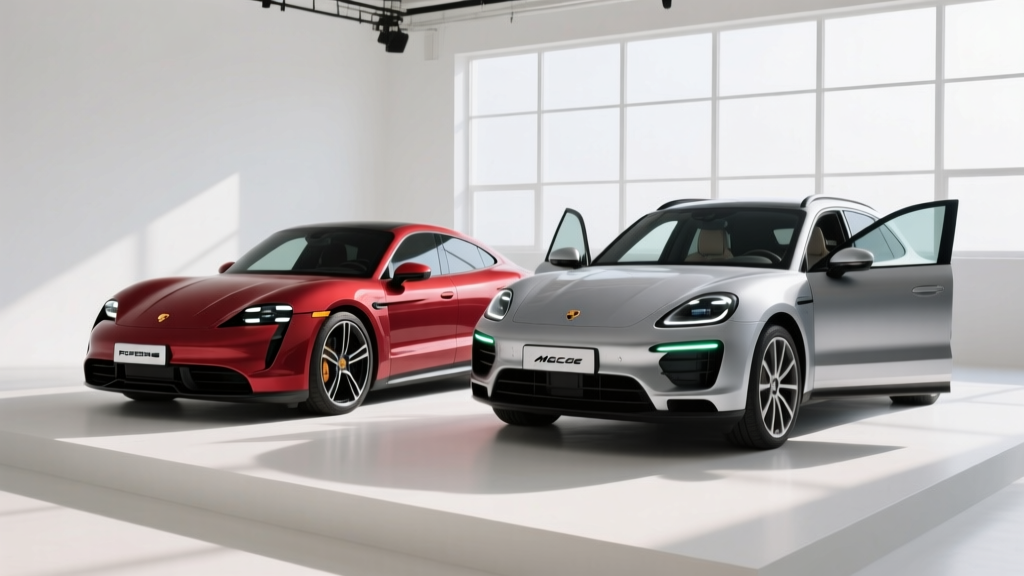
Porsche currently sells two fully electric model lines in the US market for the 2026 model year:
- Porsche Taycan (sedan and Cross Turismo / Sport Turismo body styles) — refreshed for 2025 with larger batteries and faster charging, continuing into 2026.
- Porsche Macan Electric — launched for the 2024 model year on the PPE (Premium Platform Electric) architecture co-developed with Audi.
The Cayenne EV has been announced but is not yet available for delivery as of early 2026; Porsche lists it as upcoming. The 718 Boxster/Cayman EV remains in development. If you're shopping today, the Taycan and Macan Electric are your options.
| Model / Trim | EPA Range | Battery (usable kWh) | Peak DC Charge | 10–80% Time | 0–60 mph | HP | Base MSRP |
|---|---|---|---|---|---|---|---|
| Taycan (base, RWD) | ~318 mi | ~97 kWh (NMC, Performance Battery Plus) | 320 kW | ~18 min | 4.9 s | 402 | $99,450 |
| Taycan 4S | ~283 mi | ~97 kWh | 320 kW | ~18 min | 3.7 s | 590 | $114,950 |
| Taycan Turbo | ~280 mi | ~97 kWh | 320 kW | ~18 min | 2.5 s | 872 | $163,450 |
| Taycan Turbo GT | ~269 mi | ~97 kWh | 320 kW | ~18 min | 2.1 s | 1,019 | $219,000 |
| Macan Electric (base) | ~308 mi | ~95 kWh (NMC) | 270 kW | ~21 min | 5.5 s | 335 | $78,800 |
| Macan 4 Electric | ~288 mi | ~95 kWh | 270 kW | ~21 min | 4.9 s | 402 | $84,600 |
| Macan Turbo Electric | ~270 mi | ~95 kWh | 270 kW | ~21 min | 3.1 s | 630 | $105,300 |
Sources: fueleconomy.gov, Porsche USA. EPA range varies by wheel/option package. Real-world highway range is typically 10–15% lower; cold-weather (below 30°F) can reduce range 20–30%.
Real-World Range Reality Check
The Taycan's 318-mile EPA figure is among the best of any luxury EV sedan, but on a 75-mph highway run in 45°F weather, expect closer to 250–270 miles before you need to stop. The Macan Electric, as an SUV with a taller frontal area, typically delivers 240–265 miles in mixed highway driving. Porsche's thermal management and heat pump (standard on most trims) mitigate cold-weather losses better than many competitors, but physics still applies.
Porsche EV vs. Gas Porsche: Cost and Driving Comparison
The most common cross-shop is a Taycan against a gas Panamera, or a Macan Electric against a gas Macan. Here's how the numbers stack up over 5 years and 60,000 miles:
| Cost Factor | Taycan 4S ($114,950) | Panamera 4 ($107,000) | Macan 4 Electric ($84,600) | Macan S Gas ($68,800) | |
|---|---|---|---|---|---|
| Purchase price | $114,950 | $107,000 | $84,600 | $68,800 | |
| Federal tax credit | $0 (exceeds MSRP cap) | N/A | $0 | N/A | |
| Fuel / electricity (60k mi) | ~$3,200 (home L2) | ~$9,600 (premium gas) | ~$3,000 | ~$8,400 | |
| Maintenance (5 yr) | ~$1,800 | ~$4,500 | ~$1,600 | ~$4,000 | |
| Insurance (5 yr est.) | ~$8,500 | ~$7,200 | ~$7,800 | ~$6,500 | |
| Estimated depreciation | ~$48,000 | ~$42,000 | ~$36,000 | ~$28,000 | |
| 5-year total cost | ~$176,450 | ~$170,300 | ~$133,000 | ~$115,700 |
Electricity cost assumes $0.14/kWh national average and 3.2 mi/kWh efficiency. Gas assumes $4.00/gal premium and 22 MPG combined. Depreciation estimates based on historical luxury-EV and luxury-ICE trends from Kelley Blue Book and Edmunds. Your actuals will vary by state, driving pattern, and electricity rate.
The takeaway: Porsche EVs save $5,000–$7,000 on fuel and maintenance over five years, but higher purchase prices, insurance premiums, and steeper depreciation in the current EV market partially offset those savings. The gap narrows if you have cheap home solar or time-of-use rates below $0.10/kWh.
Charging a Porsche EV: What You Actually Need to Know
Porsche's 800-volt architecture is the real differentiator. Most EVs use 400V systems; the higher voltage allows the Taycan and Macan Electric to sustain higher charge rates longer, reducing taper above 80% State of Charge (SoC).
| Charging Level | Power (kW) | Miles Added per Hour | Typical Use Case |
|---|---|---|---|
| Level 1 (120V household) | ~1.4 kW | ~4–5 mi/hr | Emergency / overnight trickle only |
| Level 2 (240V, home wall connector) | 9.6–19.2 kW | ~30–60 mi/hr | Daily home charging (full overnight) |
| DC Fast Charge (Taycan, 800V) | Up to 320 kW | ~150+ mi in 10 min | Road trips, 10–80% in ~18 min |
| DC Fast Charge (Macan Electric) | Up to 270 kW | ~130+ mi in 10 min | Road trips, 10–80% in ~21 min |
Connector note: Porsche uses the CCS1 connector for DC fast charging on current US models. With Tesla opening its Supercharger network to non-Tesla EVs via NACS adapters, Porsche has announced future models will adopt NACS natively. For now, you'll use CCS at Electrify America, EVgo, and other networks — and a Tesla-provided Magic Dock adapter at Superchargers where available.
Home Charging Setup Costs
Most Porsche EV owners install a Level 2 wall connector. The Porsche Mobile Charger Connect (included with the vehicle) can serve as a semi-permanent home unit at up to 9.6 kW on a NEMA 14-50 outlet, or you can hardwire the Porsche Home Energy Manager for up to 19.2 kW.
| Component | Low Estimate | High Estimate | Notes |
|---|---|---|---|
| Level 2 charger (if not using included mobile unit) | $400 | $800 | ChargePoint Home Flex, Emporia, etc. |
| 240V outlet (NEMA 14-50) install | $300 | $800 | If panel is nearby and has capacity |
| Hardwired install (50–80A circuit) | $600 | $2,000 | Longer wire runs cost more |
| Electrical panel upgrade (100A → 200A) | $1,500 | $4,000 | Only if existing panel is insufficient |
| Permit and inspection | $50 | $300 | Varies by municipality |
| Total (typical, no panel upgrade) | $700 | $2,500 |
Always hire a licensed electrician. Final cost depends on your panel capacity, wire-run distance, and local code. The federal 30C alternative fuel vehicle refueling property credit may cover up to 30% of home charger installation costs (max $1,000) if you live in an eligible census tract — check IRS rules for your area.
Tax Credits, Incentives, and What You'll Actually Pay
Here's where Porsche EV buyers face a hard truth: no Porsche EV currently qualifies for the federal §30D new-vehicle tax credit (up to $7,500). The reasons:
- MSRP cap: §30D limits eligibility to sedans under $55,000 and SUVs/vans/trucks under $80,000. Every Porsche EV exceeds these caps.
- Battery sourcing: Critical minerals and battery components must meet escalating domestic-content thresholds. Porsche's supply chain does not currently satisfy these requirements.
- Buyer income cap: Even if the vehicle qualified, AGI limits apply ($150K single / $300K joint) — though this is moot for Porsche pricing.
Source: IRS §30D Clean Vehicle Credit rules. Tax rules change; consult a tax professional for your situation.
State incentives may still apply. States like California, Colorado, and Massachusetts offer rebates or tax credits that don't carry federal MSRP caps — check your state's energy office for current programs.
Porsche EV Ownership: Practical Considerations
Who Should Buy a Porsche EV?
Choose a Taycan if:
- You want a luxury sport sedan with genuine track capability and daily-driver comfort.
- You have home Level 2 charging and drive under 300 miles between stops on most trips.
- You value 800V fast charging for road trips (Electrify America 350 kW stations maximize the Taycan's potential).
- You cross-shop the Tesla Model S, BMW i5, Mercedes EQE, or Audi e-tron GT.
Choose a Macan Electric if:
- You need SUV cargo space (17.1 cu ft rear / 37.7 cu ft folded) with electric powertrain refinement.
- You want the most affordable entry into Porsche EV ownership (~$78,800 base).
- You prioritize ride comfort and daily practicality over track performance.
Look elsewhere if:
- You lack home charging access and rely entirely on public DC fast chargers — the convenience penalty is real.
- You regularly drive in extreme cold (below 10°F) on long trips — range loss and charge-speed reduction will add 15–25 minutes per stop.
- Budget is a primary concern — a Tesla Model Y or Hyundai Ioniq 5 delivers 80% of the utility at 40% of the price.
Insurance, Maintenance, and Depreciation
Porsche EV insurance runs 15–25% higher than comparable gas Porsches, driven by higher repair costs for battery-adjacent damage and limited collision-repair networks trained on 800V systems. Expect $1,400–$2,200/year for a Taycan 4S depending on your state and driving record.
Maintenance is genuinely lower: no oil changes, no spark plugs, brake pads last 80,000+ miles thanks to regenerative braking. Porsche's scheduled maintenance is roughly $300–$400/year (cabin filter, fluid checks, tire rotation).
| Myth | Fact |
|---|---|
| "The Taycan's range is too low for road trips." | With 318 EPA miles and 320 kW charging, you can add 150+ miles in 10 minutes at a compatible station — competitive with any EV on sale. |
| "I'll get the $7,500 tax credit." | No Porsche EV qualifies under current §30D rules due to MSRP caps and battery-sourcing requirements. |
| "EV batteries need replacing every few years." | Porsche warranties the battery for 8 years/100,000 miles against dropping below 70% capacity. Real-world data shows most EV batteries retain 90%+ capacity at 100K miles. |
| "I can charge on any Tesla Supercharger." | Only Superchargers with the Magic Dock adapter support CCS vehicles, and coverage is still expanding. Plan with PlugShare or the Electrify America app. |
| "Porsche EVs are self-driving." | Porsche InnoDrive is an SAE Level 2 adaptive cruise + lane-centering system. You must remain engaged and hands-on at all times. |
ADAS Reality Check: Porsche InnoDrive
Porsche's InnoDrive with Active Lane Keeping is an SAE Level 2 driver-assistance system. It handles adaptive cruise control, lane centering, and predictive speed adjustment based on navigation data. It is not autonomous — you must keep your hands on the wheel and eyes on the road. No Porsche currently offers hands-free Level 3 or Level 4 driving.
Battery Longevity and Warranty
Both the Taycan and Macan Electric use NMC (nickel manganese cobalt) lithium-ion batteries with sophisticated liquid thermal management. Porsche provides:
- High-voltage battery warranty: 8 years / 100,000 miles, guaranteeing at least 70% capacity retention.
- Basic vehicle warranty: 4 years / 50,000 miles.
- Corrosion warranty: 12 years / unlimited miles.
Out-of-warranty battery replacement for a Taycan currently runs $25,000–$35,000 for the pack alone, though individual module replacement (if only a few cells degrade) can cost significantly less. Most owners will never need this — Porsche's oversized battery buffer (the 105 kWh gross / ~97 kWh usable split in the Taycan) reduces stress on cells and slows degradation.
Frequently Asked Questions
What's the cheapest Porsche EV I can buy new in 2026?
The base Macan Electric starts at $78,800 MSRP before destination. With options and dealer fees, expect $82,000–$85,000 out the door. It's the most accessible on-ramp to Porsche EV ownership.
Can I daily-charge a Porsche EV on a standard 120V outlet?
Technically yes, but Level 1 adds only ~4–5 miles per hour of charging. For a 95 kWh battery, a full charge would take 4+ days. If you drive under 30 miles daily, it's workable; otherwise, invest in a Level 2 home setup.
How does the Taycan compare to a Tesla Model S?
The Taycan costs more, offers lower peak range (318 vs. ~402 miles for the Model S Long Range), but delivers superior build quality, more consistent performance under repeated hard acceleration, and faster sustained DC charging thanks to its 800V architecture. The Model S wins on range and Supercharger network convenience; the Taycan wins on driving dynamics and interior refinement.
Do Porsche EVs hold their value?
Porsche EVs currently depreciate faster than their gas counterparts — a 3-year-old Taycan may retain 50–55% of its original MSRP, compared to 60–65% for a comparable Panamera. This is driven by rapid EV tech advancement, lack of tax-credit offset for buyers, and the general luxury-EV depreciation trend. If depreciation concerns you, consider a certified pre-owned Taycan where the first owner absorbed the steepest loss.
What charging network is best for Porsche EV road trips?
Electrify America is the primary network for maximizing the Taycan's 320 kW capability (their 350 kW stations are compatible). EVgo and ChargePoint also work at lower speeds. Tesla Superchargers are accessible via adapter at select locations. Always pre-condition your battery using the car's navigation-routed charging feature for optimal charge speed.
Prices, specs, and tax-credit rules reflect the 2026 model year and current IRS guidance as of publication. Always verify with Porsche USA, your local dealer, and a tax professional before purchasing.