Quick Answer: Should You Buy a Porsche Electric Car?
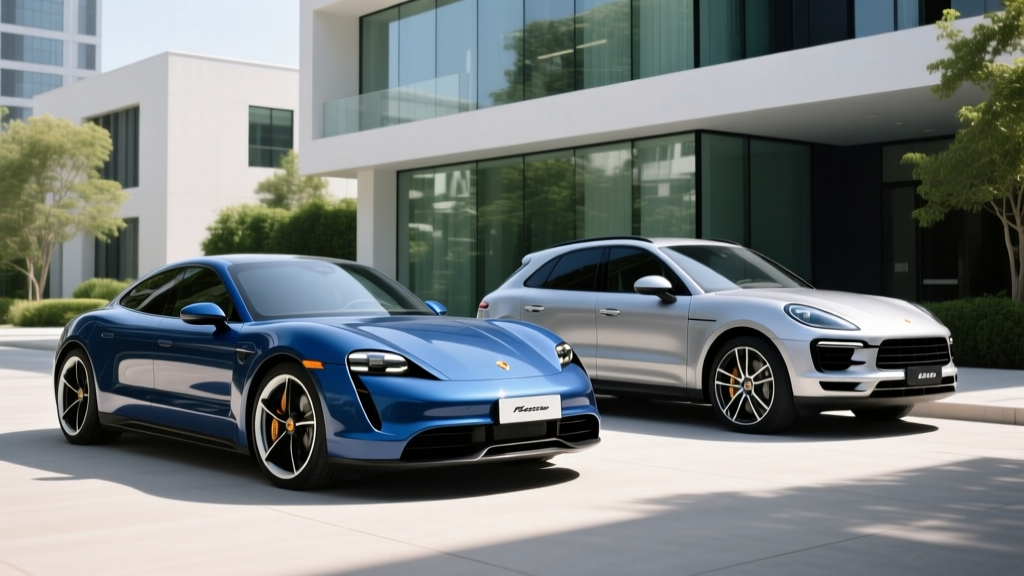
Porsche currently sells two fully electric vehicles in the U.S.: the Taycan sedan/cross-turismo (EPA range up to 318 miles, starting ~$92,000) and the Macan Electric (EPA range up to 308 miles, starting ~$78,800). Both use 800-volt architectures enabling DC fast charging at up to 320 kW (Taycan) or 270 kW (Macan), achieving 10–80% in roughly 18–21 minutes. Neither qualifies for the federal §30D tax credit due to MSRP caps and battery sourcing rules. Choose a Porsche electric car if you prioritize driving dynamics, ultra-fast charging, and premium build over maximum range-per-dollar. If budget or tax-credit eligibility is paramount, consider competitors like the Tesla Model S, BMW i5, or Hyundai Ioniq 6.
The 2026 Porsche Electric Car Lineup at a Glance
Porsche's EV strategy centers on two production models as of 2026, with a fully electric Cayenne and 718 Boxster/Cayman expected to follow in the 2026–2028 window. Here's what's on sale now:
| Spec | 2026 Taycan (Base RWD) | 2026 Taycan 4S | 2026 Taycan Turbo GT | 2026 Macan Electric | 2026 Macan 4 Electric |
|---|---|---|---|---|---|
| EPA Range | 318 mi | 283 mi | 269 mi | 308 mi | 288 mi |
| Battery (usable) | 89 kWh (NMC) | 89 kWh (NMC) | 89 kWh (NMC) | 95 kWh (NMC) | 95 kWh (NMC) |
| Max DC Charge Rate | 320 kW | 320 kW | 320 kW | 270 kW | 270 kW |
| 10–80% DC Fast Charge | ~18 min | ~18 min | ~18 min | ~21 min | ~21 min |
| Level 2 Charge Rate | 19.2 kW | 19.2 kW | 19.2 kW | 11 kW | 11 kW |
| Horsepower | 402 hp | 590 hp | 1,019 hp (Launch Control) | 335 hp | 402 hp |
| 0–60 mph | 4.6 sec | 3.4 sec | 2.1 sec | 5.2 sec | 4.9 sec |
| Base MSRP | $92,250 | $112,650 | $230,700 | $78,800 | $86,400 |
| Battery Warranty | 8 yr / 100,000 mi | 8 yr / 100,000 mi | 8 yr / 100,000 mi | 8 yr / 100,000 mi | 8 yr / 100,000 mi |
Real-World Range Expectations
The Taycan base RWD's EPA 318-mile rating is among the best Porsche has achieved, but real-world results vary significantly. In highway driving at 75 mph, expect roughly 260–280 miles. In cold weather (below 32°F), range can drop 15–25%, bringing a 318-mile Taycan down to 240–270 miles. The Macan Electric's boxier SUV shape means slightly higher highway consumption — plan for 250–270 miles at interstate speeds. Both models' heat pumps (standard on Taycan, optional on Macan) help mitigate cold-weather losses.
Charging Speed: Porsche's 800-Volt Advantage
Porsche was an early adopter of 800-volt battery architecture (with the original 2020 Taycan), and the 2026 lineup pushes DC fast-charge rates even higher. The updated Taycan peaks at 320 kW on a capable DC fast charger — among the fastest production EVs available. The Macan Electric peaks at 270 kW.
What does this mean in practice? On a 350 kW Electrify America or IONITY station, both vehicles sustain high charge rates through the middle of the battery curve. The Taycan adds roughly 190 miles of range in 10 minutes under ideal conditions. However, remember that kW is power (charge rate) while kWh is energy (battery capacity) — peak kW is never sustained across the full session. Above 80% state of charge, the rate tapers significantly to protect battery health, which is why manufacturers quote 10–80% times rather than 0–100%.
| Charging Level | Power (kW) | Taycan Miles/Hour | Macan EV Miles/Hour | Typical Use Case |
|---|---|---|---|---|
| Level 1 (120V household) | ~1.4 kW | ~4 mi/hr | ~4 mi/hr | Emergency / overnight trickle |
| Level 2 (240V home, 48A) | 11.5 kW | ~33 mi/hr | ~33 mi/hr | Daily home charging |
| Level 2 (240V, 80A — Taycan) | 19.2 kW | ~55 mi/hr | N/A (11 kW onboard max) | Fast home / destination |
| DC Fast Charge (peak) | 270–320 kW | ~1,100+ mi/hr (peak) | ~900+ mi/hr (peak) | Road trips, 10–80% in ~18–21 min |
Home charging reality: The Taycan's 19.2 kW onboard charger is a standout — it can recharge the 89 kWh battery from empty to full in about 5 hours on a properly provisioned 80-amp Level 2 circuit. Most homes require a panel upgrade (200A service minimum) and dedicated 100A circuit for this. The Macan's 11 kW onboard charger is more typical and works well on a standard 48A Level 2 circuit, taking roughly 9.5 hours for a full charge — fine for overnight use. Budget $1,200–$3,500 for a quality Level 2 home installation depending on panel proximity and local permitting, according to industry averages from sources like energy.gov.
Porsche Electric Car vs. Gas Porsche: Real Cost Breakdown
Does going electric in a Porsche save money? The answer depends heavily on your driving volume, electricity rates, and whether you're comparing to a gas Panamera, Cayenne, or Macan. Here's a 5-year total-cost-of-ownership comparison:
| Cost Factor (5 Years / 75,000 mi) | Taycan 4S ($112,650) | Panamera 4 ($104,000) | Macan Electric ($78,800) | Gas Macan ($62,900) |
|---|---|---|---|---|
| Purchase Price (MSRP) | $112,650 | $104,000 | $78,800 | $62,900 |
| Federal Tax Credit (§30D) | $0 (exceeds MSRP cap) | N/A | $0 (exceeds MSRP cap) | N/A |
| Fuel / Electricity | $4,500 (home L2 @ $0.16/kWh) | $12,750 (premium @ $4.25/gal, 21 MPG) | $4,800 | $10,500 (premium @ $4.25/gal, 21 MPG) |
| Maintenance | $2,800 | $6,500 | $2,800 | $5,800 |
| Insurance (est. avg) | $14,500 | $11,200 | $11,800 | $9,500 |
| Depreciation (est. 5-yr) | $52,000 | $42,000 | $38,000 | $28,000 |
| Estimated 5-Year Total | $186,450 | $176,450 | $136,200 | $117,200 |
Key takeaways: The Macan Electric costs roughly $19,000 more over 5 years than a gas Macan, driven primarily by higher purchase price and steeper depreciation. The Taycan 4S runs about $10,000 more than a comparable Panamera 4 over the same period. However, these figures don't account for time savings from home charging, the driving experience differential, or potential state/local incentives (which vary by jurisdiction — check afdc.energy.gov for your area). Electricity savings are substantial: the Taycan uses roughly $600/year in electricity for 15,000 miles of driving at the national average rate, versus over $2,500/year in premium gasoline for a Panamera.
Tax Credit Reality: What Porsche EV Buyers Must Know
Under current IRS §30D rules, neither the Taycan nor the Macan Electric qualifies for the up-to-$7,500 federal clean vehicle credit. Here's why:
§30D Eligibility Requirements (2026)
- MSRP Cap: Sedans must be under $55,000; SUVs/trucks under $80,000. The Taycan (sedan, from $92,250) and Macan Electric (SUV, from $78,800 — close but optioned models exceed the cap, and base model sourcing may not qualify).
- Buyer Income Cap: AGI must not exceed $150K (single), $225K (head of household), or $300K (joint).
- Battery Sourcing: Critical minerals and battery components must meet escalating domestic/free-trade-partner thresholds. Porsche sources globally, and compliance varies by build.
- Point-of-Sale Transfer: Eligible credits can be applied at purchase, reducing out-of-pocket cost — but only if the vehicle qualifies.
Bottom line: Porsche electric car buyers should plan on paying full MSRP minus any applicable state or local incentives. Consult a tax professional for your specific situation — rules are subject to change.
Common Misconceptions About Porsche Electric Cars
| Myth | Fact |
|---|---|
| "The Taycan's range is terrible compared to Tesla." | The 2026 Taycan base RWD achieves 318 miles EPA — competitive with the Model S (320 mi). Porsche prioritized charging speed and sustained performance over maximum range. |
| "Electric Porsches don't handle like real Porsches." | The Taycan Turbo GT set a Nürburgring lap record for production EVs. Porsche's rear-axle steering, torque vectoring, and low center of gravity deliver genuine sports-car dynamics. |
| "You'll save a fortune vs. a gas Porsche." | Fuel and maintenance savings are real (~$5,000–$8,000 over 5 years), but higher purchase price, insurance premiums, and depreciation typically offset them. Buy for the experience, not pure economics. |
| "The battery will need replacing in 5 years." | Porsche warrants the battery for 8 years/100,000 miles against degradation below 70% capacity. Industry data shows NMC batteries with liquid thermal management (like Porsche's) typically retain 85–90% capacity at 100K miles. |
| "I can charge on any public charger." | Porsche EVs use the NACS connector starting with 2025+ models (Taycan refresh and Macan). CCS adapters are available for legacy stations. Tesla Supercharger access is now included via NACS. |
Real-World Ownership: What First-Time Porsche EV Buyers Need to Know
Home Charging Access Is Non-Negotiable
Public DC fast charging at $0.40–$0.60/kWh eliminates most cost savings over gasoline. Porsche EV ownership makes the most financial and practical sense with reliable home Level 2 charging. If you live in an apartment without charging access or street-park regularly, a Porsche EV will be an expensive inconvenience. Confirm your home's electrical capacity (a 200-amp panel is strongly recommended for 19.2 kW Taycan charging) before committing.
Cold-Weather Range Loss Is Real
NMC battery chemistry, used in both the Taycan and Macan Electric, is sensitive to cold temperatures. Owners in northern climates (Minnesota, New England, mountain states) should expect 15–25% range reduction in sustained sub-freezing conditions. Porsche's liquid-cooled thermal management with heat pump mitigates this, but physics cannot be eliminated. A 318-mile Taycan becomes a ~250-mile car in a Minneapolis January.
Insurance Costs More
EV insurance premiums run 15–30% higher than equivalent gas vehicles due to repair complexity, battery replacement costs, and limited collision-repair networks. Expect annual premiums of $2,800–$3,500 for a Taycan 4S depending on your profile and location. Get quotes before ordering.
The Porsche EV Driving Experience
Where Porsche's electric cars justify their premium is on the road. The Taycan's 2-speed rear axle transmission (unique among EVs) delivers relentless acceleration from stop to top speed, while the Macan Electric's air suspension and rear-axle steering make it handle like a sports sedan despite its SUV ride height. Regenerative braking is powerful but not fully one-pedal — Porsche allows configurable regen levels rather than forcing aggressive deceleration. This is a driver's EV, not an efficiency-maximizing commuter.
Decision Framework: Which Porsche Electric Car Is Right for You?
Choose the Taycan if:
- You prioritize sedan/coupe driving dynamics and want the fastest-charging EV on the market (320 kW peak)
- You regularly take road trips and value 18-minute 10–80% charging stops
- You want Porsche's most advanced EV tech (rear-axle steering, 2-speed transmission, 800V architecture)
- Your budget accommodates $92K–$230K+ and you don't need federal tax credits
Choose the Macan Electric if:
- You need SUV practicality (cargo space, ride height, easier ingress/egress) with Porsche dynamics
- Your budget is $79K–$100K and you want the most accessible Porsche EV entry point
- You primarily drive in urban/suburban environments where 270 kW DC charging is sufficient
- You want a daily driver with 308-mile EPA range for commuting and weekend trips
Look elsewhere if:
- You need the $7,500 federal tax credit to justify EV ownership (consider BMW i5, Tesla Model S, Hyundai Ioniq 6)
- You lack home charging access and rely entirely on public infrastructure
- Maximum range-per-dollar is your priority (Tesla Model S at 402 mi EPA, Lucid Air at 420+ mi)
- You tow heavy loads — the Macan Electric is rated at 4,400 lbs, but towing cuts range by 30–50%
Frequently Asked Questions
Does the Porsche Taycan qualify for any tax incentives in 2026?
The Taycan does not qualify for the federal §30D clean vehicle credit due to its MSRP exceeding the $55,000 sedan cap. Some state incentives (e.g., California, Colorado, New York) may still apply — check your local DMV or energy office for current programs. Always verify with a tax professional.
How long does it take to charge a Porsche electric car at home?
On a 48-amp Level 2 home charger (11.5 kW), the Taycan charges from 0–100% in about 8.5 hours; the Macan Electric in about 9.5 hours. The Taycan's available 19.2 kW onboard charger reduces this to ~5 hours if your home electrical system supports an 80-amp circuit. Both are designed for overnight charging.
What is the real-world range of the Porsche Macan Electric?
The Macan Electric's EPA rating is 308 miles (base RWD). In mixed real-world driving, expect 270–290 miles. At sustained highway speeds (75+ mph), plan for 250–270 miles. In freezing weather, expect 230–260 miles. These figures assume moderate climate control use and standard driving habits.
Is Porsche's electric car battery reliable long-term?
Porsche warranties its EV batteries for 8 years or 100,000 miles against capacity loss below 70%. Independent fleet data from earlier Taycan models (2020–2023) shows approximately 5–8% degradation at 60,000 miles, suggesting the batteries should comfortably outlast the warranty period. Replacement cost, if needed out of warranty, is estimated at $20,000–$35,000 depending on the model — though this is expected to decline as battery technology matures.
Can I use Tesla Superchargers with a Porsche electric car?
Yes. Starting with the 2025 model year refresh, Porsche EVs sold in North America use the NACS (North American Charging Standard) connector, which is native to the Tesla Supercharger network. For earlier CCS-equipped Taycans, Porsche offers a NACS adapter. Supercharger access requires a Porsche Connect subscription or pay-per-use via the Tesla app.
How does Porsche EV maintenance compare to gas Porsche maintenance?
EVs eliminate oil changes, spark plugs, timing belts, and exhaust system maintenance. Brake wear is dramatically reduced thanks to regenerative braking (pads often last 80,000+ miles). You'll still need tire rotations, cabin air filters, brake fluid checks, and coolant service. Expect annual maintenance costs of $400–$700 for a Porsche EV versus $1,200–$2,000 for a gas Panamera or Macan.