Quick Answer: Should You Buy the 2026 Porsche Cayenne Turbo Electric?
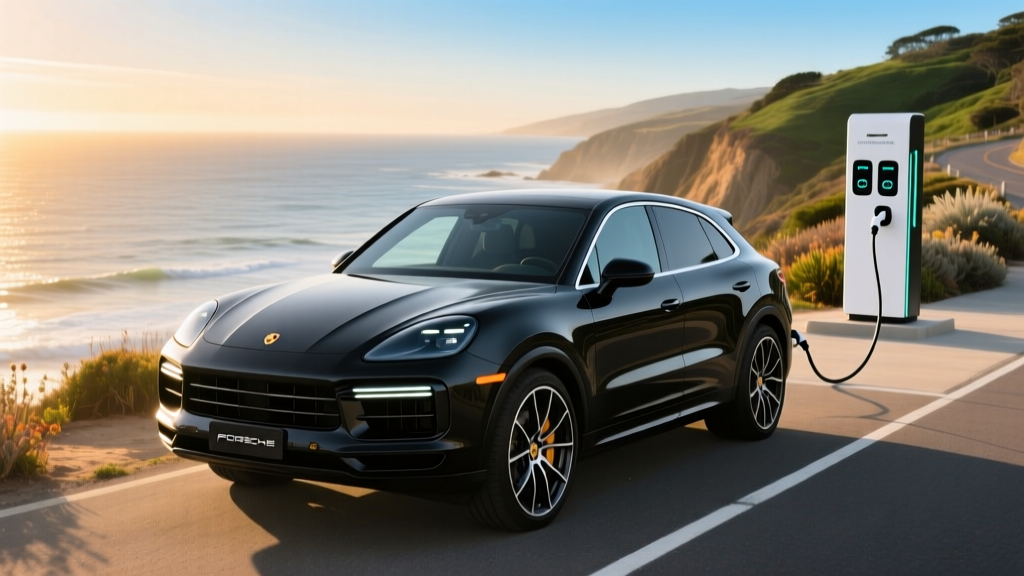
The 2026 Porsche Cayenne Turbo Electric is Porsche's flagship performance SUV built on the 800-volt PPE (Premium Platform Electric) architecture. It targets buyers who want supercar acceleration in a practical five-seat SUV with ultra-fast DC charging. Expect an EPA-estimated range around 280–305 miles depending on wheel and trim configuration, a usable battery of approximately 113 kWh (120 kWh gross), and peak DC fast-charging capability near 270 kW — enabling a 10–80% charge in roughly 16 minutes at a capable station. Pricing starts near $105,000 before options, and the Cayenne Turbo Electric does not qualify for the federal §30D tax credit due to MSRP and sourcing caps. This SUV is best suited for buyers with reliable home Level 2 charging who prioritize driving dynamics and charging speed over maximum range or incentive eligibility.
Range, Battery, and Efficiency: What the Numbers Actually Mean
Porsche equips the 2026 Cayenne Turbo Electric with a lithium-ion NMC (nickel manganese cobalt) battery pack rated at approximately 120 kWh gross capacity, with roughly 113 kWh usable. The 800-volt architecture — shared with the Taycan and the Audi Q8 e-tron GT platform — enables both higher sustained charging power and more efficient power delivery to the dual electric motors.
| Specification | 2026 Cayenne Turbo Electric |
|---|---|
| Battery (gross / usable) | ~120 kWh / ~113 kWh |
| Chemistry | NMC (Nickel Manganese Cobalt) |
| EPA Range (est.) | 280–305 mi (varies by wheel size) |
| Real-World Highway Range | ~235–265 mi |
| MPGe (combined, est.) | ~82–88 MPGe |
| Efficiency | ~38–42 kWh/100 mi |
| Drivetrain | Dual-motor AWD |
| Horsepower | ~844 hp (Launch Control) |
| 0–60 mph | ~2.7 seconds |
| Top Speed | ~160 mph (electronically limited) |
EPA Sticker vs. Real-World Range
The EPA range estimate of up to 305 miles assumes mixed driving at moderate speeds and temperatures. In real-world conditions, plan for:
- Highway driving at 75+ mph: Expect 235–265 miles. Aerodynamic drag on a large SUV penalizes efficiency significantly above 65 mph.
- Cold weather (below 32°F): Range can drop 20–30%, reducing effective range to roughly 195–240 miles. The Cayenne's heat pump helps mitigate cabin heating losses but cannot eliminate the physics of cold-cell chemistry.
- Mountain/terrain driving: Steep grades increase consumption, though regenerative braking on descents partially recovers energy.
For road-trip planning, budget conservatively at 230 miles between charging stops in moderate conditions and 200 miles in winter.
Charging Speed and Infrastructure: 800-Volt Advantage
The Cayenne Turbo Electric's 800-volt platform is its most significant ownership advantage. Here's what charging looks like across all three levels:
| Charging Level | Power (kW) | Speed (miles of range/hour) | Typical Use Case |
|---|---|---|---|
| Level 1 (120V household) | ~1.4 kW | ~3–4 mi/hr | Emergency/trickle only |
| Level 2 (240V home) | ~11–19.2 kW | ~25–45 mi/hr | Overnight home charging |
| DC Fast Charge (800V) | Up to ~270 kW peak | ~150+ mi in 10 min | Road trips, rapid top-ups |
Understanding kW vs. kWh: kW (kilowatts) measures charging power — how fast energy flows into the battery. kWh (kilowatt-hours) measures battery capacity — how much energy the battery stores. A 270 kW charger doesn't fill a 120 kWh battery in 27 minutes; the charge curve tapers significantly above 80% state of charge to protect battery health.
The Charge Curve Reality
The Cayenne Turbo Electric peaks near 270 kW at low states of charge (roughly 5–20% SoC), but sustained power depends on thermal conditions. With battery preconditioning active (triggered when you navigate to a DC fast charger in the PCM infotainment system), expect:
- 10–80% in approximately 16 minutes at a 350 kW-capable station (e.g., Electrify America 350 kW stall or Ionity in Europe)
- 10–80% in approximately 25–30 minutes at a 150 kW station
- 80–100% adds an additional 20–30 minutes — always plan to charge to 80% on road trips and move on
At home, a Level 2 wallbox at 11.5 kW (48-amp circuit, 60-amp breaker) will fully recharge the pack from empty in roughly 10–11 hours. Upgrading to Porsche's optional 19.2 kW onboard charger (requires a 100-amp dedicated circuit) cuts this to approximately 6–7 hours — worthwhile if your electrical panel supports it.
Purchase Price, Tax Credits, and the Real Cost of Ownership
The 2026 Cayenne Turbo Electric enters at a premium price point. Here's the financial picture:
| Cost Category | Cayenne Turbo Electric (est.) | Cayenne Turbo (Gas, est.) |
|---|---|---|
| Base MSRP | ~$105,000 | ~$100,500 |
| Typical as-equipped price | $115,000–$135,000 | $112,000–$130,000 |
| Federal §30D Tax Credit | $0 (exceeds MSRP cap) | $0 |
| Annual fuel/energy (12,000 mi) | ~$680–$920 | ~$2,800–$3,400 |
| Annual maintenance | ~$400–$700 | ~$900–$1,500 |
| Annual insurance (est.) | ~$3,200–$4,500 | ~$2,800–$3,800 |
| 5-year fuel/energy total | ~$3,400–$4,600 | ~$14,000–$17,000 |
Federal Tax Credit: Why the Cayenne Turbo Electric Doesn't Qualify
Under current IRS §30D rules, the new clean vehicle credit of up to $7,500 has several eligibility gates:
- MSRP cap: SUVs must be priced at or below $80,000. The Cayenne Turbo Electric starts well above this threshold, making it ineligible regardless of other factors.
- Buyer income cap: AGI must not exceed $300,000 (married filing jointly), $225,000 (head of household), or $150,000 (individual).
- Battery sourcing requirements: Critical minerals and battery components must meet phased-in domestic/free-trade-partner sourcing thresholds.
At this price tier, buyers should not factor any federal incentive into their purchase calculus. Some states offer luxury-EV rebates or utility charging incentives — check your state energy office and local utility for specifics, as these vary significantly by jurisdiction.
Five-Year Cost of Ownership Breakdown
Even without a tax credit, the electric Cayenne saves meaningfully on energy and maintenance over five years. Assuming 12,000 miles/year, $0.14/kWh average home electricity, and $3.80/gallon premium gas for the turbo V8:
- Energy savings over 5 years: Approximately $10,000–$12,500 less spent on electricity vs. gasoline
- Maintenance savings: No oil changes, no spark plugs, reduced brake wear (regenerative braking), and fewer moving parts. Estimated $2,500–$4,000 saved over 5 years.
- Insurance premium: Expect to pay 10–20% more for the electric variant — EV insurance tends to be higher due to repair costs and battery replacement exposure.
EV vs. Gas Cayenne Turbo: Head-to-Head Comparison
| Attribute | Cayenne Turbo Electric | Cayenne Turbo (Gas) |
|---|---|---|
| 0–60 mph | ~2.7 sec | ~3.6 sec |
| Horsepower | ~844 hp | ~631 hp |
| Range / Tank | 280–305 mi (EPA) | ~390–420 mi |
| Refuel / Recharge Time | ~16 min (10–80% DCFC) | ~5 min (gas station) |
| Annual Energy Cost | ~$680–$920 | ~$2,800–$3,400 |
| Cargo Volume (rear seats up) | ~26–28 cu ft | ~27–29 cu ft |
| Frunk | Yes (small, ~2–3 cu ft) | No |
| Towing Capacity | ~5,500–6,600 lbs (est.) | ~7,700 lbs |
| Drivetrain Complexity | Dual motor, no transmission | V8 + 8-speed auto |
The electric variant wins decisively on acceleration and running costs. The gas Cayenne Turbo retains advantages in total range per fill-up, towing capacity, and refueling convenience in areas with sparse DC fast-charging infrastructure. If you regularly tow a trailer over 5,000 lbs or drive in remote regions without fast chargers, the gas model remains the pragmatic choice.
Home Charging Setup: What First-Time EV Buyers Need to Know
Home charging is the backbone of EV ownership. Roughly 80–90% of all EV charging happens at home, and the Cayenne Turbo Electric's large battery makes Level 2 installation practically mandatory.
Level 2 Installation Cost Breakdown
| Component | Estimated Cost |
|---|---|
| Level 2 EVSE hardware (Porsche Mobile Charger Connect or equivalent 48A) | $600–$1,200 |
| Electrician labor (run 240V/60A circuit to garage) | $800–$2,500 |
| Permit and inspection | $100–$400 |
| Electrical panel upgrade (if needed, 200A service) | $1,500–$4,000 |
| Total (no panel upgrade) | $1,500–$4,100 |
| Total (with panel upgrade) | $3,000–$8,100 |
A licensed electrician should evaluate your panel capacity before purchase. A 48-amp charger requires a dedicated 60-amp breaker, and many older homes with 100-amp or 150-amp service may need an upgrade — particularly if you also run electric HVAC, a dryer, and an oven simultaneously. Always get the final electrical specification from a licensed electrician, not from an online guide.
What If You Can't Charge at Home?
Without home charging, owning a large-battery EV like the Cayenne Turbo Electric becomes significantly less convenient. Relying solely on public DC fast charging means:
- Weekly 20–30 minute charging sessions at $0.35–$0.55/kWh (public DCFC rates), raising annual energy costs to roughly $1,800–$2,400
- Exposure to broken chargers, occupied stalls, and variable charge speeds
- Accelerated battery degradation from frequent high-power DC charging (Porsche's battery management system mitigates this, but the physics remain)
If you lack home or workplace charging access, consider whether the gas Cayenne Turbo or a plug-in hybrid alternative better fits your situation.
Battery Longevity, Warranty, and Common Misconceptions
| Myth | Fact |
|---|---|
| "The battery will need replacing in 5 years and cost $30,000" | Porsche warranties the battery for 8 years / 100,000 miles against capacity loss below 70%. NMC packs in 800V systems with active thermal management typically retain 85–92% capacity at 100,000 miles based on Taycan fleet data. |
| "Fast charging destroys the battery" | Occasional DC fast charging is fine. The battery management system actively limits charge rate based on temperature and SoC. Daily charging to 80% on Level 2 is the recommended routine. |
| "The Cayenne Turbo Electric is self-driving" | Porsche InnoDrive with active lane guidance is a Level 2 driver-assist system per SAE classification. You must remain engaged, hands on or near the wheel, at all times. It is not autonomous. |
| "EVs don't work in cold climates" | Range drops 20–30% in freezing temperatures, but the Cayenne's heat pump and battery preconditioning maintain functionality. Norway — one of the coldest EV markets — has the highest per-capita EV adoption globally. |
| "Electric SUVs can't tow" | The Cayenne Turbo Electric is expected to tow approximately 5,500–6,600 lbs. That's less than the gas variant but sufficient for most boat and utility trailers. Range while towing drops significantly — plan for 40–50% range reduction. |
SAE Automation Level: Level 2
Porsche InnoDrive and related driver-assistance features are classified as SAE Level 2 — partial automation. The vehicle can control steering, acceleration, and braking under certain conditions, but the driver must continuously monitor the road and be prepared to take over instantly. Only driverless services like Waymo (operating in limited metro areas) qualify as Level 4. Never treat Level 2 systems as self-driving.
Battery Warranty Details
Porsche provides an 8-year / 100,000-mile high-voltage battery warranty that guarantees the battery will retain at least 70% of its original usable capacity. The broader powertrain (electric motors, power electronics) is covered for 8 years / 100,000 miles as well. The basic vehicle warranty is 4 years / 50,000 miles. These terms are consistent with other premium EV manufacturers and align with EPA and manufacturer data on expected battery degradation curves.
Decision Framework: Is the Cayenne Turbo Electric Right for You?
Choose the Cayenne Turbo Electric if:
- You have reliable Level 2 home charging (garage or driveway with 240V access)
- You want sub-3-second 0–60 performance in a practical SUV
- Your daily driving is under 200 miles round-trip, with occasional longer road trips
- You value ultra-fast 800V DC charging for road-trip convenience
- You're willing to pay a premium price without expecting a federal tax credit
- You live in a region with adequate Electrify America or compatible 350 kW DC fast-charging coverage
Stick with the Gas Cayenne Turbo (or consider a PHEV) if:
- You lack home charging and cannot install a Level 2 charger
- You regularly tow loads exceeding 5,500 lbs
- Your typical road trips cover 400+ miles through rural areas with sparse charging infrastructure
- You want maximum range per fill-up without route planning around chargers
- You prioritize a lower purchase price and higher towing capacity over acceleration and running costs
Frequently Asked Questions
What is the real-world range of the 2026 Porsche Cayenne Turbo Electric?
The EPA-estimated range is approximately 280–305 miles depending on configuration. In real-world highway driving at 75 mph in moderate temperatures, expect 235–265 miles. In cold weather (below freezing), plan for 195–240 miles. Always precondition the battery before fast charging to maximize charge speed and minimize range loss.
Does the Porsche Cayenne Turbo Electric qualify for the $7,500 federal tax credit?
No. Under IRS §30D rules, the new clean vehicle credit has an $80,000 MSRP cap for SUVs. The Cayenne Turbo Electric starts near $105,000, making it ineligible. State and utility incentives may still apply — check your local programs.
How long does it take to charge at home?
On a standard 48-amp Level 2 home charger (11.5 kW), a full charge from near-empty takes approximately 10–11 hours. With Porsche's optional 19.2 kW onboard charger and a 100-amp circuit, this drops to roughly 6–7 hours. Most owners charge overnight and wake up to a full battery daily.
How does the Cayenne Turbo Electric compare to the Tesla Model X Plaid?
The Model X Plaid offers slightly more range (~326 miles EPA), faster 0–60 (~2.5 seconds), and access to the Supercharger network (though Porsche owners can now use Superchargers via NACS adapter). The Cayenne counters with superior interior build quality, more traditional SUV styling, and Porsche's dealer service network. Pricing is comparable at the high end. Both are exceptional — the choice often comes down to brand loyalty and interior preference.
What happens if the battery needs replacement out of warranty?
Full battery pack replacement for a 120 kWh NMC pack currently costs approximately $18,000–$28,000 depending on labor. However, based on Taycan fleet data and industry degradation research, catastrophic battery failure is rare. Most degradation is gradual — expect 85–92% capacity at 100,000 miles. Module-level repair (replacing individual degraded modules rather than the full pack) is increasingly available and significantly cheaper.
Can the Cayenne Turbo Electric use Tesla Superchargers?
Porsche has committed to NACS (North American Charging Standard) adoption. Depending on your model year and production date, the Cayenne Electric may come equipped with a native NACS port or include a CCS-to-NACS adapter for Supercharger access. Confirm connector compatibility with your dealer at purchase, as the transition is ongoing across the 2025–2026 model years.