Quick Verdict: Is the 2026 Cayenne EV Worth the Switch?
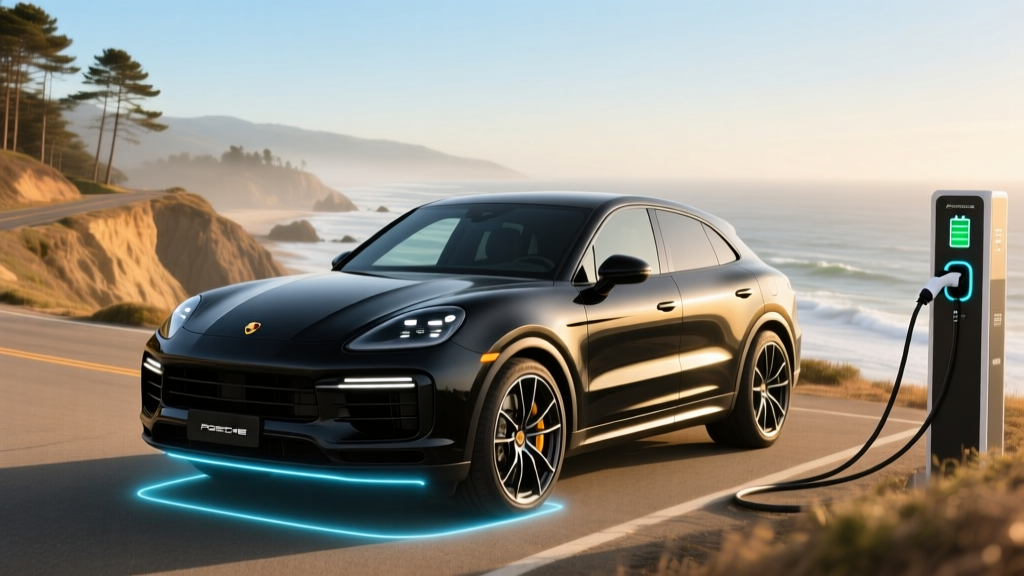
The all-electric 2026 Porsche Cayenne EV (built on the Premium Platform Electric, or PPE) targets buyers who want Cayenne practicality with 800-volt fast charging and sports-car acceleration. Expect an EPA-estimated range around 310 miles for the base rear-wheel-drive model, peak DC fast-charging rates up to 350 kW (10–80% in roughly 18 minutes under ideal conditions), and a starting MSRP near $89,000 before options. Compared to the gas Cayenne, the EV eliminates oil changes, cuts fuel cost by roughly 50–60% per mile, and delivers instant torque—but demands access to reliable DC fast charging for road trips and carries higher insurance premiums. If you have home Level 2 charging and drive under 250 miles daily, the Cayenne EV is a compelling upgrade; if you live in an apartment without charging access or regularly tow heavy loads in cold climates, the gas or E-Hybrid Cayenne may still be the safer bet.
What the 2026 Cayenne EV Actually Is
Porsche's electric Cayenne sits on the Volkswagen Group's PPE architecture—the same 800-volt platform underpinning the Audi Q6 e-tron and the all-electric Macan EV. Unlike earlier Porsche EVs that adapted existing platforms, the Cayenne EV was engineered from the ground up as a battery-electric vehicle. It slots above the Macan EV in size and price, offering three-row practicality in select trims and a more spacious cabin thanks to the flat floor enabled by the skateboard battery layout.
Porsche has confirmed multiple variants: a base rear-wheel-drive model, dual-motor all-wheel-drive versions (Cayenne 4 EV and Cayenne S EV), and a performance-oriented Cayenne Turbo EV that pushes well over 600 horsepower. All share a large lithium-ion battery pack using NMC (nickel manganese cobalt) chemistry, chosen for its higher energy density over LFP—important in a luxury SUV where range and packaging are priorities.
| Spec | Base RWD | Cayenne 4 EV (AWD) | Cayenne Turbo EV |
|---|---|---|---|
| Battery (usable) | ~96 kWh (NMC) | ~96 kWh (NMC) | ~96 kWh (NMC) |
| EPA Range (est.) | ~310 mi | ~285 mi | ~260 mi |
| Horsepower | ~335 hp | ~463 hp | ~844 hp (Launch Control) |
| 0–60 mph | ~5.5 sec | ~4.4 sec | ~2.7 sec |
| Peak DC Charge Rate | 350 kW | 350 kW | 350 kW |
| 10–80% DCFC Time | ~18 min | ~18 min | ~18 min |
| Level 2 AC Charge (11 kW) | ~10 hrs (0–100%) | ~10 hrs | ~10 hrs |
| Base MSRP | ~$89,000 | ~$98,000 | ~$135,000 |
Sources: Porsche Newsroom, fueleconomy.gov. Specs marked as estimates are based on preliminary manufacturer data and PPE platform figures; final EPA certification may vary.
Real-World Range vs. EPA Sticker
The EPA range figure is a laboratory-derived combined-cycle estimate. In real-world driving, expect:
- Highway (70–80 mph, moderate climate): ~250–275 miles for the base RWD, ~230–255 for AWD variants.
- Cold weather (below 32°F / 0°C): 20–30% range reduction is typical for NMC packs without aggressive preconditioning—plan for ~200–240 miles on the base model.
- Towing: If equipped with a tow package, expect range to drop 40–50% under load. The Cayenne EV is not optimized as a heavy tow vehicle.
The Cayenne EV's heat pump (standard on PPE vehicles) helps mitigate cold-weather losses compared to resistive cabin heating, but physics still applies: cold batteries charge slower and hold less usable energy.
Charging: Home, Public, and the 800V Advantage
The Cayenne EV's 800-volt architecture is its most significant ownership differentiator. Higher voltage means lower current for the same power, which reduces heat buildup in the battery and charging cables—enabling sustained fast-charging speeds that 400V competitors struggle to match.
| Charging Level | Power (kW) | Miles Added per Hour | Typical Use Case |
|---|---|---|---|
| Level 1 (120V household) | ~1.4 kW | ~4–5 mi/hr | Emergency / trickle only |
| Level 2 (240V, 48A home charger) | 11.5 kW | ~35–40 mi/hr | Daily overnight charging |
| Level 2 (240V, 32A portable) | 7.7 kW | ~24–28 mi/hr | Rental / travel charging |
| DC Fast Charge (350 kW peak) | Up to 350 kW | ~150+ mi in 10 min | Road trips, highway stops |
Charging curve reality: The 350 kW peak is not sustained across the entire session. On PPE-based vehicles, the charge rate typically holds above 270 kW from 10–40% State of Charge (SoC), then tapers to ~175 kW by 60%, and drops below 50 kW above 85%. This is why manufacturers quote 10–80% times rather than 0–100%. If you arrive at a 350 kW Electrify America or Ionity station with a preconditioned battery (the Cayenne EV does this automatically when a charger is set as your navigation destination), you'll see the fastest results.
Home charging setup: Most Cayenne EV buyers will install a Level 2 wallbox (e.g., Porsche Mobile Charger Connect or a third-party unit like ChargePoint Home Flex) on a 60A circuit delivering 48A continuous. Expect an installation cost of $800–$2,500 depending on panel proximity and local permitting. If your home has a 100A electrical panel, you may need a $2,000–$4,000 panel upgrade to 200A to support both the EV charger and existing household loads.
Cayenne EV vs. Gas Cayenne: Cost and Driving Comparison
The most common cross-shopping question: does the electric Cayenne make financial sense versus the gasoline Cayenne or the Cayenne E-Hybrid plug-in? Let's compare with concrete numbers.
| Metric | Cayenne EV (Base RWD) | Gas Cayenne (Base V6) | Cayenne E-Hybrid (PHEV) |
|---|---|---|---|
| Base MSRP | ~$89,000 | ~$79,200 | ~$91,000 |
| Federal Tax Credit (§30D) | Up to $7,500 (see eligibility) | $0 | Up to $7,500 (if eligible) |
| Effective Starting Price | ~$81,500 | ~$79,200 | ~$83,500 |
| Fuel/Energy Cost per Mile | ~$0.045 (home) / $0.12 (public DCFC) | ~$0.16 (premium gas, 22 MPG) | ~$0.09 (blended) |
| 5-Year Fuel/Energy (75,000 mi) | ~$3,400 (80% home) | ~$12,000 | ~$6,750 |
| Scheduled Maintenance (5 yr) | ~$1,200 | ~$4,500 | ~$3,800 |
| Estimated Insurance (5 yr avg.) | ~$18,500 | ~$15,000 | ~$17,000 |
| EPA MPGe / MPG Combined | ~79 MPGe | ~22 MPG | ~46 MPGe (electric) / 21 MPG (gas) |
Assumptions: $3.50/gal premium fuel, $0.14/kWh home electricity, $0.48/kWh public DCFC average, 15,000 mi/yr. Insurance estimates via industry averages for luxury SUVs. Source: fueleconomy.gov, IRS §30D guidelines.
The math: Over five years and 75,000 miles, the Cayenne EV saves roughly $11,900 in fuel and maintenance versus the gas Cayenne, but costs about $3,500 more in insurance. Net savings: approximately $8,400 over five years, or $1,680/year. The break-even point versus the gas model occurs around year 3–4 when factoring in the tax credit and energy savings. However, if you rely entirely on public DC fast charging (at $0.40–$0.55/kWh in many metro areas), your energy cost per mile rises to $0.12–$0.15, narrowing the gap significantly.
Federal Tax Credit Eligibility: What Cayenne EV Buyers Need to Know
The §30D Clean Vehicle Credit offers up to $7,500 for qualifying new EVs, but eligibility is not automatic. Here's the checklist for the 2026 tax year:
- MSRP cap: SUVs must have a base MSRP at or below $80,000. The base Cayenne EV RWD at ~$89,000 likely exceeds this cap, which would disqualify it from the federal credit. Higher trims are also ineligible. This is a critical consideration—confirm the final MSRP cap and vehicle classification with your dealer and a tax professional.
- Buyer income limits: Modified adjusted gross income (MAGI) must not exceed $300,000 (joint), $225,000 (head of household), or $150,000 (single).
- Battery sourcing: The $7,500 credit is split into two halves—$3,750 for critical minerals and $3,750 for battery components—each with escalating domestic/free-trade sourcing percentages that tighten annually through 2030.
- Point-of-sale transfer: If eligible, you can transfer the credit to the dealer at purchase, reducing your out-of-pocket cost immediately rather than waiting for a tax refund.
- Foreign entity of concern (FEOC): Battery components or critical minerals sourced from FEOC entities (primarily China, Russia, North Korea, Iran) can disqualify the vehicle entirely.
Bottom line: The Cayenne EV's price may place it above the §30D SUV cap. Always verify current-year eligibility on IRS.gov and consult a tax professional before relying on the credit in your purchase decision.
Real-World Ownership: Who Should (and Shouldn't) Buy the Cayenne EV
Beyond the spec sheet, EV ownership is defined by your daily patterns, your home's electrical infrastructure, and your climate. Here's a practical framework:
Cayenne EV Decision Framework
Choose the Cayenne EV if:
- You have access to home Level 2 charging (garage or driveway with a 240V/48A circuit).
- Your daily driving is under 250 miles round-trip, with occasional road trips where DC fast charging is available.
- You value instant torque, a quiet cabin, and reduced maintenance (no oil changes, fewer brake pad replacements due to regenerative braking).
- You live in a moderate or warm climate where NMC battery performance is consistent year-round.
- You want Porsche driving dynamics without the fuel bill of a twin-turbo V8.
Choose the gas Cayenne or Cayenne E-Hybrid instead if:
- You live in an apartment or condo without EV charging access and cannot install a home charger.
- You regularly tow trailers exceeding 3,500 lbs (the EV's range drops precipitously under load).
- You frequently drive in extreme cold (below 0°F / -18°C) where range loss exceeds 30% and DC charging speeds are throttled by cold battery chemistry.
- You need maximum cargo volume and are sensitive to the floor height raised by the under-floor battery pack.
- Your budget is tight and the federal tax credit does not apply—closing the ~$10,000 price gap with the gas Cayenne becomes harder.
Common Cayenne EV Misconceptions — Fact vs. Fiction
| Myth | Fact |
|---|---|
| "The Cayenne EV will charge at 350 kW the entire session." | No EV sustains peak rate. The 350 kW is a maximum—the charge curve tapers significantly above 60% SoC. A 10–80% session takes ~18 min; 10–100% takes closer to 40–45 min. |
| "EVs are cheaper to own in every scenario." | Not always. Without home charging, public DCFC costs can match or exceed gasoline per mile. Insurance premiums for luxury EVs run 15–25% higher. Upfront price is higher even after credits. |
| "The battery will need replacing in 5 years." | Porsche's PPE battery is warrantied for 8 years / 100,000 miles with a capacity retention threshold (typically 70% SoH). Real-world degradation for NMC packs averages 10–15% over 150,000 miles based on data from similar PPE vehicles. |
| "It's self-driving with Porsche InnoDrive." | Porsche InnoDrive is an SAE Level 2 driver-assistance system. It handles adaptive cruise and lane centering on highways but requires full driver attention and hands-on-wheel engagement at all times. |
| "I can use any public charger." | The Cayenne EV uses a CCS1 connector (with NACS adapter availability expected). CHAdeMO stations will not be compatible. Tesla Superchargers require a NACS adapter or built-in port depending on model-year configuration. |
Driver-Assist, Not Self-Driving
Porsche InnoDrive and any optional advanced cruise features on the Cayenne EV are SAE Level 2 systems. This means the vehicle can control steering and acceleration simultaneously under specific conditions, but the driver must remain fully engaged, monitor the road, and be prepared to take over instantly. This is not Level 4 autonomy (like Waymo robotaxis). Misuse of Level 2 systems is a documented safety risk per NHTSA.
Battery Longevity, Warranty, and What Replacement Would Cost
The Cayenne EV's ~96 kWh NMC battery pack is engineered for longevity, but all lithium-ion batteries degrade with time, charge cycles, and thermal stress. Here's what the data tells us:
- Warranty: Porsche covers the high-voltage battery for 8 years or 100,000 miles, whichever comes first, guaranteeing a minimum State of Health (SoH) of 70%. If capacity drops below that threshold within the warranty period, Porsche will repair or replace the pack.
- Expected degradation: Based on data from the Taycan and Macan EV (both PPE or similar architecture), NMC packs in Porsche vehicles typically lose 5–8% capacity over the first 50,000 miles, then degrade more slowly—averaging 10–15% total loss by 150,000 miles.
- Out-of-warranty replacement cost: A full NMC pack replacement for a ~96 kWh PPE battery currently runs $18,000–$28,000 including labor. Module-level repair (replacing only degraded cells) can reduce this to $5,000–$12,000, but availability depends on service-center capability.
- Best practices for longevity: Avoid routinely charging to 100% (set daily limit to 80–90%); use DC fast charging sparingly (once or twice a week max for road trips); enable battery preconditioning before fast-charging sessions; avoid leaving the vehicle at very low SoC (below 10%) for extended periods in hot weather.
Insurance, Depreciation, and the Hidden Costs
Luxury EVs carry ownership costs beyond the sticker price. Plan for these:
- Insurance: Expect annual premiums of $3,200–$4,500 depending on your state, driving record, and coverage level. EVs cost more to insure due to higher repair costs (specialized high-voltage training, aluminum body panels, sensor recalibration after minor collisions). Get quotes before purchasing.
- Depreciation: Luxury EVs have shown steeper depreciation than their gas counterparts in the 2023–2025 market, partly due to Tesla-driven price wars and rapid tech obsolescence. Expect the Cayenne EV to retain approximately 45–55% of its value after 3 years, though Porsche brand loyalty may cushion this versus lesser luxury marques.
- Tires: EV-specific tires (optimized for low rolling resistance and noise reduction) cost $300–$500 per corner and wear 15–25% faster than standard tires due to the vehicle's weight and instant torque. Budget for a tire replacement every 25,000–35,000 miles.
- Registration: Some states impose additional EV registration fees ($50–$200/year) to offset lost gas-tax revenue. Check your state's DMV for specifics.
Frequently Asked Questions
Does the Cayenne EV qualify for the $7,500 federal tax credit?
Likely not at the base MSRP. The §30D credit caps SUV eligibility at $80,000 MSRP, and the Cayenne EV starts near $89,000. However, IRS vehicle classification (SUV vs. sedan) and final pricing could shift eligibility. Always verify on fueleconomy.gov's tax credit page and consult a tax professional.
How long does it take to charge the Cayenne EV at home overnight?
On a Level 2 home charger delivering 11.5 kW (48A on a 60A circuit), a full 0–100% charge takes approximately 10 hours. In practice, most owners plug in at 20–30% SoC and wake up to 80–90%—a session of roughly 5–6 hours. This is ideal for overnight charging on a standard sleep schedule.
Can I tow with the Cayenne EV?
Porsche is expected to offer a towing package rated at approximately 5,000–7,700 lbs (braked), but range under tow drops by 40–50%. If you tow a 5,000-lb trailer on the highway, plan for roughly 150–180 miles of range and more frequent charging stops. For frequent heavy towing, the gas Cayenne remains the more practical choice.
Is the Cayenne EV's charging port CCS or NACS?
The 2026 Cayenne EV is expected to launch with a CCS1 port in North America, with a NACS adapter available for access to Tesla Superchargers. Porsche has signaled a transition to native NACS in future model years, but for 2026, plan on CCS as the primary connector with adapter-based Supercharger access.
How does the Cayenne EV compare to the Tesla Model X?
The Model X offers more range (~335–350 mi EPA), access to the mature Supercharger network natively, and a lower starting price (~$80,000 for the Long Range). The Cayenne EV counters with superior build quality, a more refined ride, Porsche driving dynamics, and a more traditional luxury interior. If Supercharger access and maximum range are your top priorities, the Model X wins; if build quality and driving feel matter more, the Cayenne EV is the stronger pick.
What happens if I can't install a home charger?
Without home charging, the Cayenne EV becomes significantly less convenient and more expensive to operate. Public DCFC costs average $0.40–$0.55/kWh (versus ~$0.14/kWh at home), and you'll spend 2–3 hours per week at charging stations for a 15,000-mile/year driving pattern. Consider the Cayenne E-Hybrid (plug-in hybrid) instead—it offers ~25–30 miles of electric-only range for short commutes and a gas engine for longer trips, eliminating range and charging-access concerns.
| Annual Cost Category | Cayenne EV | Gas Cayenne | Difference |
|---|---|---|---|
| Energy/Fuel | $680 | $2,400 | EV saves $1,720/yr |
| Maintenance | $240 | $900 | EV saves $660/yr |
| Insurance | $3,700 | $3,000 | EV costs $700/yr more |
| Tires | $600 | $450 | EV costs $150/yr more |
| Registration (avg.) | $350 | $250 | EV costs $100/yr more |
| Net Annual Operating Cost | $5,570 | $7,000 | EV saves ~$1,430/yr |
Based on 15,000 mi/yr, 80% home charging at $0.14/kWh, premium gas at $3.50/gal. Actual costs vary by region and driving habits.
The 2026 Porsche Cayenne EV represents a credible electrification of Porsche's flagship SUV—offering 800V fast charging, genuine sports-SUV performance, and meaningful operating cost savings for buyers with home charging access. Its primary barriers are price (likely excluding it from the federal tax credit), the need for reliable charging infrastructure, and the real-world range compromises inherent to a heavy, performance-tuned electric SUV. For the right buyer, it's the most compelling electric luxury SUV in its class; for others, the Cayenne E-Hybrid or the gas Cayenne remain pragmatic alternatives that don't require lifestyle changes to own.