Quick Answer: Is There a Porsche Boxster Electric?
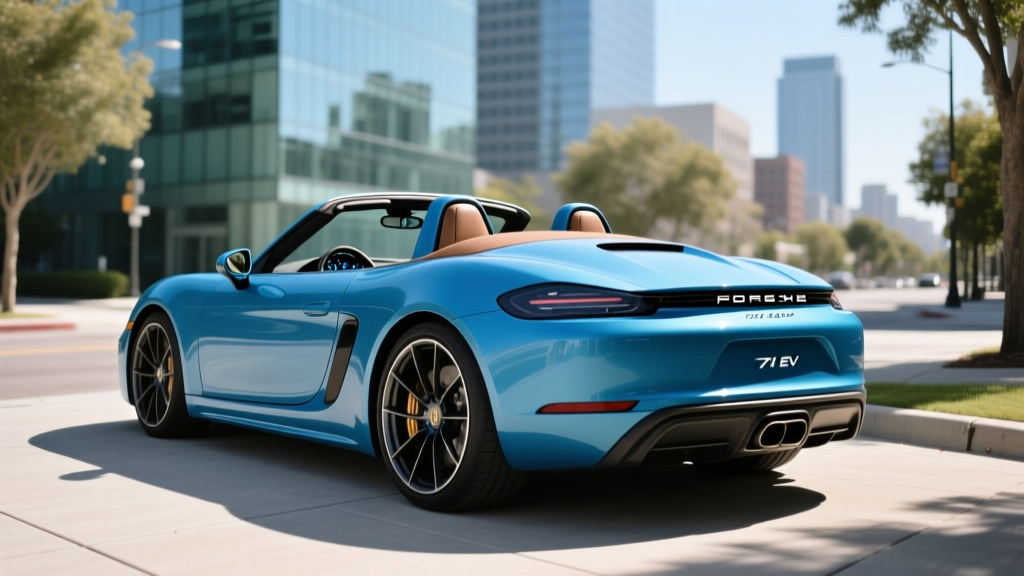
As of early 2026, the Porsche Boxster electric — officially the next-generation 718 EV — has been announced but is not yet on sale. Porsche confirmed the battery-electric 718 Boxster and Cayman will arrive as 2025/2026 model-year vehicles built on the PPE (Premium Platform Electric) architecture co-developed with Audi. Based on preliminary Porsche disclosures and PPE sibling specs (the electric Macan), expect roughly 80-100 kWh usable battery, a targeted EPA range near 250-300 miles, peak DC fast charging around 270 kW, and a starting MSRP likely between $75,000 and $85,000. Production timing has slipped from original 2024 targets; U.S. deliveries are now anticipated in late 2025 or the first half of 2026. All specs below are estimated based on platform data until Porsche publishes final U.S. figures.
Why Porsche Is Going Electric With the 718 Boxster
The mid-engine 718 Boxster has been Porsche's entry-point sports car since 1996, evolving from flat-six to turbocharged flat-four in the current generation. The electric 718 represents the most dramatic powertrain shift in the nameplate's history. Porsche's rationale is straightforward: battery-electric powertrains deliver instant torque, a lower center of gravity (battery pack mounted low in the chassis), and the ability to vector torque across axles — all advantageous for a lightweight roadster.
The electric 718 rides on a variant of the PPE platform, the same 800-volt architecture underpinning the electric Macan and Audi Q6 e-tron. This matters for buyers: 800V systems enable faster DC charging and more efficient power delivery compared to 400V architectures found in many competitors. Porsche has not confirmed whether the Boxster EV will use a single-motor rear-wheel-drive setup, dual-motor AWD, or offer both — though the brand's sports-car heritage strongly suggests RWD will be the standard configuration with AWD reserved for a GTS or Turbo variant.
Estimated Specs: Range, Battery, and Charging
Because final EPA certification numbers are not yet published, the table below draws on PPE platform capabilities, electric Macan benchmarks, and Porsche's public statements. Treat these as preliminary estimates subject to change at launch.
| Specification | Estimated Figure | Notes |
|---|---|---|
| Battery Capacity (usable) | ~80-100 kWh | PPE platform; NMC chemistry likely |
| EPA Range (est.) | 250-300 miles | Depends on trim, motor config, wheel size |
| Real-World Highway Range | ~210-260 miles | Expect 15-20% reduction at 75+ mph |
| Peak DC Fast Charge Rate | ~270 kW | 800V architecture; 10-80% in ~22 min (est.) |
| Level 2 AC Charging | 11 kW (onboard charger) | ~8-10 hours for full charge |
| 0-60 mph (base RWD est.) | ~4.5-5.0 seconds | Performance variants significantly quicker |
| Horsepower (base est.) | ~350-400 hp | Dual-motor variants could exceed 500 hp |
| Starting MSRP (est.) | $75,000-$85,000 | Before options, destination, or credits |
| Battery/Powertrain Warranty | 8 years / 100,000 miles (est.) | Consistent with Porsche Taycan coverage |
Real-World Range Reality Check
An EPA-estimated 280 miles sounds adequate for a sports car, but real-world driving tells a different story. At sustained highway speeds of 75-80 mph, expect to see 220-245 miles before needing to charge. In cold weather (below 40°F), battery efficiency drops and cabin heating draws additional energy — plan for 180-210 miles of usable range in winter conditions. For a weekend canyon run with spirited driving, heavy throttle use will reduce range further. The Boxster EV is a sports car first; efficiency is secondary to performance.
Electric Boxster vs. Gas 718 Boxster: What Changes?
The most common question from current 718 owners and prospective buyers: how does the electric version compare to the gas car it's replacing? Here's a data-driven comparison using the current-generation gas 718 Boxster as the baseline.
| Attribute | Electric 718 (Est.) | Gas 718 Boxster (Current) |
|---|---|---|
| Powertrain | Battery-electric (RWD or AWD) | 2.0L turbo flat-4 (RWD) |
| Horsepower | ~350-400 hp (base) | 300 hp |
| 0-60 mph | ~4.5-5.0 sec (base) | 4.9 sec (PDK) |
| Range / Tank | ~250-300 mi (EPA est.) | ~340 mi (16.7 gal × 24 mpg hwy) |
| "Refuel" Time | 10-80% in ~22 min (DC fast) | ~3 min at gas station |
| Curb Weight (est.) | ~4,000-4,300 lbs | ~3,100-3,200 lbs |
| Starting Price | ~$75,000-$85,000 | ~$68,300 (2024 base) |
| Annual Fuel/Energy Cost | ~$600-$900 (home charging) | ~$2,000-$2,500 (premium fuel) |
| Maintenance | Minimal (no oil, plugs, belts) | Annual oil, brakes wear faster |
| Frunk + Trunk Space | Front trunk + rear (est. ~7-9 cu ft total) | Front trunk + rear (~9.2 cu ft total) |
The trade-offs are clear. The electric 718 will be heavier — likely by 800-1,000 pounds — due to the battery pack. Porsche's engineering team has acknowledged this challenge publicly, emphasizing that chassis tuning, a low center of gravity, and rear-axle steering (if equipped) will mitigate the mass penalty. Instant electric torque will make the base EV quicker off the line than the gas base model, but the visceral flat-four exhaust note and the analog engagement of a manual-equipped 718 will not carry over. If you're a buyer who values engine sound and lightweight agility above all else, the electric transition may be a hard pill to swallow.
Cost of Ownership: What the Boxster EV Will Actually Cost You
Porsche buyers are less price-sensitive than mainstream EV shoppers, but the economics still matter — especially since the electric 718 will likely command a premium over the outgoing gas model. Here's a five-year ownership projection comparing the estimated electric 718 against the gas 718 Boxster, assuming 12,000 miles per year.
| Category | Electric 718 (Est.) | Gas 718 Boxster |
|---|---|---|
| Purchase Price (base) | $80,000 | $68,300 |
| Federal Tax Credit (§30D) | $0-$7,500* | $0 |
| Fuel/Energy (5 years) | $3,500-$4,500 | $10,000-$12,500 |
| Maintenance (5 years) | $1,500-$2,000 | $4,000-$5,500 |
| Insurance (5 years) | $12,000-$15,000 | $10,000-$13,000 |
| Estimated Depreciation | $30,000-$38,000 | $25,000-$32,000 |
| Total (5 years, est.) | $60,500-$77,000 | $55,800-$71,300 |
*Federal §30D tax credit eligibility for the electric 718 is uncertain. The credit (up to $7,500) requires the vehicle to meet MSRP caps ($55,000 for sedans/coupes — sports cars may fall under different classification), buyer income limits ($150K single / $300K joint), and battery critical-mineral sourcing requirements. Given the 718's likely MSRP above $75,000, it may exceed the cap depending on IRS vehicle classification. Consult IRS.gov §30D guidelines and a tax professional before counting on the credit.
The electric 718 saves meaningfully on fuel and maintenance — roughly $8,000-$10,000 over five years — but carries a higher purchase price and potentially steeper depreciation (EV depreciation curves are still normalizing). Insurance premiums for EVs tend to run 10-20% higher due to repair-cost data. Net: the electric 718 will likely cost somewhat more to own over five years, with the gap narrowing if you drive more miles annually or charge primarily at home on low electricity rates.
Home Charging and Daily Ownership: What First-Time EV Buyers Need to Know
If you've never owned an EV, the charging logistics are the biggest adjustment. Here's the practical reality for a prospective Boxster EV owner:
Level 1 (120V standard outlet): Adds roughly 3-5 miles of range per hour. Not viable as a primary charging strategy for a 250+ mile battery — a full charge would take 40+ hours. Useful only as an emergency trickle.
Level 2 (240V home charger): This is the baseline for EV ownership. A wall-mounted Level 2 unit delivering 11 kW (the likely onboard charger capacity) will fully replenish the 718 EV battery in roughly 8-10 hours — overnight. Installation costs vary widely:
| Component | Low End | High End |
|---|---|---|
| Level 2 Charger (hardware) | $400 | $800 |
| Electrician labor (240V circuit run) | $500 | $2,000 |
| Electrical panel upgrade (if needed) | $0 | $3,000 |
| Permit and inspection | $100 | $400 |
| Total | $1,000 | $6,200 |
If your home's electrical panel is already at or near capacity (common in older homes with 100-amp service), a panel upgrade to 200 amps may be required — this is the single biggest cost variable. Always get a licensed electrician to assess your panel before purchasing a charger.
Public DC Fast Charging: On road trips, the 800V PPE platform's ~270 kW peak rate means a 10-80% charge in roughly 22 minutes at a compatible high-power station (Electrify America, EVgo, or similar 350 kW-capable chargers). However, real-world charging curves taper significantly above 80% SoC — don't plan stops around peak kW numbers alone. A more realistic road-trip stop is 25-35 minutes per charge session when accounting for plugging in, tapering, and getting back on the road.
Cold-weather consideration: If you live in a climate with sustained sub-40°F winters, battery preconditioning (heating the pack before charging) is essential for maintaining fast-charge speeds. Porsche's thermal management system on the Taycan has proven effective; expect similar technology in the 718 EV. Budget 15-25% range loss in cold conditions.
Common Misconceptions About the Electric Porsche 718
| Myth | Fact |
|---|---|
| "It will definitely get the full $7,500 tax credit." | Unlikely at an estimated $75K+ MSRP. The §30D credit has MSRP caps and strict battery-sourcing rules. Check IRS guidelines for the model year you purchase. |
| "Electric means it won't feel like a Porsche." | The Taycan proved Porsche can tune an EV for sports-car dynamics. However, the 800-1,000 lb weight increase over the gas 718 is physics — expect different, not identical, handling feel. |
| "250+ miles of range is plenty for a sports car." | For daily driving, yes. For road trips to track days or weekend getaways, real-world highway range of ~220 miles means planning charging stops every 2-2.5 hours at highway speeds. |
| "It'll charge as fast as a Taycan." | Both use 800V PPE architecture, but charging speed depends on pack size, thermal management, and charge-curve tuning. The smaller 718 pack may sustain peak rates differently. Wait for independent testing. |
| "I can charge it on any public charger." | The electric 718 will likely use the NACS (Tesla-style) connector, as Porsche has committed to NACS adoption in North America. CCS adapters will be available, but native NACS access to Tesla Superchargers is a significant advantage. |
Decision Framework: Should You Wait for the Electric 718 or Buy Now?
Who Should Wait for the Porsche Boxster Electric
- Choose the electric 718 if: You want instant torque, lower running costs, home charging access, and don't mind a heavier car with a different sound character. You drive primarily in urban/suburban environments with occasional highway trips under 200 miles.
- Buy the current gas 718 Boxster if: Lightweight handling, exhaust note, and manual transmission engagement are non-negotiable. You regularly take road trips exceeding 300 miles, live in a charging desert, or want to avoid first-model-year EV risk.
- Consider a used gas 718 as a bridge: If you want the mid-engine Porsche experience now but plan to go electric in 2-3 years, a certified pre-owned gas 718 holds value well and avoids early-adopter pricing on the EV.
One critical timing note: Porsche has historically offered the gas 718 alongside early electric variants during transition periods (as they did with the Macan). There's a possibility — though unconfirmed — that a gas or hybrid 718 could continue in some markets. Watch for Porsche's official U.S. announcement for clarity on whether the electric 718 fully replaces the gas model or coexists temporarily.
Frequently Asked Questions
When will the Porsche Boxster electric be available in the U.S.?
Porsche has confirmed the electric 718 is in development on the PPE platform, but U.S. delivery timelines have shifted multiple times. As of early 2026, the most realistic estimate is late 2025 to mid-2026 for first customer deliveries. Porsche has not opened reservations as of this writing.
Will the electric 718 Boxster have a manual transmission?
No. Battery-electric vehicles do not use multi-speed manual transmissions. The electric 718 will use a single-speed or two-speed reduction gear (the Taycan uses a two-speed on the rear axle for performance). If a manual gearbox is essential to your sports-car experience, the gas 718 — or a competitor like the Lotus Emira — is your option.
How does the electric 718 compare to the Porsche Taycan?
The Taycan is a larger, heavier four-door sedan/cross-turismo with up to ~320 miles of EPA range (Taycan 4S, fueleconomy.gov). The electric 718 will be smaller, lighter (though still heavier than the gas 718), two-seat, and more focused on agility. Expect less range but more engaging driving dynamics. Pricing will likely overlap with mid-tier Taycan trims.
Will the electric Boxster qualify for the federal EV tax credit?
This is uncertain. The §30D credit has an MSRP cap of $55,000 for sedans and $80,000 for SUVs/trucks/vans. The IRS vehicle classification of the 718 — sports car vs. sedan — will determine which cap applies. At an estimated $75,000-$85,000 starting price, the 718 may fall above the sedan cap but potentially within the SUV/van cap if classified generously. Battery sourcing requirements add another variable. Do not assume credit eligibility; verify with a tax professional at point of purchase.
What connector will the electric Porsche 718 use?
Porsche has announced adoption of the NACS (North American Charging Standard) connector for future EVs in the U.S. market. This means native compatibility with Tesla Superchargers (now open to non-Tesla EVs) as well as Electrify America and other networks deploying NACS cables. For existing CCS-only chargers, a CCS-to-NACS adapter will likely be included or available.
Is the electric 718 heavier than the gas version? How does that affect handling?
Yes — significantly heavier. The gas 718 Boxster weighs roughly 3,100-3,200 lbs; the electric version will likely land between 4,000-4,300 lbs due to the battery pack. Porsche engineers have emphasized that the battery's low mounting position reduces the center of gravity, partially offsetting the mass. Expect excellent grip and stability, but the nimble, tossable feel of a 3,100-lb mid-engine roadster is a physics challenge that no amount of engineering fully solves. Independent track and canyon-road reviews will be essential once the car is available.