Quick Answer: Is the Porsche 911 Electric Available Now?
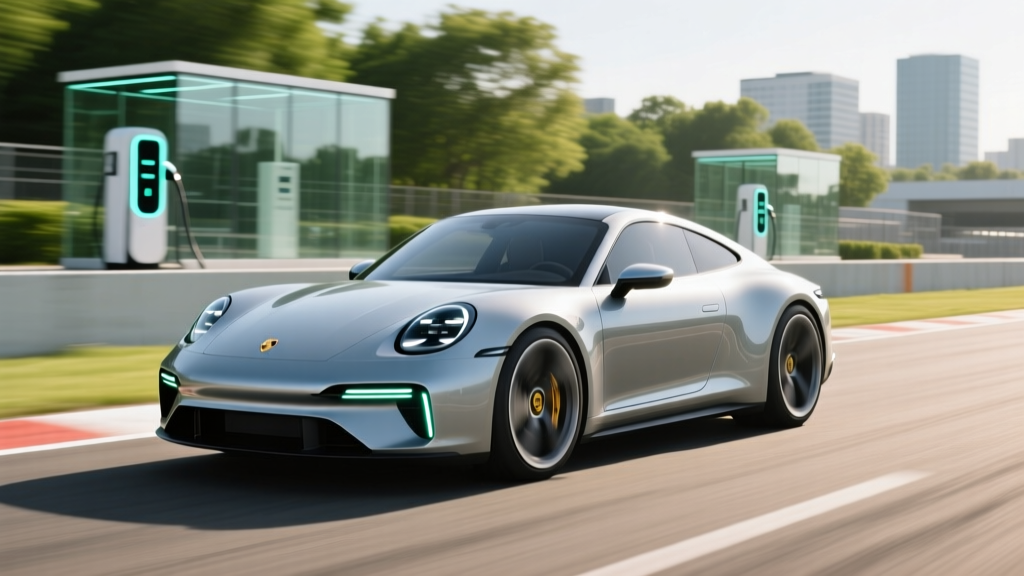
As of early 2026, the all-electric Porsche 911 is not yet available for purchase. Porsche has confirmed the next-generation 911 will offer a battery-electric variant alongside continued hybrid options, with an expected debut in late 2026 or 2027 as a 2028 model year vehicle. The current 911 lineup (992.2 generation) offers the T-Hybrid powertrain but no fully electric model. If you're searching for a "911 electric," what exists today is the 911 Carrera GTS T-Hybrid — a performance hybrid with a small electric motor assisting the flat-six engine, not a plug-in or battery-electric vehicle.
What We Know About the Electric Porsche 911
Porsche CEO Oliver Blume confirmed in 2024 that the next-generation 911 will be offered with a fully electric powertrain, built on a new version of Porsche's electric architecture. This represents a historic shift for the 911, a nameplate that has relied on rear-mounted flat-six engines since 1964. However, Porsche has been deliberate about the transition, continuing to invest in synthetic fuels and hybrid powertrains as parallel strategies.
Based on Porsche's current EV platform capabilities (seen in the Taycan and the Macan EV on the PPE platform), plus statements from Porsche engineers, here are the preliminary estimated specifications for the electric 911. These are projections based on available platform data, not confirmed production figures:
| Specification | Estimated Value |
|---|---|
| Platform | Dedicated EV sports car architecture (next-gen PPE derivative) |
| Battery Capacity (usable) | ~85–100 kWh (NMC chemistry expected) |
| EPA Range (est.) | ~280–330 miles |
| Peak DC Fast Charge Rate | ~270–320 kW (800V architecture) |
| 10–80% DC Charge Time (est.) | ~18–22 minutes |
| Level 2 AC Charge Rate | 11–22 kW onboard charger |
| 0–60 mph (est.) | ~2.5–3.5 seconds (varies by trim) |
| Horsepower (est.) | ~500–750+ hp depending on variant |
| Drivetrain | AWD likely standard; RWD possible for base/specialty trims |
| Estimated Base MSRP | $120,000–$140,000+ (before options) |
| Federal Tax Credit (§30D) | Unlikely to qualify — exceeds MSRP cap and likely income/sourcing hurdles |
Important: All figures above are estimates derived from Porsche's existing EV technology and public statements. Final production specs may differ significantly. We will update this article when Porsche releases official data.
The 911 Electric vs. the Current Gas and Hybrid 911
For buyers researching a "911 electric" today, the closest purchasable option is the 2025/2026 Porsche 911 Carrera GTS T-Hybrid. This is not a plug-in hybrid — it cannot charge from a wall outlet and has no electric-only range. Instead, it uses a small electric motor integrated into the turbocharger and an 8-speed PDK transmission to fill torque gaps and boost performance. The result is more power and sharper throttle response, not fuel savings from electric driving.
| Attribute | 911 Carrera (Gas) | 911 Carrera GTS T-Hybrid | 911 Electric (Est., Unreleased) |
|---|---|---|---|
| Powertrain | 3.0L twin-turbo flat-6 | 3.6L turbo flat-6 + electric motor | Dual-motor BEV (est.) |
| Horsepower | 388 hp | 532 hp | ~500–750+ hp (est.) |
| 0–60 mph | 3.9 sec | 2.9 sec | ~2.5–3.5 sec (est.) |
| EPA Fuel Economy / Efficiency | ~20/25 MPG (city/hwy) | ~21/27 MPG (city/hwy) | ~85–95 MPGe (est.) |
| Range / Tank | ~340 miles (17.4 gal) | ~350 miles | ~280–330 miles (est.) |
| Refuel/Recharge Time | ~5 min (gas station) | ~5 min (gas station) | ~18–22 min 10–80% DC (est.) |
| Starting MSRP | ~$120,100 | ~$164,900 | ~$120,000–$140,000+ (est.) |
| Plug-in / Electric-Only Range | No | No | Yes, fully electric |
The T-Hybrid's electric motor adds roughly 70 hp and fills in turbo lag, but the car still burns gasoline exclusively. Buyers expecting a plug-in experience from the current 911 hybrid will be disappointed — this is a performance hybrid, not an efficiency play.
Real-World Ownership: What to Expect from an Electric 911
Owning a high-performance EV like the electric 911 will come with the same practical realities that apply to the Taycan, but amplified by the sports car use case:
Range Reality: Highway and Track Driving
Porsche's Taycan achieves strong EPA range figures (up to 318 miles for the 2025 Taycan with Performance Battery Plus), but real-world highway driving at 75–80 mph typically yields 80–85% of that sticker number. For an electric 911 with an estimated 300-mile EPA range, plan for ~240–260 miles of real-world highway range in moderate temperatures.
Track days present a steeper challenge. Sustained high-speed, high-load driving can cut range by 40–60%. A Taycan on a road course can deplete its battery in under 45 minutes of hard driving. The electric 911 will face similar physics — expect 60–90 miles of range during aggressive track use, making it a car you drive to the track on a trailer or charge extensively between sessions.
Charging Infrastructure for Sports Car Owners
Porsche uses the NACS (Tesla) connector for its newer EVs starting with the 2025 Macan EV, and the electric 911 is expected to follow. This gives access to Tesla Superchargers (17,000+ stalls in North America) plus Electrify America, EVgo, and other networks.
At home, a Level 2 charger (240V, 48A) delivering ~11.5 kW would recharge the estimated 90 kWh battery from 10–80% in roughly 5.5 hours — overnight is sufficient for daily use. Installation costs for a home Level 2 setup typically run $1,200–$3,500 depending on panel capacity and run length, per U.S. Department of Energy guidance.
Climate and Battery Chemistry
Porsche has historically used NMC (nickel manganese cobalt) chemistry in the Taycan for its high energy density and power delivery. The electric 911 is likely to follow suit. NMC batteries perform well in moderate climates but experience more range loss in extreme cold than LFP (lithium iron phosphate) alternatives — typically 20–30% range reduction below freezing.
Porsche's thermal management system in the Taycan is among the best in the industry, with active battery preconditioning that warms the pack before DC fast charging. Expect the electric 911 to carry this technology forward, minimizing cold-weather charging slowdowns.
Cost Breakdown: Electric 911 vs. Gas 911 Ownership
At the price point of a 911, buyers are less focused on fuel savings and more on total experience cost. Still, the numbers tell a story:
| Cost Category | 911 Carrera GTS (Gas) | 911 Electric (Est.) |
|---|---|---|
| Purchase Price (MSRP) | $164,900 | $130,000 (est.) |
| Federal Tax Credit | $0 | $0 (likely ineligible — above MSRP cap) |
| Fuel/Energy (5 years) | $18,750 (premium gas at ~$5/gal, 22 MPG avg) | $6,750 (electricity at ~$0.15/kWh, 3 mi/kWh) |
| Maintenance (5 years) | $6,000–$8,000 (oil, filters, brakes, plugs) | $2,500–$4,000 (tires, cabin filter, brake fluid) |
| Insurance (5 years) | $22,000–$28,000 | $24,000–$32,000 (EVs typically 10–15% higher) |
| Estimated Depreciation (5 yr) | $65,000–$80,000 | $55,000–$75,000 (EV depreciation improving) |
| Estimated 5-Year Total | $276,650–$299,650 | $218,250–$248,750 |
The electric 911 may offer meaningful savings in fuel and maintenance over five years — roughly $12,000–$16,000 less in operating costs. However, insurance premiums for EVs run higher due to repair complexity and parts costs, and depreciation remains uncertain for a first-generation electric 911. Porsche's brand cachet may protect resale value better than most EVs, but early adopters of new EV nameplates historically see steeper first-year depreciation.
Federal tax credit note: Under current IRS §30D rules, the $7,500 clean vehicle credit has an MSRP cap of $55,000 for sedans and $80,000 for SUVs/pickups/vans. A sports car like the 911 would fall under the $55,000 sedan cap, making it categorically ineligible regardless of battery sourcing. The point-of-sale transfer option is irrelevant here.
Common Misconceptions About the Electric 911
| Myth | Fact |
|---|---|
| "The 911 hybrid is an electric car" | The current T-Hybrid is a mild performance hybrid. It cannot plug in and has zero electric-only range. |
| "An electric 911 won't sound right" | Porsche has developed synthetic sound profiles for its EVs (the Taycan's "Electric Sport Sound"). Whether this satisfies flat-six enthusiasts is subjective, but the performance will be undeniable. |
| "It will qualify for the $7,500 tax credit" | At an estimated $120,000+ MSRP, the electric 911 far exceeds the §30D MSRP cap. No federal purchase credit applies. |
| "Electric cars can't handle like a 911" | The Taycan has proven Porsche can engineer exceptional handling from an EV platform. Low center of gravity from the battery pack aids cornering. Weight remains the challenge — expect 4,800–5,200 lbs vs. ~3,500 lbs for a gas Carrera. |
| "The gas 911 is going away" | Porsche has committed to selling the 911 with combustion engines (including hybrids) alongside the EV variant for the foreseeable future, supported by synthetic fuel development. |
| "I can buy one now" | The electric 911 is not yet in production. Expected reveal is late 2026 or 2027, with deliveries likely in 2028. |
Decision Framework: Should You Wait or Buy Now?
If X, Then Y — Your 911 Electric Decision
- If you want a 911 today and prioritize driving engagement: Buy the 2025/2026 911 Carrera GTS T-Hybrid ($164,900). You get the most powerful non-turbocharged 911 ever with the flat-six sound and 2.9-second 0–60 time. It's the peak of the analog-meets-digital 911.
- If you want a 911 today and want electrification: The T-Hybrid is your only current option, but understand it's not a plug-in. For a true Porsche EV experience now, the Taycan offers up to 318 miles of EPA range and 2.2-second 0–60 in Turbo GT trim.
- If you can wait 2–3 years and want the definitive electric sports car: Hold for the electric 911. Porsche's 800V architecture, NACS charging compatibility, and proven EV engineering suggest it will be the benchmark electric sports car when it arrives.
- If track days are central to your ownership: The gas 911 remains the better track tool for now. Refueling in 5 minutes vs. 20+ minute charging stops, plus lower weight, make the combustion 911 more practical for repeated hot laps.
- If daily driving and commuting dominate your use: The electric 911 will excel here — instant torque, silent operation, lower running costs, and no gas station visits if you charge at home.
What First-Time EV Buyers Should Know Before Committing to an Electric 911
If the electric 911 will be your first EV, prepare for these ownership realities:
- Home charging is essential. Without a Level 2 home charger (240V, ~11.5 kW), daily EV ownership becomes burdensome. Confirm your electrical panel has capacity for a 60A circuit before committing. Budget $1,200–$3,500 for professional installation.
- Charging speed matters more than range. Porsche's 800V architecture enables sustained fast charging that most competitors can't match. A 270+ kW peak charge rate means real 18–22 minute pit stops, not the 40+ minute sessions some EVs require.
- Tires wear faster on EVs. The instant torque and heavier weight of EVs accelerate tire wear by 20–30% compared to gas equivalents. Budget for premium tire replacements every 20,000–30,000 miles.
- Insurance costs more. EV insurance premiums run 10–15% higher on average due to specialized repair requirements and higher parts costs. Get a quote before purchasing.
- The §30D tax credit won't help here. At well above the MSRP cap, the electric 911 won't qualify for federal purchase incentives. Some states offer separate EV rebates — check your state incentives for potential savings.
Frequently Asked Questions
When will the Porsche 911 electric be available to buy?
Porsche has not confirmed an exact sale date. Based on the company's product timeline and statements from CEO Oliver Blume, the electric 911 is expected to debut in late 2026 or 2027 as a 2028 model year vehicle, with deliveries likely beginning in 2028.
Will the electric 911 replace the gas 911?
No. Porsche has committed to offering the 911 with combustion engines (including the T-Hybrid) alongside the electric variant. Synthetic fuel development is part of Porsche's strategy to keep the flat-six alive. Expect both powertrains to coexist for at least a decade.
How much will the electric Porsche 911 cost?
Based on the current 911 lineup and Porsche's EV pricing strategy (the Taycan starts at ~$99,400 and the Macan EV at ~$78,800), an electric 911 base model is estimated at $120,000–$140,000, with higher-performance variants potentially exceeding $180,000.
Will it use the Tesla NACS connector or CCS?
Porsche has adopted NACS for its newer EVs (starting with the 2025 Macan EV). The electric 911 is expected to use NACS natively, providing access to the Tesla Supercharger network and other NACS-equipped stations.
Can the current 911 T-Hybrid drive on electric power alone?
No. The 911 Carrera GTS T-Hybrid uses an electric motor integrated into the drivetrain to boost performance and fill torque gaps, but it has no electric-only driving mode and cannot be plugged in. It operates exclusively on gasoline.
Is an electric 911 heavier than the gas version?
Yes, significantly. The gas 911 Carrera weighs approximately 3,400–3,500 lbs. An electric 911 with a ~90 kWh battery pack is estimated at 4,800–5,200 lbs — roughly 1,400–1,700 lbs more. Porsche's engineering will focus on masking this weight through advanced suspension tuning and torque vectoring, but physics is physics on a road course.