The Quick Answer on the Porsche 718 EV
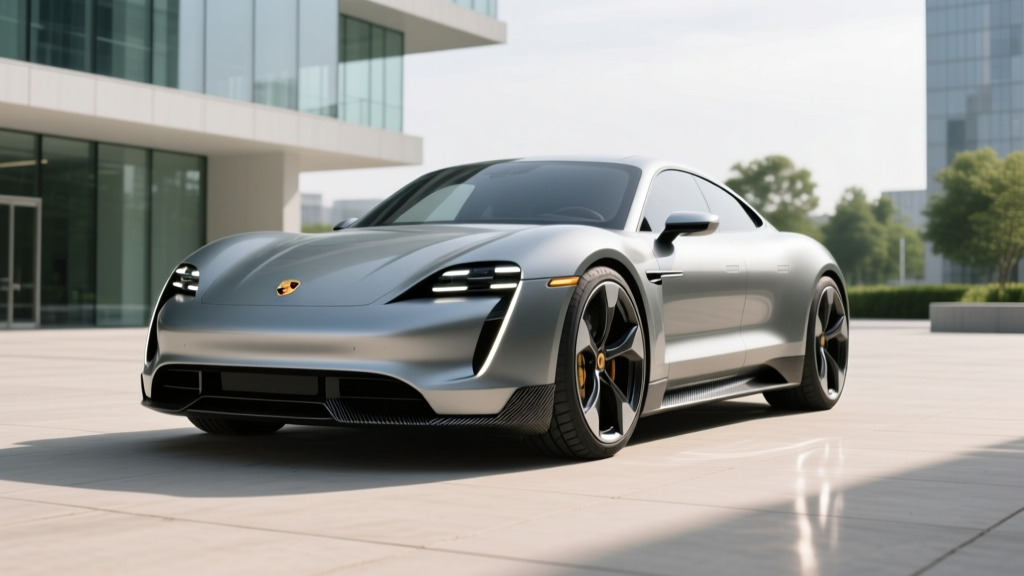
The Porsche 718 EV — the fully electric successor to the Boxster and Cayman — is announced but not yet on sale as of early 2026. Porsche has confirmed the next-generation 718 will be battery-electric, built on the PPE (Premium Platform Electric) architecture co-developed with Audi. Based on preliminary details and platform siblings, expect a usable battery around 100 kWh, 800-volt architecture enabling peak DC fast charging above 270 kW, and an EPA-estimated range targeting 280–320 miles depending on trim. Pricing is projected to start near $75,000–$80,000 for the Boxster, with the Cayman and higher-performance variants climbing well past $100,000. Final EPA-certified specs, MSRP, and delivery dates remain unconfirmed — treat all figures here as preliminary estimates based on platform data and Porsche's own statements.
What We Know About the Porsche 718 EV Platform
Porsche confirmed the electric 718 lineage will ride on the PPE (Premium Platform Electric) architecture, the same 800V system underpinning the Taycan and the newer Macan Electric. This is significant because it dictates the 718 EV's charging behavior, powertrain layout, and performance envelope far more than any marketing render can.
The PPE platform supports rear- and all-wheel-drive configurations, dual-motor setups, and battery packs ranging roughly from 80 to 100+ kWh (usable). For a mid-engine sports car transitioning to a mid-battery layout, Porsche engineers have signaled the pack will sit low and behind the driver to preserve the 718's signature weight distribution and rotational inertia characteristics — the physics that make a Boxster handle like a Boxster.
What this means practically: the 718 EV will likely offer a single-motor rear-wheel-drive base model and dual-motor AWD performance variants, mirroring how the Taycan lineup is structured. The 800V architecture is the headline spec — it enables faster DC charging and more efficient power delivery compared to 400V systems found in many competitors.
Estimated Specs: Range, Battery, and Charging
| Attribute | Boxster (Est.) | Boxster S / GTS (Est.) | Cayman (Est.) |
|---|---|---|---|
| Battery (usable) | ~95–100 kWh (NMC) | ~95–100 kWh (NMC) | ~95–100 kWh (NMC) |
| Architecture | 800V | 800V | 800V |
| EPA Range (target) | ~300–320 mi | ~280–300 mi | ~290–310 mi |
| Peak DC Charge Rate | ~270 kW | ~270 kW | ~270 kW |
| 10–80% DC Charge | ~20–22 min (est.) | ~20–22 min (est.) | ~20–22 min (est.) |
| Level 2 AC Charge | 11 kW (onboard) | 11 kW (onboard) | 11 kW (onboard) |
| 0–60 mph | ~5.0 sec | ~3.5–4.0 sec | ~4.8 sec |
| Horsepower | ~350–400 hp | ~500+ hp | ~350–400 hp |
| Drivetrain | RWD / AWD | AWD | RWD / AWD |
| Starting MSRP (est.) | ~$75,000–$80,000 | ~$95,000+ | ~$72,000–$78,000 |
Real-World Range Expectations
If the 718 EV lands near a 300-mile EPA estimate, plan for approximately 240–260 miles in sustained highway driving at 75+ mph, and potentially 200–230 miles in cold weather (below 32°F) without preconditioning. Sports cars tend to sacrifice efficiency for performance — wider tires, aggressive aero tuning, and spirited driving will push consumption higher. The Taycan averages roughly 2.0–2.5 kWh/mile in real-world mixed driving; expect similar figures here.
The charging curve matters as much as the peak kW number. Porsche's 800V Taycan sustains high charge rates longer than most competitors — holding above 150 kW well past 50% SoC before tapering. If the 718 EV mirrors this behavior, a 20-minute 10–80% session at a 350 kW-capable Electrify America or Tesla Supercharger (with NACS adapter, if equipped) is realistic. However, actual charge speed depends on battery temperature, preconditioning status, and the charger's actual output — peak 270 kW is a ceiling, not an average.
718 EV vs. Gas Boxster/Cayman: Cost & Driving Comparison
For buyers cross-shopping the outgoing gas 718 (if remaining inventory exists) or comparing against the electric version, the economics and driving experience differ substantially.
| Factor | 718 EV (Est.) | 718 Boxster Gas (2024 Final) |
|---|---|---|
| Base MSRP | ~$75,000–$80,000 | ~$68,300 (base) / ~$82,600 (GTS 4.0) |
| 0–60 mph | ~5.0 sec (base) | 4.9 sec (base) / 3.8 sec (GTS 4.0) |
| Energy/Fuel Cost (per mile) | ~$0.04–$0.06 (home L2) | ~$0.18–$0.22 (premium 91 octane) |
| Annual Fuel/Energy (12k mi) | ~$480–$720 | ~$2,160–$2,640 |
| Annual Maintenance | ~$300–$500 | ~$800–$1,500 |
| Estimated 5-Year Fuel/Energy | ~$2,400–$3,600 | ~$10,800–$13,200 |
| Weight | ~4,200–4,500 lbs (est.) | ~3,200–3,400 lbs |
| Cargo (frunk + rear) | ~5–7 cu ft (est.) | ~9.0 cu ft (combined trunks) |
The EV wins on operating cost by a wide margin — roughly $1,500–$2,000 per year in fuel and maintenance savings. Over five years, that's $7,500–$10,000 back in your pocket. But the gas 718 holds a structural advantage in weight (over 1,000 lbs lighter) and, for purists, the analog feedback of a flat-six engine and manual transmission option — something the EV cannot replicate.
Insurance is another real cost: Porsche EVs typically carry 15–25% higher premiums than their gas counterparts due to repair complexity and battery replacement cost exposure. Get a quote before committing.
Federal Tax Credit: Will the 718 EV Qualify?
This is where Porsche buyers often face disappointment. Under current IRS §30D rules, the new clean vehicle credit offers up to $7,500 — but with strict limitations:
- MSRP cap: Sedans and sports cars are capped at $55,000 MSRP. The 718 EV, projected at $75,000+, will almost certainly exceed this cap and will not qualify for the new-vehicle federal credit.
- Buyer income limits: Even if it somehow qualified, adjusted gross income must not exceed $150,000 (single) / $300,000 (joint).
- Battery sourcing: Critical minerals and battery component requirements must be met — increasingly difficult for European-manufactured vehicles.
- Point-of-sale transfer: Eligible credits can be transferred to the dealer at purchase for an instant discount, but only if all other criteria are satisfied.
Bottom line: do not budget around a federal tax credit for the 718 EV. Some states (California, Colorado, New York, among others) offer additional EV incentives that may apply regardless of MSRP — check your state's energy or DMV website for current programs. Consult a tax professional for your specific situation.
Real-World Ownership: What First-Time EV Buyers Should Know
If the 718 EV is your first electric vehicle, several practical realities will shape your ownership experience more than any spec sheet:
Home charging is essential. A Level 2 home charger (240V, 40–48 amps, delivering 9.6–11.5 kW) will fully replenish a ~100 kWh battery overnight in roughly 9–11 hours. Professional installation typically costs $500–$2,000 depending on panel capacity and run length. If your home electrical panel is at or near capacity (common in older homes with 100-amp service), a panel upgrade to 200 amps can add $1,500–$3,500. Always hire a licensed electrician and pull permits — this is not a DIY project.
Public fast charging works, but plan ahead. The 800V architecture means the 718 EV will charge quickly at compatible stations, but 350 kW chargers are still not ubiquitous. Use apps like PlugShare or A Better Routeplanner to map DC fast charging along regular routes. Porsche's charging network partnerships (via Electrify America) typically include some complimentary charging for new EV buyers — confirm terms at purchase.
Cold weather reduces range. Lithium-ion batteries lose efficiency in cold temperatures. Expect 15–30% range reduction in sustained sub-freezing conditions, mitigated partially by the heat pump (expected standard on PPE-platform vehicles) and battery preconditioning. If you live in a cold climate and regularly drive 200+ miles in winter, the real-world range may feel tight.
Battery longevity and warranty. Porsche covers the Taycan's battery for 8 years / 100,000 miles against defects and excessive degradation (typically below 70% capacity retention). Expect similar coverage on the 718 EV. NMC chemistry degrades gradually — most owners see 5–10% capacity loss in the first 3–5 years, then a slower decline. Battery replacement, if ever needed out of warranty, is estimated at $15,000–$25,000+ for a pack this size — though full replacements remain rare.
Common Misconceptions About the 718 EV
| Myth | Fact |
|---|---|
| "It won't handle like a real 718." | Porsche engineers have stated the low-slung battery pack will maintain a low center of gravity. The added weight (~1,000+ lbs over gas) will change the character — more planted, less tossable — but Porsche's chassis tuning pedigree is unmatched. Reserve judgment until professional track testing is available. |
| "It qualifies for the $7,500 federal tax credit." | The §30D MSRP cap for cars (non-SUVs) is $55,000. At an estimated $75,000+ starting price, the 718 EV will almost certainly not qualify. Check IRS guidelines for current rules. |
| "The battery will need replacing in 5 years." | Modern NMC packs with active thermal management routinely last 150,000–200,000+ miles before reaching 80% capacity. Porsche's 8-year/100,000-mile battery warranty provides a floor. Full replacements are uncommon. |
| "I can charge it at any public station." | Connector compatibility matters. If Porsche equips the 718 EV with NACS (Tesla-style), it will access Superchargers natively. If CCS, you'll need an adapter for Superchargers. Verify connector type before planning road trips. |
| "It will be cheaper to own than my gas 718." | Cheaper to operate, yes — roughly $1,500–$2,000/year in fuel and maintenance savings. But higher purchase price, potentially higher insurance, and no federal tax credit mean total cost of ownership may be comparable over 5 years, depending on mileage and electricity rates. |
Decision Framework: Should You Wait for the 718 EV?
Choose the Porsche 718 EV If:
- You want a Porsche sports car with the lowest possible operating costs and instant electric torque.
- You have reliable home Level 2 charging access (or can install it).
- You prioritize daily-driver usability and commute efficiency over weekend track sessions.
- You're willing to pay a premium for an EV sports car and accept that final specs, pricing, and delivery dates are still TBD.
- You drive under 250 miles per day and can charge overnight — making the ~280–320 mile range more than sufficient.
Look Elsewhere (or Wait for More Data) If:
- You rely exclusively on apartment/condo living with no charging access and no plans to install a charger.
- You need a sub-$60,000 sports car — the 718 EV will not land there, and no federal credit will bridge the gap.
- Weight-sensitive track driving is your primary use case — the gas 718 (if you can find remaining inventory) or a lighter EV like the Lotus Emeya may suit better.
- You need confirmed EPA range, final MSRP, and delivery dates before committing — wait until Porsche publishes official specs and opens orders.
- You live in a region with minimal DC fast charging infrastructure and regularly take 300+ mile trips.
Frequently Asked Questions
When will the Porsche 718 EV be available to buy?
Porsche has confirmed the electric 718 is in development but has not announced a firm on-sale date as of early 2026. Industry estimates point to a late 2025 reveal with deliveries beginning in the 2026 or 2027 model year. Monitor Porsche's official press channels for confirmed timing.
Will the 718 EV have a manual transmission?
No. Like all current production EVs, the 718 EV will use a single-speed reduction gear (or possibly a 2-speed rear axle like the Taycan). There is no clutch or traditional gear lever. Porsche's PDK dual-clutch is also gone — electric motors don't need multi-ratio gearboxes for most driving.
Will it use NACS (Tesla) or CCS charging connectors?
Porsche has not confirmed the connector for the 718 EV specifically. However, Porsche North America has committed to adopting the NACS (Tesla) standard across its EV lineup, beginning with updated Taycan models. It is highly likely the 718 EV will ship with a native NACS port, granting direct access to Tesla Superchargers without an adapter.
How does the 718 EV compare to the Taycan?
The Taycan is a four-door performance sedan (or Sport Turismo wagon); the 718 EV is a two-seat sports car. They share the PPE 800V platform, but the 718 EV will be shorter, lighter (though still heavy by sports car standards), and focused on handling agility over passenger practicality. Expect similar charging performance but different driving dynamics — lower, more mid-ship weight bias in the 718.
What will insurance cost for the 718 EV?
Porsche vehicles already carry elevated insurance premiums. EV variants typically add 15–25% on top due to battery replacement cost exposure and specialized repair requirements. For a driver with a clean record, expect annual premiums in the $3,000–$5,500+ range depending on state, age, coverage level, and driving history. Always get a personalized quote before purchasing.
Can I reserve a 718 EV now?
As of this writing, Porsche has not opened public reservations for the 718 EV. Contact your local Porsche dealer to express interest and join any informal waitlists. Be cautious of third-party sites claiming to accept deposits — only reserve through official Porsche channels.