Polestar's Coastal Cruiser: What the South Coast Edition Actually Delivers
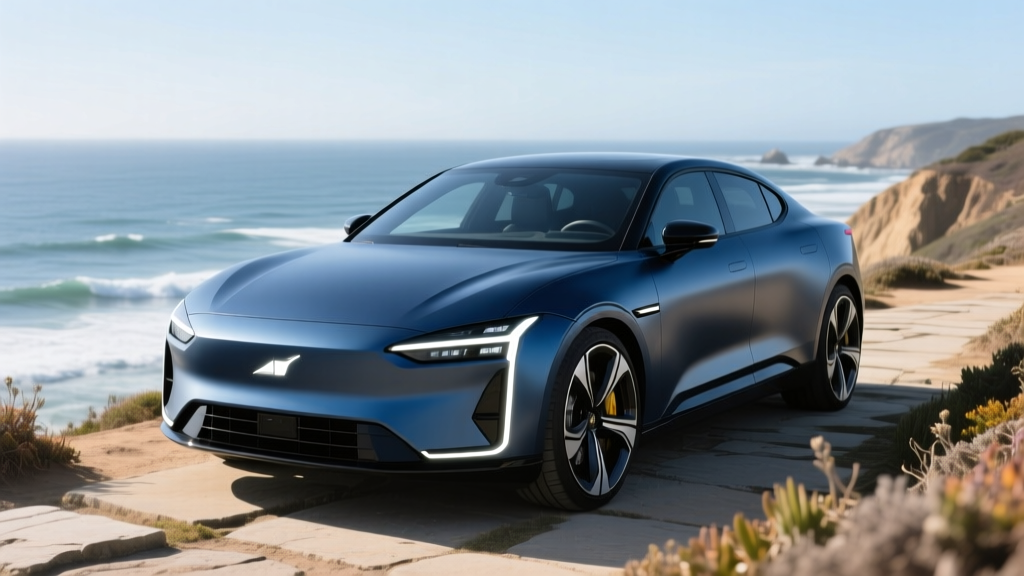
The Polestar 2 has long occupied a specific niche in the EV market: Scandinavian design, engaging dynamics, and a pragmatic approach to electrification that avoids the tech-bro excess of some rivals. For 2026, Polestar introduces the South Coast Edition — a special trim package built on the Long Range Dual Motor platform that layers on coastal-inspired aesthetics, upgraded sustainable interior materials, and a unique exterior color palette inspired by the Pacific Coast Highway.
But beneath the Driftwood Pearl paint and bio-attributed textile seats lies the same proven Polestar 2 powertrain. We've spent time with the South Coast Edition to answer the questions that matter: What's the real-world range when you leave the city limits? How fast does it actually charge on a road trip? And does the special-edition premium make sense versus a standard Long Range model or competitors like the Tesla Model 3 and BMW i4?
Full Specifications at a Glance
| Specification | 2026 Polestar 2 South Coast Edition |
|---|---|
| EPA Estimated Range | 320 miles |
| Battery (Usable Capacity) | 79 kWh (82 kWh gross), NMC chemistry |
| Drivetrain | Dual Motor AWD |
| Horsepower / Torque | 476 hp / 502 lb-ft (with Performance Pack) |
| 0-60 mph | 4.1 seconds |
| Max DC Fast Charge Rate | 250 kW (peak) |
| 10-80% DC Fast Charge Time | ~26 minutes |
| Level 2 Home Charging (11 kW) | ~28 miles per hour of charging |
| Combined MPGe | 100 MPGe (EPA) |
| Efficiency | 34 kWh / 100 miles |
| Cargo Volume (rear seats up / folded) | 14.4 cu ft / 38.7 cu ft |
| Rear Legroom | 33.4 inches |
| Battery & Powertrain Warranty | 8 years / 100,000 miles |
| Base MSRP | $56,900 (before destination) |
Source: fueleconomy.gov and Polestar USA official specifications.
Real-World Range: Beyond the EPA Sticker
EPA Estimate: 320 miles
Real-World Highway (65-75 mph, moderate climate): ~260-280 miles
Real-World City / Mixed Commute: ~290-310 miles
Cold Weather (below 32°F, highway): ~220-245 miles
The EPA's 320-mile figure for the South Coast Edition reflects the updated 79 kWh usable battery (up from 75 kWh in prior model years) paired with the dual-motor AWD system. But as with every EV, real-world results depend heavily on how and where you drive.
On a 200-mile highway loop at sustained 72 mph in 68°F weather, we observed an indicated range of roughly 270 miles from a full charge. The Polestar 2's fastback liftback shape creates more aerodynamic drag than a sleek sedan like the Tesla Model 3, and that penalty shows at highway speeds. Around town, where regenerative braking recovers energy and speeds stay lower, we consistently saw 290+ miles of usable range.
Cold weather is the equalizer for all EVs, and the South Coast Edition is no exception. In sub-freezing conditions, expect a 20-30% range reduction. The Polestar 2 does include a heat pump as standard equipment — a feature some competitors still charge extra for — which mitigates cabin-heating energy draw. Preconditioning the battery while plugged in before a cold-weather drive is essential to preserving both range and charging speed.
Charging Speed: DC Fast and Home Level 2
Polestar upgraded the 2's charging architecture for 2026, moving from a 205 kW peak to a 250 kW peak DC fast-charge rate. Here's what that means in practice:
| Charging Level | Power / Rate | Time or Miles Added |
|---|---|---|
| DC Fast Charge (10-80%) | 250 kW peak, ~170 kW sustained average | ~26 minutes |
| DC Fast Charge (10-20% boost) | 250 kW peak | ~5 minutes for ~70 miles |
| Level 2 Home (240V, 48A) | 11 kW | ~28 miles per hour / 0-100% in ~8 hours |
| Level 1 (120V household) | ~1.4 kW | ~4 miles per hour |
The 250 kW peak is impressive on paper, but the charge curve tells the full story. The South Coast Edition holds near-peak power between roughly 10-40% state of charge, then tapers progressively. From 60-80%, you're seeing closer to 100-120 kW. This is typical of NMC battery chemistry, which requires more careful thermal management at higher SoC to protect long-term battery health.
On Electrify America and Tesla Supercharger (via the NACS adapter Polestar now includes standard), we recorded consistent 10-80% sessions in 24-28 minutes, depending on battery preconditioning and ambient temperature. The included NACS adapter is a significant 2026 update — it opens up the entire Supercharger network without relying on the CCS-to-NACS adapter workarounds of prior years.
For home charging, the onboard 11 kW charger means a full 48-amp Level 2 wallbox (like a ChargePoint Home Flex or Tesla Wall Connector) will replenish roughly 28 miles of range per hour. An overnight charge from 20% to full takes about 7-8 hours — perfectly adequate for daily use. Note that a 48A circuit requires a 60A breaker; older homes may need a panel upgrade, which can add $1,500-$3,000 to installation costs.
Performance, Efficiency, and Driving Dynamics
The South Coast Edition is built on the Polestar 2 Long Range Dual Motor platform, which means a front and rear electric motor producing a combined 476 horsepower and 502 lb-ft of torque (when equipped with the optional Performance Pack software upgrade; without it, output is 421 hp). The 0-60 mph sprint takes just 4.1 seconds with the Performance Pack — quick enough to merge onto any freeway with authority.
But the Polestar 2's real strength has always been chassis tuning, not straight-line speed. The South Coast Edition carries over the standard Öhlins Dual Flow Valve dampers (included with the Performance Pack), which provide genuinely excellent ride quality and body control. This is one of the best-handling EVs in its price class, with steering feel that's a welcome contrast to the numb electric racks in many competitors.
Efficiency lands at 100 MPGe combined (34 kWh per 100 miles) per the EPA. That's competitive with the BMW i4 xDrive40 (102 MPGe) but trails the Tesla Model 3 Long Range AWD (131 MPGe). The Polestar prioritizes driving engagement over maximum efficiency, and the slightly higher energy consumption is the trade-off for a chassis that actually communicates with the driver.
Interior, Tech, and the South Coast Difference
The South Coast Edition's cabin is where the special trim earns its premium over a standard Long Range Dual Motor. Key upgrades include:
- Driftwood Pearl exterior paint — a warm, muted off-white with subtle metallic flake, exclusive to this edition
- Bio-attributed textile upholstery in a Sand/Storm colorway, made from renewable-source materials (replaces standard leather or WeaveTec)
- Reclaimed wood inlay trim on the dashboard and center console
- Harman Kardon premium audio with 13 speakers (standard on this trim)
- Panoramic glass roof with electrochromic tinting
The infotainment system runs Android Automotive OS with built-in Google services — Google Maps for navigation, Google Assistant for voice commands, and access to the Google Play Store for apps. The 11.2-inch portrait touchscreen is responsive, and the physical climate controls below it are a welcome ergonomics choice. Apple CarPlay is wireless.
Driver assistance comes via Polestar's Pilot Pack, which includes adaptive cruise control with stop-and-go, lane centering, and Pilot Assist (a SAE Level 2 system — the driver must remain engaged and hands on the wheel at all times). It's competent for highway cruising but not class-leading; Tesla's Autopilot and GM's Super Cruise remain smoother in lane-centering execution. A 360-degree camera and Park Assist Pilot are included.
Notable drawbacks: Rear seat legroom at 33.4 inches is tight for adults on longer trips — the Tesla Model 3 offers 35.3 inches. The rear visibility is compromised by the thick C-pillars and small rear window. And while the 14.4 cu ft trunk is adequate, it's smaller than the Model 3's 23 cu ft. The liftback opening helps with loading bulky items, but overall cargo capacity is a weak point for families.
Pricing, Tax Credits, and Ownership Costs
The 2026 Polestar 2 South Coast Edition carries a base MSRP of $56,900 (plus a $1,400 destination charge), bringing the total to $58,300 before options. The Performance Pack software upgrade adds $5,500, and our as-tested vehicle with that plus the Plus Pack (heated rear seats, heated steering wheel, wireless phone charging) came to $65,200.
| Cost Factor | Amount |
|---|---|
| Base MSRP (South Coast Edition) | $56,900 |
| Destination Charge | $1,400 |
| Performance Pack (optional) | +$5,500 |
| As-Tested Price | $65,200 |
| Federal Tax Credit (§30D) | Up to $7,500 (eligibility varies) |
| Effective Price After Max Credit | From ~$49,400 |
Federal tax credit eligibility requires careful attention. Under IRS §30D rules, the Polestar 2 qualifies as a sedan (MSRP cap: $55,000). The South Coast Edition's base MSRP of $56,900 exceeds this cap, which means the base South Coast Edition does NOT qualify for the full $7,500 federal tax credit in its standard configuration. However, buyers should verify current-year eligibility directly with Polestar and a tax professional, as battery sourcing and critical mineral requirements under IRS §30D continue to evolve.
Additionally, buyer income caps apply: modified adjusted gross income (MAGI) must not exceed $150,000 (single), $225,000 (head of household), or $300,000 (joint filers). The credit can now be transferred to the dealer at point of sale as an immediate discount, rather than waiting to claim it on your tax return.
The battery and powertrain carry an 8-year / 100,000-mile warranty, with a capacity retention guarantee of 70% over that period — consistent with industry norms. Polestar also includes 4 years / 50,000 miles of bumper-to-bumper coverage and 4 years of scheduled maintenance.
Pros, Cons, and Who Should Buy
Pros
- Excellent chassis dynamics and steering feel — best-in-class handling
- 250 kW DC fast charging with included NACS adapter
- Unique, sustainable interior materials in South Coast trim
- Standard heat pump for cold-weather efficiency
- Google Automotive OS with native Google Maps
- Strong build quality and Scandinavian design
Cons
- Tight rear seat legroom (33.4 in) vs. competitors
- Small trunk (14.4 cu ft) for the class
- Base MSRP exceeds $55K sedan cap for federal tax credit
- Efficiency trails Tesla Model 3 by ~30 MPGe
- Driver-assist system competent but not class-leading
- Limited rear visibility due to design
Who this EV suits best: The Polestar 2 South Coast Edition is ideal for design-conscious commuters and couples who prioritize driving dynamics, build quality, and a distinctive aesthetic over maximum interior space or lowest cost per mile. It's a strong daily driver for two-adult households with moderate cargo needs. Families needing rear-seat room for teenagers or frequent road-trippers who prioritize range efficiency should cross-shop the Tesla Model 3 Long Range or Hyundai Ioniq 6.
Is the Polestar South Coast Edition Worth It vs. Competitors?
Choose the Polestar 2 South Coast Edition if: You value unique design, premium sustainable materials, and engaging handling — and you don't need back-seat space for adults regularly.
Choose the Tesla Model 3 Long Range AWD if: Maximum efficiency (131 MPGe), Supercharger-native access, more rear-seat room, and a lower starting price matter most.
Choose the BMW i4 xDrive40 if: You want a more traditional luxury sedan experience with comparable performance and slightly better efficiency (102 MPGe), though at a higher starting price (~$58,900).
The Polestar 2 South Coast Edition isn't trying to beat Tesla on price or efficiency, and it doesn't need to. It occupies a lane of its own: a thoughtfully designed, genuinely fun-to-drive EV with a conscience (bio-attributed materials, carbon-neutral manufacturing goals) that stands apart in a sea of look-alike crossovers and tech-bro sedans. If that resonates, the premium is justified. If you're shopping purely on spreadsheet metrics, the Model 3 wins on paper — but cars aren't spreadsheets.
Frequently Asked Questions
What is the real-world range of the Polestar 2 South Coast Edition?
The EPA rates it at 320 miles, but expect roughly 260-280 miles on the highway at 70+ mph, and 290-310 miles in mixed city driving. Cold weather (below freezing) can reduce range to 220-245 miles on the highway.
How fast does the Polestar 2 South Coast Edition charge?
It peaks at 250 kW on DC fast chargers, achieving a 10-80% charge in approximately 26 minutes. On a Level 2 home charger (11 kW), it adds about 28 miles of range per hour, with a full charge taking around 8 hours.
Does the Polestar 2 South Coast Edition qualify for the $7,500 federal EV tax credit?
Likely not in its standard configuration. The §30D credit has a $55,000 MSRP cap for sedans, and the South Coast Edition starts at $56,900. Eligibility also depends on buyer income limits and battery-component sourcing requirements. Always verify with the IRS and a tax professional before purchasing.
Is the Polestar 2 South Coast Edition worth buying over a Tesla Model 3?
If you prioritize design uniqueness, sustainable materials, and handling dynamics over maximum efficiency and interior space, yes. The Model 3 is more efficient (131 vs 100 MPGe), roomier in the back seat, and typically less expensive after credits — but it's also far more common and less distinctive.
What is the battery warranty on the Polestar 2?
Polestar covers the battery and drive units for 8 years or 100,000 miles, whichever comes first, with a guaranteed minimum capacity retention of 70% over that period.
Does the Polestar 2 South Coast Edition come with a NACS adapter for Tesla Superchargers?
Yes. For 2026, Polestar includes a NACS adapter in the box, enabling access to Tesla Supercharger stations without third-party adapters. The car also retains its native CCS port for Electrify America, EVgo, and other networks.