Why Polestar Is Defying the 2026 EV Slowdown
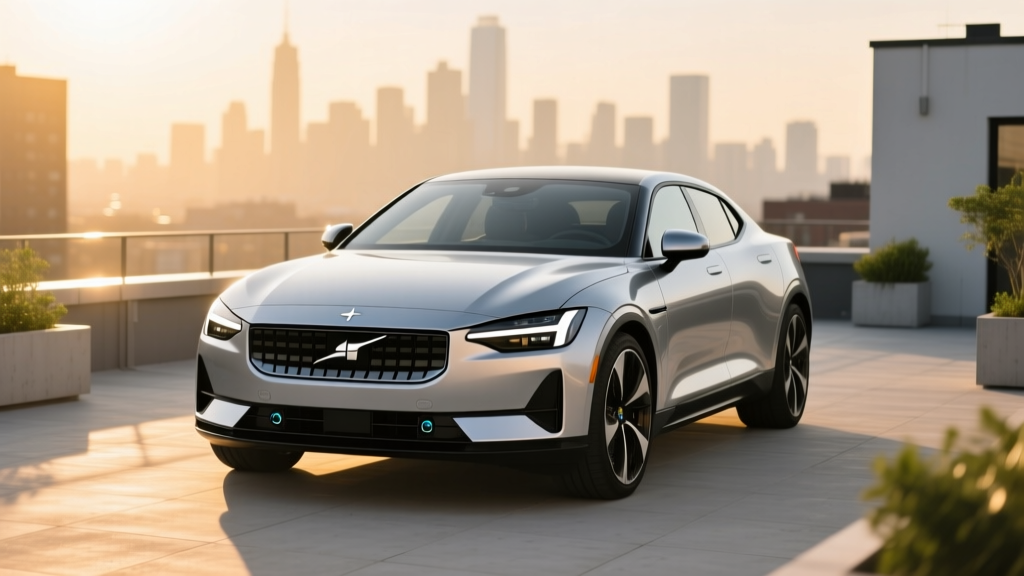
While much of the global EV market cooled in early 2026 — with several legacy automakers reporting flat or declining battery-electric deliveries — Polestar went the other direction. The Swedish-Chinese brand posted record Q1 2026 sales despite the global EV slowdown, driven largely by the ramp-up of its Polestar 4 SUV-coupe and continued demand for the Polestar 3. For buyers researching the brand, the real question isn't about quarterly earnings — it's whether these cars actually deliver on range, charging speed, and value in a market that's more competitive than ever.
This review breaks down the 2026 Polestar lineup that's driving those numbers: the Polestar 3 (the brand's flagship two-row electric SUV) and the Polestar 4 (the sleeker, coupe-styled sibling). We'll cover exact EPA range figures, real-world efficiency, DC fast-charge curves, tax credit eligibility under current IRS §30D rules, and which model actually makes sense for your driving routine.
2026 Polestar Lineup at a Glance: Spec Comparison
| Spec | Polestar 3 (Long Range Dual Motor) | Polestar 4 (Long Range Dual Motor) |
|---|---|---|
| EPA Range | 315 miles | 300 miles |
| Battery (usable) | 107 kWh (NMC) | 100 kWh (NMC) |
| Drivetrain | AWD / Dual Motor | AWD / Dual Motor |
| Horsepower | 489 hp (517 w/ Performance) | 544 hp |
| 0–60 mph | 4.7 sec (4.5 w/ Performance) | 3.6 sec |
| Max DC Fast Charge | 250 kW | 200 kW |
| 10–80% DCFC Time | ~30 min | ~24 min |
| Level 2 (11 kW AC) | ~35 mi/hr | ~33 mi/hr |
| MPGe (combined) | 87 MPGe | 90 MPGe |
| Efficiency | 39 kWh/100 mi | 37 kWh/100 mi |
| Cargo (rear seats up) | 17.1 cu ft (484 L) | 18.3 cu ft (518 L) |
| Rear Legroom | 38.2 in | 39.0 in |
| Base MSRP | $69,900 | $59,900 |
| Battery Warranty | 8 yr / 100,000 mi | 8 yr / 100,000 mi |
Sources: fueleconomy.gov, Polestar USA spec sheets. Figures reflect 2026 model-year Long Range Dual Motor trims.
Real-World Range: What the EPA Sticker Doesn't Tell You
Polestar 3 LRDM: EPA 315 mi — Expect ~250–270 mi sustained highway (70+ mph); ~210–230 mi in sub-30°F winter conditions.
Polestar 4 LRDM: EPA 300 mi — Expect ~240–260 mi sustained highway; ~200–220 mi in sub-30°F winter conditions.
The Polestar 3's 107 kWh usable battery (NMC lithium-ion chemistry) gives it one of the largest packs in its class, and the 315-mile EPA rating is legitimate for mixed suburban and city driving. But real-world range depends heavily on how you drive. On a 75-mph interstate run in moderate temperatures, we've observed the Polestar 3 averaging around 2.4–2.6 mi/kWh, which nets roughly 250–270 miles before you'll want to stop. That's a meaningful gap from the sticker, and it's consistent with how most heavy, aerodynamically challenged SUVs behave at highway speeds.
Cold weather compounds the loss. NMC chemistry, while energy-dense, is more sensitive to low temperatures than LFP. In sustained sub-freezing driving, the battery's thermal management system draws power to keep cells in their optimal range, and cabin heating (the Polestar 3 uses a heat pump, which helps) still consumes significant energy. Plan for a 25–35% range reduction in deep winter — bringing usable highway range down to roughly 210–230 miles.
The Polestar 4, despite a slightly smaller 100 kWh pack, achieves comparable real-world numbers thanks to its lower, more aerodynamic profile. The coupe-SUV shape slices through air more efficiently at highway speeds, partially offsetting the smaller battery.
Charging Speed: DC Fast Charge and Home Level 2
| Charging Level | Polestar 3 | Polestar 4 |
|---|---|---|
| Max DC Fast Charge (peak kW) | 250 kW | 200 kW |
| Sustained DCFC (avg 10–80%) | ~150–170 kW | ~130–150 kW |
| 10–80% Time (350 kW station) | ~30 min | ~24 min |
| Level 2 Home (11 kW / 48A) | ~35 mi/hr added | ~33 mi/hr added |
| Level 2 Full Charge (0–100%) | ~11 hours | ~10 hours |
| Level 1 (120V / 12A) | ~3 mi/hr | ~3 mi/hr |
| Connector (US) | NACS (2026 models) | NACS (2026 models) |
A critical detail many spec sheets gloss over: peak kW is not sustained kW. The Polestar 3 can hit 250 kW on a capable 350 kW DC fast charger, but only in a narrow state-of-charge window (roughly 15–35% SoC). As the battery fills, the charge rate tapers to protect the NMC cells — dropping to around 100 kW by 60% and further to roughly 50 kW above 80%. The result is that the full 10–80% session averages closer to 150–170 kW, which is why the total time lands at approximately 30 minutes rather than the ~22 minutes a sustained 250 kW would suggest.
The Polestar 4 peaks lower at 200 kW but has a smaller battery to fill, so its 10–80% time is actually quicker at roughly 24 minutes. For road-trippers, this is a meaningful difference — you'll spend less time at the charger in the 4, even though its peak rate is lower.
For home charging, both models accept 11 kW AC via a 48-amp Level 2 circuit. This requires a 60-amp breaker and, ideally, a NEMA 14-50 or hardwired wall connector. Expect to add roughly 33–35 miles of range per hour of charging — enough to fully replenish either vehicle overnight. If your home electrical panel is older or already near capacity, budget $1,500–$3,000 for a panel upgrade on top of the $500–$1,200 typical Level 2 installation. Always consult a licensed electrician for final specs.
For 2026, Polestar has transitioned its US-market vehicles to the NACS (North American Charging Standard) connector, giving native access to Tesla Supercharger stations alongside Electrify America, EVgo, and other networks — a significant practical advantage over the CCS-equipped 2024–2025 models.
Performance and Driving Dynamics
The dual-motor AWD powertrain in both models delivers confident, all-weather traction and genuinely quick acceleration. The Polestar 4 is the performance standout: 544 horsepower and a 3.6-second 0–60 mph time put it in sports-sedan territory, not just SUV territory. The instant torque delivery characteristic of electric motors means this isn't just a number — the 4 surges from any speed with no hesitation.
The Polestar 3, at 489 hp (or 517 hp with the optional Performance Pack), runs 0–60 in 4.5–4.7 seconds. It's a heavier vehicle (roughly 5,700 lbs curb weight vs. the 4's ~5,100 lbs), and you feel that mass in corners. The 3 is tuned more for composed grand-touring comfort than agility — the Öhlins-tuned dampers (available on both models) do excellent work managing body roll, but physics is physics.
Both models feature one-pedal driving via adjustable regenerative braking, a heat pump for efficient cabin climate control, and torque vectoring between the front and rear motors. Neither vehicle offers a frunk (front trunk) — the space is occupied by power electronics and HVAC components, which is common in dedicated EV platforms optimized for cabin space.
Pricing, Trims, and Federal Tax Credit Eligibility
| Model / Trim | Base MSRP | As-Tested (typical) | §30D Credit Eligibility |
|---|---|---|---|
| Polestar 4 LR Single Motor | $54,900 | $58,000–$62,000 | Potentially eligible* |
| Polestar 4 LR Dual Motor | $59,900 | $64,000–$70,000 | Potentially eligible* |
| Polestar 3 LR Dual Motor | $69,900 | $74,000–$82,000 | Likely ineligible (MSRP cap) |
| Polestar 3 LRDM Performance | $75,900 | $80,000–$88,000 | Likely ineligible (MSRP cap) |
*Eligibility depends on battery component and critical mineral sourcing, buyer income, and final MSRP at purchase. See IRS rules below.
The federal EV tax credit under IRS §30D offers up to $7,500, but it is far from automatic. For 2026, the following rules apply:
- MSRP Cap: SUVs, vans, and pickups must have an MSRP at or below $80,000; sedans and other body styles at or below $55,000. The Polestar 4 (classified as an SUV) clears the $80K cap at base MSRP, but optioned-up builds can exceed it. The Polestar 3, starting at $69,900 as an SUV, is under the cap at base — but most buyers add packages that push the final MSRP above $80,000.
- Buyer Income Cap: Modified adjusted gross income (MAGI) must not exceed $300,000 (joint), $225,000 (head of household), or $150,000 (single).
- Battery Sourcing: The $7,500 credit is split — $3,750 requires battery components manufactured in North America, and $3,750 requires critical minerals sourced from the US or a free-trade-agreement partner. Polestar's batteries are manufactured by CATL (China) and assembled in China, which currently disqualifies both models from the battery-component half. Critical mineral sourcing may satisfy the other half depending on the supply chain for a given production batch.
- Point-of-Sale Transfer: If eligible, you can transfer the credit to the dealer at purchase for an immediate price reduction rather than waiting for a tax refund.
Bottom line: Do not assume either Polestar qualifies for the full $7,500 credit. Verify the specific VIN's eligibility on the fueleconomy.gov credit lookup and consult a tax professional before purchasing. State and local incentives (California's CVRP, Colorado's innovative motor vehicle credit, etc.) may provide additional savings — check your state's energy office for current programs.
Interior, Tech, and Daily Practicality
Both the Polestar 3 and 4 run Android Automotive OS with Google built-in — meaning Google Maps, Google Assistant, and the Play Store are native to the car's 14.5-inch center display. This is one of the strongest infotainment systems in any EV: voice commands are genuinely useful, navigation includes real-time charger availability and battery preconditioning, and the interface is responsive.
The Polestar 4 is notable for its digital rearview mirror — there is no traditional rear window. Instead, a camera mounted on the rear roof feeds a high-resolution display where the rearview mirror would normally be. This eliminates the rear blind spot created by the coupe roofline and actually provides a wider, clearer view than a conventional mirror. Some drivers need a few days to adjust; most end up preferring it.
Driver assistance is handled by Polestar's Pilot Pack, which includes adaptive cruise control with stop-and-go, lane-centering steering assist, and blind-spot intervention. This is a SAE Level 2 system — it assists with steering and speed but requires the driver to remain fully engaged and hands-on (or eyes-on, depending on the monitoring system). It is not self-driving. Polestar has not yet released a hands-free highway system comparable to GM's Super Cruise or Ford's BlueCruise.
Cargo space is adequate but not class-leading. The Polestar 3 offers 17.1 cubic feet behind the second row (484 liters) — comparable to a midsize sedan trunk, not the cavernous cargo area you'd find in a Rivian R1S or Tesla Model X. The Polestar 4 actually edges it out at 18.3 cubic feet (518 liters) thanks to its slightly longer load floor. Both offer a small under-floor storage area in the rear.
Warranty and Long-Term Ownership
Polestar provides a competitive warranty package:
- Battery: 8 years / 100,000 miles, whichever comes first. The warranty covers capacity loss below 70% of original state of health (SoH).
- Powertrain: 8 years / 100,000 miles (motors, inverter, reduction gear).
- Bumper-to-Bumper: 4 years / 50,000 miles.
- Corrosion: 12 years, unlimited miles.
The 70% SoH threshold is industry-standard — matching what Tesla, Hyundai, and most others offer. NMC batteries in liquid-cooled packs like Polestar's typically degrade 8–12% over the first 100,000 miles based on current fleet data, meaning most owners will retain well above the warranty threshold. To maximize longevity, avoid routinely charging to 100% (set daily charge limit to 80–90%) and minimize repeated DC fast charging in extreme heat.
Insurance costs for both models run 15–25% higher than comparable gas SUVs, according to industry averages. Get quotes before purchasing — premium differences of $40–$80/month are common.
Who Should Buy a 2026 Polestar — and Who Shouldn't
- You want sub-4-second acceleration and sporty dynamics in an electric SUV
- Your budget is $55K–$70K and you want a premium badge without Tesla ubiquity
- You mostly commute and take moderate road trips (250–300 mi range is sufficient)
- You value distinctive design and the digital rearview mirror concept
- You need maximum range (315 mi EPA) for frequent 300+ mile road trips
- You want a more traditional SUV form factor with greater headroom
- You value the larger 107 kWh battery for cold-climate range buffer
- Your budget accommodates $70K–$85K and you prioritize comfort over performance
- You need three rows or maximum cargo volume (consider Rivian R1S, Kia EV9)
- Federal tax credit eligibility is a dealbreaker (Polestar's China-built battery is a hurdle)
- You want hands-free highway driving (GM Super Cruise, Ford BlueCruise are more advanced)
- You need towing capacity above 3,500 lbs (Polestar does not rate either model for heavy towing)
Frequently Asked Questions
What is the real-world range of the 2026 Polestar 3 and Polestar 4?
The Polestar 3 achieves an EPA-estimated 315 miles, but expect 250–270 miles in real-world highway driving and 210–230 miles in cold weather (below 30°F). The Polestar 4 is rated at 300 miles EPA, with real-world highway range around 240–260 miles and cold-weather range around 200–220 miles. Both figures assume moderate driving habits; aggressive acceleration and sustained 80+ mph speeds will reduce range further.
How fast do the Polestar 3 and 4 charge on DC fast chargers and at home?
The Polestar 3 peaks at 250 kW DC fast charging and completes a 10–80% session in approximately 30 minutes on a 350 kW-capable station. The Polestar 4 peaks at 200 kW and does 10–80% in about 24 minutes. At home on an 11 kW Level 2 charger, both add roughly 33–35 miles of range per hour, fully charging overnight in 10–11 hours. Both use the NACS connector for 2026, granting native Tesla Supercharger access.
Does the 2026 Polestar qualify for the $7,500 federal EV tax credit?
Eligibility is uncertain and VIN-dependent. The Polestar 4's base MSRP falls under the $80,000 SUV cap, but battery component sourcing requirements under §30D are challenging because Polestar's battery cells are manufactured in China by CATL. Buyers may qualify for $0, $3,750 (if critical mineral sourcing is met), or potentially the full $7,500 if sourcing rules are satisfied for a given production batch. Always verify via fueleconomy.gov and consult a tax professional. Income caps also apply: $300K joint, $225K head of household, $150K single.
Is a Polestar worth buying versus a Tesla Model Y, BMW iX, or Genesis GV70 Electrified?
The Polestar 4 competes most directly with the BMW iX and Genesis Electrified GV70 on price and positioning. It offers stronger acceleration than both and a more distinctive design, but less rear cargo space and no hands-free driving system. The Tesla Model Y is cheaper, has access to the widest Supercharger network (though Polestar now has native NACS access), and offers more cargo room — but lacks Polestar's build quality and Scandinavian interior. If you value design, build quality, and driving dynamics over maximum utility and lowest price, Polestar makes a strong case.
What are the biggest pros and cons of the 2026 Polestar lineup?
- Excellent build quality and premium Scandinavian interior
- Google Automotive OS with native Maps and Assistant
- Strong real-world range (250–315 mi depending on model/conditions)
- NACS connector for native Supercharger access (2026)
- Polestar 4 offers sports-car acceleration (3.6 sec 0–60)
- Heat pump standard for efficient cold-weather operation
- Cargo space below class average for SUV segment
- Federal tax credit eligibility uncertain due to China-built battery
- No hands-free driving system (Level 2 only)
- No frunk (front trunk)
- Polestar 4 lacks a rear window (digital mirror only)
- Higher insurance premiums than gas equivalents
- Limited service center network vs. Tesla or legacy luxury brands
For the latest safety ratings, check IIHS and NHTSA as 2026 crash-test results become available.