Is a Polestar Private Lease Right for Your Next EV?
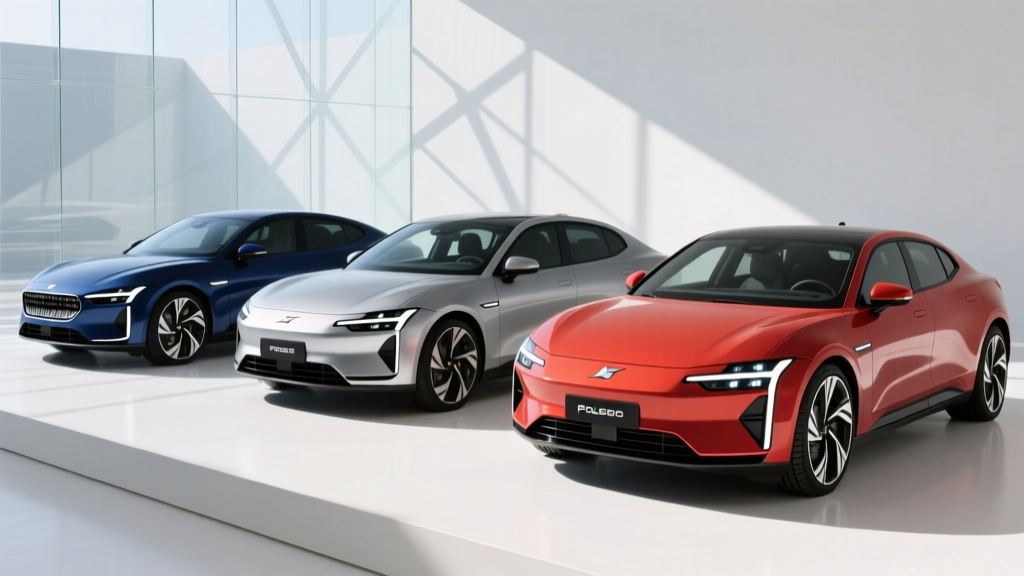
If you're researching a Polestar private lease, you're likely weighing Scandinavian design, strong performance, and Google-built infotainment against a premium price tag. Polestar's 2026 lineup spans three distinct vehicles—the compact Polestar 2 sedan/fastback, the midsize Polestar 4 SUV-coupe, and the flagship Polestar 3 luxury SUV. Each targets a different buyer, but all share Polestar's commitment to minimalist interiors, over-the-air updates, and NACS charging compatibility.
This guide breaks down real-world range, charging speeds, pricing after incentives, and whether leasing makes financial sense versus buying. We'll cover EPA estimates alongside the highway and cold-weather reality that stickers don't show.
2026 Polestar Lineup at a Glance
| Model | EPA Range | Battery (kWh) | 0-60 mph | HP | Base MSRP |
|---|---|---|---|---|---|
| Polestar 2 (Long Range Single Motor) | 320 mi | 82 kWh (NMC) | 5.9 sec | 299 | $49,900 |
| Polestar 2 (Long Range Dual Motor) | 300 mi | 82 kWh (NMC) | 4.3 sec | 421 | $53,400 |
| Polestar 4 (Long Range Single Motor) | 370 mi | 100 kWh (NMC) | 6.9 sec | 272 | $56,300 |
| Polestar 4 (Long Range Dual Motor) | 340 mi | 100 kWh (NMC) | 3.7 sec | 544 | $62,900 |
| Polestar 3 (Long Range Dual Motor) | 315 mi | 111 kWh (NMC) | 4.8 sec | 489 | $79,900 |
Source: EPA / fueleconomy.gov and Polestar USA specifications.
Real-World Range: What the EPA Sticker Doesn't Tell You
Polestar 2 Long Range Single Motor: EPA 320 miles. Expect 270–290 miles on highway-heavy trips at 70+ mph. In freezing temperatures (below 32°F), plan for 220–250 miles due to battery heating demands and reduced regenerative braking efficiency.
Polestar 4 Long Range Single Motor: EPA 370 miles. Real-world highway: 310–340 miles. Cold weather: 260–290 miles. The 100 kWh battery and heat pump help mitigate winter losses, but aerodynamic drag at speed still dominates.
Polestar 3 Long Range Dual Motor: EPA 315 miles. Highway reality: 260–285 miles. Cold weather: 220–245 miles. The larger, heavier SUV body and dual-motor drivetrain consume more energy at sustained speeds.
Polestar's thermal management system includes a heat pump (standard on 2026 models), which improves cold-weather efficiency by 10–15% compared to resistive heating. However, NMC chemistry still loses 20–30% range in sub-freezing conditions—a physics limitation, not a Polestar-specific flaw.
Charging Speed: DC Fast, Level 2, and Connector Compatibility
| Model | Max DC Fast Charge | 10-80% Time | Level 2 (240V) | Connector |
|---|---|---|---|---|
| Polestar 2 | 200 kW | ~27 min | 11 kW (~37 mi/hr) | NACS (2026+) |
| Polestar 4 | 200 kW | ~30 min | 11 kW (~34 mi/hr) | NACS (2026+) |
| Polestar 3 | 250 kW | ~25 min | 11 kW (~30 mi/hr) | NACS (2026+) |
All 2026 Polestar models sold in the U.S. now feature the NACS (Tesla) charging port, granting access to Tesla Superchargers without an adapter. This is a significant shift from 2024–2025 models, which used CCS1 and required a Magic Dock adapter at Superchargers.
Charging curve reality: Peak kW is not sustained. The Polestar 2, for example, hits 200 kW only between 10–30% state of charge, then tapers to ~120 kW by 60% and ~60 kW above 80%. This is why manufacturers quote 10-80% times—the final 20% can take as long as the first 70%.
For home charging, a 48-amp Level 2 wall connector on a 60-amp circuit delivers the full 11 kW. Expect a full overnight charge in 8–10 hours depending on battery size.
Pricing, Trims, and Federal Tax Credit Eligibility
| Model & Trim | Base MSRP | Federal Tax Credit (§30D) | Effective Price (if eligible) |
|---|---|---|---|
| Polestar 2 Long Range Single Motor | $49,900 | $0 (MSRP cap exceeded for sedans) | $49,900 |
| Polestar 2 Long Range Dual Motor | $53,400 | $0 (MSRP cap exceeded for sedans) | $53,400 |
| Polestar 4 Long Range Single Motor | $56,300 | Up to $7,500 (SUV classification) | $48,800 |
| Polestar 4 Long Range Dual Motor | $62,900 | Up to $7,500 (SUV classification) | $55,400 |
| Polestar 3 Long Range Dual Motor | $79,900 | $0 (MSRP cap exceeded) | $79,900 |
Critical §30D eligibility rules (2026):
- MSRP caps: $55,000 for sedans; $80,000 for SUVs/pickups/vans. The Polestar 2 is classified as a sedan and exceeds the cap. The Polestar 4 qualifies as an SUV under IRS guidelines.
- Income limits: Adjusted gross income must not exceed $150,000 (single), $225,000 (head of household), or $300,000 (joint).
- Battery sourcing: A percentage of critical minerals and battery components must be sourced from the U.S. or free-trade-agreement countries. Polestar's supply chain compliance varies by model year—verify current eligibility at IRS.gov.
- Point-of-sale transfer: You can transfer the credit to the dealer at purchase, reducing the upfront price. This applies to purchases, not leases.
Lease loophole: Under §45W, the commercial clean vehicle credit applies to leased EVs. The leasing company (lessor) claims the credit and may pass savings to you via lower monthly payments. This bypasses MSRP and income caps. Ask your Polestar dealer whether their lease offers reflect this pass-through.
Who Should Consider a Polestar Private Lease?
Choose Polestar 2 if: You want a premium compact EV with sharp handling, Google Automotive OS, and don't need SUV cargo space. Best for urban commuters and couples without kids. The 15.5 cu ft trunk (hatchback-style) is practical for groceries and weekend trips, but rear legroom (35.7 inches) is tight for tall adults on long drives.
Choose Polestar 4 if: You need family-friendly space (28.1 cu ft cargo, 40.5 inches rear legroom) and want the longest range in the lineup. The dual-motor variant's 3.7-second 0-60 time makes it one of the quickest SUVs under $70K. The absence of a rear window (replaced by a digital camera feed) is polarizing—test it before committing.
Choose Polestar 3 if: You're cross-shopping the BMW iX, Audi Q8 e-tron, or Tesla Model X and prioritize luxury materials, air suspension, and a 25-speaker Bowers & Wilkins audio system. The 315-mile EPA range is modest for an $80K vehicle, but the 111 kWh battery and 250 kW charging compensate for road trips.
Pros and Cons: The Honest Take
Pros
- Minimalist Scandinavian design with premium materials (vegan textiles, reclaimed wood)
- Google Automotive OS with native Google Maps, Assistant, and Play Store
- NACS port on 2026 models—direct Tesla Supercharger access
- Strong performance across the lineup (sub-5-second 0-60 on dual-motor trims)
- Over-the-air updates continuously add features
- Pilot Pack (adaptive cruise, lane centering) is well-tuned for highway use
Cons
- Polestar 2 rear seat is cramped for adults over 6 feet
- Polestar 4's camera-based rearview takes adjustment; no physical rear window
- Most trims exceed §30D MSRP caps for purchase (lease loophole required)
- Service center network is sparse outside major metros
- Infotainment can be slow to respond on cold starts
- No frunk (front trunk) on any model—missed storage opportunity
Warranty and Long-Term Ownership
Polestar's battery and powertrain warranty covers 8 years or 100,000 miles, whichever comes first, with a capacity retention threshold of 70%. This is industry-standard, matching Tesla, Hyundai, and Ford. The basic vehicle warranty is 4 years/50,000 miles.
NMC batteries (used across the Polestar lineup) typically degrade 10–15% over 100,000 miles based on current data from Geely/Volvo platforms. To maximize longevity, Polestar recommends keeping state of charge between 20–80% for daily use and limiting DC fast charging to road trips.
Frequently Asked Questions
Does a Polestar qualify for the federal EV tax credit?
The Polestar 4 (SUV classification) may qualify for up to $7,500 under §30D if you purchase and meet income/sourcing requirements. The Polestar 2 and Polestar 3 exceed MSRP caps for purchase but may benefit from the lease loophole (§45W commercial credit).
What is the real-world range of the Polestar 2?
EPA 320 miles (Long Range Single Motor). Expect 270–290 miles highway, 220–250 miles in freezing weather.
How fast does a Polestar charge at home?
All 2026 models accept 11 kW on Level 2 (240V, 48 amps). A full charge takes 8–11 hours depending on battery size.
Is Polestar reliable?
Polestar shares Volvo/Geely platforms and powertrains. Long-term reliability data is limited (brand launched in 2017), but the Volvo C40 and XC40 Recharge—mechanical siblings—score average to above-average in J.D. Power and Consumer Reports surveys.
Can I lease a Polestar and still get a tax credit?
Yes, indirectly. The leasing company claims the §45W commercial credit and may reduce your monthly payment. Confirm the pass-through with your dealer before signing.
Does Polestar have a good charging network?
Polestar doesn't operate its own network, but 2026 models with NACS ports access Tesla Superchargers (17,000+ stalls in the U.S.). You can also use Electrify America, EVgo, and ChargePoint via the Polestar app.
Final Verdict: Is a Polestar Private Lease Worth It?
A Polestar private lease makes sense if you value design, Google-native tech, and NACS charging access—and if you live near a service center. The Polestar 4 offers the best value proposition: 370-mile EPA range, family space, and potential §30D eligibility. The Polestar 2 remains a compelling compact EV, but the MSRP cap issue pushes most buyers toward leasing. The Polestar 3 is a luxury play that competes on refinement, not range-per-dollar.
Before signing, verify current tax credit eligibility at IRS.gov, confirm the lease pass-through with your dealer, and test-drive the Polestar 4's digital rearview mirror to ensure it's a feature you can live with.