The Quick Verdict: Leasing a Tesla Model X in 2026
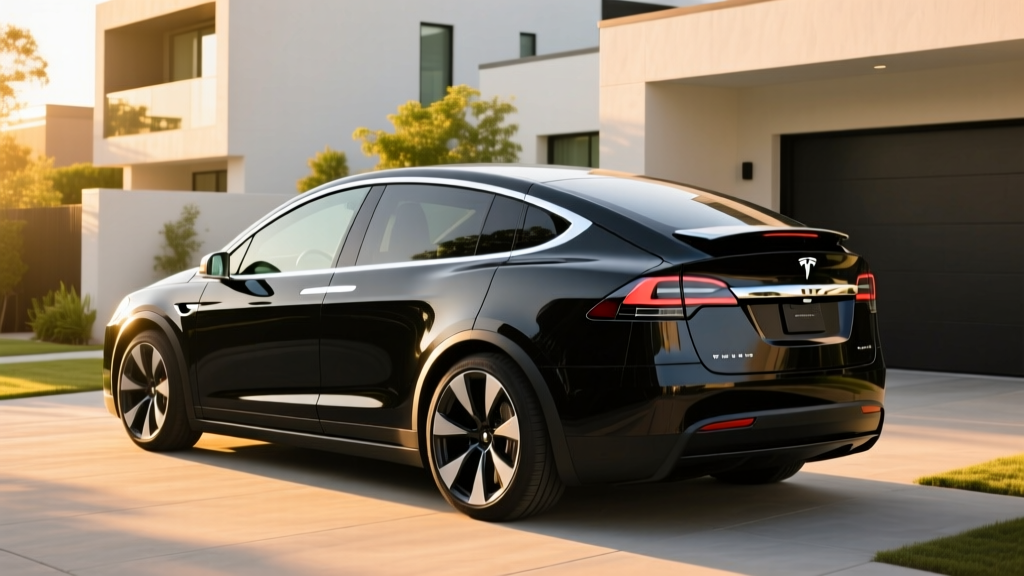
The Tesla Model X remains the only all-electric three-row SUV that pairs genuine falcon-wing drama with Supercharger-network access and over 300 miles of EPA-rated range. For 2026, leasing has become the most popular acquisition path for this vehicle — and for good reason. The Model X's high MSRP (starting near $79,990) pushes it above the IRS §30D federal tax credit MSRP cap for SUVs ($80,000), meaning most buyers won't qualify for the $7,500 credit when purchasing outright. A lease, however, can sidestep that limitation through the commercial clean vehicle credit (§45W) that leasing companies can pass along as a capitalized-cost reduction.
This guide covers everything you need to evaluate a Model X lease: real-world range expectations, charging infrastructure, total monthly cost, and whether competing electric SUVs like the Rivian R1S, BMW iX, or Mercedes EQS SUV offer a smarter deal.
Range, Battery, and Real-World Efficiency
The 2026 Tesla Model X Long Range carries a usable battery capacity of approximately 95 kWh using a nickel-manganese-cobalt (NMC) cell chemistry. NMC provides the high energy density needed to push a heavy three-row SUV past 300 miles — a trade-off versus LFP chemistry, which is heavier but more cycle-durable. Tesla does not publish official kWh figures; the 95 kWh number is derived from observed charge-session data and industry teardowns.
| Spec | Value |
|---|---|
| EPA Range | 335 miles (Long Range) / 326 miles (Plaid) |
| Battery (usable, est.) | ~95 kWh, NMC chemistry |
| Efficiency | 102 MPGe combined / 33 kWh/100mi |
| Drivetrain | Dual-motor AWD (Long Range), Tri-motor AWD (Plaid) |
| 0-60 mph | 3.8 sec (Long Range) / 2.5 sec (Plaid) |
| Horsepower | 670 hp (Long Range) / 1,020 hp (Plaid) |
| Towing Capacity | 5,000 lbs |
| Cargo (behind 3rd row) | ~15 cu ft (up to 88 cu ft folded) |
| Warranty (battery/drive) | 8 years / 150,000 miles |
| Base MSRP | $79,990 (Long Range) / $94,990 (Plaid) |
The EPA rates the Model X Long Range at 335 miles. In practice, expect approximately 275–295 miles on highway road trips at 70–75 mph. Cold-weather driving (below 32°F) with cabin heating can reduce range by 20–30%, dropping effective range to roughly 230–265 miles. City driving with frequent regenerative-braking opportunities gets you closer to or slightly above the EPA number. Tesla's heat pump (standard since 2021 refresh) helps mitigate cold-weather losses compared to resistive heaters, but physics still applies to a 5,185-lb vehicle pushing through dense air.
Charging Speed: DC Fast Charging and Home Level 2
The Model X supports Tesla's V3 and V4 Supercharger architecture natively via the NACS (North American Charging Standard) connector. Peak DC fast-charge rate is 250 kW on V3 stalls, which Tesla claims delivers up to 175 miles of range in 15 minutes under optimal conditions.
| Charging Level | Power (kW) | Speed (mi/hr) | 10-80% Time |
|---|---|---|---|
| Level 1 (120V / 12A) | ~1.4 kW | ~3 mi/hr | N/A (days) |
| Level 2 (240V / 48A Wall Connector) | 11.5 kW | ~34 mi/hr | ~9–10 hours |
| Level 2 (240V / 32A Mobile Connector) | 7.7 kW | ~23 mi/hr | ~13–14 hours |
| DC Fast (Supercharger V3) | 250 kW peak | ~700 mi/hr (peak) | ~30 minutes |
| DC Fast (Supercharger V4) | 250 kW peak | ~700 mi/hr (peak) | ~30 minutes |
Charging-curve reality: The 250 kW peak is only sustained between roughly 10–30% state of charge. The curve tapers significantly above 50% SoC, dropping to ~100 kW near 70% and ~50 kW above 85%. This is why Tesla and most DC fast-charge etiquette guides recommend charging to 80% on road trips and moving on. A 10–80% session takes approximately 30 minutes at a V3 Supercharger.
For home charging, Tesla's Wall Connector at 48 amps (requiring a 60-amp dedicated circuit) adds roughly 34 miles of range per hour — enough to fully replenish the battery overnight. Most Model X lessees report home charging as their primary refueling method, with Superchargers reserved for road trips.
Pricing, Lease Costs, and Federal Tax Credit Eligibility
The 2026 Model X Long Range starts at $79,990 before destination and options. The Plaid trim jumps to $94,990. With common add-ons (Full Self-Driving Supervised at $8,000, premium interior colors, 22-inch wheels), as-tested prices routinely exceed $100,000.
| Trim | Base MSRP | Typical As-Tested | Est. Monthly Lease (36 mo, $7,500 down) |
|---|---|---|---|
| Long Range | $79,990 | $85,000–$92,000 | $1,100–$1,350 |
| Plaid | $94,990 | $100,000–$115,000 | $1,400–$1,700 |
Federal Tax Credit: §30D Purchase vs. §45W Lease Loophole
Under IRS §30D rules, the Model X faces a critical problem for buyers: the MSRP cap for SUVs is $80,000. The Long Range at $79,990 barely squeaks under, but any options or destination charges push it over. The Plaid at $94,990 is ineligible regardless. Additionally, buyers must meet income caps ($300,000 joint / $150,000 single modified adjusted gross income) and the vehicle must satisfy critical-mineral and battery-component sourcing requirements that have tightened through 2026.
The lease advantage: When you lease a Model X through Tesla Financial Services or a third-party lessor, the vehicle is technically purchased by the leasing company. This makes it eligible for the §45W commercial clean vehicle credit — up to $7,500 — which has no MSRP cap, no buyer income cap, and less restrictive sourcing rules. Many lessors pass this savings to the lessee as a capitalized-cost reduction, effectively lowering monthly payments. This "lease loophole" has been a major driver of Model X lease popularity.
- Tesla Financial Services does not always pass through the full $7,500 — confirm the cap-cost reduction in writing before signing.
- Lease money factors (interest rates) on luxury EVs can be higher than purchase APRs. Compare total cost over 36 months.
- Mileage limits are typically 10,000–15,000 miles/year. Excess mileage fees on a Model X lease run $0.25–$0.35/mile.
- At lease end, you do not own the vehicle and have no equity. Factor this into total cost of ownership.
Performance, Cargo, and Interior Technology
The Model X Long Range delivers 670 horsepower and a 3.8-second 0–60 mph time — remarkable for a three-row family SUV. The Plaid variant's tri-motor setup produces 1,020 horsepower and a 2.5-second 0–60, placing it in supercar territory. Both trims come with dual-motor or tri-motor all-wheel drive as standard.
Interior and cargo: The Model X seats up to seven passengers in a 2-3-2 configuration (or six with optional second-row captain's chairs). Cargo space behind the third row is roughly 15 cubic feet — tight for a vehicle this size. Fold the third row and you get approximately 44 cu ft; fold both rear rows for up to 88 cu ft. The front trunk (frunk) adds about 6.5 cu ft for groceries or charging cables.
Standout tech:
- 17-inch center touchscreen with tilt capability (cinema-style for rear passengers)
- Second-row 8-inch touchscreen for climate and entertainment
- Autopilot standard; Full Self-Driving (Supervised) available for $8,000 — note this is an SAE Level 2 system requiring constant driver attention, not autonomous driving
- Falcon-wing rear doors with ultrasonic obstacle detection
- HEPA air filtration with Bioweapon Defense Mode
- Over-the-air software updates that add features post-delivery
- Vaporware-style yoke steering wheel option (controversial for daily use)
Notable drawbacks:
- Build-quality inconsistency remains a concern — panel gaps, trim rattle, and paint imperfections are more common than in legacy luxury brands
- Falcon-wing doors are slow to open (~6–7 seconds) and can struggle in tight garages despite sensors
- No Apple CarPlay or Android Auto — Tesla's proprietary infotainment only
- Third-row space is tight for adults on longer trips
- Insurance costs are significantly above average for the luxury SUV segment
Model X vs. Competitors: Is It the Right Electric Three-Row SUV?
| Vehicle | EPA Range | Base MSRP | Seats | DC Fast Charge (peak kW) | 0-60 mph |
|---|---|---|---|---|---|
| Tesla Model X LR | 335 mi | $79,990 | 6-7 | 250 kW | 3.8 sec |
| Rivian R1S (Dual) | 352 mi | $79,900 | 7 | 220 kW | 4.5 sec |
| Kia EV9 GT-Line AWD | 270 mi | $60,900 | 6-7 | 210 kW | 4.9 sec |
| BMW iX xDrive50 | 324 mi | $87,250 | 5 | 195 kW | 4.4 sec |
| Mercedes EQS 450 SUV | 305 mi | $104,400 | 5-7 | 200 kW | 5.7 sec |
- You need 300+ miles of range AND three rows
- Supercharger network reliability matters to you
- You want supercar acceleration in a family hauler (Plaid)
- Over-the-air updates and tech-forward features are priorities
- Build quality and interior luxury matter more than raw performance (BMW iX, Mercedes EQS)
- You want genuine off-road capability (Rivian R1S)
- Budget is a primary concern (Kia EV9 saves $20,000+)
- You need Apple CarPlay/Android Auto
Who Should Lease the Tesla Model X?
The Model X lease makes the most sense for:
- Tech-forward families who want three rows, 300+ mile range, and the reliability of the Supercharger network for road trips
- High-mileage commuters (under 15,000 mi/yr) who benefit from low per-mile electricity costs versus premium fuel
- Buyers who exceed §30D income caps but can access the $7,500 lease credit through §45W
- Performance enthusiasts who want Plaid-level acceleration without committing to a $100,000+ purchase and the associated depreciation risk
It is less ideal for buyers who prioritize interior luxury and build consistency, need maximum third-row space, or drive in extreme cold climates where the range penalty hits harder on a heavy SUV.
Frequently Asked Questions
What is the real-world range of the Tesla Model X?
The EPA rates the Long Range at 335 miles and the Plaid at 326 miles. Expect 275–295 miles on highway road trips at 70–75 mph, and 230–265 miles in sub-freezing temperatures with heating. City driving with regenerative braking can match or slightly exceed the EPA number.
How fast does the Model X charge at home and on the road?
At home on a Level 2 Tesla Wall Connector (48A/11.5 kW), you'll add about 34 miles of range per hour, fully charging overnight in roughly 9–10 hours. On a V3 Supercharger (250 kW peak), a 10–80% charge takes approximately 30 minutes, though the charge curve tapers significantly above 50% SoC.
Does the Tesla Model X qualify for the federal EV tax credit?
For outright purchases, the Long Range at $79,990 barely meets the $80,000 SUV MSRP cap under §30D, but options and destination charges often push it over. The Plaid is ineligible. Buyers must also meet income caps and battery-sourcing requirements. Through a lease, the §45W commercial credit (up to $7,500) applies with no MSRP or income cap, and many lessors pass this as a cap-cost reduction.
Is it worth leasing a Model X vs. buying?
Leasing offers the tax-credit advantage, protects against depreciation on a $80,000+ vehicle, and keeps you in newer hardware as Tesla iterates. Buying makes sense if you drive well under the mileage cap, plan to keep the vehicle 5+ years, and want to build equity. Run the numbers both ways using your local electricity rates and insurance quotes.
What are the biggest pros and cons of the Model X?
Pros: 335-mile EPA range, Supercharger access, tri-row seating, class-leading acceleration, continuous OTA updates, strong safety ratings from NHTSA. Cons: Build quality inconsistency, slow falcon-wing doors, no CarPlay/Android Auto, tight third row for adults, high insurance costs, expensive out-of-warranty repairs.
How does the Model X compare to the Rivian R1S?
The R1S offers comparable range (352 mi EPA), genuine off-road capability, and a more traditional (and practical) SUV design with better third-row space. The Model X wins on Supercharger network access, faster DC charging, and the tech/OTA ecosystem. If you tow or go off-pavement, the R1S is stronger. If you road-trip frequently on highways, the Model X's Supercharger advantage is significant.