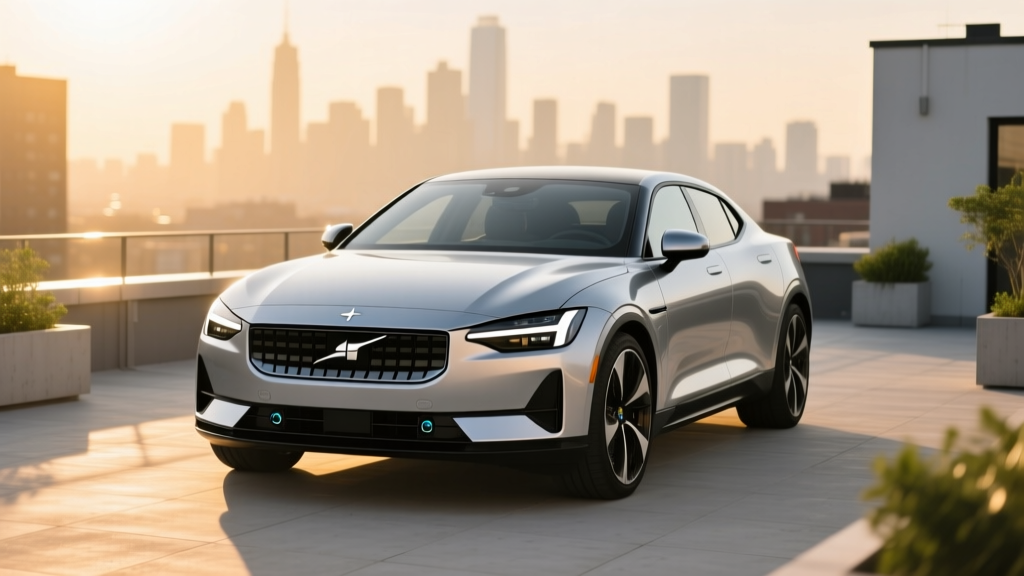
Philadelphia's EV infrastructure has matured enough to support daily electric ownership without compromise, but choosing the right model still hinges on hard numbers — not showroom gloss. For Delaware Valley shoppers eyeing a Polestar, the brand's Scandinavian-minimalist appeal masks a serious engineering story: competitive range, robust DC fast-charging architecture, and one of the most transparent battery warranties in the segment. This guide breaks down the 2026 Polestar lineup through the lens of a Philadelphia owner — factoring in I-95 corridor commuting, cold Mid-Atlantic winters, and the region's public charging landscape.
2026 Polestar Lineup at a Glance
Polestar enters 2026 with three core models available to U.S. buyers. The Polestar 2 sedan remains the volume seller, the Polestar 4 SUV-coupe targets the premium crossover segment, and the Polestar 3 large SUV anchors the top of the range. Each rides on dedicated EV architectures with distinct battery chemistries and charging profiles.
| Spec | Polestar 2 (LR SM) | Polestar 4 (LR DM) | Polestar 3 (LR DM) |
|---|---|---|---|
| EPA Range | 320 mi | 300 mi | 315 mi |
| Battery (usable) | 79 kWh NMC | 100 kWh NMC | 107 kWh NMC |
| Max DC Charge | 200 kW | 200 kW | 200 kW |
| 10–80% Time | ~27 min | ~30 min | ~30 min |
| Level 2 Rate | 11 kW (~37 mi/hr) | 11 kW (~33 mi/hr) | 11 kW (~35 mi/hr) |
| 0–60 mph | 6.2 sec | 5.0 sec | 5.0 sec |
| Horsepower | 299 hp | 544 hp | 489 hp |
| Drivetrain | RWD | AWD Dual-Motor | AWD Dual-Motor |
| MPGe (combined) | 107 MPGe | 89 MPGe | 87 MPGe |
| Base MSRP | $49,900 | $60,900 | $67,900 |
Source: fueleconomy.gov and Polestar USA specifications. Figures reflect Long Range trims; Standard Range Polestar 2 trims carry smaller batteries and lower range.
Real-World Range for Philadelphia Driving
The Polestar 4 and 3, with their larger crossovers and higher drag coefficients, see a slightly wider gap between EPA and real-world figures. Highway-heavy commuters from Cherry Hill or Wilmington into Center City should budget roughly 15–20% below the sticker range for trip planning. That still leaves the Polestar 2 comfortably capable of a Philadelphia-to-Washington, D.C. run (~140 miles) with substantial buffer — even in January.
For the typical Philadelphia commuter logging 30–40 miles round trip, any 2026 Polestar model requires charging only once or twice a week on Level 2 home power, making daily range a non-issue for most owners.
Charging Speed and Philadelphia Infrastructure
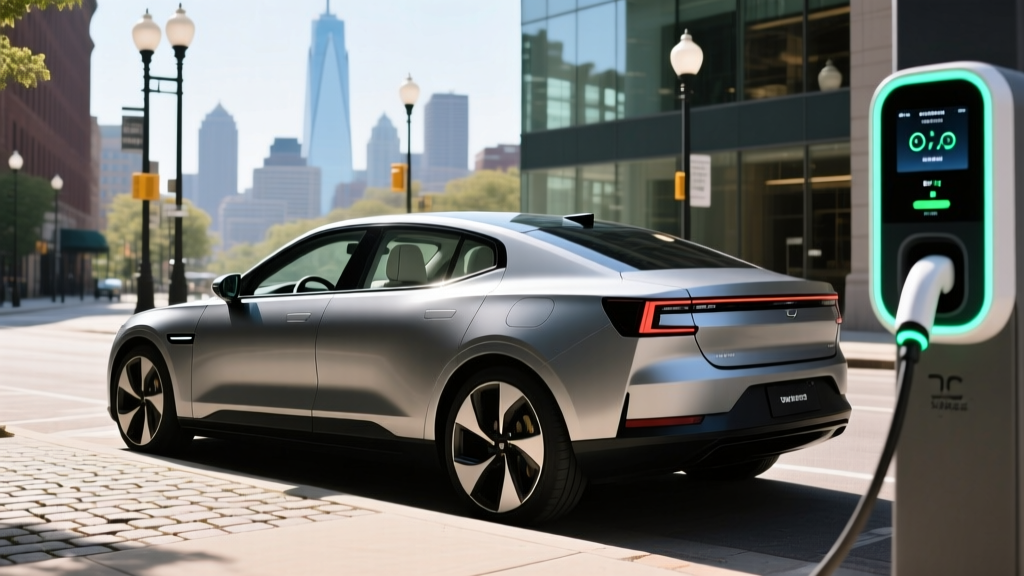
Polestar's 2026 models all support DC fast charging at up to 200 kW via the CCS1 connector (Polestar has confirmed NACS adapter availability for Supercharger access starting in 2025, expanding network options significantly for 2026 owners).
| Charging Level | Power | Polestar 2 Speed | Polestar 4/3 Speed | Philly Availability |
|---|---|---|---|---|
| Level 1 (120V) | ~1.4 kW | ~4 mi/hr | ~4 mi/hr | Any standard outlet |
| Level 2 (240V) | 11 kW | ~37 mi/hr | ~33–35 mi/hr | Home install; public AC stations |
| DC Fast | up to 200 kW | 10–80% in ~27 min | 10–80% in ~30 min | Electrify America, EVgo, Tesla SC (w/ adapter) |
Charging curve reality check: The 200 kW peak rate applies only between roughly 10–40% state of charge. Above 60%, the curve tapers significantly — expect 80–100 kW from 60–80%, and below 50 kW above 80%. This is standard for NMC chemistry thermal management, but it means the "10–80% time" metric is the useful one; charging from 80–100% adds another 25–35 minutes.
Philadelphia's public charging network includes multiple Electrify America stations along the I-95 corridor, EVgo chargers in Center City and University City, and a growing Tesla Supercharger network now accessible via the NACS adapter. For rowhouse-dwelling Philadelphians without garage access, the city's expanding curbside Level 2 program and workplace charging options at Navy Yard and University City campuses provide viable alternatives to home charging.
Pricing, Tax Credits, and Total Cost
| Model / Trim | Base MSRP | §30D Credit Eligible? | Effective Price* |
|---|---|---|---|
| Polestar 2 LR SM | $49,900 | Partial — verify sourcing | ~$46,150–$49,900 |
| Polestar 2 LR DM | $53,400 | Partial — verify sourcing | ~$49,650–$53,400 |
| Polestar 4 LR DM | $60,900 | Partial — verify sourcing | ~$57,150–$60,900 |
| Polestar 3 LR DM | $67,900 | Partial — verify sourcing | ~$64,150–$67,900 |
*Effective price assumes potential $3,750 partial credit (critical minerals requirement met, battery component sourcing under review). Full $7,500 credit eligibility depends on meeting both critical mineral AND battery component requirements under IRS §30D rules. Point-of-sale transfer is available at participating dealers.
- MSRP Cap: Sedans ≤ $55,000 (Polestar 2 qualifies); SUVs/trucks ≤ $80,000 (Polestar 3, 4 qualify)
- Buyer Income Cap: AGI ≤ $150K single / $225K head of household / $300K joint
- Battery Sourcing: Critical minerals and battery components must meet escalating domestic/free-trade-partner thresholds — verify current-year compliance on the DOE eligibility list
- Assembly: Final assembly must occur in North America — Polestar 2 (China-built) and Polestar 3/4 (China and Korea-built) face sourcing scrutiny; confirm VIN-specific eligibility before purchase
- Point-of-Sale: Credit can be transferred to the dealer at purchase for an immediate price reduction, or claimed on your federal tax return
Important caveat: Polestar's manufacturing footprint has historically involved Chinese production (Luqiao and Chengdu plants). The Polestar 4 has begun production in Busan, South Korea (a U.S. free-trade partner), which may improve sourcing compliance. Always confirm your specific VIN's eligibility with the dealer and cross-reference the DOE's official list. Consult a tax professional for your personal situation.
Interior Space, Tech, and Daily Livability
The Polestar 2's 14.4 cu ft trunk and 40.4 inches of front legroom work well for a two-person household, but rear-seat space (35.7 inches legroom) is tighter than rivals like the Hyundai Ioniq 6 or Tesla Model 3. The Polestar 4's coupe-SUV form factor offers 27.7 cu ft behind the second row and a notably spacious rear cabin thanks to the absence of a rear window (replaced by a digital camera feed).
All 2026 Polestars run a Google-based infotainment system with native Google Maps navigation, Google Assistant voice control, and over-the-air updates. The 12.3-inch driver display and 14.5-inch center touchscreen (15.4-inch on the 3 and 4) are crisp, though some buyers note the lack of physical climate controls requires extra taps while driving.
Driver assistance: Polestar's Pilot Pack includes adaptive cruise with stop-and-go, lane centering, and blind-spot intervention — all SAE Level 2 features requiring continuous driver supervision. The Google Built-in navigation integrates real-time charger routing with battery preconditioning, automatically warming the pack when a DC fast charger is selected as your destination.
- Distinctive Scandinavian design stands out in a sea of Tesla and Hyundai
- Google-native infotainment with excellent charger routing
- Battery preconditioning for optimized DC fast charging
- Competitive 200 kW peak charge rate across the lineup
- Strong build quality and materials
- NACS adapter opens Tesla Supercharger network access
- Polestar 2 rear seat is cramped vs. segment rivals
- Touchscreen-only climate controls distract while driving
- Full §30D credit eligibility uncertain due to assembly/sourcing
- Philadelphia-area Polestar Spaces (retail) are limited — service may require travel
- Higher insurance premiums than comparable gas sedans (typical for EVs)
- Polestar 4 lacks a rear window — camera-only rear visibility
Warranty and Long-Term Battery Confidence
Polestar covers all 2026 models with:
- Battery warranty: 8 years / 100,000 miles, guaranteeing ≥70% capacity retention
- Limited vehicle warranty: 4 years / 50,000 miles
- Roadside assistance: 4 years / unlimited miles
The 70% retention threshold at 8 years is industry-standard (matching Tesla, Hyundai, and Ford). Real-world degradation data from European Polestar 2 fleets suggests most packs retain 90%+ capacity after 100,000 miles, though NMC chemistry is more sensitive to frequent DC fast charging and sustained high state-of-charge storage than LFP packs. For Philadelphia owners who can charge primarily on Level 2 at home and avoid routinely charging to 100%, long-term degradation should be minimal.
How Does Polestar Compare in the Philly Market?
For Philadelphia buyers cross-shopping the Polestar 2 against the Tesla Model 3 Long Range ($47,990, 341 mi EPA, 250 kW charging) and the Hyundai Ioniq 6 SEL ($42,900, 361 mi EPA, 240 kW charging), the Polestar trades peak range and charge speed for design exclusivity and build quality. The Model 3 wins on Supercharger network density and efficiency; the Ioniq 6 wins on value and range. The Polestar 2 occupies a niche for buyers who want something different from the Tesla ubiquity and appreciate the Google-native interface.
In the SUV segment, the Polestar 4 competes with the Genesis Electrified GV70 and BMW iX — offering more horsepower than the Genesis at a lower entry price than the BMW, though with less established dealer service infrastructure in the Delaware Valley.
- Choose Polestar 2 if: You want a distinctive premium sedan for I-76 commuting, value Google Maps integration, and can charge at home or work
- Choose Polestar 4 if: You need SUV cargo space and dual-motor AWD for Poconos ski trips, and accept the camera-only rear visibility
- Choose Polestar 3 if: Budget is flexible, you want maximum interior space and range, and you prioritize Scandinavian luxury over Tesla's tech-forward approach
- Look elsewhere if: You need the lowest cost-per-mile (Ioniq 6 wins), the most charger access without adapters (Tesla wins), or guaranteed full $7,500 tax credit eligibility (check VIN sourcing)
Frequently Asked Questions
What is the real-world range of the Polestar 2 in Philadelphia winters?
Expect 230–250 miles in sustained cold (below 35°F) with highway driving. The heat pump helps, but battery chemistry inherently loses efficiency in cold temperatures. City driving with regenerative braking recovers some range. For most Philly commutes under 40 miles round-trip, this is more than adequate even in January.
How fast does a Polestar charge at home?
On a Level 2 home charger (240V, 48A circuit), all 2026 Polestars accept up to 11 kW, adding roughly 33–37 miles of range per hour. A full charge from 10% takes about 8–9 hours — easily done overnight. A licensed electrician should assess your panel capacity; many older Philadelphia rowhouses may need a 200A panel upgrade ($1,500–$3,500) before installing a hardwired Level 2 unit.
Does the Polestar 2 qualify for the $7,500 federal tax credit?
It depends on your specific VIN's battery sourcing compliance. The Polestar 2's MSRP ($49,900 base) falls under the $55,000 sedan cap, and eligible buyers must meet income thresholds. However, final assembly location and battery component sourcing determine the actual credit amount — potentially $3,750 (partial) or $7,500 (full). Verify on fueleconomy.gov before signing.
Where can I service a Polestar in the Philadelphia area?
Polestar operates through a limited network of "Spaces" (retail/showroom) and authorized Volvo service centers. Philadelphia-area owners may use the Polestar Space in the King of Prussia area or authorized Volvo dealers for warranty and maintenance work. Mobile service and pickup/delivery are available for many routine items. Confirm service proximity before purchasing if you live outside the immediate metro area.
Is the Polestar 4's lack of a rear window a safety problem?
The Polestar 4 replaces the rear window with a high-resolution digital camera feed displayed on the interior rearview mirror screen. In practice, the camera provides a wider field of view than a traditional mirror and performs well in rain and darkness. However, some drivers find the slight latency and screen glare disorienting initially. NHTSA has approved this configuration, but test-drive it personally before committing.
How does Polestar's insurance cost compare in Pennsylvania?
Polestar owners in Pennsylvania typically see insurance premiums 15–30% higher than equivalent gas-powered vehicles, reflecting higher repair costs and parts pricing. Average annual premiums for the Polestar 2 in the Philadelphia metro range from $1,800–$2,400 depending on coverage level, driving record, and insurer. Get quotes from multiple carriers — some EV-specialized insurers offer competitive rates.