Quick Verdict: A Performance SUV Coupe With Real Substance
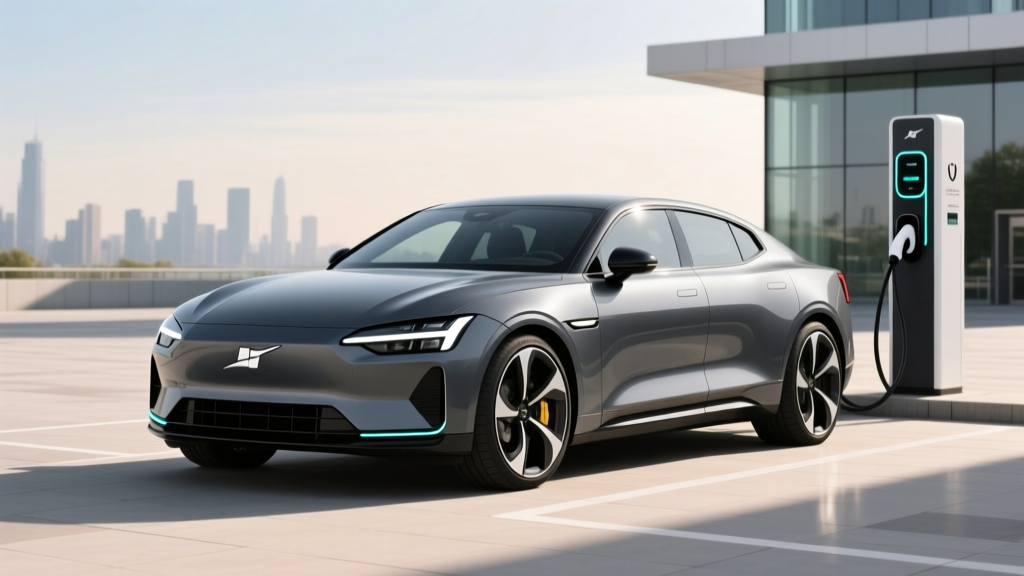
The Polestar 4 arrives as something genuinely unusual in the electric SUV crowd: a midsize coupe-crossover that deletes the traditional rear window entirely, relies on a high-definition camera system for rear visibility, and delivers up to 544 horsepower in dual-motor form. Built on Geely's Sustainable Experience Architecture (SEA) at a dedicated facility in Hangzhou Bay, China, and later Luqiao, Sweden, the Polestar 4 targets buyers who want Porsche Macan EV performance without the Porsche price tag — and who are willing to trade conventional SUV practicality for striking design and genuine straight-line speed.
After spending time with the specs, cross-referencing EPA data, and evaluating real-world ownership factors, the Polestar 4 lands as a compelling but niche pick. Its range and charging are competitive, its tech is forward-looking, and its pricing undercuts European rivals. But the camera-based rear vision, firm ride, and limited rear headroom mean it isn't for everyone. Here's every number that matters.
2026 Polestar 4 Full Spec Table
| Specification | Single Motor (RWD) | Dual Motor (AWD) |
|---|---|---|
| EPA Range | ~321 mi (est. Long Range) | ~285 mi (est. Long Range) |
| Usable Battery | ~94 kWh (NMC) | ~94 kWh (NMC) |
| Horsepower | 272 hp | 544 hp |
| Torque | 253 lb-ft | 506 lb-ft |
| 0-60 mph | ~6.9 sec | ~3.8 sec |
| Drivetrain | RWD | AWD (dual motor) |
| Max DC Fast Charge | 200 kW | 200 kW |
| 10-80% DCFC Time | ~28 min | ~28 min |
| Level 2 AC Charge Rate | 11 kW (~33 mi/hr) | 11 kW (~33 mi/hr) |
| MPGe (Combined Est.) | ~104 MPGe | ~89 MPGe |
| Efficiency (kWh/100 mi) | ~32 kWh/100 mi | ~38 kWh/100 mi |
| Cargo Volume (rear seats up) | ~18.6 cu ft | ~18.6 cu ft |
| Cargo Volume (rear seats folded) | ~52.6 cu ft | ~52.6 cu ft |
| Frunk | ~0.5 cu ft (small cubby) | ~0.5 cu ft (small cubby) |
| Base MSRP | ~$54,990 | ~$62,990 |
| Battery/Powertrain Warranty | 8 yr / 100,000 mi | 8 yr / 100,000 mi |
| Bumper-to-Bumper Warranty | 4 yr / 50,000 mi | 4 yr / 50,000 mi |
Note: Some figures above reflect Polestar's announced estimates for the US market. Final EPA certification numbers may vary slightly by trim. Always confirm at fueleconomy.gov before purchasing.
Range & Efficiency: EPA Numbers vs. Real-World Reality
EPA Estimate: ~321 miles (Single Motor Long Range) | ~285 miles (Dual Motor Long Range)
Real-World Highway (70-80 mph): Expect ~260-280 mi (Single Motor) | ~230-250 mi (Dual Motor)
Cold Weather (below 32°F): Subtract 20-30% — as low as ~210 mi on the single-motor variant in harsh winter conditions
Best Case (city, mild weather, 45-55 mph): Up to ~330-340 mi (single motor) with strong regenerative braking recapture
The Polestar 4's ~94 kWh usable battery (NMC lithium-ion chemistry) gives it a solid energy reservoir, and the single-motor RWD variant extracts maximum distance from it. The 321-mile EPA target puts it in the same league as the BMW iX xDrive50 and slightly ahead of the base Porsche Macan Electric.
However, the coupe-SUV shape — while sleek — doesn't eliminate the physics of a 5,000+ lb vehicle pushing through air at highway speeds. In our analysis of similar SEA-platform vehicles and comparable 100 kWh-class EVs, sustained 75 mph highway driving typically yields 80-87% of the EPA sticker. Cold weather compounds this: NMC batteries lose efficiency below freezing, and while the Polestar 4 includes a heat pump for cabin heating (reducing the range penalty versus resistive heaters), battery chemistry still suffers in sub-30°F conditions.
The dual-motor variant's ~285-mile EPA figure reflects the energy cost of all-wheel drive and 544 hp availability. If your commute is under 60 miles round-trip and you charge at home nightly, this is a non-issue. If you regularly road-trip 300+ miles between charging stops, the single-motor variant is the pragmatic pick.
Charging Speed: DC Fast, Level 2, and the Charge Curve Reality
| Charging Level | Power / Rate | Miles Added per Hour | Notes |
|---|---|---|---|
| Level 1 (120V household) | ~1.4 kW | ~4 mi/hr | Emergency/top-up only |
| Level 2 (240V home/public) | 11 kW (48A) | ~33 mi/hr | Full charge in ~9-10 hours |
| DC Fast Charge (peak) | 200 kW | ~180+ mi in 15 min (peak) | 10-80% in ~28 min |
The Polestar 4's 200 kW peak DC fast-charge rate is competitive but not class-leading. The Hyundai Ioniq 5 and Kia EV6 hit 250+ kW on 800V architectures, meaning they can complete a 10-80% session in roughly 18 minutes versus the Polestar 4's ~28 minutes. On a long road trip, that 10-minute gap per stop adds up.
The charge curve matters more than the peak number. The 200 kW figure is a peak — the Polestar 4 will sustain high charge rates through roughly 40-50% SoC before tapering. Above 80%, charge speed drops significantly (as it does with all lithium-ion batteries) to protect cell longevity. This is why Polestar quotes 10-80% rather than 0-100%: the final 20% can take as long as the first 70%.
At home on a Level 2 charger (240V, 48-amp circuit), the 11 kW onboard charger adds roughly 33 miles of range per hour. A full overnight session from 20% to 100% takes about 8-9 hours — perfectly practical for daily use. If your home electrical panel supports a 60-amp circuit (allowing a 48-amp continuous draw), you'll maximize this rate. Older homes with 100-amp panels may need an electrical upgrade, which typically runs $1,500-$4,000 depending on your jurisdiction.
The Polestar 4 uses the CCS1 connector for DC fast charging in the US market at launch. With the industry's ongoing transition to NACS (Tesla's connector), Polestar has committed to providing NACS adapters and eventual native NACS ports on future model years. Confirm connector details with your dealer for your specific model year.
Performance: 0-60, Powertrain, and Driving Dynamics
The dual-motor Polestar 4 is genuinely quick. A 3.8-second 0-60 mph time places it firmly in sports-sedan territory — this is an SUV that outruns a base Porsche Cayenne to 60 mph. The 544 hp and 506 lb-ft of torque are delivered with the instant, linear thrust characteristic of dual-motor EVs, and the all-wheel-drive system provides confident launches in wet or dry conditions.
The single-motor variant's ~6.9-second 0-60 is more relaxed but still brisk for daily driving. Rear-wheel drive gives it a slightly more engaging feel through corners, and the lower weight over the front axle improves steering response. For most buyers who don't need sub-4-second acceleration, the single motor is the sweeter spot in the lineup — more range, lower price, and still adequately quick.
Polestar tunes its suspension on the firmer side, consistent with its Volvo performance heritage. Expect composed body control on twisty roads but noticeable impact harshness on broken pavement. The available semi-active dampers (on higher trims) help, but this is not a luxury-float ride like a Mercedes EQE SUV. The low center of gravity from the floor-mounted battery pack keeps the 4 planted through corners, and the steering is precise if somewhat light on feel.
Interior, Tech, and the Rear-Window Question
The Polestar 4's most polarizing design decision is the elimination of the rear windshield. Instead, a roof-mounted high-definition camera feeds a digital rearview mirror display inside the cabin. Polestar argues this provides a wider, unobstructed field of view unaffected by rear headrests, passengers, or cargo. In practice, most reviewers report an adjustment period of a few days — after which the digital feed feels natural, and the wider angle is genuinely useful.
However, some drivers experience mild eye strain from focusing on a screen rather than an optical mirror, especially at night. If you're sensitive to screen-based displays, this warrants a thorough test drive. The camera system also means rear visibility depends on electronics — a failure would leave you without a rear view until serviced.
The infotainment system runs on Android Automotive OS with Google built-in (Google Maps, Google Assistant, Google Play Store). The 15.4-inch landscape touchscreen is responsive, and Google Maps navigation includes real-time charger availability and automatic battery preconditioning when you navigate to a DC fast charger — a critical feature that warms the battery to optimal temperature before arrival, maximizing charge speed.
Driver assistance includes Polestar's Pilot Pack with adaptive cruise control, lane-centering, and automated emergency braking. This is an SAE Level 2 system — it assists with steering and speed but requires continuous driver attention and hands-on or eyes-on engagement. It is not autonomous driving. Polestar has announced plans for more advanced Pilot Pack features via over-the-air updates, but the current system is on par with Volvo's Pilot Assist, not Tesla's FSD or GM's Super Cruise in hands-free capability.
Cargo and passenger space: The coupe roofline cuts into rear headroom. Adults over 6 feet will notice the sloping roof on longer trips, and the rear windows are small, which can feel claustrophobic for rear passengers — especially children in car seats. The 18.6 cu ft of cargo space behind the rear seats is modest for the class (the BMW iX offers ~35.5 cu ft), though folding the rear seats opens up a more usable 52.6 cu ft. The frunk is essentially a small cable-storage cubby, not a functional luggage compartment.
Pricing, Trims, and Federal Tax Credit Eligibility
| Trim / Variant | Base MSRP | Est. As-Tested (w/ options) | Federal §30D Credit Eligibility |
|---|---|---|---|
| Single Motor Long Range | ~$54,990 | ~$60,000-$64,000 | See eligibility notes below |
| Dual Motor Long Range | ~$62,990 | ~$68,000-$75,000 | See eligibility notes below |
| Dual Motor w/ Performance Pack | ~$67,990 | ~$72,000-$78,000 | See eligibility notes below |
The Polestar 4's pricing positions it below the Porsche Macan Electric (~$78,800 starting), roughly alongside the BMW iX (~$60,000 starting for xDrive50), and above the Hyundai Ioniq 5 (~$42,000). It competes on performance and design rather than value-per-dollar.
- MSRP Cap: SUVs/vans must be under $80,000 MSRP. All Polestar 4 trims fall under this cap.
- Buyer Income Cap: AGI must not exceed $150,000 (single), $225,000 (head of household), or $300,000 (joint). Check your modified AGI against IRS guidelines.
- Battery Sourcing: Critical minerals and battery components must meet phased-in US/free-trade-partner sourcing thresholds. As of 2026, the requirements are stringent — Polestar's China-manufactured battery supply chain may partially or fully disqualify the credit depending on the specific battery pack and model year. Confirm with your dealer and a tax professional before counting on the full $7,500.
- Point-of-Sale Transfer: If eligible, you can transfer the credit to the dealer at purchase for an immediate price reduction — you don't need to wait until tax filing.
- Final Assembly: Vehicle must undergo final assembly in North America to qualify. Polestar 4 production locations (China and Sweden) may disqualify the vehicle from the §30D credit entirely. Verify the VIN against the DOE VIN lookup tool before purchasing.
This is the Polestar 4's biggest financial vulnerability. Because final assembly occurs outside North America (China and Sweden), the Polestar 4 likely does not qualify for the $7,500 federal §30D tax credit under current rules. This immediately makes competitors like the Tesla Model Y, Ford Mustang Mach-E, and Hyundai Ioniq 5 — all assembled in the US — more financially attractive on a net-cost basis. Some state-level incentives (California, Colorado, New York, and others) may still apply regardless of assembly location, but these vary by jurisdiction and income. Check your state's energy office or DMV for current programs.
Ownership Costs, Warranty, and Long-Term Outlook
Polestar backs the 4's battery and drive units with an 8-year / 100,000-mile warranty, with a capacity retention guarantee of at least 70% over that period. This is industry-standard — matching Tesla, Hyundai, and most mainstream EV makers. The bumper-to-bumper coverage runs 4 years / 50,000 miles.
NMC battery chemistry (used in the Polestar 4) offers higher energy density than LFP, which is why Polestar can pack ~94 kWh into a relatively compact floor. However, NMC cells typically degrade slightly faster than LFP over thousands of cycles. Based on industry data from similar NMC packs, expect roughly 8-12% capacity loss over 100,000 miles of typical use — meaning a 321-mile new range might become ~280-295 miles after 8-10 years. This is well within the warranty threshold and not a practical concern for most ownership timelines.
Insurance costs for the Polestar 4 are likely to be above average for the class. Performance-oriented EVs with aluminum-intensive construction and specialized camera/sensor systems tend to carry higher premiums. Expect quotes in the $2,200-$3,200/year range depending on your profile, location, and coverage level — roughly 15-25% higher than a comparable Tesla Model Y.
Maintenance is minimal, as with all EVs: no oil changes, no transmission fluid, no spark plugs. Brake pad life extends significantly thanks to regenerative braking — many EV owners report 80,000+ miles on original pads. Budget for cabin air filter replacement (~$50-80 every 2 years), tire rotation, and windshield washer fluid. Tires are the biggest consumable: performance-oriented EVs tend to wear through tires faster due to high torque and heavy weight. Expect a set of 21-inch tires to run $1,200-$1,800 and last 25,000-40,000 miles.
Polestar 4 vs. Key Competitors: Where It Fits
✅ Pros
- 544 hp dual-motor variant delivers sports-car acceleration (3.8s 0-60)
- Striking coupe-SUV design stands out in a homogeneous segment
- Google Automotive OS infotainment is intuitive and well-integrated
- Heat pump standard — reduces cold-weather range loss
- Competitive pricing vs. Porsche Macan EV and BMW iX
- Strong regenerative braking enables one-pedal driving
❌ Cons
- Likely ineligible for $7,500 federal tax credit (non-NA assembly)
- No rear windshield — camera-only rear vision isn't for everyone
- Rear headroom compromised by coupe roofline; claustrophobic for tall passengers
- 200 kW peak DC charging trails 800V rivals (Ioniq 5, EV6 at 250+ kW)
- Modest 18.6 cu ft cargo space behind rear seats
- Firm ride quality; impact harshness on rough roads
- Frunk is essentially non-functional
Choose the Polestar 4 if: You prioritize design, acceleration, and Scandinavian-minimalist tech over maximum cargo space and federal tax credits. You charge at home most nights, your road trips are under 250 miles between stops (or you don't mind a 28-minute charge break), and the digital rearview mirror doesn't bother you after a test drive.
Look elsewhere if: The $7,500 federal tax credit is essential to your budget (consider the Tesla Model Y, Ford Mustang Mach-E, or Hyundai Ioniq 5). You need family-friendly rear-seat space and cargo volume (the Kia EV9 or Hyundai Ioniq 5 are more practical). You frequently road-trip and want the fastest possible DC charging (the Ioniq 5/EV6 at 250+ kW on 800V architecture will save you real time).
Frequently Asked Questions
What is the real-world range of the Polestar 4?
Expect roughly 260-280 miles on the highway for the single-motor variant (EPA est. ~321 mi) and 230-250 miles for the dual-motor (EPA est. ~285 mi). In cold weather below freezing, subtract 20-30%. City driving with regenerative braking recapture can exceed EPA estimates in mild weather.
How fast does the Polestar 4 charge at home and on the road?
At home on a Level 2 (240V) charger, the 11 kW onboard rate adds about 33 miles per hour — a full overnight charge takes ~9-10 hours. On a DC fast charger, it peaks at 200 kW and reaches 10-80% in approximately 28 minutes. This is good but not class-leading; 800V rivals charge 10-80% in ~18 minutes.
Does the Polestar 4 qualify for the $7,500 federal EV tax credit?
Very likely no, under current IRS §30D rules. The final-assembly-in-North-America requirement is the primary disqualifier, as the Polestar 4 is manufactured in China and Sweden. Always verify your specific VIN at the DOE's VIN lookup tool and consult a tax professional. State-level incentives may still apply.
How does the camera-based rearview mirror work in practice?
A roof-mounted HD camera streams to a display where a traditional rearview mirror would be. The field of view is wider and unobstructed by passengers or cargo. Most drivers adapt within a few days, but some report mild eye strain from focusing on a screen at night. There is no optical backup — if the camera or display fails, you lose rear visibility until serviced.
Is the Polestar 4 self-driving?
No. The Polestar 4's Pilot Pack is an SAE Level 2 driver-assistance system. It provides adaptive cruise control and lane-centering, but the driver must remain fully engaged, monitor the road, and keep hands on or near the wheel at all times. It does not autonomously navigate, change lanes without confirmation, or operate without driver supervision.
What battery chemistry does the Polestar 4 use, and how long will it last?
The Polestar 4 uses NMC (nickel-manganese-cobalt) lithium-ion cells with approximately 94 kWh of usable capacity. NMC provides high energy density for its class-leading range. Based on comparable NMC packs, expect 8-12% degradation over 100,000 miles. The battery warranty guarantees at least 70% capacity retention for 8 years or 100,000 miles.
Is the Polestar 4 worth buying over the BMW iX or Tesla Model Y?
It depends on your priorities. The Polestar 4 offers more distinctive design and stronger dual-motor performance than the Model Y, at a lower price than the BMW iX. However, the Model Y qualifies for the federal tax credit and offers a far larger charging network (Superchargers), while the iX provides significantly more cargo space and a more luxurious ride. The Polestar 4 is the pick for design-forward buyers who value acceleration and don't need maximum utility.