Polestar 3 at a Glance: Pricing, Range, and Positioning
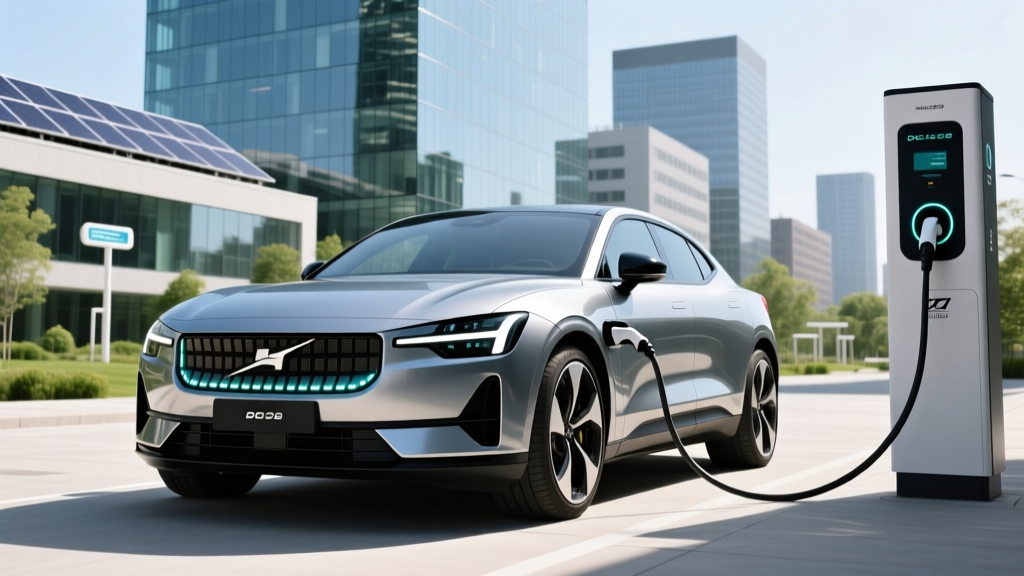
The Polestar 3 arrives as the Swedish-Chinese brand's flagship luxury electric SUV, targeting the space occupied by the BMW iX, Mercedes EQE SUV, and Tesla Model X. For buyers researching the Polestar 3 MSRP, the headline number is $67,900 for the Long Range Dual Motor base trim (including destination), with the Performance Pack-equipped variant climbing to $73,900. These figures place it firmly in premium EV territory — and above the $80,000 MSRP cap for SUVs under the IRS §30D federal tax credit, which has significant implications we'll unpack below.
Built on the same SPA2 platform as the Volvo EX90, the Polestar 3 pairs a 111 kWh battery (NMC chemistry) with dual-motor all-wheel drive. The result is a vehicle that prioritizes long-distance comfort and Scandinavian design over outright sportiness, though the Performance Pack's 517 horsepower and 4.7-second 0-60 time keep it competitive.
| Spec | Long Range Dual Motor | LRDM w/ Performance Pack |
|---|---|---|
| Base MSRP (incl. destination) | $67,900 | $73,900 |
| EPA Range | 315 miles | 300 miles |
| Battery (usable / gross) | 107 kWh / 111 kWh | 107 kWh / 111 kWh |
| Chemistry | NMC (Nickel Manganese Cobalt) | NMC |
| Drivetrain | Dual Motor AWD | Dual Motor AWD |
| Horsepower | 489 hp | 517 hp |
| Torque | 612 lb-ft | 671 lb-ft |
| 0-60 mph | 5.0 sec | 4.7 sec |
| Max DC Fast Charge | 250 kW | 250 kW |
| 10-80% DC Charge Time | ~30 min | ~30 min |
| Level 2 Home Charge Rate | 11 kW (~37 mi/hr) | 11 kW (~37 mi/hr) |
| EPA Efficiency (combined) | 87 MPGe (39 kWh/100mi) | 84 MPGe (40 kWh/100mi) |
| Towing Capacity | 4,409 lbs | 4,409 lbs |
| Battery Warranty | 8 yr / 100,000 mi | 8 yr / 100,000 mi |
Real-World Range: What to Expect Beyond the EPA Sticker
Real-World Expectation: 260-285 miles highway (70-80 mph); 220-250 miles in freezing weather with cabin heat; 290-310 miles mixed city/suburban driving.
The Polestar 3's 315-mile EPA rating is competitive for the luxury electric SUV segment, but as with any EV, your actual mileage will vary based on driving style, terrain, and climate. The 111 kWh gross battery (107 kWh usable) provides a substantial energy reserve, and the NMC chemistry delivers strong energy density — the trade-off versus LFP is slightly faster long-term degradation and a lower thermal runaway threshold, though Polestar's active liquid thermal management system mitigates this in normal operation.
In highway driving at sustained 75-80 mph, expect range to drop to roughly 260-285 miles. The boxy SUV profile creates more aerodynamic drag than a sedan like the Polestar 2 or Lucid Air, and that drag penalty compounds at speed. In cold weather (below 32°F), battery chemistry slows and cabin heating draws significant power — plan for 220-250 miles of usable range on a winter road trip. Preconditioning the battery while plugged in (using the Polestar app) recovers some of this loss by warming the pack before departure.
For context, the EPA's fueleconomy.gov testing cycle includes a mix of city and highway driving at moderate temperatures. Real owners doing mostly suburban commuting at lower speeds will likely see results closer to or even exceeding the EPA figure, while cross-country road trippers should plan charging stops around the 250-mile mark for a comfortable buffer.
Charging Speed: DC Fast Charging and Home Setup
The Polestar 3 supports up to 250 kW peak DC fast charging via its CCS connector (NACS adapter access to Tesla Superchargers is included). At peak rate, a 10-80% charge takes approximately 30 minutes. However, peak rate is not sustained rate — the charge curve tapers significantly above 60% state of charge to protect the NMC battery cells. Expect charging to slow to roughly 80-100 kW in the 60-80% window, which is typical for large-battery EVs in this class.
| Charge Level | Power | Miles Added per Hour | Full Charge Time (10-100%) |
|---|---|---|---|
| Level 1 (120V household) | ~1.4 kW | ~4 mi/hr | ~76 hours |
| Level 2 (240V home, 48A) | 11 kW | ~37 mi/hr | ~10 hours |
| DC Fast Charge (peak) | 250 kW | ~650 mi/hr (at peak) | 10-80% in ~30 min |
For home charging, the onboard charger accepts up to 11 kW on a 240V Level 2 circuit (48 amps). This means a full overnight charge adds roughly 37 miles of range per hour of charging, easily replenishing a day's driving in 2-3 hours and a full depleted-to-full charge in about 10 hours. A 60-amp dedicated circuit with a hardwired Level 2 station (such as a ChargePoint Home Flex or Emporia Level 2) is the recommended setup. Installation costs typically range from $800 to $2,500 depending on panel capacity and conduit run length — budget extra if your home's electrical panel needs a 200-amp upgrade.
On the road, the Polestar 3's CCS port means access to Electrify America, EVgo, and other major networks. Polestar includes a NACS adapter for Tesla Supercharger access, which dramatically expands the usable fast-charging network for road trips. Plan route charging around stations offering 150 kW or higher to take advantage of the 3's peak charge capability — a 50 kW station will bottleneck the vehicle to roughly 120 miles per hour of charging.
Performance, Efficiency, and Driving Dynamics
The Polestar 3 isn't pitched as a performance SUV in the mold of a Tesla Model X Plaid, but the numbers tell a capable story. The standard Long Range Dual Motor produces 489 hp and 612 lb-ft of torque, reaching 60 mph in 5.0 seconds. The optional Performance Pack bumps output to 517 hp and 671 lb-ft, dropping the 0-60 to 4.7 seconds. Both variants feature torque vectoring on the rear axle via a dual-clutch setup, which enhances cornering stability and gives the 3 a more engaging feel than its platform-mate, the Volvo EX90.
Efficiency lands at 87 MPGe combined (39 kWh per 100 miles) for the standard model and 84 MPGe (40 kWh/100mi) for the Performance variant. For a 5,000+ lb luxury SUV with all-wheel drive, these figures are respectable — comparable to the BMW iX xDrive50 (87 MPGe) and meaningfully better than the Mercedes EQE 500 SUV (82 MPGe). At the national average electricity rate of ~$0.16/kWh, fueling the Polestar 3 costs roughly $6.24 per 100 miles, versus approximately $14-16 for a gas-powered luxury SUV getting 22 mpg at $3.50/gallon.
The air suspension (standard on all trims) provides a compliant ride with adaptive damping, and the low center of gravity from the floor-mounted battery pack keeps body roll well-controlled. Regenerative braking offers one-pedal driving capability with adjustable intensity through the touchscreen, though the blend between regen and friction brakes could be smoother in stop-and-go traffic.
Interior Space, Cargo, and Technology
The Polestar 3 is a midsize two-row SUV with seating for five. Passenger space is generous in the front (41.1 inches of legroom) but slightly tighter in the rear (38.2 inches) compared to the three-row Volvo EX90 it shares a platform with. The absence of a third row is a deliberate choice — Polestar prioritizes cargo volume and a lower roofline for aerodynamics.
Cargo capacity measures 18.4 cubic feet behind the rear seats and approximately 48 cubic feet with the 60/40 split rear seats folded. There's also a modest front trunk (frunk) offering about 1.1 cubic feet — enough for charging cables and a small bag but not a full suitcase. Competitors like the BMW iX offer more rear cargo volume (35.5 cu ft behind the second row), so if maximum utility is your priority, the Polestar 3 isn't the segment leader here.
Technology highlights include:
- Infotainment: 14.5-inch center touchscreen running a Google built-in OS (Google Maps, Google Assistant, Google Play Store)
- Driver Display: 9-inch driver information screen plus available head-up display
- Audio: Available Bowers & Wilkins 25-speaker Dolby Atmos system
- ADAS: Pilot Assist (SAE Level 2) with adaptive cruise, lane centering, and automatic emergency braking; available LiDAR from Luminar for enhanced highway pilot functionality
- Over-the-air updates: Continuous feature improvements via cellular connection
Polestar 3 MSRP, Trim Levels, and Tax Credit Eligibility
Understanding the Polestar 3 MSRP structure is straightforward because the lineup is intentionally simple — two configurations, one battery, one drivetrain:
| Trim | MSRP (incl. dest.) | Federal §30D Credit Eligible? | Effective Price (if eligible) |
|---|---|---|---|
| Long Range Dual Motor | $67,900 | No (below $80K SUV cap — potentially eligible) | ~$60,400* |
| LRDM + Performance Pack | $73,900 | Potentially (below $80K SUV cap) | ~$66,400* |
| LRDM + Pilot Pack + Plus Pack | ~$76,500 | Potentially | ~$69,000* |
*Effective price assumes full $7,500 §30D credit. Actual eligibility depends on multiple factors — see below.
Here's where the Polestar 3's tax credit situation requires careful attention. Under current IRS §30D rules, the Polestar 3 qualifies as an SUV with an $80,000 MSRP cap (not the $55,000 sedan cap). Both the base $67,900 and Performance Pack $73,900 trims fall below this threshold, making them potentially eligible. However, eligibility is not guaranteed — it hinges on three additional requirements:
- Buyer income limits: Modified adjusted gross income must not exceed $300,000 (married filing jointly), $225,000 (head of household), or $150,000 (single filers)
- Battery sourcing requirements: A percentage of critical minerals and battery components must be sourced from the US or free-trade-agreement countries. These thresholds increase annually — check the latest IRS qualified vehicle list before purchasing, as eligibility can change mid-year
- Final assembly in North America: The Polestar 3 for the US market is assembled at Volvo's Ridgeville, South Carolina plant, which satisfies this requirement
The credit can be applied as a point-of-sale reduction (transferring the credit to the dealer) or claimed on your federal tax return. Because battery-sourcing rules tighten each year and Polestar's supply chain details determine qualification, confirm current eligibility with your dealer and a tax professional before signing a purchase agreement. Do not assume the full $7,500 applies — partial credits of $3,750 are possible if only one of the two sourcing requirements (minerals or components) is met.
Ownership Costs, Warranty, and Long-Term Value
Polestar provides a competitive warranty package for the 3:
- Battery warranty: 8 years / 100,000 miles (whichever comes first), covering defects and capacity loss below 70% of original capacity
- Powertrain warranty: 8 years / 100,000 miles
- Bumper-to-bumper: 4 years / 50,000 miles
- Roadside assistance: 4 years / unlimited miles
The 70% capacity retention threshold is standard for the industry (Tesla, BMW, and Mercedes use similar benchmarks). For the 107 kWh usable battery, 70% retention means approximately 75 kWh usable at the warranty boundary — still enough for roughly 220 miles of range under normal conditions.
Insurance premiums for the Polestar 3 tend to run higher than average for the segment due to repair costs for aluminum body panels and the Luminar LiDAR sensor (if equipped). Expect annual premiums in the $2,200-$3,200 range depending on location and driving record — obtain quotes before purchase to budget accurately.
Maintenance costs are low relative to ICE luxury SUVs: no oil changes, no transmission fluid, and regenerative braking extends brake pad life significantly. Polestar recommends a cabin air filter replacement annually and a brake fluid check every two years. Tire rotation every 7,500 miles is critical — the 3's weight (approximately 5,700 lbs) and instant torque accelerate tire wear, particularly on the rear axle.
Competitive Comparison: Polestar 3 vs. Key Rivals
| Spec | Polestar 3 LRDM | BMW iX xDrive50 | Mercedes EQE 350+ SUV | Tesla Model X LR |
|---|---|---|---|---|
| MSRP | $67,900 | $73,200 | $77,900 | $79,990 |
| EPA Range | 315 mi | 324 mi | 305 mi | 335 mi |
| Battery (usable) | 107 kWh | 105.2 kWh | 90.6 kWh | 100 kWh |
| Max DC Charge | 250 kW | 195 kW | 170 kW | 250 kW |
| 0-60 mph | 5.0 sec | 4.4 sec | 6.4 sec | 3.8 sec |
| Horsepower | 489 hp | 516 hp | 288 hp | 670 hp |
| Cargo (rear seats up) | 18.4 cu ft | 35.5 cu ft | 14.0 cu ft | 42.5 cu ft (5-seat) |
| Towing | 4,409 lbs | 3,500 lbs | Not rated | 5,000 lbs |
The Polestar 3 occupies a distinct niche: it undercuts the BMW iX and Mercedes EQE SUV on price while offering competitive range and faster DC charging than both. The Tesla Model X offers more range, more power, and vastly more cargo space — but at a higher price and with an interior quality gap that most reviewers note. Where the Polestar 3 wins is design differentiation (it looks like nothing else on the road), build quality (Volvo-grade materials and assembly), and the Luminar LiDAR option for forward-looking ADAS capability.
Where it loses: cargo volume is the smallest in this comparison, rear-seat space is merely adequate for the price point, and the Google-based infotainment system, while functional, lacks the polish of BMW's iDrive or Tesla's interface. The absence of a third row or a frunk of meaningful size also limits versatility for families.
Pros
- Striking Scandinavian design with premium materials throughout
- 315-mile EPA range with strong 250 kW DC fast-charge capability
- Competitive MSRP for the luxury EV SUV segment
- Standard air suspension and torque-vectoring rear axle
- Available Luminar LiDAR for enhanced highway assist
- US assembly (South Carolina) supports §30D eligibility
- 4,409-lb towing capacity — strong for the class
Cons
- Cargo volume (18.4 cu ft) trails BMW iX and Tesla Model X significantly
- Rear-seat legroom adequate but not generous for the price
- Small frunk (1.1 cu ft) limits front storage utility
- Google-based infotainment can feel less refined than competitors
- Insurance premiums tend to run high
- Tax credit eligibility depends on evolving battery-sourcing rules
- Dealer/service network still expanding in many US markets
Who Should Buy the Polestar 3?
Choose the Polestar 3 if: You want a design-forward luxury EV SUV that stands apart from the Tesla/BMW/Mercedes crowd, you prioritize build quality and ride comfort over maximum cargo space, and you primarily need seating for five with occasional towing (up to 4,409 lbs).
Look elsewhere if: You need third-row seating (Volvo EX90, Tesla Model X), maximum cargo volume (BMW iX, Model X), the lowest possible price in the segment (Genesis Electrified GV70), or you live in an area with limited Polestar service infrastructure.
The Polestar 3 is best suited for design-conscious buyers who commute in suburban or urban environments, take regular road trips within the 250-300 mile charging envelope, and value a premium cabin experience over outright performance numbers. It's a strong daily driver and capable road-tripper with the NACS adapter unlocking Tesla Superchargers. Families needing maximum utility should cross-shop the Model X or iX, but for couples or small families who want something distinctive and well-built, the Polestar 3's MSRP-to-feature ratio is compelling — especially if the §30D credit applies at time of purchase.
Frequently Asked Questions
What is the real-world range of the Polestar 3?
The EPA rates the Polestar 3 Long Range Dual Motor at 315 miles. In real-world highway driving at 75-80 mph, expect 260-285 miles. In freezing temperatures with cabin heating, plan for 220-250 miles. City and suburban driving at moderate speeds can approach or exceed the EPA figure.
How fast does the Polestar 3 charge?
On a DC fast charger, the Polestar 3 peaks at 250 kW, reaching 10-80% in approximately 30 minutes (with taper above 60% SoC). At home on a 240V Level 2 charger (48A/11 kW), it adds about 37 miles of range per hour, completing a full charge in roughly 10 hours.
Does the Polestar 3 qualify for the $7,500 federal EV tax credit?
The Polestar 3 is potentially eligible. Its MSRP ($67,900-$73,900) is below the $80,000 SUV cap, and it's assembled in South Carolina. However, eligibility also depends on battery critical-mineral and component sourcing requirements (which change annually), plus buyer income limits ($300K joint / $150K single). Verify current status on the IRS qualified vehicles list and consult a tax professional before purchase.
Is the Polestar 3 worth buying over the BMW iX or Tesla Model X?
The Polestar 3 offers a lower entry price than both, competitive range, and faster DC charging than the iX. It trades cargo space and rear-seat room for distinctive design and build quality. If utility and space are priorities, the iX or Model X win. If design, ride comfort, and value pricing matter more, the Polestar 3 is a strong choice.
What is the Polestar 3's battery chemistry and how long will it last?
The Polestar 3 uses NMC (Nickel Manganese Cobalt) chemistry in its 111 kWh (107 kWh usable) battery pack. NMC offers high energy density but requires careful thermal management. Polestar warranties the battery for 8 years/100,000 miles against capacity loss below 70%. With proper care (avoiding frequent 100% charges and extreme heat exposure), NMC packs typically retain 80-85% capacity at 150,000 miles based on industry data.
Can the Polestar 3 use Tesla Superchargers?
Yes. The Polestar 3 includes a NACS adapter that enables access to Tesla's Supercharger network, which significantly expands DC fast-charging options for road trips. The native port is CCS, providing access to Electrify America, EVgo, and other networks as well.
How much does it cost to charge a Polestar 3 at home?
At the US average electricity rate of ~$0.16/kWh, fully charging the 107 kWh usable battery from empty costs approximately $17.12. For a typical daily commute consuming 40 kWh, the cost is about $6.40 — roughly a third to a quarter of what a comparable gas SUV would spend on fuel for the same distance.