Quick Verdict: Who Should Lease the Polestar 3?
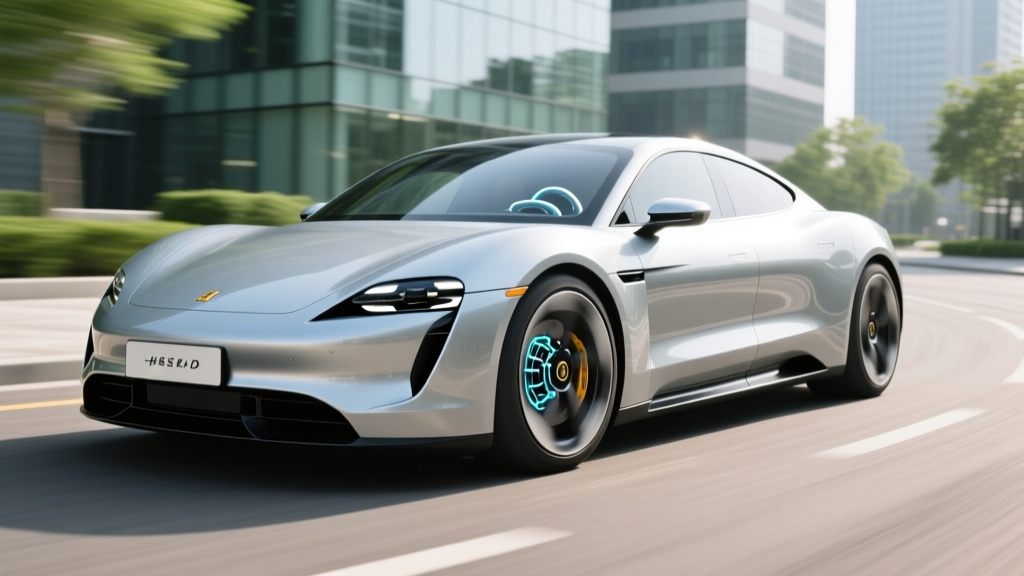
The Polestar 3 is Volvo's electric performance arm staking its claim in the luxury midsize SUV segment — a segment dominated by the BMW iX, Tesla Model X, and now the Porsche Macan Electric. For 2026, the Polestar 3 arrives with up to 370 miles of EPA-estimated range (Long Range Single Motor), a 111 kWh usable battery, and a design language that finally distances itself from the XC90 playbook. Leasing the Polestar 3 makes strategic sense for buyers who want to sidestep depreciation risk on a new-nameplate EV while capturing the maximum federal incentive via the lease loophole — but the math only works if you understand what you're actually getting.
| Spec | Long Range SM | Long Range DM | Long Range DM Perf. |
|---|---|---|---|
| EPA Range | 370 mi | 315 mi | 300 mi |
| Battery (usable) | 111 kWh (NMC) | 111 kWh (NMC) | 111 kWh (NMC) |
| Horsepower | 299 hp | 489 hp | 517 hp |
| 0–60 mph | 7.4 sec | 4.7 sec | 4.4 sec |
| Drivetrain | RWD | AWD | AWD |
| Peak DC Charge | 205 kW | 205 kW | 205 kW |
| 10–80% DC Time | ~30 min | ~30 min | ~30 min |
| Level 2 Rate | 11 kW | 11 kW | 11 kW |
| MPGe (combined) | 89 MPGe | 84 MPGe | 82 MPGe |
| Base MSRP | $67,900 | $73,900 | $79,900 |
Real-World Range: What the EPA Sticker Doesn't Tell You
The headline 370-mile EPA figure on the Long Range Single Motor variant is genuinely competitive — it outpaces the BMW iX xDrive50's ~320 miles and slots in just behind the Tesla Model X Long Range. But EPA estimates assume a blended city/highway cycle at moderate temperatures, and the Polestar 3's real-world behavior diverges meaningfully depending on how and where you drive it.
- City / suburban commuting: 350–380 mi (regen-friendly stop-and-go actually helps)
- Highway (70–75 mph sustained): 290–320 mi (aerodynamic drag dominates at speed)
- Cold weather (below 32°F, highway): 240–280 mi (NMC chemistry loses ~20–25% without preconditioning)
- Mountain / elevation gain: 260–300 mi (significant energy spent climbing, partial regen recovery descending)
The dual-motor AWD variants sacrifice 50–70 miles of range for traction and performance. If your commute involves snow-belt winters or frequent 400-mile road trips, the single-motor variant is the efficiency play — but you give up the all-weather confidence of AWD.
The Polestar 3 uses a heat pump as standard equipment, which mitigates cold-weather cabin-heating drain substantially compared to resistive heaters. Still, NMC (nickel-manganese-cobalt) chemistry is inherently more sensitive to low temperatures than LFP (lithium iron phosphate). If you live in Minnesota or Maine, budget for a 20–25% range reduction in deep winter and precondition the battery before DC fast charging.
Charging Speed: DC Fast, Level 2, and the Curve Reality
The Polestar 3 peaks at 205 kW on a DC fast charger — respectable, though not class-leading. The Hyundai Ioniq 5 and Kia EV9 hit 240 kW, and the Porsche Macan Electric architecture supports up to 270 kW. Peak rate, however, is only part of the story; the charge curve matters more for actual road-trip time.
| Charge Level | Power / Rate | Time / Miles Added |
|---|---|---|
| Level 1 (120V household) | ~1.4 kW | ~4 mi/hr — overnight adds ~40–50 mi |
| Level 2 (240V home, 48A) | 11 kW | ~30 mi/hr — full charge in ~11 hr |
| DC Fast (peak) | 205 kW | 10–80% in ~30 min |
| DC Fast (sustained avg 10–80%) | ~150 kW avg | ~200 mi added in 30 min |
The charge curve on the Polestar 3 holds above 150 kW through roughly 50% state of charge, then tapers progressively. By 80% SoC, you're down to around 80–90 kW, and the final 80–100% stretch is painfully slow — as it is on virtually all EVs. For road trips, plan your stops around 10–80% charges; chasing the last 20% at a DC fast charger is a waste of time.
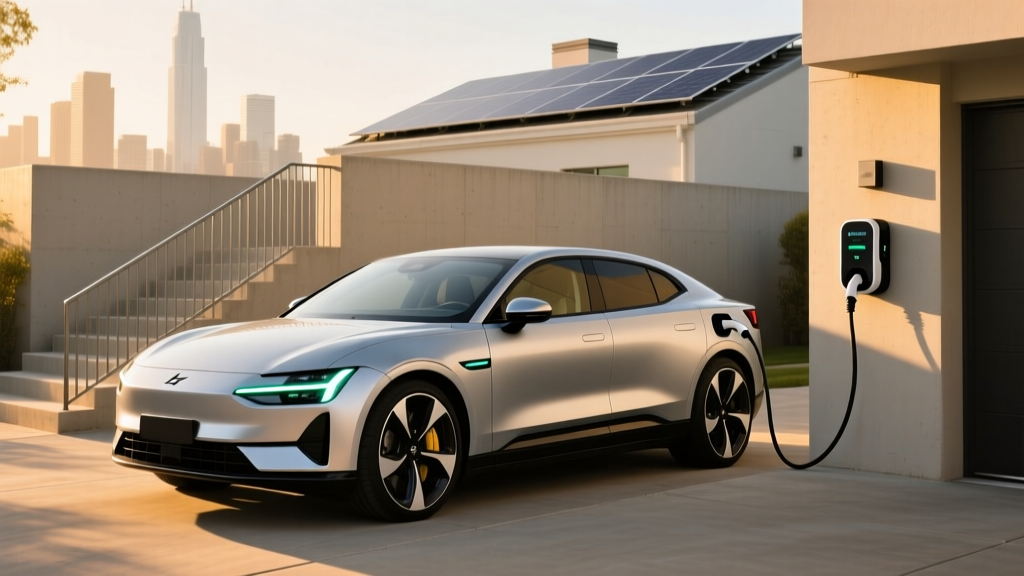
At home on an 11 kW Level 2 circuit (48-amp hardwired charger on a 60-amp breaker), the 111 kWh battery refills from near-empty in about 11 hours. That's fine for overnight charging but means you can't fully replenish in a short window. Most owners will arrive home at 40–60% SoC and wake up full — which is the ideal daily pattern.
Performance and Driving Dynamics
The dual-motor Performance variant's 4.4-second 0–60 mph time is quick by any measure, though the Tesla Model X Plaid's sub-3-second run exists in a different universe. Where the Polestar 3 earns its keep is chassis tuning: the double-wishbone front and integral-link rear suspension, available adaptive dampers, and a low center of gravity from the floor-mounted battery pack deliver handling that feels more sports sedan than SUV.
The single-motor RWD variant at 299 hp and 7.4 seconds to 60 mph won't win drag races, but it's adequate for highway merging and passing. More importantly, the RWD layout contributes to the 370-mile range figure and a slightly lighter curb weight, which pays dividends in tire wear and efficiency.
All variants include torque vectoring on the rear axle (dual-motor models can disconnect the front motor for efficiency under light loads), and the regenerative braking system offers adjustable levels including a one-pedal driving mode that brings the car to a complete stop.
Interior, Cargo, and Daily Livability
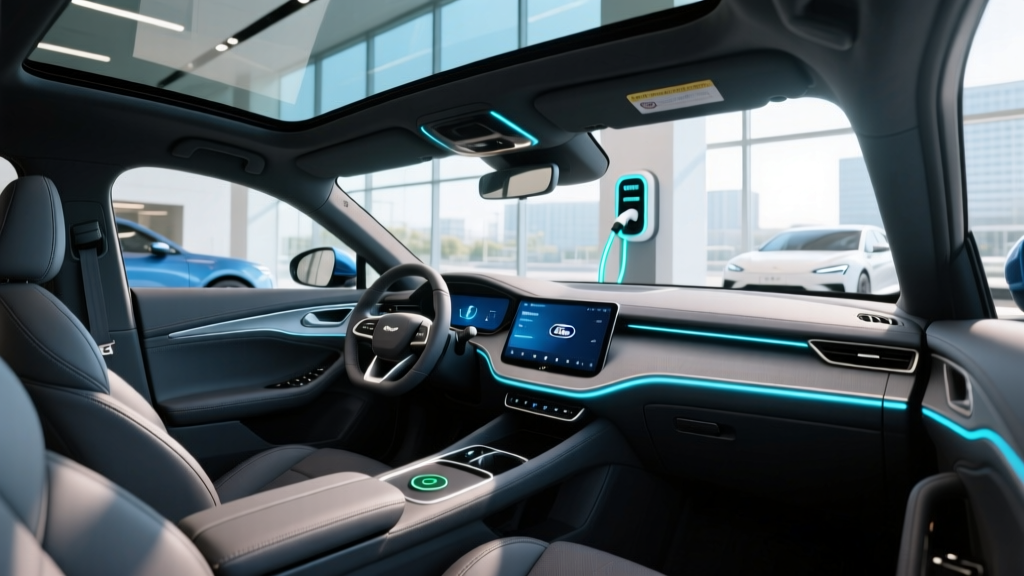
The Polestar 3's cabin leans Scandinavian-minimalist: a 14.5-inch center touchscreen running a Snapdragon-powered Android Automotive OS infotainment system, a 9-inch driver display, and a head-up display. Material quality is high — bio-attributed MicroTech upholstery, recycled aluminum décor, and available Nappa leather. The panoramic glass roof is electrochromic (it dims electronically), a nice touch that eliminates the need for a physical shade.
Practical dimensions matter for family use:
- Cargo behind second row: ~21.5 cu ft (competitive with BMW iX's ~22 cu ft; less than Model X's ~34 cu ft)
- Cargo with second row folded: ~54 cu ft
- Front trunk (frunk): ~1.1 cu ft (enough for charging cables, not a suitcase)
- Rear legroom: ~38.5 inches (adequate for adults; the iX offers slightly more)
- Ground clearance: ~7.0 inches (sufficient for light snow, not off-roading)
The Polestar 3 does not offer a third row. If you need six or seven seats, the Tesla Model X or Kia EV9 are your alternatives. For a two-row luxury EV SUV, the Polestar 3's interior is refined but not segment-leading in space.
Pricing, Lease Economics, and Federal Tax Credit
The 2026 Polestar 3 starts at $67,900 for the Long Range Single Motor, placing it squarely in luxury EV territory. The dual-motor AWD starts at $73,900, and the Performance variant at $79,900. Options like the Pilot Pack (LiDAR + enhanced ADAS), Plus Pack (premium audio, soft-close doors), and 22-inch wheels can push an as-tested price past $90,000.
| Trim | Base MSRP | Est. As-Tested | §30D Credit (Purchase) | Lease Incentive* |
|---|---|---|---|---|
| Long Range SM | $67,900 | $72,000–$76,000 | Up to $7,500 (if eligible) | Typically $7,500 passed through |
| Long Range DM | $73,900 | $78,000–$84,000 | Up to $7,500 (if eligible) | Typically $7,500 passed through |
| LR DM Performance | $79,900 | $85,000–$92,000 | Up to $7,500 (if eligible) | Typically $7,500 passed through |
*Under the "commercial clean vehicle credit" (§45W) lease loophole, the leasing company (lessor) claims the $7,500 credit and typically passes it to the lessee as a capitalized-cost reduction. This bypasses the buyer income caps and battery-sourcing restrictions that apply to purchases under §30D. Confirm with your dealer and tax professional — rules may shift. Source: IRS §30D guidance.
For buyers, the §30D purchase credit has significant strings: modified adjusted gross income caps ($300K joint / $150K single), an $80,000 MSRP cap for SUVs (all Polestar 3 trims qualify), and critical-mineral / battery-component sourcing requirements that shift annually. The single-motor variant's $67,900 MSRP clears the cap easily; the Performance trim at $79,900 also qualifies. However, the battery-sourcing requirements may reduce the credit to $3,750 or eliminate it depending on Polestar's supply chain compliance in 2026. Check the latest fueleconomy.gov eligibility list before committing.
Leasing sidesteps most of these restrictions. Most Polestar 3 lease offers apply the full $7,500 as a cap-cost reduction, effectively lowering your monthly payment by roughly $100–$130/month over a 36-month term. Typical lease offers in early 2026 range from $799–$1,099/month depending on trim, money factor, and residual — with $5,000–$7,500 due at signing.
ADAS and Technology
The Polestar 3 ships with Pilot Assist as standard — a Level 2 driver-assistance system combining adaptive cruise control and lane-centering. Per SAE International definitions, Level 2 requires the driver to remain fully engaged and supervising at all times. This is not autonomous driving.
The optional Pilot Pack adds a LiDAR sensor (from Luminar) mounted in the roofline, providing enhanced object detection at longer ranges. Polestar has indicated this hardware enables future over-the-air upgrades to more advanced capabilities, but as of 2026, it remains a Level 2 system with improved perception. The Android Automotive OS supports Google Assistant, Google Maps navigation with real-time range estimation and charger routing, and Google Play apps — a genuine advantage over proprietary infotainment systems.
Warranty and Long-Term Ownership
Polestar backs the Polestar 3 with a warranty package that matches European luxury norms:
- Battery warranty: 8 years / 100,000 miles (whichever comes first), covering capacity retention below 70% of original
- Powertrain warranty: 8 years / 100,000 miles
- Bumper-to-bumper: 4 years / 50,000 miles
- Corrosion: 12 years, unlimited miles
- Roadside assistance: 4 years / unlimited miles
The 70% capacity retention threshold is industry-standard but worth noting: if your 111 kWh battery drops to 77 kWh usable after 95,000 miles, Polestar will not replace it under warranty. Real-world degradation data for the Polestar 3's specific NMC cells is still accumulating (the model launched in 2024–2025), but comparable Volvo/Polestar NMC packs have shown 8–12% degradation over 100,000 miles in European fleet data. Leasing for 36 months and 30,000–36,000 miles means battery degradation is essentially a non-issue during your ownership period.
- 370-mi EPA range (SM) is top-tier for the segment
- Scandinavian interior design and material quality
- LiDAR-ready hardware for future ADAS upgrades
- Lease loophole captures full $7,500 incentive regardless of income
- Heat pump standard — strong cold-weather efficiency
- Google Automotive OS with native Google Maps/EV routing
- 205 kW peak DC charge is slower than Ioniq 5, EV9, Macan Electric
- Cargo space (21.5 cu ft) trails Model X and iX
- No third-row option
- Frunk is nearly useless (1.1 cu ft)
- Dealer/service network still sparse vs. BMW, Tesla
- Brand-new nameplate = uncertain resale value
Polestar 3 vs. Key Competitors
The midsize luxury EV SUV space is crowded. Here's how the Polestar 3 stacks up against the three benchmarks:
- BMW iX xDrive50 (~$87,000, ~320 mi EPA): The iX is the driver's choice — sharper handling, faster DC charging (up to 200 kW but better sustained curve), and a more established dealer network. The Polestar 3 wins on range (SM variant), interior material sustainability, and price.
- Tesla Model X Long Range (~$82,000, ~335 mi EPA): Model X offers falcon-wing doors, a third row, Supercharger access, and vastly more cargo space. The Polestar 3 counters with a quieter cabin, superior build quality, and a more curated ownership experience.
- Porsche Macan Electric (~$78,000, ~308 mi EPA): The Macan Electric is the performance benchmark with up to 270 kW charging and Porsche tuning. It's smaller inside and pricier optioned. The Polestar 3 offers more range and cargo for less money.
Who Should Lease the Polestar 3?
The Polestar 3 lease is best suited for: design-conscious professionals or small families who prioritize interior refinement, sustainable materials, and strong (but not extreme) range over raw performance or maximum cargo volume. If your daily drive is a 40–80 mile round-trip commute with weekend road trips under 300 miles, the Long Range Single Motor variant hits the sweet spot. If you need AWD for snow-belt winters, the dual-motor variant is worth the range tradeoff.
Leasing specifically makes sense if you: want to avoid depreciation risk on a new EV nameplate; want to capture the $7,500 lease incentive without worrying about §30D income or sourcing restrictions; or plan to upgrade to a next-generation EV in 3 years when solid-state batteries and 350 kW+ charging may be mainstream.
What is the real-world range of the Polestar 3?
The Long Range Single Motor variant carries a 370-mile EPA estimate. Expect 290–320 miles on sustained highway driving at 70–75 mph, and 240–280 miles in cold weather (below freezing) without preconditioning. The dual-motor AWD variants deliver 260–315 miles EPA, with real-world highway figures roughly 15–20% lower.
How fast does the Polestar 3 charge at home and on DC fast chargers?
On a DC fast charger, the Polestar 3 peaks at 205 kW and charges from 10–80% in approximately 30 minutes. At home on a Level 2 (240V, 48A) charger, it charges at 11 kW, adding roughly 30 miles of range per hour — a full charge takes about 11 hours.
Does the Polestar 3 qualify for the federal EV tax credit?
For purchases under §30D, the Polestar 3's MSRP is under the $80,000 SUV cap, making it potentially eligible for up to $7,500. However, eligibility depends on your income (under $300K joint / $150K single), battery-sourcing compliance, and critical-mineral requirements — all of which shift annually. When leasing, the $7,500 commercial clean vehicle credit (§45W) is typically passed through to the lessee as a cap-cost reduction, bypassing most purchase restrictions. Always verify current eligibility on fueleconomy.gov and consult a tax professional.
Is it worth leasing the Polestar 3 vs. the BMW iX or Tesla Model X?
Choose the Polestar 3 if you prioritize Scandinavian design, sustainable materials, competitive range (370 mi SM), and a lower entry price. Choose the BMW iX for sharper driving dynamics and a stronger dealer network. Choose the Tesla Model X if you need a third row, maximum cargo space, or Supercharger convenience. Choose the Porsche Macan Electric for the best charging speed and performance handling.
What is the battery warranty on the Polestar 3?
Polestar provides an 8-year / 100,000-mile warranty on the battery and powertrain, covering defects and capacity retention below 70% of original capacity. The bumper-to-bumper warranty covers 4 years / 50,000 miles.
How much does a Polestar 3 lease typically cost per month?
As of early 2026, Polestar 3 lease offers range from approximately $799/month (Long Range SM, 36 months, ~$7,500 due at signing with the federal lease incentive applied) to $1,099/month (Performance DM, similar terms). Actual rates depend on credit tier, money factor, residual value, and regional dealer promotions.